 Brixton Vintage Thrift Shop Finder: South London Retro Gems
Hidden Gems & Odd Finds
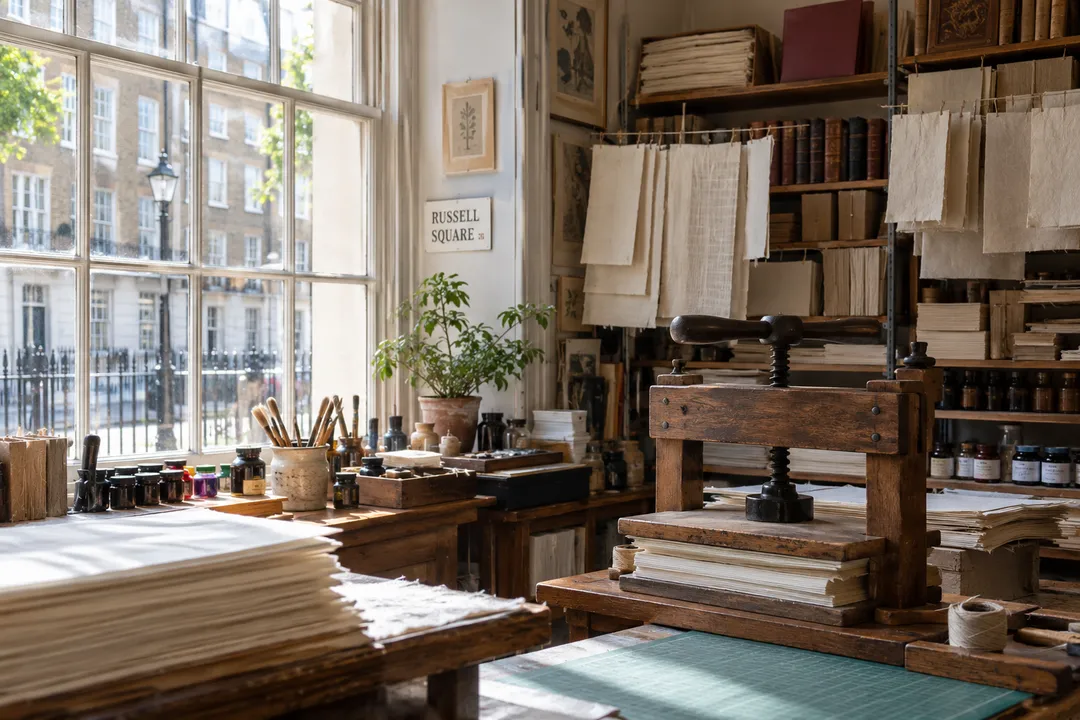
Bloomsbury Area Neighborhood Stationery Hop Route: Paper Map
Trace this Bloomsbury neighborhood stationery hop route near Russell Square. Browse archival artist papers, handmade linen sketchbooks, and rare bookbinding.
Bloomsbury and the garden squares surrounding Russell Square represent London's intellectual heartland and its most storied neighborhood stationery hop route, where academic publishing, book conservation, and bespoke papermaking have intertwined for generations. Stepping out of Russell Square station onto Bernard Street, visitors enter a precinct famously celebrated by the Bloomsbury Set, Virginia Woolf, and generations of university scholars. Here, grand Georgian brick facades overlook shaded squares where writers have gathered for over a century to debate literature and draft manuscripts on heavy cotton sheets. Rather than focusing on disposable office novelties, Bloomsbury stationery shops celebrate archival longevity, bookbinding craftsmanship, and traditional drafting tools favored by historians and illustrators. Exploring these tranquil streets on foot provides a unique glimpse into the tangible material culture of London's literary world, connecting travelers with historic bookbinding methods that have survived the transition into the modern digital age.

Great Russell Street and Academic Art Supplies
Commencing the walking circuit near Great Russell Street opposite the British Museum introduces venerable stationery and art supply emporiums that have served scholars since the nineteenth century. Inside, oak floorboards creak beneath towering shelves stacked with handmade Japanese washi paper, French watercolor blocks, and heavy sketchbooks bound in coarse unbleached linen. Visitors can examine jars of rare dry pigments, hand-cut goose quill pens, and specialty gum arabic binders used for bespoke watercolor mixing. The shop assistants include practicing artists and conservators who offer expert guidance on paper acidity, cotton content, and paper sizing techniques, making this an inspiring starting point for any creative journey. Browsing these historic shelves gives you direct access to professional conservation materials that are rarely found outside of university library archives.
Museum Street and Marbled Paper Specialists
Progressing northward along Museum Street and Bury Place introduces master bookbinders and specialist paper merchants displaying exquisite hand-marbled papers created using traditional water-bath techniques. Shelves showcase marbled endpapers with comb and peacock patterns, bookbinding bone folders carved from polished horn, and rolls of bookbinding bookcloth in rich jewel tones. Enthusiasts can purchase DIY bookbinding starter kits complete with waxed linen thread, curved bookbinding needles, and acid-free binding glues. The deliberate preservation of century-old bookbinding traditions gives Museum Street a timeless dignity that captivates anyone who cherishes the physical structure of books. Watching artisans measure spine linings and trim book cloth by hand reinforces how much human care goes into every hand-bound volume.
Lamb's Conduit Street and Boutique Stationers
Advancing eastward toward Lamb's Conduit Street brings visitors to an idyllic pedestrianized haven of independent boutiques, bespoke stationers, and quiet reading benches. This charming street boasts specialty shops featuring fountain pen inks, Italian leather pen cases, and bespoke letterpress greeting cards printed on vintage Heidelberg platen presses. The atmosphere is warm and neighborly, with residents and university lecturers browsing displays of tactile correspondence paper and heavyweight brass desk rulers. The absence of heavy road traffic creates a serene environment where you can appreciate the quiet rustle of fine paper sheets. Taking time to test different pen weights on smooth writing pads reveals the subtle pleasures of thoughtfully engineered desktop instruments.
Queen Square and Conservation Bindery Studios
Passing through Queen Square reveals hidden conservation bindery studios that restore rare antiquarian books and craft custom archival presentation portfolios. Here, skilled artisans hand-tool leather spines with gold leaf, repair damaged parchment documents using Japanese tissue, and construct bespoke slipcases lined with archival velvet. Visitors can commission custom leather journals stamped with personalized initials or select ready-made notebooks featuring hand-sewn signatures that open completely flat across any desk. Witnessing these meticulous restoration processes highlights the enduring value of preserving handwritten words across centuries. The gentle scent of aged leather and bookbinding paste fills the workshop air, offering a truly immersive historical encounter.
How to Pace Your Bloomsbury Trail
Balancing your time across Bloomsbury's literary ateliers requires steady restraint to avoid creative overload and impulsive spending. Limit your route to three or four dedicated paper shops over ninety minutes, allowing ample time to pause on a shady bench in Russell Square or Bloomsbury Square Gardens to examine your acquisitions. Carrying a pocket notebook to swatch ink shades and compare paper tooth across different sheets ensures you make informed purchases that suit your daily writing utensils. Should a boutique near the British Museum become crowded with tour groups, stroll down a peaceful side mews and return once the crowd dissipates. Giving yourself time to reflect beneath the plane trees helps you appreciate the literary heritage embedded in every corner of this district.
What to Prioritize and What to Skip
Discerning paper lovers should concentrate acquisitions on archival materials like handmade cotton rag paper, small-batch bottled fountain pen inks formulated in Britain, or hand-bound sketchbooks with exposed thread stitching. Avoid mass-produced tourist stationery, ordinary plastic fineliners, and generic museum gift shop notebooks that offer little artisan value. Selecting a single hand-marbled notebook or a bespoke bottle of permanent writing ink provides lasting creative inspiration and directly supports the preservation of London's independent book crafts. These unique materials possess an enduring tactile presence that elevates everyday journaling into an artistic practice.
Weather Protection in Bloomsbury
Guarding fragile bookbinding materials against persistent Bloomsbury autumn moisture is essential for safeguarding your paper investments. Always travel with a water-resistant canvas tote bag or ask shopkeepers for protective glassine envelopes before heading out into the afternoon air. If sudden rain begins around Southampton Row, take refuge beneath the portico of the British Museum or duck into a quiet tea shop on Bury Place to inspect your paper samples while sipping hot tea. Ensuring that delicate deckle-edged papers remain completely shielded from sidewalk dampness preserves their crisp shape and archival qualities.
Practical Notes for Bloomsbury Visitors
Transportation links across Bloomsbury could hardly be more central, with Russell Square station on the Piccadilly line and Holborn station on the Central and Piccadilly lines offering effortless access. Most independent bookbinders and stationers open between ten in the morning and six in the evening from Monday through Saturday, with several specialist studios remaining closed on Sundays to focus on bespoke workshop orders. Clean public restrooms and sheltered seating are conveniently accessible within Russell Square Gardens and the British Museum entrance hall. Navigating this compact academic quarter on foot allows you to move easily between workshops in just a few short strides.
Charting Your Bloomsbury Paper Map with Karpo APP
Mapping this historic literary paper pilgrimage is streamlined when using the Karpo APP to coordinate your stationer wishlist. The platform dynamically outlines pedestrian pathways that link quiet Georgian mews and leafy garden squares while avoiding noisy arterial routes along Theobalds Road. Use the app to bookmark your favorite bookbinding counters, record paper weight preferences, and discover quiet neighborhood cafes where you can write your first handwritten notes in historic comfort. With intuitive waypoint directions in hand, exploring Bloomsbury's literary backstreets becomes an effortless and richly rewarding cultural journey.
Ask Karpo for more information.
Keep reading
- Brixton Vintage Thrift Shop Finder: South London Retro Gems
 Notting Hill Vintage Thrift Shop Finder: Preloved Rails
 Soho Vintage Thrift Shop Finder: West End Designer Archives