 Marylebone Coffee Shop Finder: Village Cafes and Espresso
Coffee & Dessert

Soho Neighborhood Coffee Crawl Planner: Old Espresso to New
Plan a Soho coffee crawl from old Italian espresso bars to modern filter counters, with record shop browsing between cups and a rest in Soho Square at the end.
Luca grew up hearing his grandfather talk about London coffee bars in the late 1950s, the hiss of the machine, the jukebox, the teenagers who sat for hours over one frothy cup. When his cousin Ben came down from Leeds for a weekend, Luca wanted to show him that story still lives in Soho, right next to the modern cafes that weigh every dose. This neighborhood coffee crawl planner follows their afternoon: an old-school espresso stop, a walk through record shops and narrow streets, then a newer filter bar, so you taste how London coffee has changed in one short loop.
Why Soho Tells London's Coffee Story
In the decade after the Second World War, Soho became one of the first places in London where Italian espresso machines caught on. Coffee bars opened in narrow shopfronts, and young people who were too young for pubs crowded in for frothy coffee, music and conversation. Skiffle bands played in basements nearby, and for a while the coffee bar was the most exciting room a teenager could find in the city.
Today Soho still holds pieces of that era: chrome counters, mirrored walls, old photographs of boxers and singers, and staff who make espresso fast and talk faster. Around the corner, newer cafes pour single-origin filter coffee with scales and timers. Few London neighbourhoods let you walk between those two worlds in a few minutes, which is why it works so well for a crawl built around contrast.
Stop One: The Classic Italian Espresso Bar
Luca and Ben start in an old-style Italian bar with a long counter and stools that face the street. The trick here is to drink like the regulars. Order an espresso or a cappuccino, stand at the counter if there is space, and drink it while it is hot rather than lingering for an hour. These rooms were built for quick cups, loud greetings and a lot of coming and going.
Ben orders a cappuccino with a thick, dense foam and gets a dusting of chocolate he did not ask for, which makes Luca laugh because his grandfather always had it that way. The coffee is darker and more bitter than what Ben drinks at home, but that is the point of this stop. It tastes like the version of espresso most Londoners grew up with.
Look around while you drink. The decor in these places often says more than any plaque: the age of the machine, the faded posters, the photos behind the till, the way the staff call out orders. Ask the person behind the counter how long the bar has been there and you might get a story worth the whole trip.
Between Cups: Record Shops and Narrow Streets
After the first stop, slow down. Soho's music history is tied up with its coffee history, so the walk between cafes should pass through record shops rather than big chains. Luca and Ben spend half an hour flipping through crates of second-hand vinyl, looking for jazz and old rock and roll that would have played on a coffee bar jukebox.
Then they wander the small streets around Berwick Street and the old market, past tailors, tiny restaurants and doorways painted in deep reds and greens. Soho is compact, so you can zigzag without a map and still end up where you meant to go. The walk takes the edge off the caffeine and gives the second cup room to taste fresh.
Stop Two: A Modern Filter Counter
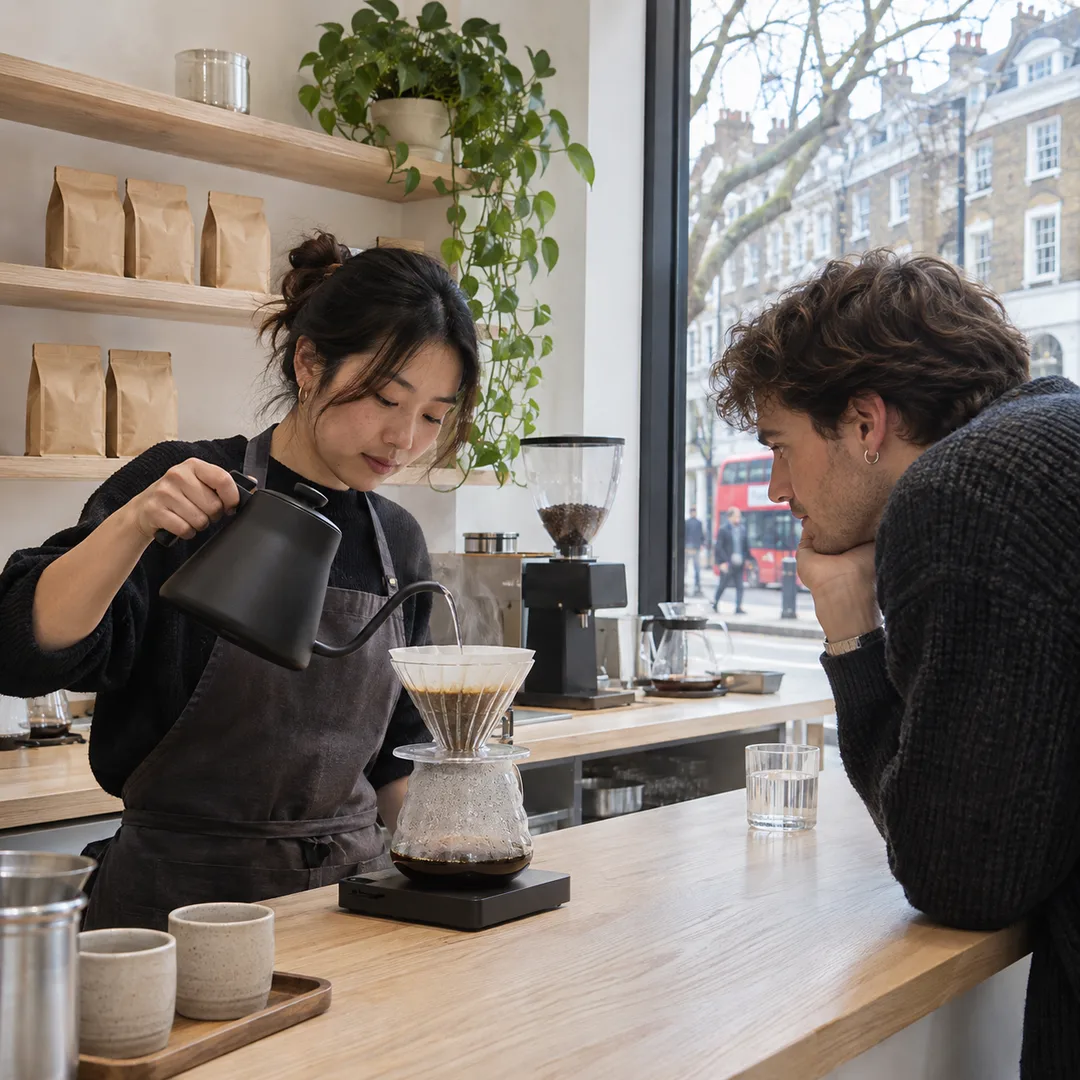
The second stop is the opposite of the first. Pick a bright, quieter cafe where baristas brew filter coffee by hand and talk about where the beans came from. Sit down this time. Order a pour-over or a batch brew, and if you can, ask for a lighter roast from a single farm so the contrast with the old espresso is clear.
Ben was not sure he would like it. The coffee tasted of red fruit and tea, lighter in body, with almost no bitterness. He drank it slowly while the barista explained how they choose recipes and why the water temperature matters. Luca ordered a flat white made with the same beans, and they swapped cups so each could taste both styles.
Do not rush this part. The fun of a contrast crawl is talking about what changed. Which cup would your grandparents have liked? Which one would you order every day? Those small questions turn a coffee crawl into an afternoon you remember.
Stop Three: Pastry and a Seat in Soho Square
Finish with something sweet and a seat outside. Pick up a pastry, a cannoli or a slice of cake from a bakery, and carry a final small coffee, or a decaf if you have had enough, to Soho Square. The little garden with its mock-Tudor hut in the middle is one of the calmest spots in the area, and the benches are good for people watching.
Luca and Ben sit there as the light fades, sorting the records they bought and arguing about which cup won. It is a gentle way to end, away from the busy streets, and a good place to decide whether to head to dinner or catch a show nearby.
Skip These Mistakes
Skip planning this crawl for Friday or Saturday evening. Soho fills up with drinkers after work and at weekends, cafe seats vanish, and the old espresso bars become standing-room only. Weekday afternoons or a Sunday morning give you room to talk to staff and actually taste the coffee.
Also skip the urge to order the same drink everywhere. The crawl works because each stop shows a different side of coffee. Espresso at the old bar, filter at the new one, something sweet at the end. Three flat whites in a row will only tell you about milk.
Plan B When the Bars Are Full
If the classic bar is packed, take an espresso to go and drink it standing outside, the way plenty of regulars do. Then make your sit-down stop the modern cafe instead. If the filter bar has a queue out of the door, look on the next street; Soho has several newer coffee bars within a short walk of each other, and the second choice is often calmer.
On a cold, wet day, swap Soho Square for a longer browse inside a record shop or a bookshop and finish your sweet treat at a counter seat.
Practical Notes
Wear comfortable shoes and keep the bag small, because Soho's pavements are narrow and the cafes are tight. Bring cash or a card for small purchases, and leave room in a tote for any records you pick up. Keep the walk to about two hours so the caffeine stays pleasant rather than jittery.
If you want help putting the route together, ask Karpo APP for a Soho crawl that pairs a classic espresso bar with a modern filter cafe and a record shop in between. Share the plan with a friend or relative who loves a story, and let them pick which era wins.
Ask Karpo for more information.
Keep reading
- Marylebone Coffee Shop Finder: Village Cafes and Espresso
 Fitzrovia Coffee Shop Finder: Quiet Central London Espresso
 Covent Garden Coffee Shop Finder: Hidden Courtyard Cafes