 Brixton Vintage Thrift Shop Finder: South London Retro Gems
Hidden Gems & Odd Finds
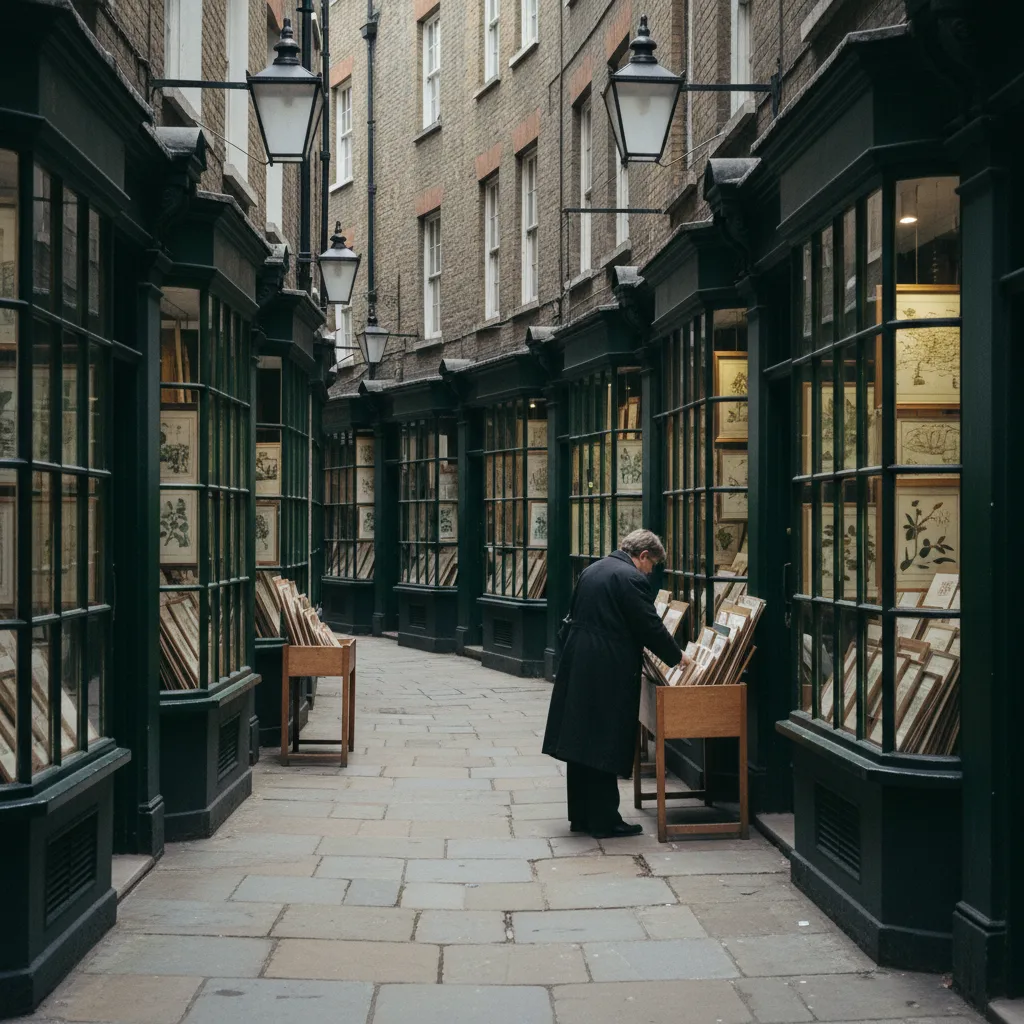
Soho Neighborhood Antiques Crawl: Old Maps, Prints and Vinyl
A Soho antiques crawl works best as a launch pad: walk Berwick Street records, Liberty's 1924 timber halls, then Cecil Court's antiquarian print dealers.
Soho is not an antiques district, and a neighborhood antiques crawl that begins here works best when you treat these streets as a launch pad rather than the whole hunt. Within roughly a ten-minute walk of Soho Square you can reach the second-hand record racks of Berwick Street, the mock-Tudor galleries of Liberty, built in 1924 from the timbers of two retired warships, and the antiquarian map and print sellers of Cecil Court. This page shows how to string those stops into one afternoon.
Why Soho Is the Start Line, Not the Destination
Anyone expecting Portobello-style arcades will be disappointed by Soho itself. The district trades in restaurants, post-production studios and late bars, and most of its Georgian townhouses now hold offices rather than dealers. What Soho does offer is position. It sits between three pockets of old stuff that are each too small for a full day: vinyl on Berwick Street, design history at Liberty, and paper ephemera around Charing Cross Road. Linking them on foot is the whole point.
That framing changes how you pack. Bring a tote with a flat board or a cardboard folder, because the best finds on this route are prints, maps, postcards and records rather than furniture. Nothing here needs a van. A realistic target for a first visit is two or three small purchases and a much better sense of which shops deserve a longer return trip, ideally one that pairs Soho with Marylebone or Notting Hill on another day.

Berwick Street: Records, Cloth and a Market With Long Roots
Start on Berwick Street, where a street market has traded for well over two centuries and where the record shop culture of the 1990s still survives. Sister Ray and Reckless Records both keep second-hand stock alongside new pressings, and the used bins are where the antique-hunter's instincts pay off: original sleeves, press inserts, labels from long-gone imprints. Flick slowly. The good copies tend to hide behind newer reissues filed under the same artist.
The same street is still known for its fabric merchants, whose bolts of tweed, silk and printed cotton spill onto the pavement. They are not antiques, but they are a useful lesson in reading material, and a quick conversation with a cloth seller about weave and weight sharpens the eye you will use later on old prints. Walk the street end to end once before buying anything, then double back to the bins that caught your attention.
Liberty's Timber Halls as a Free Design Lesson
From Berwick Street it is a short walk west to Great Marlborough Street and Liberty. The Tudor revival building opened in 1924 and was framed with timber salvaged from HMS Impregnable and HMS Hindustan, so the beams, carved balustrades and galleried atrium are themselves a kind of antique. Climb the wooden stairs and look at the light wells rather than the price tags. The building is the free part of the visit and the reason it earns a stop on a crawl about age and craft.
Cecil Court: Where the Paper Hunters Go
Cross back through Soho toward Leicester Square and turn into Cecil Court, a short pedestrian passage between Charing Cross Road and St Martin's Lane. It is lined with Victorian shopfronts, and its tenants deal in antiquarian books, engraved maps, theatre programmes, coins and old prints. A plaque records that the young Mozart lodged here in 1764. The passage takes five minutes to walk and an hour to browse properly, which is the right ratio for the end of this route.
Treat each shop window as a catalogue. Dealers here tend to specialise narrowly, so one window may be all nineteenth-century county maps while the next is children's book illustration or performing arts ephemera. If something interests you, ask about its condition and whether a print is an original engraving, a later restrike or a photographic reproduction. Good dealers answer those questions directly, and their answers are the most valuable thing you will collect all day.
Sequencing the Walk Around Soho's Weekly Rhythm
Order matters because Soho's character swings sharply between morning and evening. Records first, while the bins are tidy and the staff have time to talk. Liberty in the middle, when you want a break from crouching over crates. Cecil Court last, as the light softens and the passage feels most like its nineteenth-century self. Reverse the order and you end up digging through records in a crowded shop just as the bars on Old Compton Street fill up.
Weekdays are calmer than Saturdays, when the West End fills with shoppers and theatre crowds and Cecil Court's narrow width becomes a bottleneck. A Tuesday or Wednesday afternoon gives you room to pull prints from the browse bins without apologising to anyone. Sunday is the riskiest choice, because small specialist shops in central London often run reduced weekend schedules, and the walk loses its main payoff if Cecil Court is shuttered.
What to Skip, and the Rainy-Day Fallback
Skip the souvenir shops and generic vintage boutiques clustered around Carnaby Street. They are fun for clothes but sell very little that is genuinely old, and the time is better spent in Cecil Court. Likewise, do not expect bargains on headline items at Liberty. The building is the draw for this route, and its stock is contemporary design rather than anything you would find at an antiques fair.
If rain sets in, the whole route compresses well. Berwick Street's record shops and Liberty's interior are covered, and Cecil Court's dealers are used to customers sheltering in doorways while they look. If you would rather swap streets for a single roof, the National Portrait Gallery and National Gallery are a few minutes' walk south on Trafalgar Square and offer free entry to the permanent collections, a useful way to calibrate your eye for period portraits before buying a print.
How to Buy Old Paper Without Regret
Prints and maps are where first-time crawlers most often overpay. Look for a plate mark, the faint rectangle pressed into the paper by an engraved copper plate, which suggests a genuine intaglio print rather than a modern copy. Check the margins for foxing, the brown spotting caused by damp, and ask whether any colouring is original or added later. None of this requires expertise, only the willingness to ask and to hold the sheet against the light.
Records reward a similar discipline. Slide the disc halfway out and tilt it under the shop light to check for scratches, then look at the run-out groove for matrix numbers if you care about pressing details. Ask whether you can play a side before paying. Many Soho shops will oblige when they are quiet, and the habit of testing before buying is the same one that will protect you at bigger antiques markets later.
Using Karpo APP to Shape the Afternoon
Before you head out, tell Karpo APP what you are actually hunting, whether that is engraved maps of a particular county, theatre ephemera or original 1970s pressings, and how much time you have. Karpo can suggest which of these Soho-adjacent stops fits that brief and which neighborhoods to save for a longer antiques day, so the walk is built around your interests rather than a generic list of famous streets. Save the shortlist and you have a starting order for the afternoon.
Ask Karpo for more information.
Keep reading
- Brixton Vintage Thrift Shop Finder: South London Retro Gems
 Notting Hill Vintage Thrift Shop Finder: Preloved Rails
 Soho Vintage Thrift Shop Finder: West End Designer Archives