 Brixton Vintage Thrift Shop Finder: South London Retro Gems
Hidden Gems & Odd Finds
Camden Neighborhood Antiques Crawl: A Wednesday Canal Walk
Camden's antiques crawl starts in the old Stables horse yards and follows Regent's Canal to Camden Passage, whose dealers trade Wednesdays and Saturdays.
A neighborhood antiques crawl from Camden works best as a walk with two ends. You begin in the Stables Market, built into the former Pickfords stables and a Grade II listed horse hospital beside the Regent's Canal, and you finish at Camden Passage near Angel, a pedestrian lane where an antiques market has traded since the 1960s. The canal links them, and Wednesday is the day both ends earn the trip.
Why Camden Needs a Two-Part Route
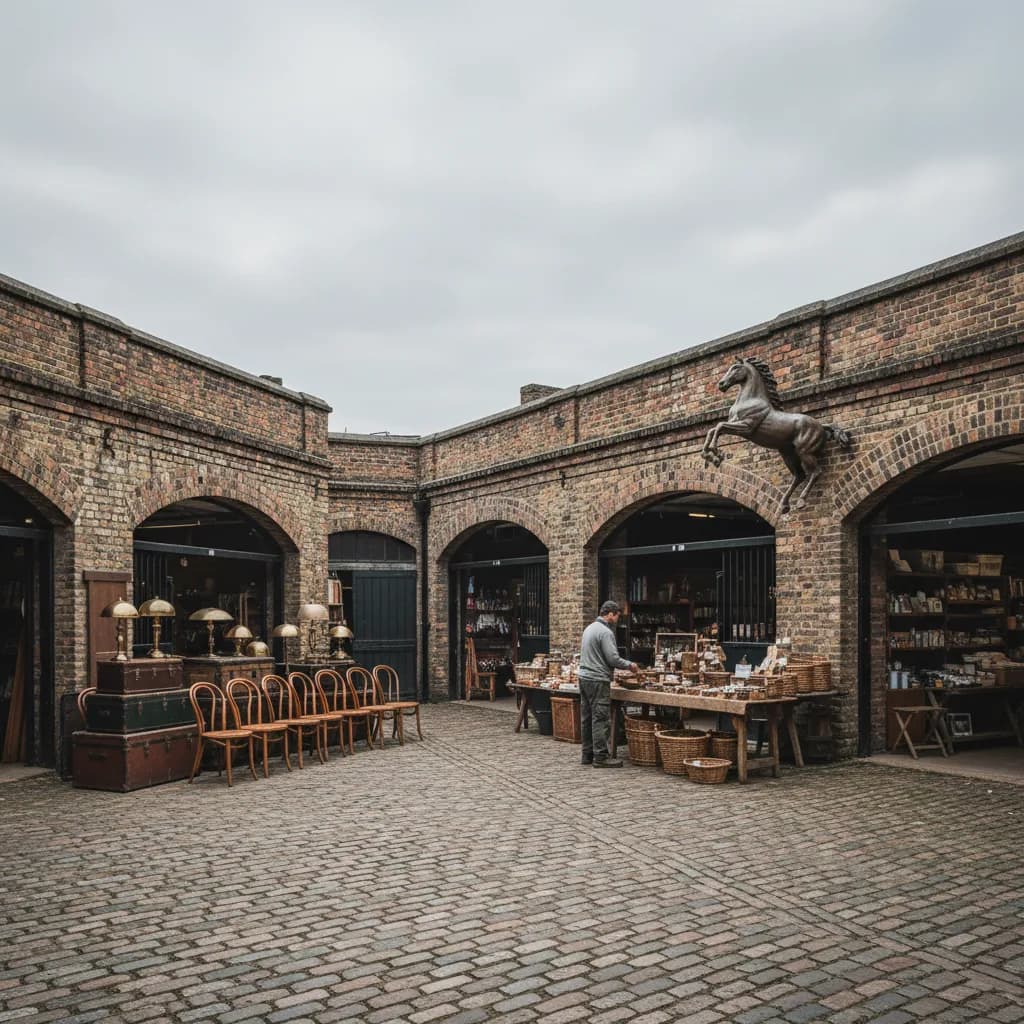
Camden Town itself is better known for alternative fashion, street food and a weekend crush than for serious dealers. What it does have is the Stables, a labyrinth of cobbled yards and railway arches where vintage clothing, retro furniture and a scattering of older pieces fill the stalls. It is a good warm-up for the eye, a place to handle mid-century lamps and old luggage before you meet sharper-priced stock further east.
The confusion to clear up early is the name. Camden Passage is not in Camden at all. It sits off Upper Street in the London Borough of Islington, a minute or two from Angel station. Plenty of visitors type Camden into a map, end up at Camden Lock, and never find the dealers. This route deliberately joins the two places, so the name works in your favour instead of against you.
Morning in the Old Horse Yards
The Stables history is worth knowing as you walk it. In the nineteenth and early twentieth centuries, horses based here pulled Pickfords vans and canal barges, and the complex included tack rooms, saddlers' workshops and a hospital for injured animals. Walk slowly through the yards and you can still read the working layout, from stable rows to the wide passages built for horses rather than shoppers. Many stalls now occupy the large arches under the railway viaduct.
Treat this first hour as reconnaissance. Note what catches you, whether it is enamel signs, Bakelite radios or a battered leather Gladstone bag, and how the traders describe age and condition. The Stables mixes genuine old pieces with reproductions and new goods styled to look aged, so ask directly whether something is original. Traders here are used to the question, and a straight answer tells you a lot about the stall.
Next door, Camden Lock Market grew from a small Sunday crafts market that opened beside the lock on 30 March 1974. Its focus today is makers, food and gifts rather than antiques, so a quick loop is enough. Pick up a coffee, watch a narrowboat work through the lock gates, and then join the towpath heading east. The real antiques stretch of the day is still ahead of you.
Following the Regent's Canal East
From Camden Lock the towpath runs east past moored narrowboats, converted warehouses and the backs of terraced streets toward King's Cross. It is flat and easy, and on a weekday morning it is mostly joggers, cyclists and people walking dogs. Keep an eye out for bikes and stay to the inside of the path. If the weather is poor, the same journey is a short ride on the Northern line from Camden Town to Angel.
Beyond King's Cross the canal reaches the western portal of the Islington Tunnel at Muriel Street. The tunnel opened in 1818, runs for 960 yards, and has no towpath, so barge crews once lay on their backs and legged boats through by walking along the walls. Walkers go over the hill instead, guided by waymarkers set into the pavement, a small piece of canal history that most Camden visitors never notice.
The marked route climbs along Maygood Street and Penton Street, passes through the stalls of Chapel Market, and comes out on Islington High Street near Angel station. From there Camden Passage is just across the road and behind Upper Street. Following the waymarkers is part of the fun. It turns a transfer between neighbourhoods into a treasure hunt, and it delivers you to the dealers with your eye already trained.
Camden Passage, the Real Antiques Stop
Camden Passage began life in 1767 as an alley running along the backs of houses on Upper Street. Its antiques market was founded in the 1960s by John Payton in partnership with the old Metropolitan Borough of Islington, and at its height it drew more than 350 traders. Rising rents have thinned that number since, but the narrow lane, the arcades and the cluster of permanent shops still make it one of central London's best antiques browses.
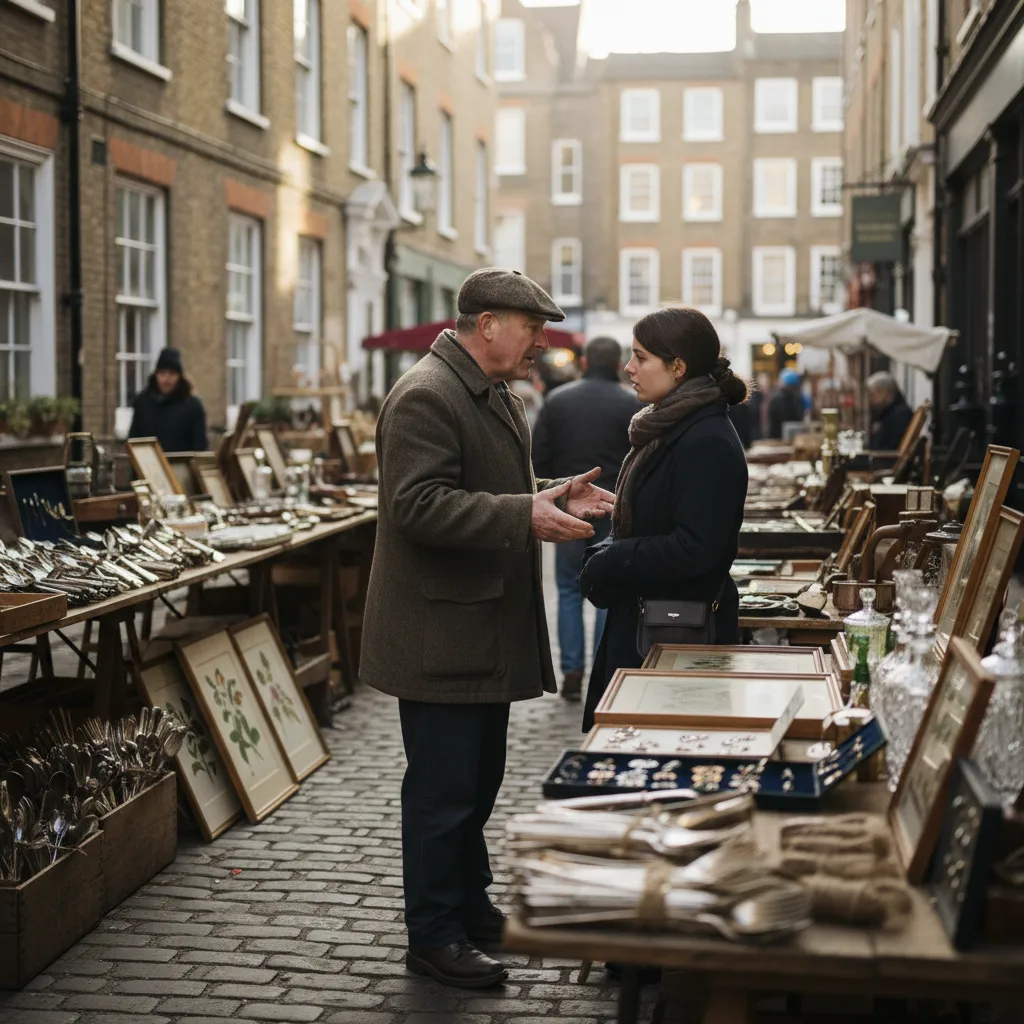
Wednesdays and Saturdays are the core market days, when outdoor stalls set up alongside the shopfronts. Some listings add Sundays, and a few traders appear on other days, but that is less dependable. Expect small, portable pieces: silver and bone-handled cutlery, vintage jewellery, cut-glass decanters, old prints and maps, and vintage clothing. It suits buyers hunting for a gift or a single good object rather than a sideboard for the van.
Who gets the most from it? Collectors of silver and costume jewellery, people furnishing a small flat one object at a time, and anyone who likes talking to traders who know their stock. Wednesday rewards conversation, because the lane is quieter and dealers have time to explain hallmarks or the age of a print. Saturday has more stalls and more buzz, but also more shoulders to squeeze past in a narrow passage.
What to Skip and When to Change the Plan
Skip the instinct to linger in Camden Lock's craft stalls if antiques are the point of the day. They are enjoyable but largely new work, and time spent there is time not spent in Camden Passage. Primrose Hill is often suggested as a Camden add-on, and it is a lovely place for a view and a coffee, yet this route does not depend on it. Save it for a separate, slower afternoon.
Avoid making this a weekend-only plan. Camden Market is at its most crowded on Saturdays and Sundays, and the towpath fills with walkers. A Wednesday gives you the calmest Stables morning and a proper market day at Camden Passage. If your only free day is a Saturday, reverse the route: start at Angel when the stalls open, then wander back west along the canal and finish in Camden for food.
On a Monday or Tuesday Camden Passage has no market, though many of its shops and cafes still trade. A better antiques plan on those days is Covent Garden for Monday antiques at Jubilee Market, or Alfies Antique Market in Marylebone from Tuesday onward. Keep the canal walk for midweek, when the market at the far end makes the miles worthwhile, and go home with something old in your bag.
Practical Notes for the Walk
Wear shoes that handle cobbles and uneven towpath edges, and carry a tote for small finds. Allow time for the waymarker section over the tunnel, because it is easy to miss a marker at a junction. Pack water and a snack too, since the canal stretch between King's Cross and Muriel Street is mostly residential and quiet.
For an evening finish, the Camden Head pub on Camden Passage hosts the Angel Comedy club, and the lane's cafes and restaurants stay busy after the stalls pack up. Karpo can help you shape the day: tell it which era or object you are hunting, and it will suggest which stops to prioritise and save a shortlist you can open on the walk. Then go and see the pieces for yourself.
Ask Karpo for more information.
Keep reading
- Brixton Vintage Thrift Shop Finder: South London Retro Gems
 Notting Hill Vintage Thrift Shop Finder: Preloved Rails
 Soho Vintage Thrift Shop Finder: West End Designer Archives