 Brixton Vintage Thrift Shop Finder: South London Retro Gems
Hidden Gems & Odd Finds
Lewisham Musical Instrument Repair: Pianos at Robert Morley
Robert Morley & Co has restored pianos and harpsichords in Lewisham since 1881. Send photos first, then visit the showroom. Expect quotes in the thousands.
Most London repair shops can sort out a sticky saxophone key or a buzzing guitar fret while you wait. A piano that has lost its tone, or a harpsichord whose quills have given up, needs something different: a proper factory with craftsmen who understand thousands of moving parts. Robert Morley & Co, tucked into a side street a short walk from Lewisham station, has been that place for south London since 1881. It restores, rebuilds and repairs upright, grand and early keyboard instruments, and its showroom is full of pianos and harpsichords waiting for new homes.
Five Generations of a Musical Family
The Morley story starts well before the Lewisham factory. The company's own history page traces the family's musical roots back to Thomas Morley, Master of the Queen's Music in Elizabethan times, and records that James Morley opened a music lending library in Greenwich in 1796. His sons made and sold instruments, especially pianos, and his grandson Robert moved to Lewisham and founded Robert Morley & Co in 1881.
The firm is still in the family. John Morley, Robert's great-grandson, runs it with his daughters. Over the years the workshop built some 16,000 pianos before switching its new production to harpsichords and clavichords, and well over 3,000 of those early keyboard instruments have now been made here. John Morley has been building clavichords, spinets, virginals and harpsichords based on 18th-century originals for more than 60 years, using traditional techniques and materials. That background matters when your instrument comes in for repair, because the people looking at it have built the same mechanisms from scratch.
What the Workshop Actually Fixes
Morley's piano repair page is unusually frank about the size of the jobs it handles. When the strings have lost their bite and the tuning pins no longer hold, the workshop can restring with new pins and, where needed, a new tuning plank. Faults in the soundboard, bridges or bars are also treated as structural work. The company puts the cost of this kind of job in the region of £2000-£5000 and upwards.
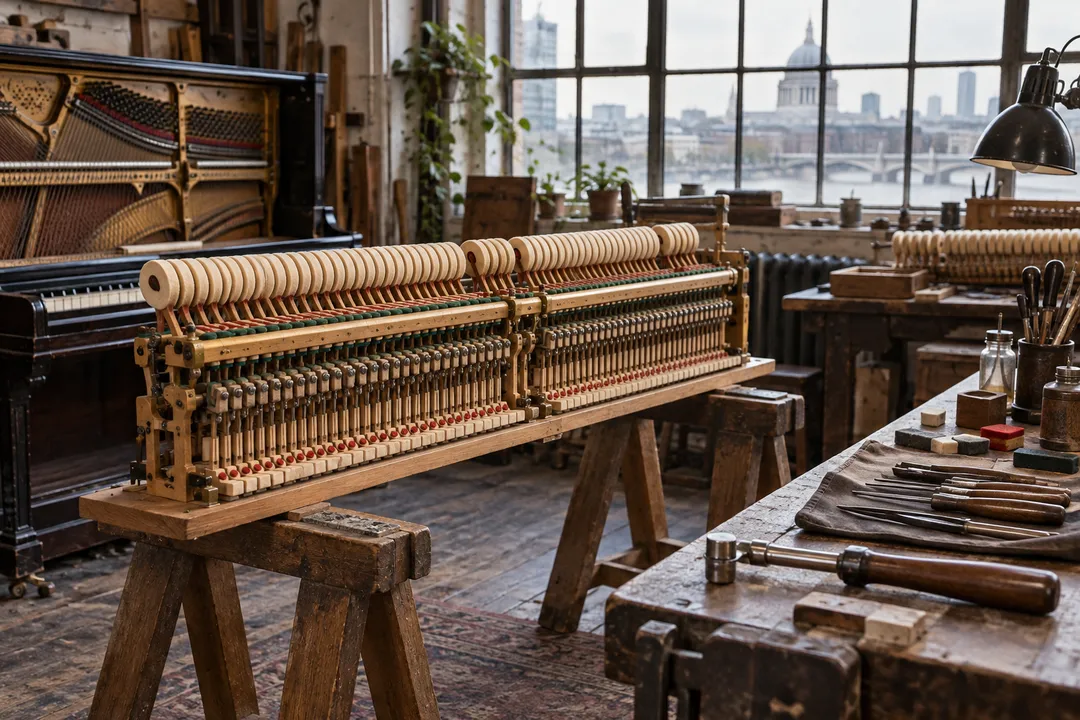
When the tone and touch feel uneven or unresponsive, the fix is usually an action overhaul. The hammers and dampers come out, key coverings may be replaced, the keyboard and pedals are overhauled, and the whole instrument is reassembled, regulated, tuned and toned. Morley quotes this at around £2250-£8800 and upwards. Casework is treated separately. A finish faded by sun or lifted by damp can be stripped and re-polished in polyester or by traditional hand polishing, while lighter touch-up work on an existing polish is quoted at up to £2000 or so.
None of this is rushed. The workshop describes the process as factory restoration, repair, rebuilding and reinstatement, and that includes insurance work and water damage. Harpsichords, clavichords and other early keyboards have their own repair page, which makes Morley one of the few places in London where a period instrument can be looked after by people who also make them.
How to Get a Sensible Quote
Pianos are not instruments you carry in under your arm, so the first step happens at home. Morley asks for the make, the serial number, the height and length, the type of finish and a list of the faults that worry you. Photographs help a great deal. Send them by email, or use the WhatsApp number the company keeps for photos and videos only. The blog has a recent post on where to find the serial number on an upright piano, which saves a lot of fumbling with a torch inside the case.
After that first conversation the workshop suggests the best next step. Often that is a visit to the factory in Lewisham, where you can see the kind of work that is possible and play restored instruments side by side with the one you are thinking about. You may find that your piano does not need the costlier work at all. Morley says as much on its own repair page, and a good tuning and regulation can bring a neglected instrument back to life for far less than a rebuild.
It is worth arriving with a clear idea of what you want the instrument to do. A family upright that needs to survive children's practice for another decade calls for different decisions from a grand you intend to keep for life, and the technicians will talk you through which repairs make sense for each.
Inside the Showroom
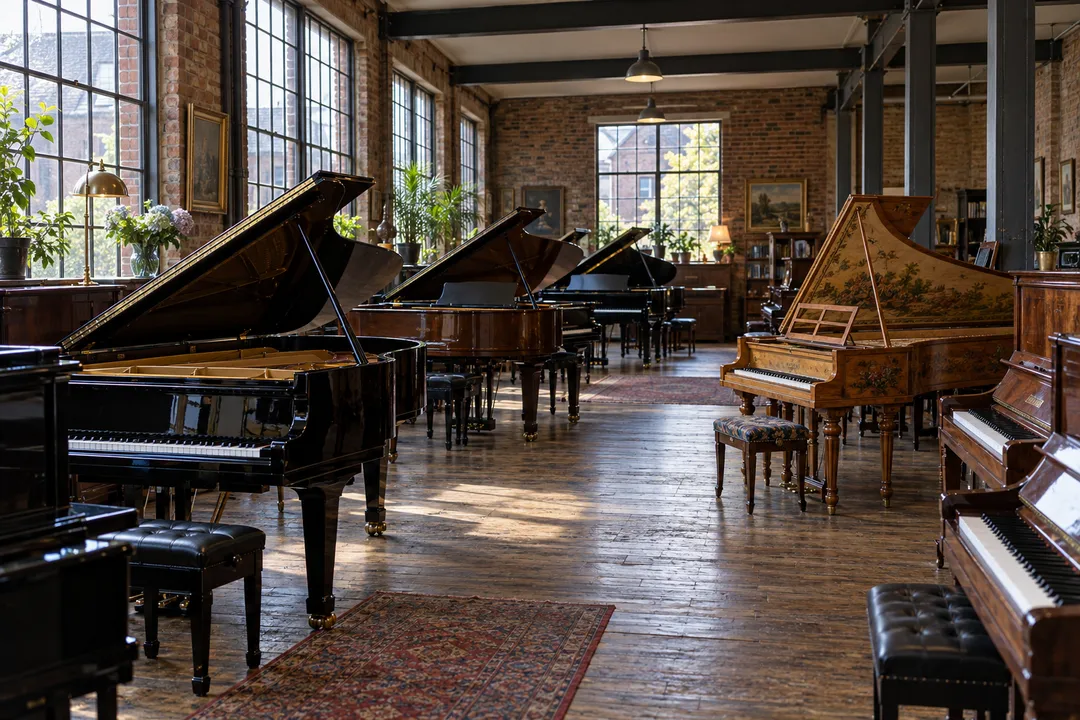
Even if your own instrument is staying at home, the showroom is a good reason to make the trip. New and secondhand uprights and grands sit alongside antique pianos, square pianos and the harpsichords, spinets and clavichords made on site. The firm also rents pianos out and sells instruments from the Bechstein group. Instruments for sale span modern models for beginners right up to restored antiques, so the room doubles as a small museum of how the piano has changed over two centuries.
Visitors are welcome to sit down and play. Hearing a restored instrument next to one in original condition is the quickest way to understand what a rebuild buys you, and staff are used to customers who drop in to compare touch and tone before deciding how much to spend on their own piano.
A Walk Around Ladywell
Morley's factory is close to both Lewisham and Ladywell stations, which makes it easy to fold a visit into an afternoon in this corner of south-east London. Ladywell Fields runs along the River Ravensbourne, a long green strip with paths, play areas and a restored river channel that is lovely on a dry day.
Climb up to Hilly Fields for one of the best free views in the area, with the City skyline laid out to the north and a stone circle on the summit. Back in Lewisham, the street market on the High Street and the cafés around the station are fine for a coffee before the journey home.
Practical Notes
Robert Morley & Co, at 34 Engate Street, Lewisham, London SE13 7HA, is open 9.30am to 5pm Monday to Saturday and is closed on Sundays and UK bank holidays. Email sales@morleypianos.co.uk with questions or photos of your instrument.
The nearest stations are Lewisham, on National Rail and the DLR, about seven minutes away on foot, and Ladywell, also close by. Free customer parking is available, and the factory is outside the London Congestion Charge zone, which helps if you are bringing a small instrument by car. Restoration prices quoted above come from Morley's piano repair page and are guides only. The final figure depends on what the technicians find once they have seen the instrument.
Ask Karpo for more information.
Keep reading
- Brixton Vintage Thrift Shop Finder: South London Retro Gems
 Notting Hill Vintage Thrift Shop Finder: Preloved Rails
 Soho Vintage Thrift Shop Finder: West End Designer Archives