 Brixton Vintage Thrift Shop Finder: South London Retro Gems
Hidden Gems & Odd Finds
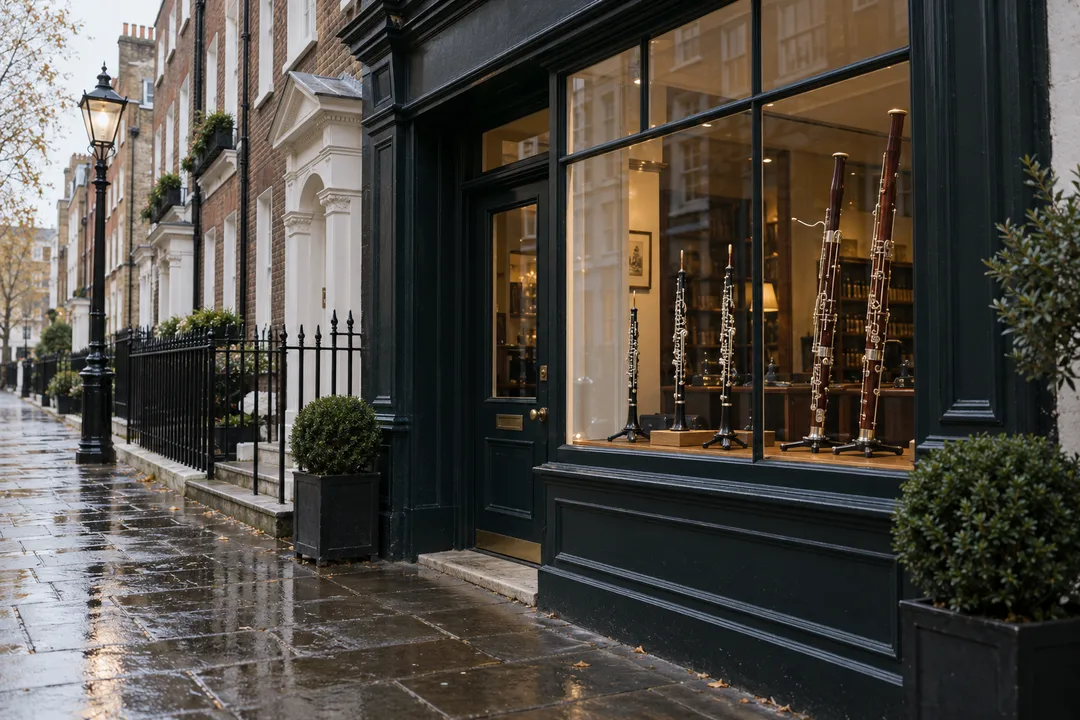
Marylebone Musical Instrument Repair for Oboes at Howarth
Howarth of London, woodwind makers since 1948, services oboes, bassoons, clarinets, saxophones and flutes at its Chiltern Street shop with eight repairers.
Ask a London oboist where their instrument goes when a key starts sticking and the answer is often a short one: Chiltern Street. Howarth of London has made oboes since 1948, and its Marylebone shop is also one of the busiest woodwind repair rooms in the city, with a team of eight repairers who, by the company's own count, have more than 150 years of experience between them. Oboes, bassoons, clarinets, saxophones and flutes make up most of the work, from a single torn pad to a complete strip-down service.
From a Blandford Street Repair Shop to Chiltern Street
The company's history begins with repair. Tom Howarth, one of three founding directors alongside George Ingram and Frederick Mooney, had set up an instrument repair shop in Blandford Street, a few minutes from today's showroom, and it was there that the three men made the tools to build oboes. Their first instrument, serial number 1001, was bought in April 1948 by Edward 'The Duke' Selwyn, principal oboist of the BBC Symphony Orchestra, and the business was formally founded that year as T. W. Howarth & Co.
Howarth oboes, oboes d'amore and cors anglais are now built in the company's own manufacturing workshops in Worthing, West Sussex, and are played by orchestral musicians around the world. That link between the makers and the London repairers is useful to anyone with a Howarth instrument: the repair team can draw on the people who designed the keywork. Owners of other brands are served too, and the shop stocks reeds, cane, staples and maintenance kits for all four of the main woodwind families, so a repair visit often doubles as a supplies run.
What the London Workshop Takes On
The repairs page sets out three kinds of work. Repairs cover the moment something goes wrong, such as a bent key, a leaking pad or a crack, and the team says small problems can often be put right quickly. Larger issues take longer, and the repairers assess the instrument and advise on time and cost before they start. If they find a second, hidden problem once the instrument is apart, and it changes the price or the timing, they contact you before going further.
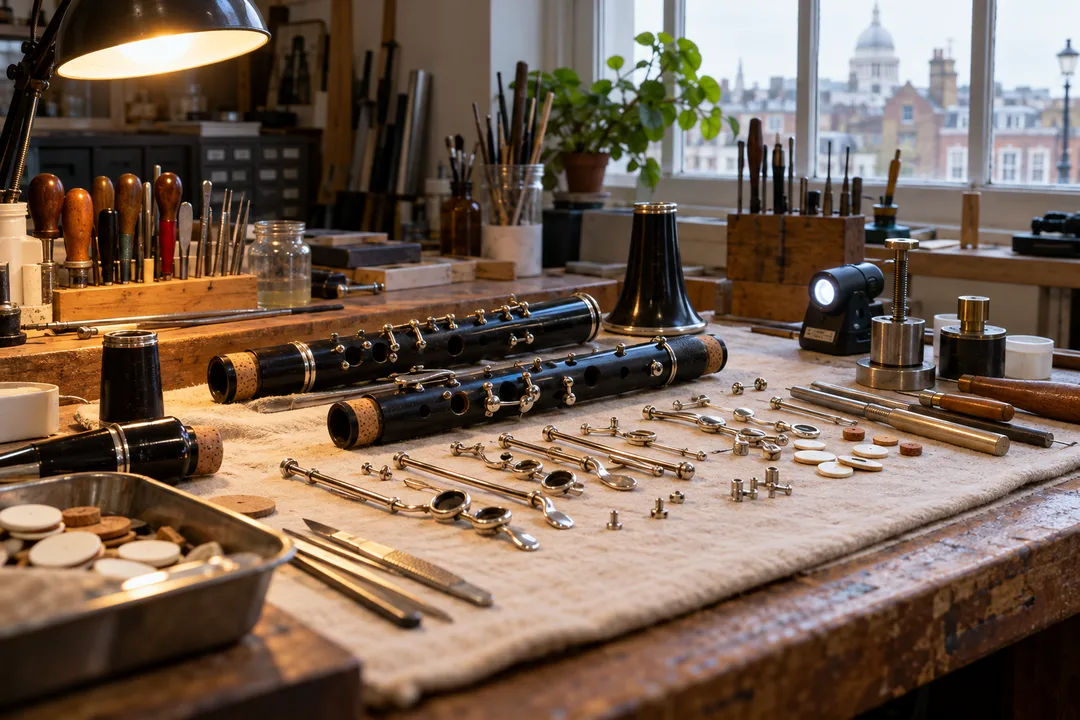
Servicing is the routine job, and Howarth recommends one every couple of years for anyone who plays regularly, or for an instrument coming back into use after years in a cupboard. In a service, the repairer strips the instrument, removes all of the keys and cleans it thoroughly, looking for cracks or damage that are hidden when it is assembled. It is then rebuilt with oil where needed, the pads are checked for a proper seal, worn corks are replaced and spring tensions are corrected. Before final adjustments, the instrument is tested by the company's professional players.
Pads wear out with use and also degrade when an instrument sits unplayed, and at that point the shop will recommend a full re-pad rather than patching pad by pad. The third service is custom keywork. Players with small hands can have extensions fitted, and keys can be added or removed, which is a real help for younger oboists and for anyone with an injury that makes a standard key layout uncomfortable.
How to Arrange a Repair
The workshop does not publish a price list, because every repair starts with an assessment of the instrument in front of the technician. Outside working hours, the website has an enquiry form where you can describe the fault and leave a number for a call back.
Players who live nearby can simply bring the instrument in, and someone will always take a look, though the shop is clear that it cannot promise to fix every problem on the spot. Booking an appointment in advance is encouraged, especially if you are travelling in from outside central London or need advice from a particular specialist. For a crack in a wooden oboe or clarinet, bring the instrument in as soon as you notice it, since cracks are easier to stabilise early.
A few notes make the conversation quicker. Say which notes are failing, whether the problem appeared suddenly or crept in, and when the instrument was last serviced. If it is a rental, mention that too, because Howarth runs its own rental and insurance schemes and those instruments may be handled differently. For a concert or audition date, give it at the start of the call, so the team can say whether the job fits.
Showroom, Events and Pre-Owned Instruments
Chiltern Street is a showroom as well as a repair counter. Players can try new Howarth oboes and instruments from other makers, browse pre-owned stock, and look through printed sheet music organised by grade. The shop also hosts visiting makers. Its events page lists a Moosmann bassoon shop visit on 20 and 21 November 2026, a chance for bassoonists to try instruments from the German maker in London, so it is worth timing a service around such a visit if you are shopping for an upgrade at the same time.
Getting to Marylebone and Walking Nearby
Howarth of London is at 31 Chiltern St, London W1U 7PN, in Marylebone in the City of Westminster. Baker Street station, on the Jubilee, Bakerloo, Metropolitan, Circle and Hammersmith & City lines, is the closest Underground stop, and the walk down to Chiltern Street takes only a few minutes. Several bus routes run along Baker Street, which helps if you are carrying a bassoon case.
Chiltern Street itself is one of the quieter streets in the West End, lined with small independent shops and cafes. Marylebone High Street is a block to the east, with Daunt Books and its long Edwardian gallery a favourite stop for anyone killing time while a pad is replaced. The Wallace Collection, a free museum of paintings, armour and French furniture in a townhouse on Manchester Square, is a short walk south, and Regent's Park is just to the north for a longer stroll.
Practical Notes
Howarth of London, 31 Chiltern St, London W1U 7PN. Hours: Monday to Friday 9:30am to 5:30pm, Saturday 10am to 4:30pm, closed Sunday. Repair costs are quoted after the team has seen the instrument, and the company gets in touch if a repair turns out to need more time or money than first estimated.
The London shop focuses on oboes, bassoons, clarinets, saxophones and flutes, with occasional work on other woodwinds. Brass, strings and guitars need another workshop. The manufacturing site in Worthing takes visits strictly by appointment, so make the London shop your first stop for repairs.
Ask Karpo for more information.
Keep reading
- Brixton Vintage Thrift Shop Finder: South London Retro Gems
 Notting Hill Vintage Thrift Shop Finder: Preloved Rails
 Soho Vintage Thrift Shop Finder: West End Designer Archives