 Shoreditch Comic Shop Crawl Planner: Murals to Manga
Hidden Gems & Odd Finds

Soho Model Shop Browsing Guide: Midday Kit Counter Route
Navigate Soho sci-fi, mecha, and tabletop miniature counters on a midday break. Inspect sprue gates, match acrylic washes, and stroll Golden Square.
Between morning colour-grading sessions on Wardour Street and afternoon prop builds off Dean Street, scenic painters Maya and Tariq duck down a steep Soho stairwell where the street noise of delivery vans gives way to the quiet click of dropper-bottle agitator balls. Following a practical model shop browsing guide turns a forty-minute West End lunch break into a sharp, productive supply run through basements and upper-floor hobby rooms packed from floor to ceiling with Japanese snap-fit mecha cartons, resin fantasy busts, and revolving racks of water-based acrylics.
Why Soho Draws Prop Makers, Mecha Builders, and Figure Painters
Soho's post-production houses, theatrical costume workrooms, and animation studios create a steady local crowd that treats scale kit building as both craft research and evening relaxation. While traditional suburban hobby stores lean heavily on railway scenery, Soho's compact rooms cater to builders who work on desk mats in small flats: articulated sci-fi exoskeletons, high-grade vinyl creature kits, and skirmish-scale tabletop miniatures dominate the shelving.
At midday you will stand shoulder to shoulder with concept artists comparing box-side mechanical line art, West End stage technicians buying cyanoacrylate accelerator and styrene tubing, and tabletop painters hunting for a single shade of non-metallic gold. Aisles between stacked kit towers are tight, so regulars tuck messenger bags against their hips, lift boxes straight out by both sides rather than pulling from the top lip, and return inspected cartons to the exact grade tier.
Reading Sprue Runner Grades and Checking Box Side Panels
Maya heads first to the imported mecha wall, where boxes are shelved by scale ratio and internal frame complexity rather than franchise name. Instead of judging a kit by the dramatic painted illustration on the lid, flip the carton onto its long side edge to study the unpainted factory test shot. That side panel reveals which armour plates are moulded in separate colours, where seam lines run across cylindrical calves or shoulder thrusters, and whether water-slide decals or foil stickers are included.
If the shop keeps an open sample box at the counter, check the sprue runner gates where individual parts meet the plastic frame. Undergated runners hide nib marks on plated or gloss-injected pieces, whereas thick side gates on dark navy or crimson plastic require careful progressive sanding. For a relaxing weekend build without an airbrush booth, pick a recent mid-tier articulated kit with an inner skeleton frame and skip older large-scale shells that demand heavy putty seam filling.
Matching Acrylic Dropper Bottles and Testing Single-Blade Nippers
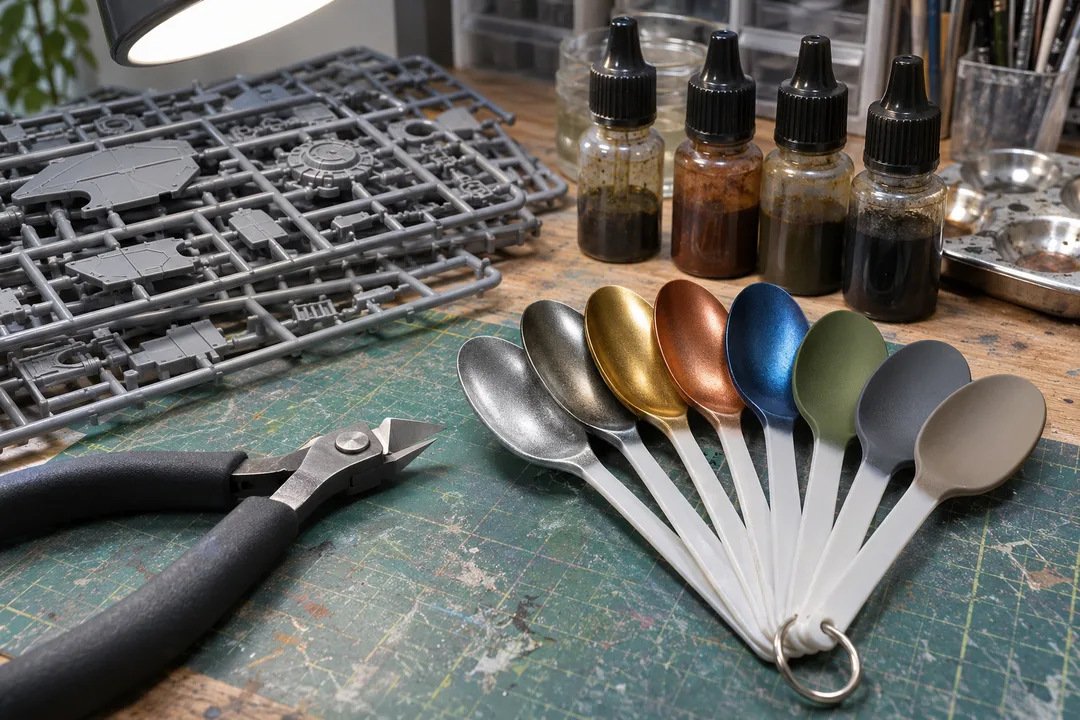
Tariq moves to the revolving paint carousels, where matte acrylics, enamel panel-line washes, and lacquer metallics stand in numbered slots. Never trust the printed paper cap sticker on a miniature paint bottle; lift the bottle and inspect the settled pigment band at the bottom of the clear plastic or glass vial. Better yet, check whether the counter keeps a ring of primed plastic spoons brushed with dried swatches so you can see how a glaze behaves over black, grey, and ivory undercoats.
At the tool vitrine, ask to feel the spring tension on single-blade precision nippers before choosing a pair. A thin, single-bevel cutting jaw slices cleanly through delicate polystyrene gates without stressing the plastic white, but it should never be used on thick clear sprue rods or brass pinning wire. Pair a fine finishing nipper with a nano-glass polishing file and a pack of pre-cut wet-palette hydration sheets so you can thin glazes cleanly at your kitchen table.
When selecting natural sable detail brushes for edge highlighting and cockpit pilot visors, ask the staff if you can dip the tip into a small cup of clean water at the counter. A good miniature brush snaps immediately into a needle point without stray belly hairs splitting sideways, and keeping the clear plastic protective tube inside your brush case prevents bent bristles on the ride home.
Inspecting Resin Figure Castings, Basing Cork, and Decal Softeners
Beyond the injection-moulded mecha stacks, glass cabinets near the till display unpainted grey resin busts and multi-part fantasy miniatures produced by small European and Asian sculptors. When a counter assistant hands you a blister pack or foam-lined box to inspect, look closely at the tip of spears, cloak hems, and facial profiles to make sure mould vents do not cut across fine surface texture or tiny buckles.
Before leaving the accessory wall, check the bottles of decal setting solution and matte polyurethane varnish beside the basing tufts. A mild decal softener helps unit markings conform over curved shoulder armour without silvering, while pre-tinted slate shards and cork bark pieces let you build dramatic vertical plinths in a single evening without mixing plaster indoors.
If you enjoy articulating custom poses or swapping weapon loadouts across kits, pick up a pin-vise hand drill with tungsten micro-bits and a sleeve of rare-earth neodymium disc magnets from the counter tray. Drilling shallow recessed sockets inside shoulder joints before priming lets you swap heavy shield arms or flight packs for tabletop display without wearing down polycap friction joints.
What to Leave on the Shelf and How to Carry Tall Kit Cartons
Skip aerosol propellant cans and strong cellulose lacquer thinners if you work in an unventilated flat or plan to head straight into a Soho screening room or pub after shopping; odourless water-based primers and brush-on varnishes travel safely in a daypack and cure cleanly indoors. Also avoid picking up bargain resin garage kits with warped sword blades unless you are ready to straighten cast polyurethane in a bowl of hot water.
When packing up, stack flat kit boxes face-to-face inside a wide reusable carrier so heavy corner edges do not dent the lid art of a smaller carton. Keep liquid cement bottles upright in an inner zip pocket away from clear canopy sprues. Once you climb back to pavement level, open the Karpo APP to spot nearby specialist bookshops, art-supply counters, and sheltered courtyards across Soho and Fitzrovia for the rest of your afternoon loop.
Walking from Soho Square to Golden Square and Berwick Street
With their paint vials and sprue nippers stowed, Maya and Tariq walk north to Soho Square, where benches around the half-timbered central gardener's hut offer clear daylight for admiring box-art mechanical cutaways and sorting decal sheets. The square's plane trees and gravel paths feel worlds away from the lunchtime rush along Oxford Street just a block north.
If the northern benches are full, cut south down Frith and Brewer Streets toward Golden Square, a calmer brick-lined pocket favoured by sound editors and illustrators eating sandwiches on the low stone wall. On the way back to the studio, thread through Berwick Street Market to grab a flat white and browse bolt-end textile stalls whose fine metallic threads and micro-suede offcuts double as clever scratch-building materials for scale cockpit straps and miniature cloaks.
Ask Karpo for more information.
Keep reading
- Shoreditch Comic Shop Crawl Planner: Murals to Manga
 Bermondsey Comic Shop Crawl Planner: Zines Under the Arches
 Clapham Comic Shop Crawl Planner: Charity Shelves and Common