 Brixton Vintage Thrift Shop Finder: South London Retro Gems
Hidden Gems & Odd Finds
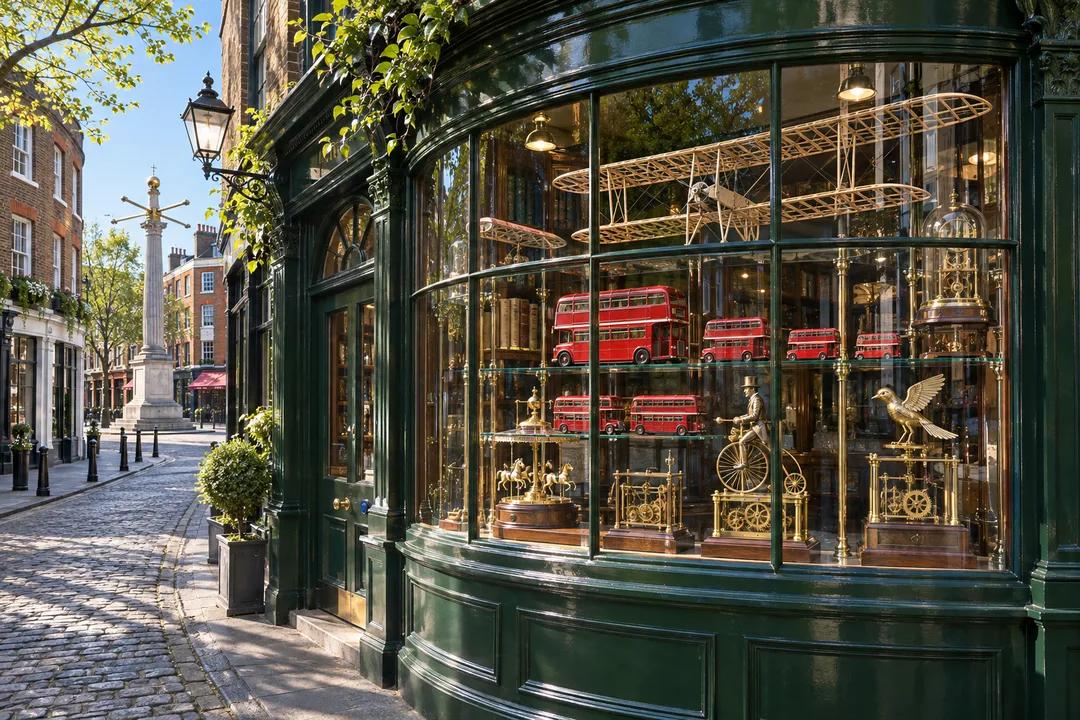
Covent Garden Model Shop Browsing Guide: Calm Morning Walk
Explore Covent Garden die-cast cabinets, balsa aircraft kits, and brass automata before theatre crowds build. Inspect vitrines and stroll Neal's Yard.
Arriving in Covent Garden before the street performers set up their amplifiers under the Piazza porticoes gives visiting Bristol father Owen and twelve-year-old Clara the quietest hour of the weekend to explore the narrow brick lanes radiating from Seven Dials. Keeping a clear model shop browsing guide in mind helps them distinguish genuine collector parlours and timber kit counters from theatrical souvenir stalls. Behind bow-fronted glass panes along the cobbled alleys between St Martin's Lane and Neal's Yard, specialist cabinets hold rows of enamelled die-cast touring cars, laser-etched balsa airframes suspended from nylon lines, and mechanical wooden pendulum kits that turn a family city trip into a hands-on engineering morning.
Why Early Saturday Works Around Seven Dials and the Piazza
Covent Garden's theatrical carpentry heritage and Victorian arcade layout make it a natural home for display-grade scale models, mechanical puzzles, and aviation kits. Once matinee audiences flood Long Acre and James Street, however, peering into waist-high glass cabinets becomes a game of dodging umbrellas and shopping bags. Stepping into the lanes during the calm morning window lets you speak directly with counter curators who know every casting variation on the shelf.
You will share the floorboards with aviation enthusiasts examining wingspan drawings, retired London Transport drivers spotting route blind details on miniature double-deckers, and parents introducing children to their first balsa and tissue build. Keep coats buttoned so trailing scarves do not catch on low ceiling-hung gliders, and ask for a felt-lined viewing tray before handling unboxed metal models.
Distinguishing Sealed Die-Cast Editions from Collector Cabinet Trays
Owen and Clara start at the illuminated wall vitrines where scale racing cars, classic delivery vans, and cast-iron traction engines sit on tiered glass shelves. When browsing die-cast cabinets, look at the baseplate and wheel arch clearance through the glass before asking to handle a piece. High-detail collector castings feature photo-etched windscreen wipers, separate clear headlamp lenses, and tampo-printed dashboard dials rather than thick paper stickers.
When the assistant places two boxed models on the velvet counter pad, inspect the outer cardboard sleeve edges and inner blister cradle together. If you are picking a piece to display on a study shelf, ask the staff to check that the steering tie-rod tracks straight and that opening gull-wing or bonnet hinges hold their position without drooping. For younger builders who want something interactive, skip fragile resin-bodied display cars and choose heavy zinc-alloy castings with sprung suspension.
Take a moment to check the underside chassis stamping and numbered collector certificate card tucked beneath the moulded plinth. Many West End vitrines group vehicles by coachbuilder livery or municipal transport fleet, making it easy to pair a classic cream-and-crimson route bus with a matching period taxi without hunting through unsorted drawers.
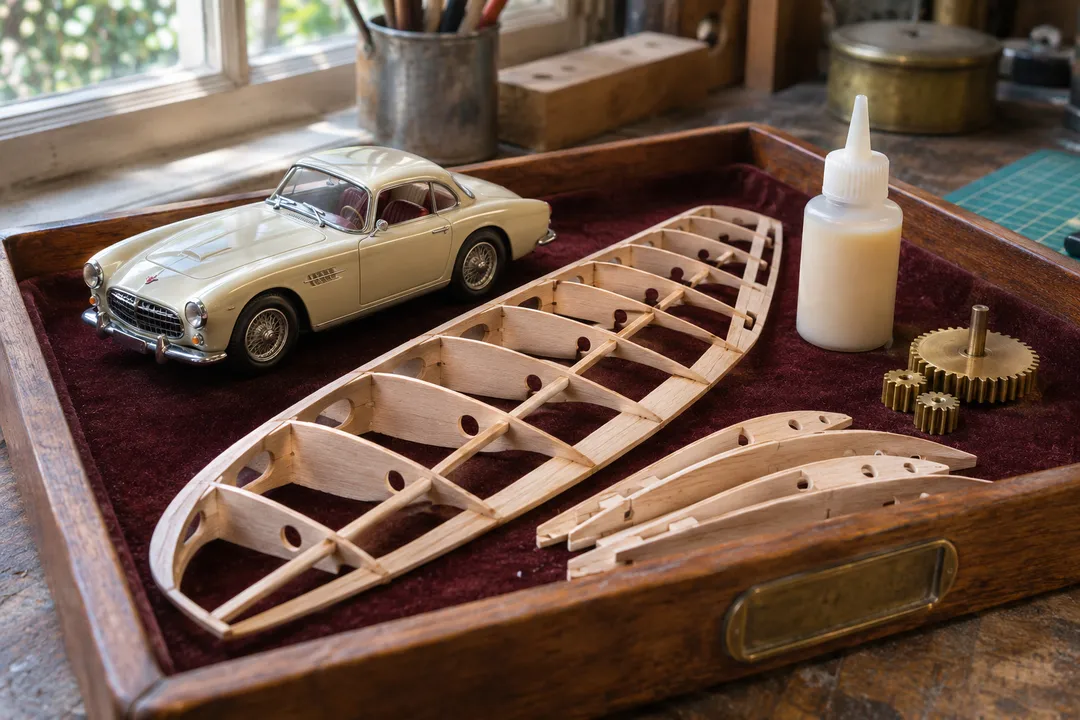
Inspecting Laser-Cut Balsa Airframes and Mechanical Wood Kits
Across the room, open timber racks hold flat boxes of rubber-powered balsa biplanes, plank-on-bulkhead sailing launches, and interlocking plywood clockwork automata. Clara lifts a balsa glider box to feel its weight and checks the end label for laser-cut versus die-crushed wood sheets. Clean laser-cut lime and balsa ribs pop free from the carrier sheet with a single touch of a craft blade, whereas older die-stamped wood often splits along the grain during sanding.
For mechanical gear kits that assemble without solder, inspect the demonstration model ticking on the counter to see how waxed wooden escapement wheels mesh under tension. Ask the counter clerk for a small cake of beeswax or dry PTFE lubricant tube along with a bottle of yellow aliphatic resin wood glue, which sands far more cleanly than rubbery household white adhesives when fairing fuselage stringers.
If you are considering a planked wooden harbour tug or Thames barge, ask to see the brass fittings packet inside the box. Turned brass belaying pins, cast anchors, and pre-sewn cotton sail cloth save beginners from having to turn tiny metal tapers on a hand drill at home.
Choosing Safe Adhesives, Tissue Dope Alternatives, and Decal Folders
Travelling families often forget that traditional shrinking dope, butane micro-torches, and pressurized primer cans are awkward to carry on intercity trains or into theatre cloakrooms. Instead, pick up low-odour water-activated shrinking tissue paste, water-based sanding sealer, and a compact self-healing cutting mat that slips flat against the back of a rucksack.
If your chosen aircraft or vehicle kit includes a large sheet of water-slide roundels and squadron serials, ask the counter staff for a stiff card backing board and a sealable polythene sleeve. Keeping transfer sheets flat and dry away from the cardboard kit frame prevents humidity crinkles when you duck out into a sudden London drizzle.
While browsing the finishing drawer, pick up a pair of curved spring-steel tweezers, a balsa stripper gauge that holds standard craft blades at fixed width intervals, and a block of fine garnet sandpaper wrapped around a cork rubbing brick. Having dedicated shaping blocks keeps wing trailing edges symmetrical without gouging soft timber ribs.
What to Pass Up and How to Protect Fragile Boxes in West End Crowds
Pass up impulse novelty tins near the doorway that lack replacement spare-part sheets or clear exploded assembly diagrams; a reputable Covent Garden hobby counter will happily show you the printed assembly manual before you commit to a multi-week build. Also skip ultra-thin vacuum-formed canopy conversions until you have practised trimming curved lexan with curved manicure scissors at home.
Ask for corner card protectors when bagging long balsa fuselage boxes, and carry the bag on your inside shoulder when crossing the Piazza cobbles. Before heading to lunch, use the Karpo APP to locate nearby quieter courtyards, specialist stationery rooms, and family-friendly cafe tables around Covent Garden and Holborn so you can sit down without queuing on the main concourse.
If a light shower starts while you are crossing Long Acre, step under the glass roof of the Central Market arcade to double-bag wooden kit cartons before walking toward your train. Keeping moisture off unsealed balsa sheets ensures the ribs remain dead flat when you pin them over your building board at home.
Looping Through Neal's Yard, St Paul's Churchyard, and Goodwin's Court
From Seven Dials, Owen and Clara slip through the narrow brick archway into Neal's Yard, where colourful window boxes and courtyard benches offer a sheltered spot to unroll blueprinted fuselage plans over warm pastries. In the morning calm, you can lay out parts lists and check wood strip tallies before the lunchtime crowd arrives.
Continue south across Floral Street into the tranquil green garden behind St Paul's, the Actors' Church, where wooden benches sit beneath tall plane trees shielded from the street buskers by high brick walls. Finish your walk by threading west through Goodwin's Court, a narrow gas-lit seventeenth-century alley lined with bowed Georgian windows that looks like a living theatrical scale diorama in the heart of the West End.
Ask Karpo for more information.
Keep reading
- Brixton Vintage Thrift Shop Finder: South London Retro Gems
 Notting Hill Vintage Thrift Shop Finder: Preloved Rails
 Soho Vintage Thrift Shop Finder: West End Designer Archives