 Shoreditch Comic Shop Crawl Planner: Murals to Manga
Hidden Gems & Odd Finds

Richmond Model Railway Hobby Shop Picker: Garden Rail Guide
Review scratchbuilding timber and heritage steam liveries near Richmond greenways. Ask Karpo APP for nearby recommendations to choose stops and explore at ease.
Strolling along the sweeping riverfront promenades, Georgian terraces, and historic greenways of Richmond immerses model railway crafters in a landscape steeped in scenic elegance and historic railway architecture. The graceful stone and brick railway bridges spanning the River Thames, along with the former London and South Western Railway branch corridors, have long provided idyllic prototypes for modellers who appreciate country branch lines, rural terminus stations, and tranquil riverfront goods wharves. Craftspeople, landscape artists, and heritage steam modellers travel to Richmond to inspect laser-cut architectural kits, delicate scenery materials, and regional steam locomotive liveries. Exploring this historic riverside enclave with an intentional creative focus enables makers to select premium materials that reflect pastoral British transport charm.
The calm, scenic atmosphere of Richmond provides the perfect setting for contemplating fine landscape detailing and architectural modeling projects. Designing a country branch-line layout demands a delicate, artistic sensibility to capture the quiet repose of rural stations, gravel country lanes, and dense riverside tree canopies. Examining natural sea-foam tree armatures, fine scenic scatter fibers, and etched brass station ironwork in local specialty displays offers immediate clarity regarding scale proportion and natural coloration. Pausing on the peaceful terrace overlooking Richmond Green allows hobbyists to study heritage timber structures and stone bridge masonry under natural daylight before beginning assembly on home workbenches.
The meandering banks of the Thames offer exceptional real-world studies in how pastoral waterways intersect with railway infrastructure. Modellers examine stone embankment footings, wooden mooring posts, and tidal mudflats, noting how river currents create gentle silt lines along retaining walls. Translating these organic riverside features into a miniature diorama requires combining sculpted plaster banks with textured matte ground colors. Observing these peaceful scenes under the changing afternoon light helps builders establish realistic color schemes that bring tranquil pastoral layouts to life.
Laser Cut Timber Architecture and Scratchbuilding Materials
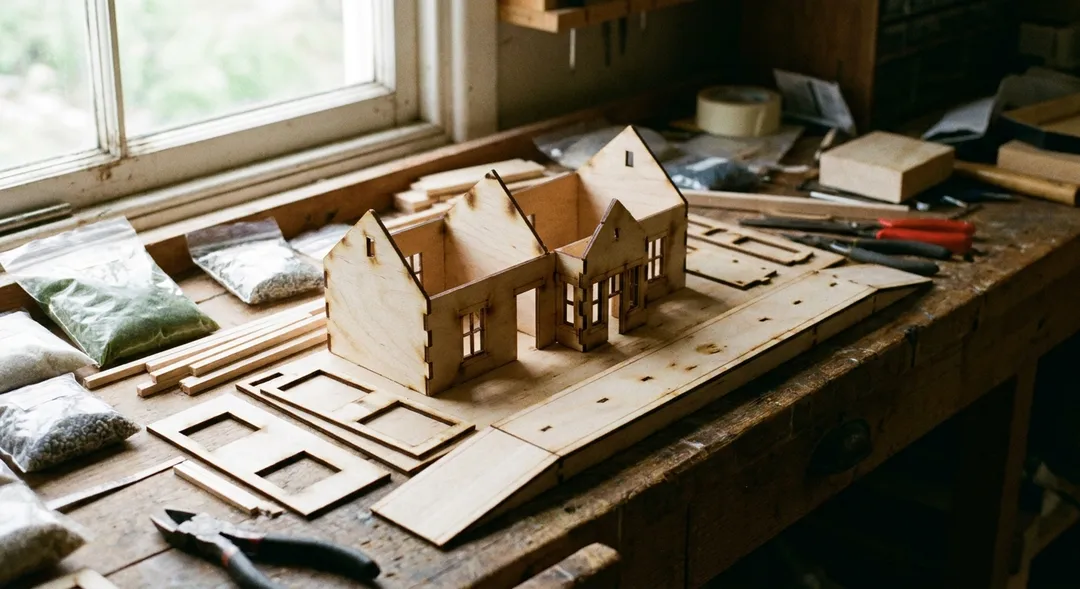
Miniature station buildings, goods sheds, and trackside signal boxes serve as the visual anchors of any believable railway diorama, framing the arriving and departing trains. In Richmond, hobbyists actively evaluate the precision and tactile appeal of laser-cut micro-plywood and medium-density fiberboard architectural kits against traditional plastic embossed kits. Laser-cut wood kits excel in capturing the authentic grain textures of weathered timber platform canopies, clapboard waiting shelters, and country goods depots, absorbing matte acrylic washes and wood stains with beautiful realism.
For crafters who prefer scratchbuilding unique regional prototypes, sourcing raw modeling materials is paramount. Modellers examine various thicknesses of basswood strips, balsa sheets, micro-strip styrene profiles, and etched brass architectural fretwork like Victorian canopy valances and decorative iron ridge tiles. Stocking up on razor saws, miter cutting boxes, archival wood glues, and miniature clamping jigs ensures that timber frameworks can be assembled squarely, creating sturdy architectural structures that become cherished centerpieces of model landscapes.
Finishing laser-cut timber models with subtle weathering washes accentuates the delicate laser engraving on window glazing bars and roof rafters. Using micro-sanding sticks to soften sharp laser-cut edges creates the authentic softened contours of weathered English woodwork. Integrating authentic cast-metal guttering, downpipes, and enamel station signage completes the architectural composition, firmly anchoring the structure in its pastoral Thameside setting.
Southern Railway Liveries and Heritage Steam Detailing
The distinct liveries of the Southern Railway, from olive green and malachite green to postwar British Railways lined black and sunburst green, require exacting color matching and fine lining application. Modellers visiting Richmond hobby displays examine pre-mixed enamel paints, acrylic airbrush bottles, and ultra-fine waterslide lining decal sheets that capture the delicate double-lining on locomotive splashers and cab sides. Choosing the correct paint formulations and protective matte varnishes ensures that historical liveries maintain authentic satin finishes without obscuring delicate boiler rivet detail.
Upgrading factory locomotive models with aftermarket brass detailing parts allows modellers to replicate specific individual locomotives down to minor shed variations. Enthusiasts evaluate turned brass steam safety valves, cast-metal smokebox door handles, vacuum brake pipes, and etched nickel-silver locomotive nameplates with authentic red or black backgrounds. Sourcing miniature crew figures hand-painted in realistic denim boiler suits and greasy caps adds an indispensable touch of human scale to the locomotive cab footplate, making stationary models look ready for immediate departure.
Pastoral Landscape Modeling and Water Feature Realism
Creating a convincing countryside setting for a model railway requires mastering the interplay of rolling ground contours, realistic vegetation, and natural waterways. Modellers in Richmond examine various grades of lightweight plaster cloth, sculptamold paper-plaster blends, and carved insulation foam used to build lightweight yet rugged hillside terrain. Applying static grass using dedicated electrostatic applicators allows fibers ranging from two to twelve millimeters to stand upright, simulating the wild, tufted texture of unkempt railway embankments and sheep pastures.
Simulating the gentle flow of river water, tranquil canal reaches, and marshy trackside ditches requires careful layering of colored acrylic pigments and slow-curing epoxy casting resins. Observing the natural current ripples and shaded reflections along the Thames riverbank in Richmond inspires modellers to texture water surfaces using clear acrylic gloss gel mediums applied with fine artist brushes. Sitting on the historic benches along Terrace Gardens while reviewing scenic diorama layouts provides fresh creative inspiration for blending rail infrastructure with surrounding nature.
Discovering Richmond Hobby Stops With Karpo APP
Organizing an inspiring and rewarding hobby exploration through Richmond is made effortless by using Karpo APP to browse nearby suggestions. The mobile application allows users to describe their modeling interests, view recommended locations in the area, and choose specialty hobby spots alongside riverside trails and leafy parkland viewpoints. Readers can freely pick their preferred destinations and decide their own visiting order, keeping an unhurried, contemplative pace that gives ample time to examine timber craft kits and landscape materials in detail.
Before heading out on your Thameside excursion, prepare a notebook detailing your layout station platform lengths, clearances under bridge arches, and desired tree height scales to direct your shopping decisions. Checking Karpo APP throughout your day helps you see what is nearby, so you can tailor your itinerary and explore at your own speed across one of London most scenic historic boroughs. Immerse yourself in the timeless romance of British branch-line railway modeling, discover exquisite materials for your projects, and return to your modeling space ready to craft breathtaking countryside scenes.
Ask Karpo for more information.
Keep reading
- Shoreditch Comic Shop Crawl Planner: Murals to Manga
 Bermondsey Comic Shop Crawl Planner: Zines Under the Arches
 Clapham Comic Shop Crawl Planner: Charity Shelves and Common