 Richmond Park Sunset Viewing Planner: Deer Meadow Horizons
Weekend Plans
Meditation Studio Near Me in Kennington: Jamyang Buddhist Centre Guide
Inside a restored 1869 Victorian courthouse on Renfrew Road in Kennington, Jamyang Buddhist Centre provides serene Tibetan mindfulness, drop-in meditation, and a tranquil courtyard garden. Here is everything to know about visits, donation prices, and quiet hours.
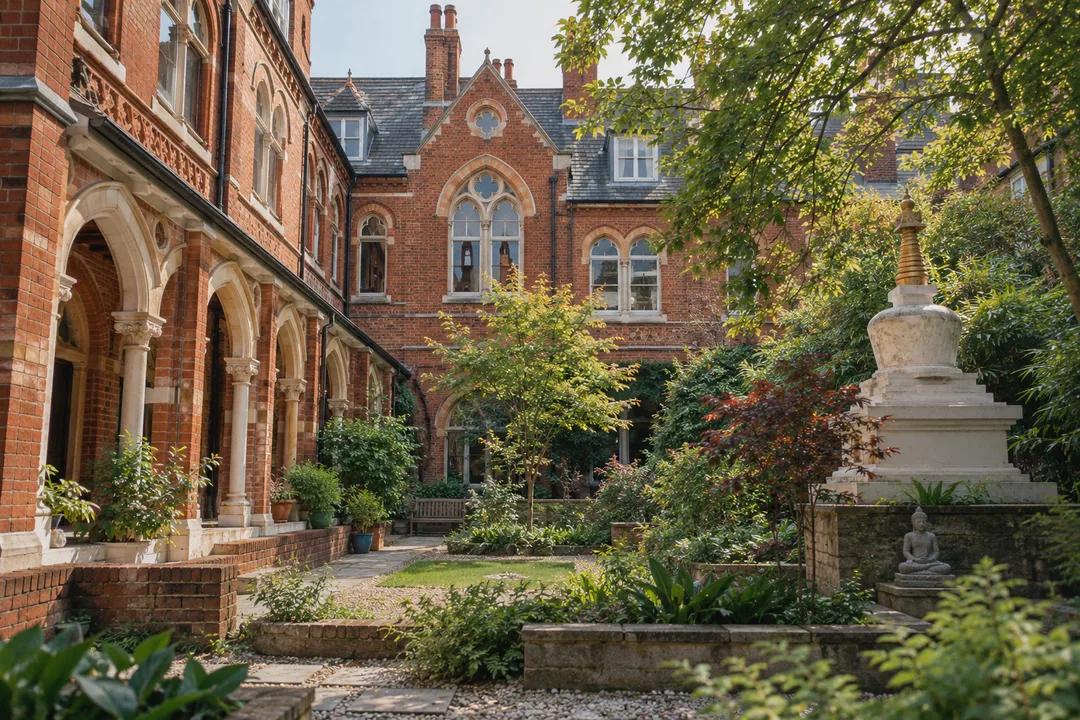
Inside the red-brick courtyard of 43 Renfrew Road in Kennington, Jamyang Buddhist Centre provides an extraordinary sanctuary of calm within a lovingly restored 1869 Victorian courthouse. First established in 1978 and relocated to this historic Lambeth site in 1995, this community oasis functions as an authentic meditation studio near me for south London commuters, neighborhood residents, and curious seekers. Under high timber rafters where magistrates once presided, the main gompa shrine room now hums with Tibetan singing bowls, incense, and silent shamatha practice, offering a timeless refuge from the bustling thoroughfares of Kennington Lane.
A Restored Victorian Courthouse Turned Mindful Sanctuary
Stepping through the wrought-iron gates at 43 Renfrew Road reveals one of south London's most unexpected architectural transformations. Built in 1869 as the Lambeth Magistrates Court, this Grade II listed red-brick structure once echoed with legal proceedings, holding cells, and Victorian civic formality. After falling derelict during the late twentieth century, the historic property was acquired by Buddhist practitioners in 1995 and steadily transformed into a peaceful community sanctuary. Today it stands as an authentic meditation studio near me for Londoners seeking genuine mental refuge away from the rumbling double-decker bus routes of Kennington Lane.
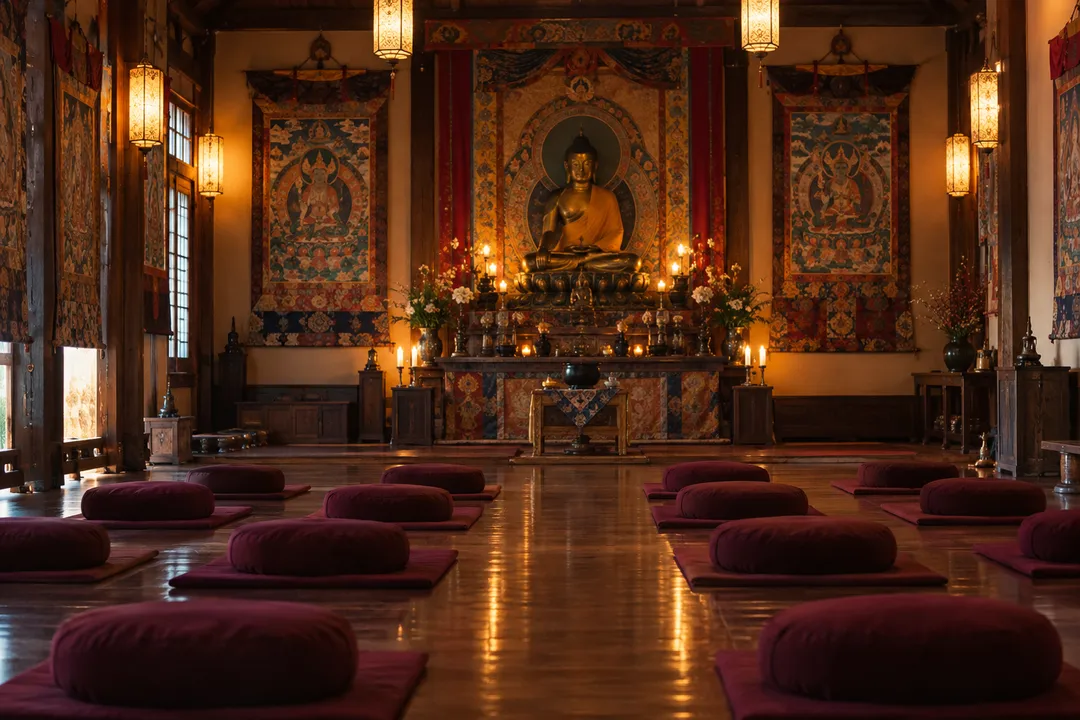
The heart of the complex is the grand former courtroom, now consecrated as the main gompa meditation hall. Where magistrates once presided over dock prisoners, a gilded statue of Shakyamuni Buddha rests against tall timber paneling, framed by vibrant brocade thangkas and soft golden lamplight. The acoustic dampening provided by the nineteenth-century masonry completely filters out urban transit hum, wrapping visitors in an immediate envelope of stillness. Whether you are navigating professional burnout or exploring traditional shamatha mindfulness, the space invites you to exhale and set down city burdens.
Shrine Room Etiquette, Props, and Arrival Protocols
Entering the gompa requires mindful adherence to traditional shrine room customs that preserve serenity for everyone present. Upon arriving from Renfrew Road, guests walk along the paved corridor to the reception vestibule and remove outdoor shoes, arranging footwear neatly on the slatted timber storage racks. Coats, backpacks, and digital electronics must remain outside the meditation hall, with all mobile devices turned off completely to prevent unexpected vibration alerts during silent sitting intervals.
Inside the high-ceilinged hall, visitors may choose their preferred sitting posture from a variety of traditional cushions and supportive props. Low wooden shelves hold firm round zafus, flat cotton zabuton floor mats, curved meditation stools, and folded wool blankets for temperature regulation. For attendees with knee stiffness or back injuries, padded straight-backed wooden chairs are spaced along the perimeter walls, ensuring physical comfort never impedes internal mindfulness. Facilitators gently instruct newcomers to bow slightly toward the altar upon entering as a mark of respect for the shared practice space.
Drop-In Mindfulness Formats and Dana Donation Economics
The core public offering at Jamyang is its regular drop-in meditation schedule, which welcomes complete novices alongside seasoned meditators without demanding formal membership. Morning and evening drop-in sessions emphasize calm-abiding breathing techniques, guided body scans, and loving-kindness contemplation led by ordained monastics and accredited lay teachers. Instruction begins with fundamental posture alignment, helping participants establish a stable spine before settling into gentle breath awareness and unhurried periods of seated silence.
Financial access at the centre operates on the ancient Buddhist principle of dana, or voluntary generosity, ensuring economic constraints never prevent anyone from finding stillness. Standard sixty-minute drop-in classes suggest a modest donation of £7 per person, which covers hall heating and building maintenance, while an optional benefactor donation of £12 helps subsidize attendees experiencing financial hardship. For those unable to contribute financially, attendance remains entirely free upon arrival, with no invasive means-testing or awkward questioning at the welcome desk.
Courtyard Garden Quiet and Plant-Based Cafe Refreshment
Meditation practice extends naturally into the centre's sheltered inner courtyard, recognized across the borough as a hidden horticultural gem. The courtyard garden is planted with aromatic rosemary bushes, climbing jasmine, Japanese maple trees, and potted bamboo around a central stone fountain that murmurs rhythmically against the brick walls. Wooden garden benches line the perimeter, allowing visitors to engage in walking meditation or sit quietly under open sky while listening to bird song in the middle of south London.
Tucked into the south wing of the former courthouse, Cafe Jamyang serves organic plant-based lunches, loose-leaf herbal teas, and freshly baked vegan pastries Wednesday through Sunday. Practitioners frequently gather here following morning meditation to enjoy homemade lentil dal, sourdough toast, and fair-trade coffee in peaceful company. The cafe operates with environmental mindfulness, composting organic kitchen scraps and sourcing seasonal vegetables from local ethical distributors to align hospitality with contemplative ethics.
Kennington Walking Circuit and Decompression Itineraries
Preserving the relaxed mental state cultivated during meditation is made easier by Kennington's remarkably leafy pedestrian streets. Leaving the courtyard, take a left onto Renfrew Road and wander past quiet Victorian terraced houses toward Kennington Park, located just a five-minute walk across the main road. The park offers broad paved perimeter paths beneath mature London plane trees, open grassy fields, and an ornate flower garden that provides an ideal twenty-minute post-practice decompression stroll.
For a longer neighborhood exploration, continue northward toward the historic Georgian squares of Cleaver Square and Stannary Street, where quiet cobblestones invite slow foot travel without vehicular traffic. The neighborhood features independent bookshops, artisan bakeries, and heritage pubs along Kennington Cross where you can sit quietly with a notebook. Walking mindfully through these residential avenues prevents cognitive overstimulation, allowing the nervous system benefits of your seated meditation to integrate thoroughly.
Essential Visitor Details and Transit Directions
Planning your visit to 43 Renfrew Road is straightforward thanks to convenient public transport connectivity across central and south London. Kennington Underground Station on the Northern Line sits roughly six minutes away on foot, providing direct connections to London Bridge, Waterloo, and Charing Cross. Alternatively, Elephant and Castle Station on both the Northern and Bakerloo lines is an eight-minute walk northeast, with numerous municipal bus routes stopping along Kennington Lane.
Drop-in attendees are advised to arrive fifteen minutes prior to the scheduled start time, as doors close promptly once guided chanting or instruction commences to preserve sacred silence. The tranquil courtyard garden opens from 10 am to 4 pm most weekdays, providing a dependable oasis of calm whenever your London routine calls for mindful grounding.
Ask Karpo for more information.
Keep reading
- Richmond Park Sunset Viewing Planner: Deer Meadow Horizons
 South Bank Sunset Viewing Planner: Thames Riverside Walks
 Parliament Hill Sunset Viewing Planner: London Heath Vistas