 Marylebone Coffee Shop Finder: Village Cafes and Espresso
Coffee & Dessert
Shoreditch Matcha Cafe Crawl Planner: Flowers and Tea Grades
A Sunday Shoreditch matcha crawl that doubles as a tasting lesson: compare grades, read colour and froth, grab flowers on Columbia Road, and buy a tin for home.
A matcha cafe crawl planner for Shoreditch works best on a Sunday morning, when the flower market on Columbia Road fills a narrow Victorian street with buckets of stems and the traders call out their last bargains. Around it, East London's coffee scene has grown a serious matcha habit. That makes this neighbourhood the right place to turn a crawl into a small lesson, tasting different grades side by side until you can tell a ceremonial bowl from a latte blend by colour, froth and that first sip.
A Lesson Disguised as a Walk
Most people drink matcha for months without knowing what separates a good cup from a forgettable one. The difference comes down to grade, freshness and preparation. Ceremonial grade uses the youngest shade-grown leaves, stone-ground into a fine powder meant for drinking with water alone. Latte or culinary grades come from later harvests and taste stronger and more bitter, which suits milk and baking.
This crawl uses three cafes to show you those differences in practice. You will taste one plain bowl, one latte and one cup made from a blend you can buy to take home. By the end, you should be able to judge a matcha the way a coffee drinker judges an espresso.
Start Early at Columbia Road
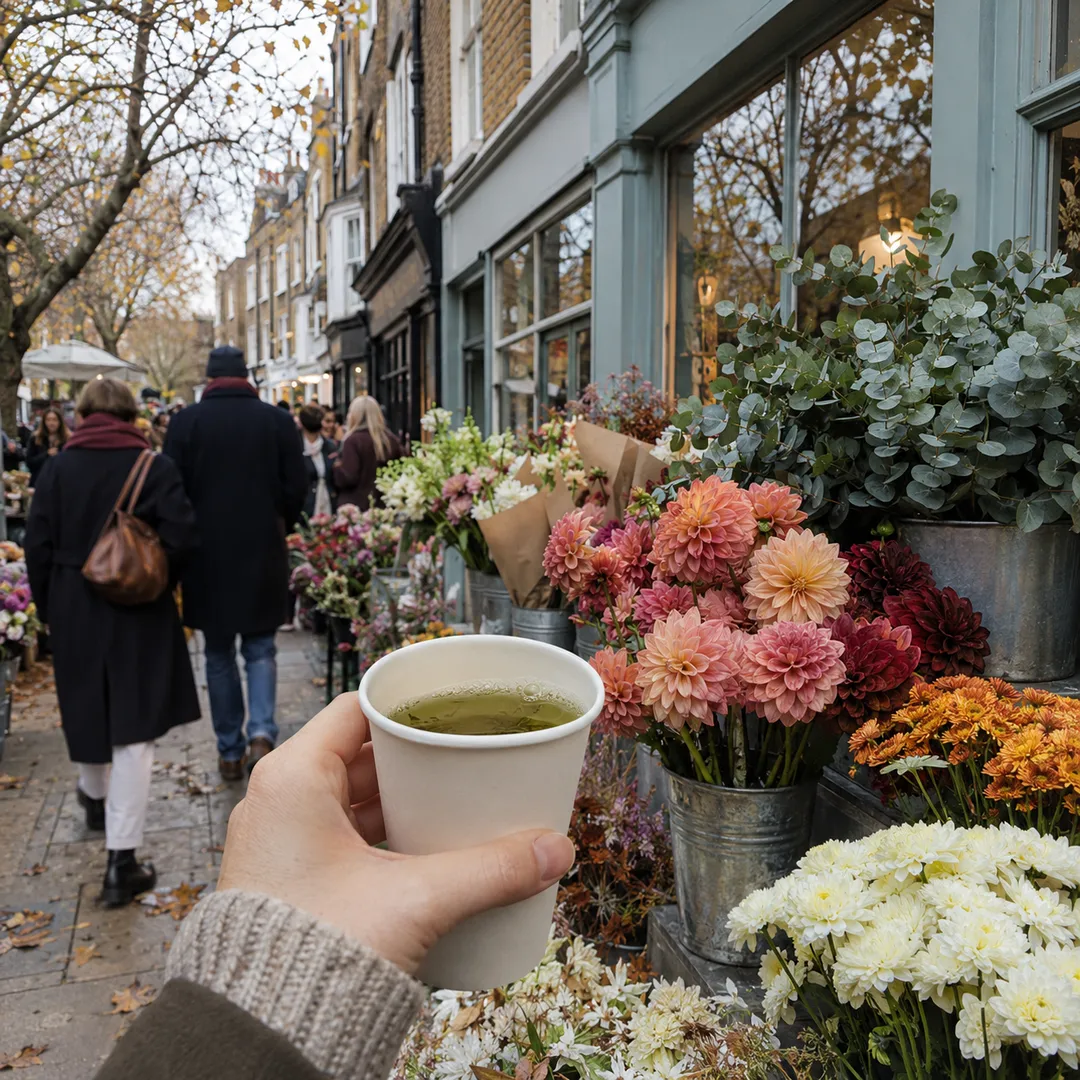
Arrive at Columbia Road early on Sunday, before the crowds turn the street into a slow shuffle. The market runs the length of a single road lined with small shops selling plants, pottery and vintage things. Traders stack buckets of eucalyptus, dahlias, chrysanthemums and winter foliage along the kerb, and the smell of damp greenery fills the street.
Buy your flowers at the start, not the end. The best stems sell early, and you will want both hands free later. Ask the trader to wrap them in paper, then tuck the bunch under your arm. Late in the market, sellers sometimes drop prices to clear stock, but by then the choice is thin.
Stop One: The Plain Bowl Benchmark
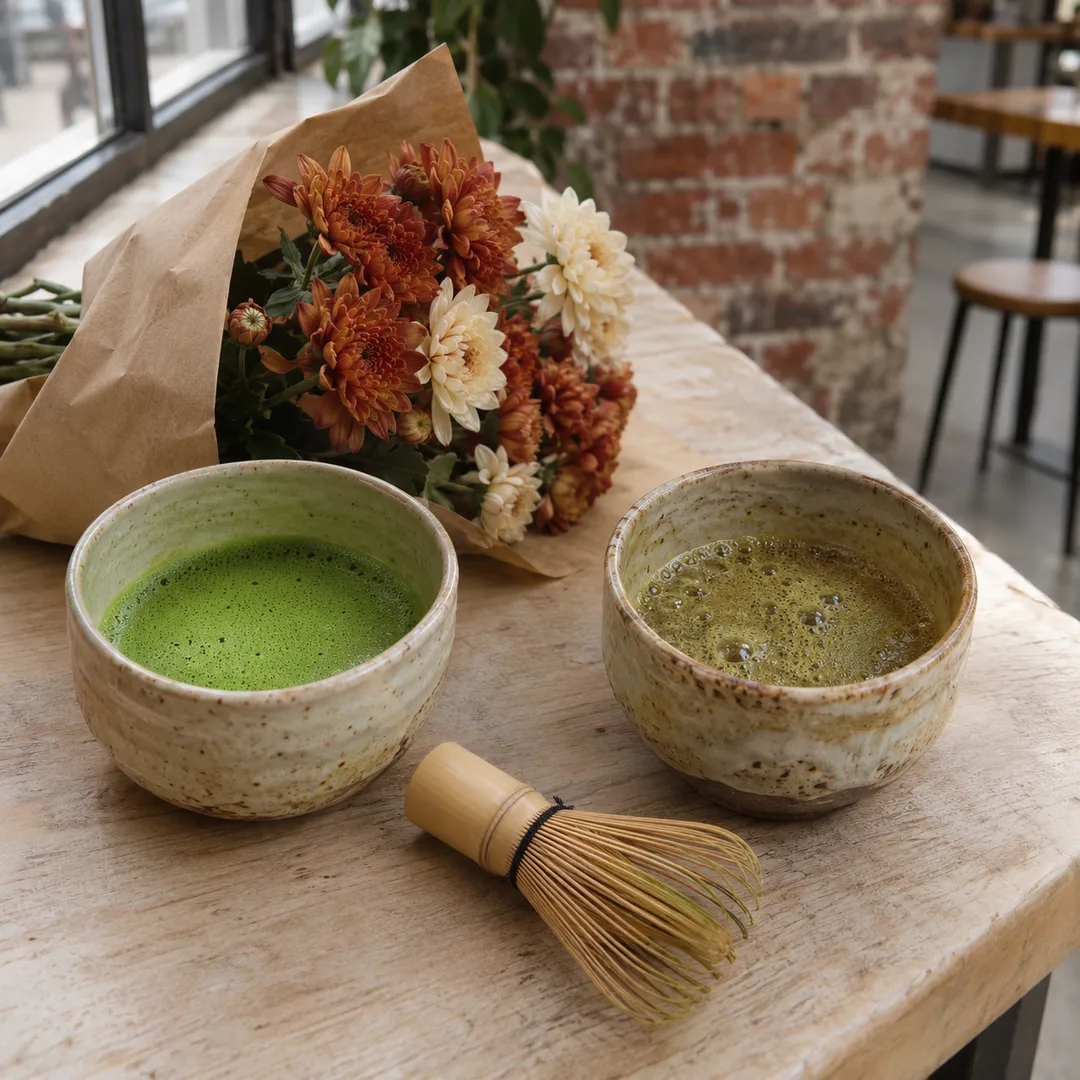
Your first cup should be the purest. Find a cafe near Columbia Road or toward Hackney Road that whisks matcha with hot water only, served in a bowl. Look at it before you drink. A good ceremonial matcha is vivid jade green, almost glowing, with a fine, even froth of tiny bubbles across the surface.
Then taste it. Good matcha should be sweet and savoury at once, with a rich umami note like fresh spinach or seaweed broth, and very little harsh bitterness. The finish should linger pleasantly. If the cup tastes flat, dusty or sharply bitter, the powder may be old or the water too hot.
Reading Colour and Froth
Colour is the easiest clue. Bright green means young leaves and careful storage. A dull, yellowish or brownish green usually means a lower grade, older powder or exposure to light and air. Froth tells you about preparation. Fine, creamy foam comes from a well-whisked bowl at the right temperature. Large, quickly collapsing bubbles suggest rushed whisking.
Do not judge by colour alone in a latte. Milk dilutes the green, and some cafes add sweeteners that change the hue. That is why the plain bowl comes first. It gives you a clear reference point for everything after.
Stop Two: The Latte Comparison
Walk south toward Shoreditch High Street and choose a busy, well-regarded coffee shop for the second cup. Order a matcha latte, ideally unsweetened, and taste it against the memory of your first bowl. A good latte grade has enough strength to stand up to milk without turning bitter or chalky.
Ask the barista what grade they use and where it comes from. Many cafes source from Uji near Kyoto, Nishio in Aichi or Kagoshima in southern Japan, and each region has its own character. Uji tends toward rich umami, while Kagoshima blends are often brighter and grassier. Baristas who care about matcha usually enjoy this conversation.
A Brick Lane Interval
Between the second and third cups, wander along Brick Lane. On Sundays, the street fills with vintage stalls, food traders and the old brewery yard markets. It is crowded and noisy, which makes the next quiet cafe feel even better. Grab something savoury to eat, since you have had two strong teas on an empty stomach.
Keep your flowers safe in the crowd. Hold the bunch upright against your chest rather than swinging it at your side, and avoid the most packed market halls if you can.
Stop Three: Buy a Tin to Take Home
For the last stop, look for a cafe or tea shop that sells matcha by the tin. Taste the blend they sell, then buy a small amount. Fresh matcha starts to fade once opened, so a small tin you will finish within a month or two is better than a large one that sits in the cupboard.
Ask how to store it. Most tea shops will tell you to keep it sealed, away from light and heat, and in the fridge once opened. If they sell bamboo whisks and bowls, consider buying a chasen too. Whisking with a spoon or a milk frother works, but a proper whisk makes a noticeable difference to the froth.
Making the Lesson Stick at Home
When you get home, put the flowers in water and make a bowl of your new matcha straight away, while the tastes of the day are fresh. Sift the powder first to break up clumps, use water that has cooled a little from boiling, and whisk briskly in a zigzag motion until a fine froth forms.
Compare it with your memory of the first bowl. If it tastes bitter, try cooler water next time. If it lacks froth, whisk faster. Within a week of practice, most people can make a cup they are proud of.
Who This Crawl Is For
This plan suits curious tea drinkers who want to understand what they are paying for, coffee lovers switching to matcha and anyone planning to make it at home. It also works as a gentle Sunday outing for a couple or a pair of friends. Families with small children may find Columbia Road and Brick Lane too crowded at peak times, so go early or skip the markets and focus on the cafes.
If you are short on time, do just the first two stops. The plain bowl and the latte comparison carry most of the lesson.
Using Karpo for the Morning
Open the Karpo APP and search for matcha cafes around Shoreditch, Columbia Road and Brick Lane. Save one near the flower market for the first bowl, one toward Shoreditch High Street for the latte and one that sells tins. If a cafe is too busy, Karpo can show nearby options so you can keep the lesson moving.
Add a note to each saved place about how the tea tasted. Over time, that list becomes your own guide to which East London cafes take matcha seriously.
Practical Notes
Bring a tote bag for the tin and any pottery you buy, plus a bottle of water to rinse your palate between cups. Wear warm layers, because the flower market is outdoors and early Sunday mornings in November are cold.
Finally, pace yourself. Three strong matcha drinks in one morning is a lot of caffeine. If you feel jittery, swap the last cup for a small taste and buy the tin anyway.
Ask Karpo for more information.
Keep reading
- Marylebone Coffee Shop Finder: Village Cafes and Espresso
 Fitzrovia Coffee Shop Finder: Quiet Central London Espresso
 Covent Garden Coffee Shop Finder: Hidden Courtyard Cafes