 Shoreditch Comic Shop Crawl Planner: Murals to Manga
Hidden Gems & Odd Finds
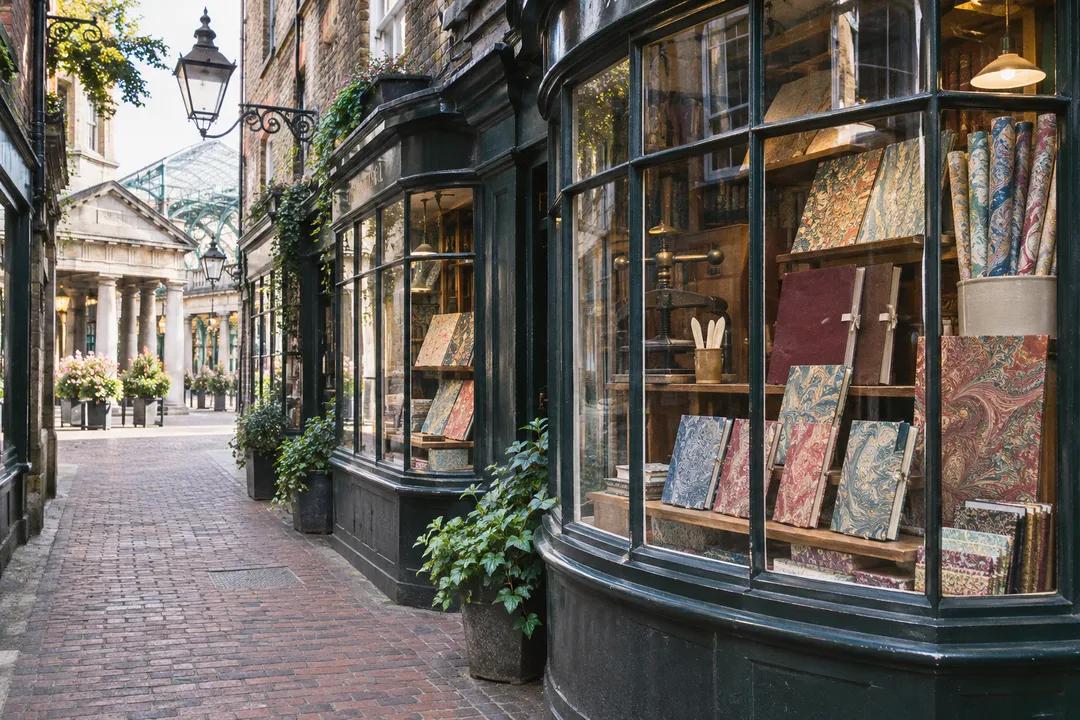
Covent Garden Marbled Paper Stationery Walk: Craft Guide
Explore historic Covent Garden lanes for hand-combed marbled paper. Ask Karpo APP for nearby spots, then curate your own London stationery walk.
Covent Garden retains a quiet guild tradition tucked behind its bustling piazza corridors, making it a natural starting point for an unhurried marbled paper stationery walk. Long before theatrical posters and market stalls defined the central square, print specialists, engravers, and ledger binders maintained modest workshops along these narrow brick lanes. Wandering here with an eye for decorative book arts invites you to shift attention away from commercial retail windows toward quiet display cases filled with patterned papers. The morning light strikes vintage vitrines where sheets of hand-combed paper reveal intricate fluid motifs that seem almost alive under the glass. Whether you are seeking a tactile desk journal bound in Spanish wave patterns or loose folios for archival craft projects, the district balances theatrical vibrancy with deep artisanal grounding. Walking these historic pedestrian flagstones connects you directly to centuries of craftsmanship that still flourishes in hidden corners.
The Theatrical Heritage of Patterned Paper
The historic connection between Covent Garden and decorative paper crafts grew out of the West End printing houses that once serviced nearby playhouses, publishing rooms, and law offices. Ledger binders required durable endpapers that could resist finger oils and conceal minor scuffs during daily administrative handling across dusty counting tables. Decorative paper marblers answered this demand by floating earth pigments on viscous seaweed baths, combing rhythmic ripples across liquid surfaces before lifting permanent patterns onto rag paper sheets.
The resulting designs served both practical protective duties inside leather bindings and aesthetic celebrations of fluid geometry. Even as modern commercial book production shifted toward high-speed machinery and synthetic finishes, small pockets of dedicated artisans in central London preserved these labor-intensive techniques with fierce devotion. Stepping across the threshold of a traditional stationery atelier in this quarter feels like entering a living archive. The subtle fragrance of dried gum, linseed paste, beeswax, and aged wood greets you at the door, immediately separating the browsing experience from ordinary modern shopping environments.
Deciphering Swirls and Hand-Combed Peacock Veins
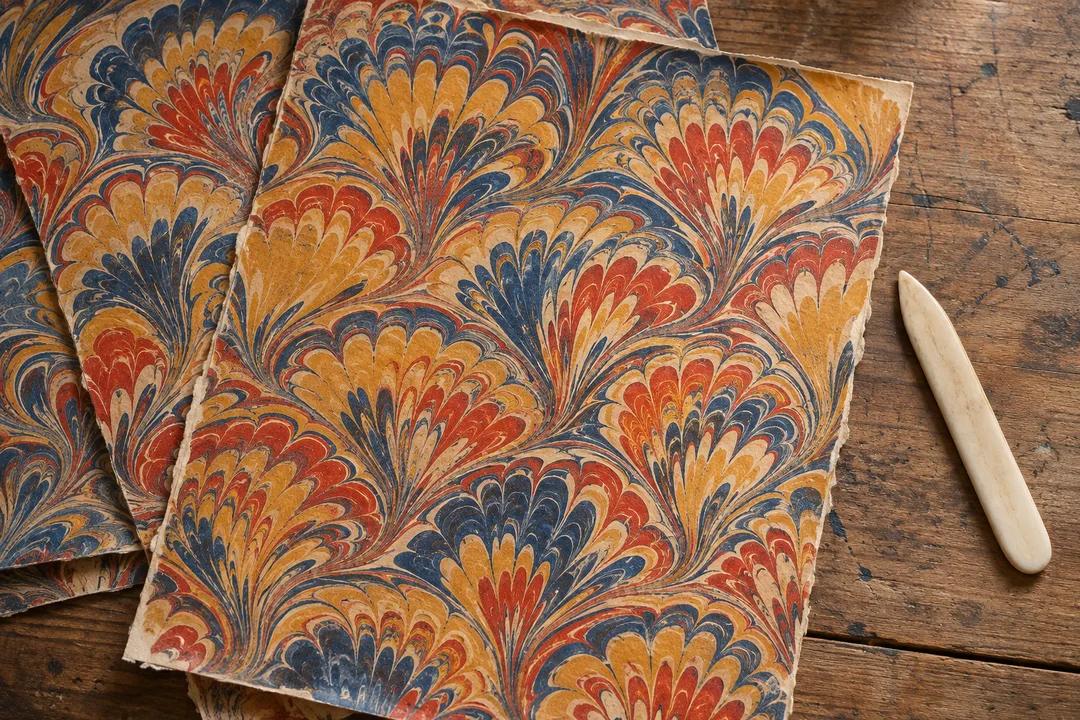
A proper appreciation of marbled paper begins with understanding how distinct motifs are coaxed into being upon the marbler shallow water bath. Traditional Turkish ebru techniques inspire organic stone patterns, where mineral pigments disperse naturally into delicate droplet clusters resembling polished jasper, river gravel, or ancient travertine marble. In contrast, Western European guild marblers perfected mechanical rakes and brass combs, drawing fine wire teeth through floating pigment to create feathered peacock plumes, bouquet arches, and undulating chevron waves across the surface.
When examining individual sheets in wide shallow drawers, take note of the rhythmic symmetry and subtle organic irregularities that declare genuine hand production. Machine prints reproduce identical spacing and mechanical color registration across every square inch, whereas hand-combed paper reveals tiny variations in pigment density, slight pigment splatters, and tender shifts where the artisan breath met the bath. These gentle imperfections lend warmth, tactile depth, and irreplaceable character to every finished page, assuring you that no two sheets in the entire world can ever be completely identical.
Tactile Selection for Binding and Desk Journals
Selecting marbled stationery requires thoughtful consideration of how you intend to use or display the finished piece in your daily creative routine. If you seek a personal notebook for reflective journaling, poetry transcription, or fountain pen sketching, examine the binding structure and paper weight closely. A master bookbinder selects heavier rag cotton stock for the covers, ensuring the marbled surface is treated with protective beeswax or natural shellac to endure years of gentle carriage in a leather satchel.
For those searching for loose folios to frame as decorative wall art or use in bespoke gift wrapping, inspecting the paper grain and deckle edge is paramount. Handmade sheets often carry raw, deckled borders and subtle laid watermarks that look magnificent when floated inside archival timber frames against linen mats. Do not rush your selection; lift individual folios toward the window daylight to observe how natural light illuminates the mineral pigments and highlights the subtle fiber texture running through the cotton pulp.
Pairing Studio Browsing with Historic Alleys
One of the chief joys of hunting for artisanal paper in Covent Garden lies in weaving between quiet interior workspaces and the surrounding historic mews lanes. After immersing yourself in color wheels, binder boards, and pigment trays, stepping out into pedestrian arcades offers a refreshing sensory contrast. Cobblestone courtyards that once sheltered carriage horses and coaching inns now house independent coffee roasters, specialty tea merchants, and quiet alcoves where you can pause to admire your newly acquired stationery.
Take time to wander through sheltered churchyards and pedestrian passageways where iron gas lanterns still hang above timber doorways and ivy climbs mellow brick arches. Resting on a weathered stone bench under leafy plane trees allows you to leaf through freshly wrapped marbled envelopes and cards while listening to faint string melodies drifting from the nearby market colonnade. This effortless rhythm of quiet indoor discovery and unhurried outdoor exploration defines an ideal London walking itinerary for creative minds.
Practical Guidance for Folio Protection and Display
Caring for delicate hand-marbled papers ensures that their fluid mineral colors remain vibrant across decades of handling and creative display. Because traditional marbling employs natural ox gall, carrageenan moss extract, and ground earth pigments, the resulting surfaces react gracefully to clean dry environments with gentle indirect light. Keep unmounted folios flat inside acid-free portfolios or sturdy document boxes lined with archival glassine sheets to prevent curling or abrasion.
When incorporating marbled paper into custom framing projects or book arts, select water-reversible wheat starch paste rather than chemical craft glues. Starch adhesive allows the paper fibers to expand and contract smoothly without causing uneven buckling or surface discoloration. Taking a few moments to understand these preservation fundamentals elevates your connection to the craft from simple casual acquisition to informed stewardship of living bookbinding arts.
Curating Your Stroll Across West End Passages
Planning an inspiring paper-hunting afternoon across Covent Garden benefits from combining focused stationery browsing with spontaneous neighborhood discoveries. Rather than following rigid itineraries or hurried checklists, allow your natural curiosity to guide you from quiet paper specialist shelves toward neighboring second-hand bookstalls, print galleries, and historic reading rooms. Each adjoining lane holds unexpected decorative details, from antique brass door fixtures and carved pediments to hand-lettered gold leaf shop signage.
When you want to locate inviting independent cafes for an afternoon coffee break or discover neighboring craft studios across the West End, open the Karpo APP to explore nearby curated recommendations. The app helps you spot serene resting spots, quiet courtyard benches, and adjacent artisan lanes suited to your personal walking pace. With your new marbled folios carefully rolled in acid-free tissue paper, you can seamlessly transition toward quiet West End squares as evening street lamps begin to glow along the cobblestones.
Ask Karpo for more information.
Keep reading
- Shoreditch Comic Shop Crawl Planner: Murals to Manga
 Bermondsey Comic Shop Crawl Planner: Zines Under the Arches
 Clapham Comic Shop Crawl Planner: Charity Shelves and Common