 Greenwich Blues Bar Night Picker: River Stages After Dusk
Bars & Nights Out
London Historic Pub Trail: The Blackfriar Arts Route
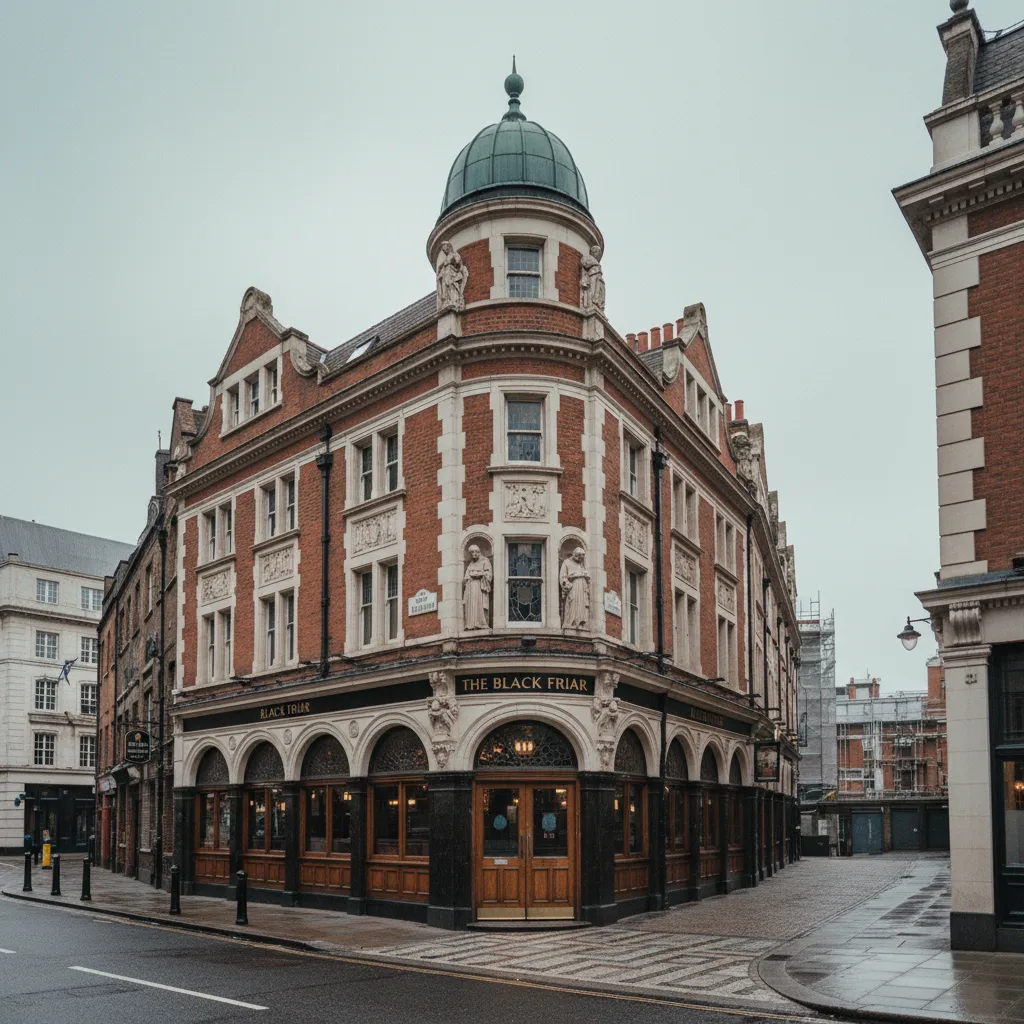
The Black Friar at 174 Queen Victoria Street anchors a stunning London historic pub trail through Arts and Crafts marble reliefs, vaults, and Thames paths.
The Black Friar opens daily at 11:30 am on Queen Victoria Street at 174 Queen Victoria Street, London EC4V 4EG. Built around 1875 on the historic site of a thirteenth-century Dominican monastery, this extraordinary Grade II* listed building is recognized internationally as London's finest architectural masterpiece of the Arts and Crafts public house movement. Operating continuously under the Nicholson's pub collection, the tavern welcomes visitors until 11:00 pm Monday through Saturday and 10:30 pm on Sunday. Sitting on a prominent triangular wedge-shaped plot directly opposite Blackfriars rail station, the pub stands as an indispensable destination on any curated London historic pub trail, offering an awe-inspiring union of ecclesiastical craftsmanship, sculpted marble, and traditional British cellar service within steps of the River Thames.
Arts and Crafts Architecture and the Grotto Vault
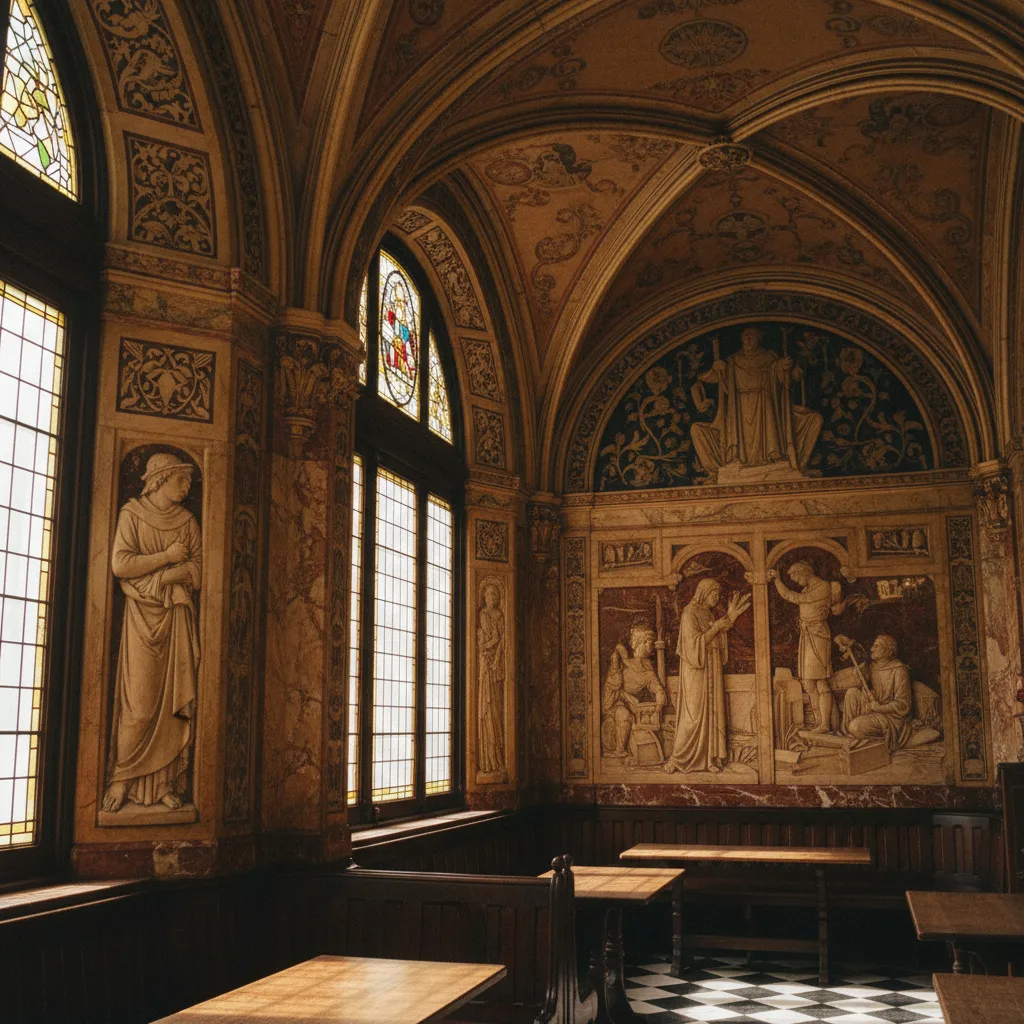
Between 1905 and 1921, architect Herbert Fuller-Clark transformed the public house into a visual celebration of medieval Dominican friars, collaborating with celebrated sculptors Frederick T. Callcott and Henry Poole. The exterior is clad in striking yellow brick with ornate bronze relief panels depicting cheerful monks harvesting grapes, boiling cauldrons, and fishing in streams. Inside, the pub opens into a series of interconnected rooms framed by red Verona marble pillars, iridescent copper friezes, and rich oak ceiling beams. The crown jewel of the pub is the rear vaulted dining room known as the Grotto, built beneath an arched railway viaduct with shimmering gold mosaic ceilings, polished green marble bench seating, and humorous moral inscriptions in Latin and English celebrating good cheer, laughter, and industrious daily labor.
Historic British Ales and Classic Tavern Dining
At the polished marble and brass-fitted main bar, the cellar team draws an exceptional range of cask ales, craft ciders, and single malt whiskies. Pints of Nicholson's Pale Ale cost £6.30, while London Pride and seasonal guest cask beers from British craft microbreweries pour at £6.60 per pint. The kitchen offers a full menu of traditional British comforting tavern dishes throughout the afternoon and evening. Popular staples include the braised steak and Nicholson's pale ale pie served with creamy mash and steamed seasonal greens for £17.50, crispy beer-battered cod and chunky chips with homemade tartare sauce for £18.20, and loaded vegetarian mushroom and chestnut pies for £15.95. Bar patrons can also order crispy duck wings or breaded whitebait with lemon aioli from the bar snack menu for £7.95, pairing hearty dining with authentic heritage hospitality.
Monastic Heritage and the Campaign to Save the Pub
The site takes its name from the Dominican friars, or black friars, who established their great monastic precinct here beside the River Thames in 1278, which served as a seat of Parliament and royal assemblies until the Dissolution of the Monasteries in 1538. During the 1960s, the unique wedge-shaped Victorian building was threatened with total demolition to make way for a concrete road-widening scheme connecting Blackfriars Bridge. Poet Laureate Sir John Betjeman led a fierce public preservation campaign alongside architectural historians, successfully convincing the City of London Corporation to spare the building. In June 1972, the property was formally granted Grade II* listed status, ensuring that future generations of travelers and Londoners could continue drinking amidst its irreplaceable Edwardian copperwork and hand-carved marble bas-reliefs, making it a triumph of London conservation history.
Visiting Etiquette and Peak Atmosphere Tips
Due to its location at the junction of the City financial district and the Blackfriars transport hub, The Black Friar attracts an eclectic mix of commuters, legal professionals, and design enthusiasts. The saloon bar becomes bustling and lively between 5:00 pm and 8:00 pm on weekdays, with city workers gathering around the central marble fireplace and spilling out onto the sheltered outdoor corner terrace. If you want to photograph the Grotto's mosaics and copper reliefs in peaceful conditions, plan your arrival for early weekday afternoons between 2:00 pm and 4:30 pm. Bar orders are taken at the counter for drinks, while full table service is offered for diners seated in the Grotto. Payment is predominantly cashless by card or mobile wallet, and the pub maintains a welcoming, unpretentious hospitality standard that welcomes solo travelers, architectural students, and local regulars alike in equal measure.
Thames Embankment and Medieval City Walking Loop
Stepping out from The Black Friar puts you at the gateway of an enchanting walking trail tracing London's medieval and riverfront evolution. Heading south across the pedestrian footpath of Blackfriars Bridge offers sweeping panoramic views of St Paul's Cathedral and the Tate Modern across the water. Turning northeast into the City's historic core leads you along Carter Lane at 24 Carter Lane, a winding cobbled street that formerly served as the monastic perimeter. Continuing east leads past the College of Arms at 130 Queen Victoria Street, chartered by King Richard III in 1484, and arrives at the south transept of St Paul's Cathedral at St Paul's Churchyard. This scenic loop encapsulates centuries of river commerce, monastic settlement, and post-Great Fire reconstruction within an effortless eight-minute walk through peaceful paved courtyards.
Transit Directions and Planning Your Historic Walk
Getting to The Black Friar is remarkably straightforward thanks to its prime position opposite Blackfriars station. Blackfriars station is served directly by the Circle and District lines on the London Underground, as well as Thameslink National Rail trains crossing the river bridge, with fully accessible step-free street level exits right across Queen Victoria Street. St Paul's station on the Central line is an easy seven-minute walk to the northeast, while City Thameslink station lies five minutes to the north along Farringdon Street. The ground floor bar features step-free street access from Queen Victoria Street, with accessible ground-floor seating areas available. Assistance dogs are fully welcomed. To enhance your walking experience, combine a midday visit to the Grotto with an afternoon walk along the Victoria Embankment toward Temple Church. Visitors can access curated historic pub itineraries, live transport directions, and local tasting recommendations directly on the Karpo APP before embarking on their journey.
Ask Karpo for more information.
Keep reading
- Greenwich Blues Bar Night Picker: River Stages After Dusk
 Shoreditch Blues Bar Night Picker: East End Brick Stages
 Brixton Blues Bar Night Picker: Soulful South Stage Sets