 Brixton Christmas Light Up Walk Planner: Rainy Arcades
Free Things to Do
South Bank Local Heritage Museum Walk: Free Thames Stories
The South Bank acts as a free local heritage museum along the Thames: festival-era terraces, old wharves and river stairs, easiest to read at low tide midweek.
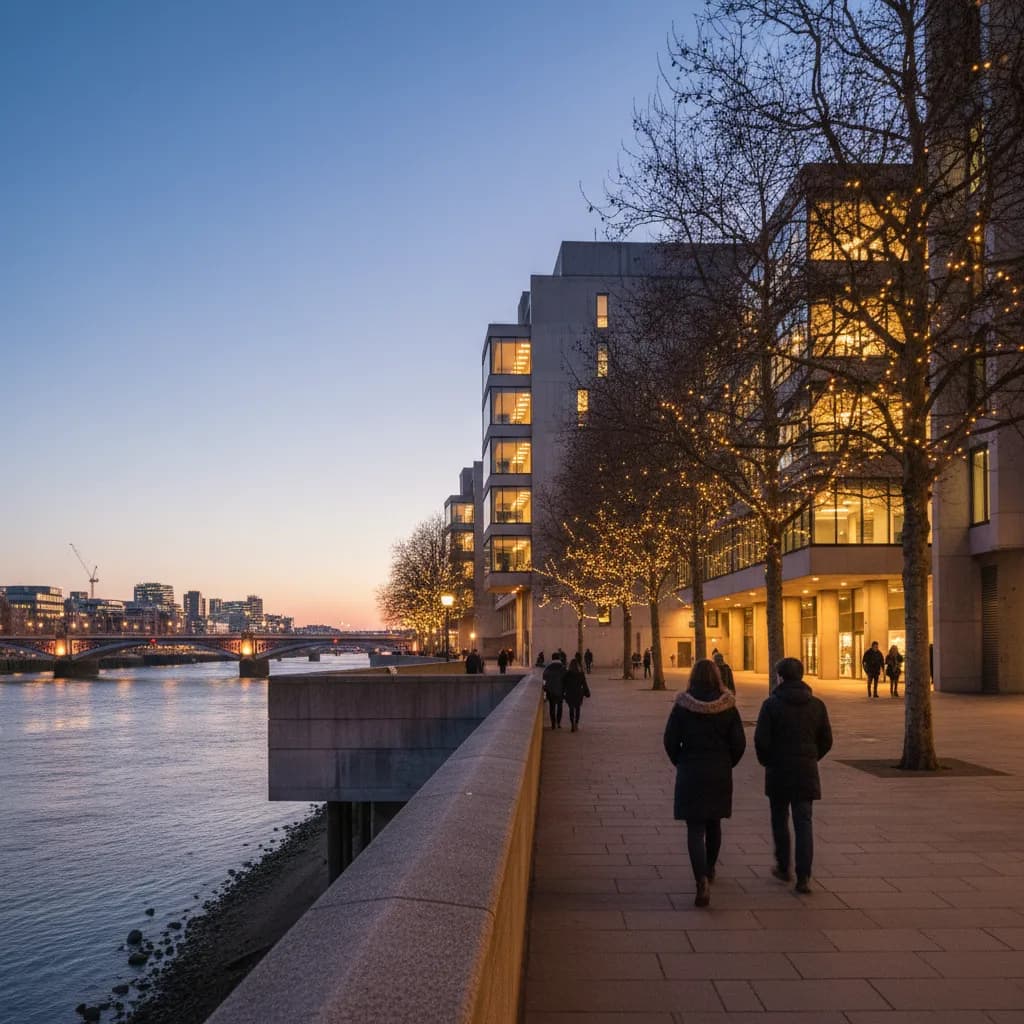
The South Bank is where many Londoners first realise that the Thames itself is a history book. For centuries this shore was a working edge of wharves, timber yards, breweries and pleasure gardens, kept slightly apart from the formal city across the water. After the war, a festival celebrating national recovery transformed part of the riverside into a cultural quarter, and its concrete halls still dominate the skyline today. Rather than looking for a single local heritage museum, treat the riverside walk from the arts centre terraces to Gabriel's Wharf and on to Bankside as one long free gallery. This planner shows where to pause, how to time the tide, and how to read the layers of industry, celebration and reinvention along the way.
The Festival Legacy in Concrete and Glass
Begin at the concert hall that survived from the post-war festival, the only major building kept from that celebration. Its broad foyers tend to welcome walk-in visitors, and walking through them gives a sense of the optimism of that era: generous glass, open stairs and views over the river. The surrounding concrete buildings, from the theatre complex to the gallery spaces, followed later and divided opinion for decades before being embraced by a new generation.
Take time on the raised terraces between these buildings. They were designed to separate people from traffic and to frame river views, and their textures of board-marked concrete make good subjects for photography. The skate area underneath the halls has its own story of community campaigning, showing that heritage is not only about old buildings but also about how people claim and defend public space.
Low Tide on the Foreshore
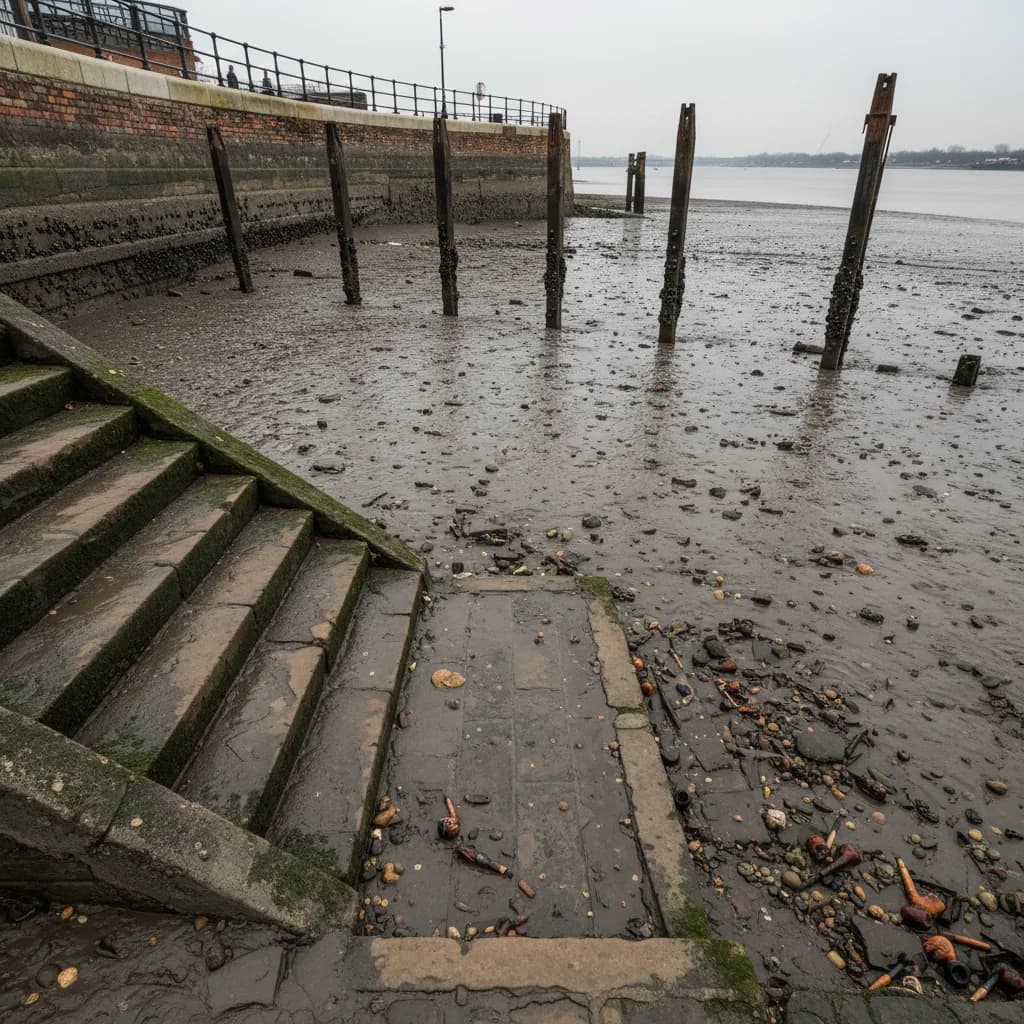
The Thames is tidal through central London, and at low tide parts of the foreshore emerge beneath the river walls. Stone stairs lead down in several spots, revealing pebbles, old timber posts and fragments of pottery and clay pipe washed out by the current. Looking at the foreshore from the walkway is free and fascinating, and it connects the modern promenade to the busy working river of the past.
If you choose to step down, take great care. The steps are slippery, the tide rises quickly and parts of the foreshore are unstable. Digging or removing objects is regulated, so treat the foreshore as a viewing gallery rather than a dig site. Checking tide tables in advance lets you plan this as a highlight of the walk, ideally on a calm grey weekday when the light is soft and the shore is quiet.
Gabriel's Wharf and the Community Riverside
Continue east to Gabriel's Wharf, a cluster of small shops and cafes with painted facades sitting on land once earmarked for office blocks. Local residents campaigned for community-led housing and public riverside space instead, and the result shapes this stretch today. Knowing that history changes how the playful little wharf feels: it is a reminder that neighbours shaped what you are walking through.
Nearby, the converted tower with its distinctive window lettering on top rises above a building that once served as a power station and then a cold store. Its lower levels now host design shops and studios, with walkways that let you peek in. Even if you do not buy anything, walking through the ground floor gives you another chapter of the riverside's shift from industry to culture.
Bankside, Theatres and Old Stairs
East of the tower, the walk reaches Bankside, a stretch long associated with entertainment, inns and the playhouses of Shakespeare's time. A reconstructed open-air theatre now stands near the site of the original, and a former power station has become one of the world's best-known modern art galleries. The gallery's vast turbine hall is often free to walk through, and it is a striking example of an industrial building turned public room.
Look for the narrow alleys running inland from the river and the small plaques marking long-gone inns and wharves. Further east, the old cathedral by the market offers a quiet interior and a churchyard where you can sit. Together these stops show how the South Bank has always been a place for pleasure, trade and worship side by side, and they make a satisfying end to the riverside chapter.
How Long to Allow and When to Go
The stroll from the arts centre to Bankside is short in distance but rich in stops, so allow a relaxed half day. Weekday mornings and early afternoons are calmest. Weekends bring street performers, food stalls and families, which create a cheerful atmosphere but slower walking. Evenings are lovely for lights on the water and views of the opposite bank, though building interiors may be busier.
Bring layers, because the riverside can feel cold and windy even when nearby streets are sheltered. For photography, late afternoon light warms the concrete and turns the river silver. If you only have time for one highlight, choose the low-tide foreshore view, since it is the most unusual and the most clearly tied to the area's working past.
Food, Rest and Easy Extensions
The riverside offers plenty of seating, from concrete steps to benches under the plane trees. Food markets near the arts centre and around the cathedral make simple lunch stops, and there are cafes inside many cultural buildings with views over the water. If you want something more substantial, the streets around the market hall behind Bankside offer historic pubs and casual dining.
For an extension, cross one of the bridges to the City and walk back on the north bank, or head inland to Borough and its old courtyards and inns. Both stay free on foot and offer new angles on the same stretch of river. The Karpo APP is handy for finding a riverside cafe or a historic pub interior near wherever your walk ends, so you can sit down without a long search.
Practical Notes for the Riverside Walk
Waterloo, Embankment, Southwark and London Bridge stations all sit close to the route, so you can start at one end and finish at the other. The promenade is wide and step-free for most of its length, though the raised terraces and river stairs involve steps. Keep children close near the river wall and stairs, and avoid the foreshore entirely if the tide is rising.
Cultural venues along the way set their own visiting rules and opening patterns, so follow posted information on the day. Bins and benches are plentiful, but toilets are mostly inside venues, so plan stops accordingly. Ask the Karpo APP for related heritage walks along other parts of the river if you enjoy this one, and turn it into a series of free afternoons through the year.
Ask Karpo for more information.
Keep reading
- Brixton Christmas Light Up Walk Planner: Rainy Arcades
 Hackney Christmas Light Up Walk Planner: Canal Boats
 Islington Christmas Light Up Walk Planner: Square Dates