 Brixton Christmas Light Up Walk Planner: Rainy Arcades
Free Things to Do
Covent Garden Local Heritage Museum Walk: Free Market Lore
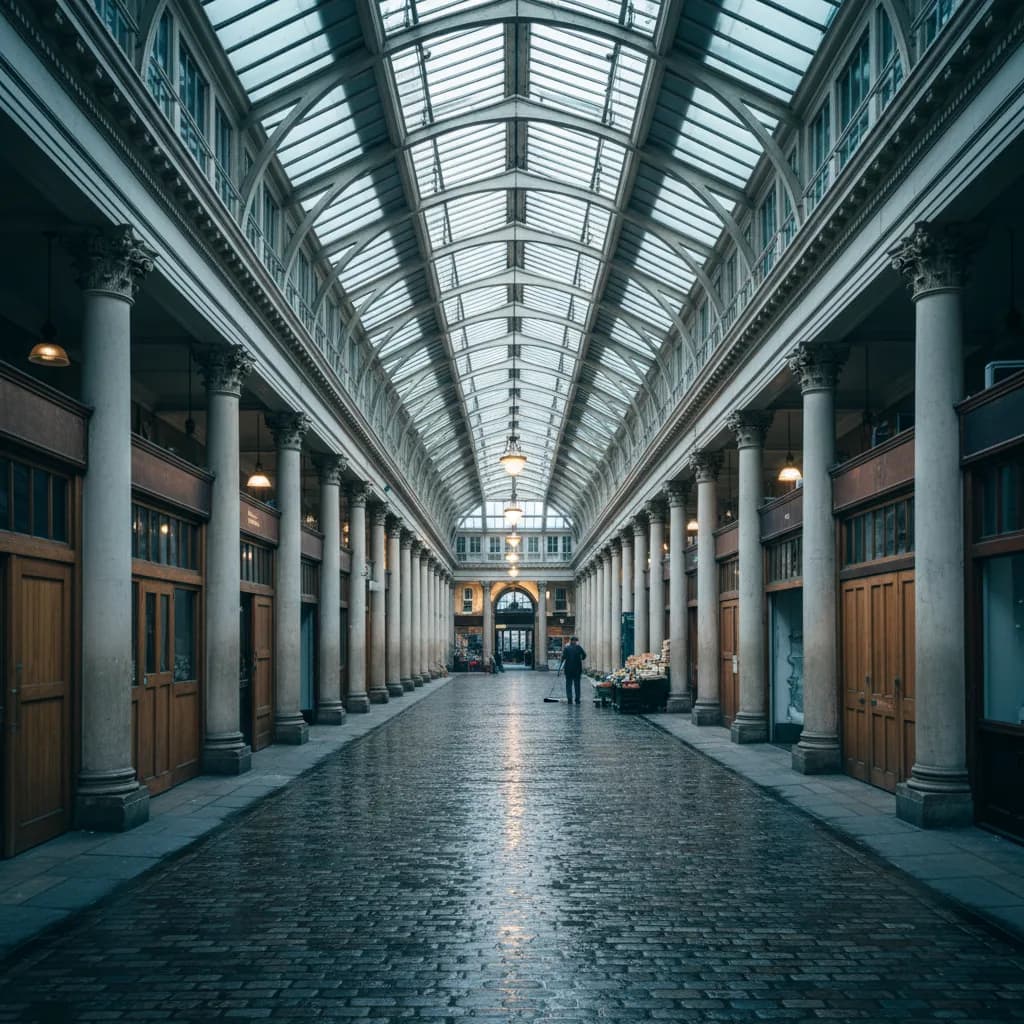
Covent Garden works as a free local heritage museum: market arcades, the actors' church garden and the Seven Dials sundial pillar, best on on weekday mornings.
Covent Garden began life as a garden belonging to a religious house, became one of London's first planned squares, then spent centuries as the city's great fruit, flower and vegetable market. Theatres, coffee houses, printers and gin shops crowded around it, and the market buildings themselves still frame the Piazza today. Anyone hunting for a local heritage museum here will find that the most rewarding exhibits are free and outdoors: arcades, churchyards, cobbled courtyards and a small star of streets meeting at Seven Dials. This planner treats the district as a walk-in museum, giving you a sensible route, the moments of day when it is easiest to see, and the quiet corners to rest in between stops.
Reading the Piazza Like a Gallery Floor
Stand in the middle of the Piazza and turn a slow circle before doing anything else. The square was laid out as an elegant residential space, and the arcaded buildings on its northern edge echo that early ambition. The market halls in the centre came later, when trading took over and the square filled with carts, porters and baskets. Once you can picture the noise of a working market, the polished shops inside the halls start to look like a museum display of their own history.
Walk the outer edges of the market building and look at the roof structure, the columns and the old doorways where goods once moved in and out. Then step back to the west side and find the portico of the church facing the square. Street performers use that space today, continuing a long tradition of entertainment in the Piazza. Watching a show here for a few minutes is a genuinely heritage-rich experience, since the square has hosted performers for centuries.

The Actors' Church Garden as a Quiet Exhibit Room
Behind the busy Piazza sits the churchyard garden of St Paul's, known widely as the actors' church because of its deep ties to the theatre world. The entrance is not from the portico on the square, which surprises many first-time visitors, but from the lanes behind it. Inside, the garden is calm, shaded and lined with benches, and the church walls carry memorials to performers and theatre people. It is the closest thing in the area to a quiet, free heritage room.
Plan to spend at least twenty minutes here. Read the memorial plaques slowly, notice how many professions from the stage world are represented, and use the garden as your halfway rest. It is also a sensible place to check your route for the second half of the walk. Treat the space respectfully: it is still an active church, and weddings, services and memorial events take place, so follow any notices at the gate and lower your voice.
Seven Dials and the Neal's Yard Detour
North of the Piazza, seven streets meet at a single slender column topped with sundial faces. The junction was designed as a fashionable development, slid into poverty during the following centuries, and has since been restored as a shopping hub with colourful frontages. Standing at the pillar and looking down each street in turn is one of the best quick lessons in London urban history. Each arm has its own character, from narrow cobbled passages to wider shopping streets.
From Seven Dials, take the short detour into Neal's Yard, a tiny courtyard of painted facades and window boxes. It shows how former warehouse spaces were reinvented by independent traders and craft businesses. The yard is compact, so visit early in the day or late in the afternoon when it is less crowded and you can actually see the building details. Photographs from the corner entrances capture the colour without blocking other visitors.
When to Go for Space, Light and Fewer Crowds
Covent Garden fills fast on weekends and during school holidays, and the crowds hide exactly the details a heritage walker wants to see. Weekday mornings are ideal, while shops are still setting up and the market halls echo a little. Overcast days are underrated: the soft light flatters stone columns and painted shopfronts, and the arcades give shelter if showers roll through. Evenings belong to theatre audiences, which makes the area lively but less suited to slow observation.
If you only have a weekend slot, start at Seven Dials and the northern lanes, which tend to stay calmer, then reach the Piazza when you have already done most of your looking. Keep the church garden as a refuge for the busiest part of the day. A complete, relaxed loop of the square, the garden, Seven Dials and Neal's Yard usually fills a comfortable half day without feeling rushed.
Questions Visitors Usually Ask Before Setting Out
Is the whole route free? The outdoor elements, the market halls, the church garden and the Seven Dials streets cost nothing to explore. Some specialist museums and exhibitions in the area charge admission, so treat those as optional add-ons rather than the backbone of the walk. Is it suitable for children? Yes, especially the street performances in the Piazza and the bright courtyard at Neal's Yard, which tend to hold young attention better than formal displays.
Can it be done in the rain? Mostly yes. The arcades and market halls offer cover, and the church interior can be a good dry stop when it is open to visitors. Do you need a guide? Not really. A little preparation, a list of what to look for and a willingness to look up at roofs and upper floors will reveal most of the story. If you want company, the Karpo APP can suggest nearby walking groups or cafes to regroup in.
Linking Covent Garden to Neighbouring Heritage Streets
Covent Garden sits between several other historic districts, so it is easy to extend the day. Head west and you reach Soho, where plaques and old workshops tell the story of musicians, printers and tailors. Walk south and you arrive at the Strand and the Thames, where grand buildings and riverside stairs show the city's older relationship with the water. North-east lies Bloomsbury, with its garden squares and literary associations.
Each extension works on foot and stays free if you stick to streets, squares and public gardens. Pick the one that matches your energy. Soho suits a lively continuation, the river suits a reflective stroll, and Bloomsbury suits anyone who wants leafy calm. The Karpo APP can help shortlist a cafe or a quiet pub at the end of whichever route you choose, so you can plan the finish without breaking the flow.
Practical Notes for the Covent Garden Loop
Cobbles in the Piazza and the lanes around it are uneven and slippery when wet, so choose shoes with grip. The nearest Underground station is often crowded, and walking in from Leicester Square, Holborn or Charing Cross can be faster and more pleasant at busy times. Public toilets and benches are limited around the Piazza, so plan breaks around the church garden or a cafe stop.
Keep an eye on bags in crowded spots, particularly around street performances. Respect performers by stepping back from their marked circles and avoid filming close up without permission. For a calmer second visit, save this route in the Karpo APP and ask for related heritage walks nearby, from riverside stairs on the Strand to the garden squares north of Holborn.
Ask Karpo for more information.
Keep reading
- Brixton Christmas Light Up Walk Planner: Rainy Arcades
 Hackney Christmas Light Up Walk Planner: Canal Boats
 Islington Christmas Light Up Walk Planner: Square Dates