 Waterloo Cozy Board Game Cafe Finder in South London
Weekend Plans
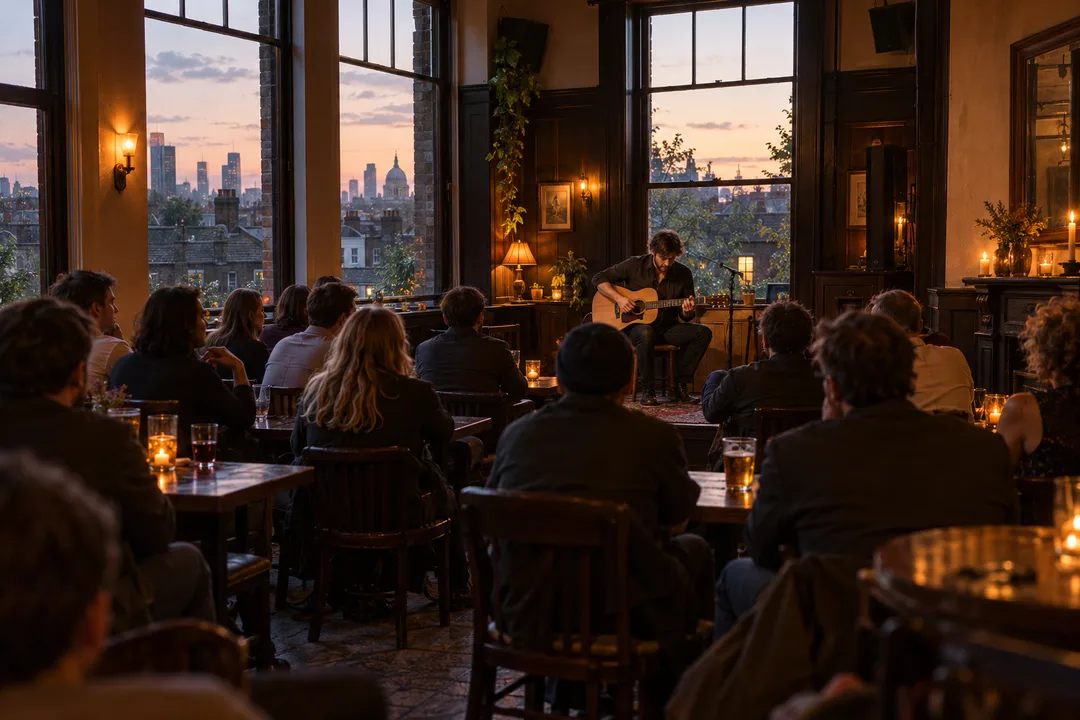
London Local Event Finder: Weekday Music Along Your Commute
Find London acoustic sessions along your commute in Karpo APP, then compare music formats, walking limits and a leaving time that keeps the evening simple.
A London local event finder works better for after-work music when you give it your commute, listening preference and leaving time together. Open Karpo APP and describe the Tube line you already use, whether you want acoustic songs or a mixed open mic, and the latest time you want to head home. Build the evening around one manageable stop rather than a promising gig across the city. The aim is a satisfying hour of music that still feels possible on a working day.
Start with the journey you already make
Use your actual office station and homeward direction as the starting point. A useful opening request is: “Find acoustic sessions along my London commute on Thursday. I leave near Bank at 6 pm, travel west on the Central line, and want a short walk from the station.” These are example preferences, not a published event schedule. Naming the direction matters because an apparently nearby room can require backtracking before the journey home even begins.
Add the walking limit separately from the rail preference. You might accept ten minutes on foot but dislike changing trains, or prefer one change to a long walk carrying a laptop. Tell Karpo which compromise you would make first. That gives the conversation something concrete to work with when it compares suggestions. A venue beside a different branch of a line should not quietly count as being on your usual route simply because the line name matches.
Decide whether you want songs or unpredictability
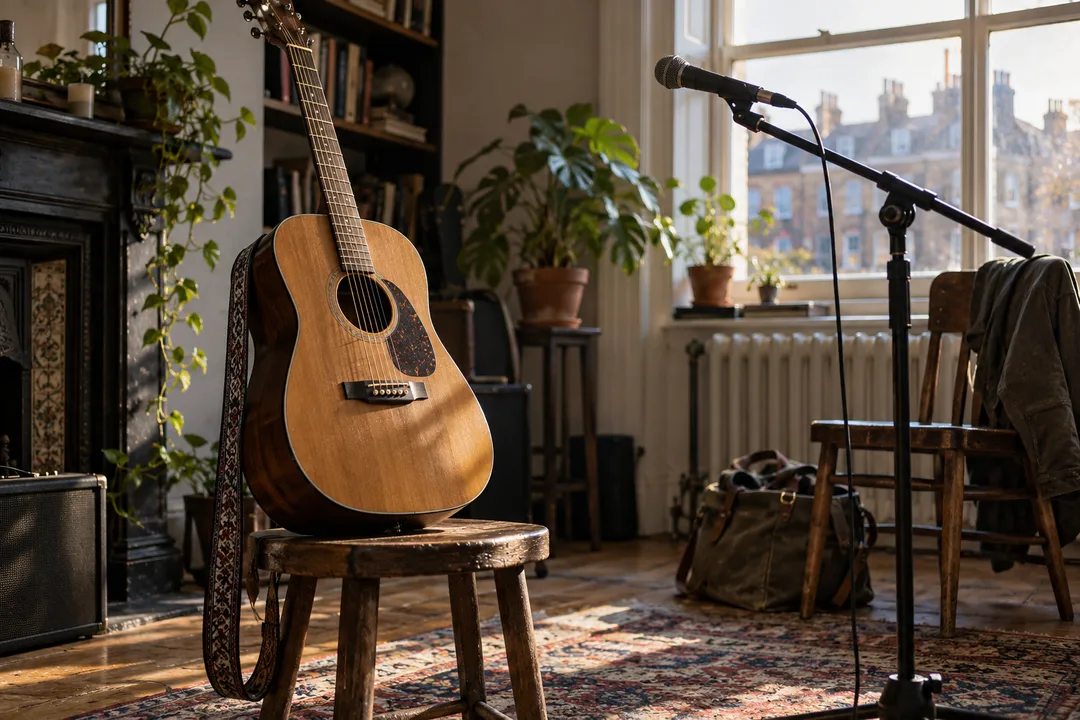
An acoustic session, a songwriter showcase and an open mic promise different evenings. For a listening night, ask for music-led suggestions with seated audiences where that format is described. For an open mic, explain whether you enjoy a changing mix of performers or want the music portion of the programme. A listing saying “open mic” alone does not establish a guitar-based bill, a quiet room or an opportunity for visitors to perform.
Make your own role explicit. “I only want to listen” is a useful instruction if you have no interest in signing up. Someone carrying an instrument needs a different comparison: performer registration, the order of acts, equipment arrangements and the distinction between arrival time and a possible stage slot. Keep any unanswered performer questions attached to the candidate. A recommendation to attend is not an acceptance onto the running order, and a conversational request cannot secure a turn at the microphone.
Compare three routes through the evening
Ask for a maximum of three candidates and an explanation of what each one trades away. Your first category could be the smallest detour from work, the second the strongest acoustic match, and the third the most comfortable listening arrangement. This is a comparison brief, rather than a claim that three suitable sessions exist on your chosen date. If only one option has enough information to assess, a short list of one is useful.
For each suggestion, put the event date, music format, station approach and known admission conditions next to one another. Distinguish the time doors admit people from the time performers begin. If an event page only supplies one time, preserve that description rather than inventing the other. You can ask Karpo to explain which option leaves the most breathing room after work, using the journey assumptions you supplied and the event details that are actually available.
The simplest detour is often the sensible weekday pick. Skip a room that needs an extra cross-city leg when the main reason you liked it was a photograph of the stage. A modest session that fits the homeward journey can be easier to enjoy than a more ambitious night spent watching the clock. Keep the music-first option as an alternative for a day when you can leave work earlier, rather than pretending every attractive suggestion fits the same evening.
Narrow the shortlist with one useful reply
After the first comparison, change the weakest part of the brief. “Keep the acoustic focus, remove standing-only suggestions, and prioritise the easiest route home” is more useful than starting another search with “live music London”. Karpo can use that reply to refine the plan in the conversation. Describe seating as essential if you need it, and separate published seating information from an assumption based on a room photograph.
Budget belongs in this second pass if it was not already a hard limit. State an admission ceiling and whether drinks or food should fit a separate allowance. A free-entry description does not establish a free evening, and a suggested spending limit is not a quoted ticket price. Where a listing describes a ticket or contribution, keep its wording beside the candidate. Leave an unknown charge unknown rather than turning your own ceiling into a supposed offer.
Leave room for a short neighbourhood walk
Build a small walk around the selected station and music room instead of adding a second destination on another line. Ask for a compact loop before the performance, with a direct route back to the venue. For a central London plan, that might mean quieter side streets, a public square or a river-facing stretch if the chosen area makes it practical. Those are route preferences to discuss, not a promise that every candidate has all three nearby.
Keep the walk optional and give it a clear purpose: changing pace after the office, eating something before sitting down, or meeting a friend before entering a quiet room. Do not make the performance dependent on completing it. If the journey takes longer than expected, go straight to the event. An itinerary with one removable piece is easier to use on a weekday than a chain of timed stops that all have to work perfectly.
Keep a fallback on the same corridor
Ask for an alternative with the same musical intention and a similarly simple journey. A useful fallback might be a later session on a different date, rather than an unrelated loud bar tonight. You can also choose to have a short walk and go home when the available options miss your essentials. There is no need to turn a narrow acoustic brief into a generic night out simply to produce a longer list.
When sharing the choice with a colleague, copy a concise plan: the selected event link, date, meeting point, expected listening format and your intended departure time. Separate your personal leaving time from the advertised end of the session. Save the organiser information alongside that note so the plan remains understandable outside the conversation. Anyone joining later should be able to tell where you will meet without reconstructing the whole discussion about Tube lines.
Practical Notes for an easy listening night
Carry only what you want to manage in a small room, especially if you are coming directly from a desk. Put bag storage, seating needs and an alcohol-free preference into the brief when they affect your choice. For performers, add instrument and equipment questions before choosing a session. For listeners, describe how much conversation or audience participation you enjoy. These details help explain your preferences without making unsupported claims about a venue's rules.
Finish by asking Karpo APP for one chosen plan and one clearly labelled alternative. Read the organiser's event information when deciding whether to buy a ticket or register, and complete any required action through the organiser's stated route. The useful outcome is a music night aligned with your commute, with the assumptions visible and the next step clear. You decide when to leave the office and whether to attend; the conversation helps make those choices less scattered.
Ask Karpo for more information.
Keep reading
- Waterloo Cozy Board Game Cafe Finder in South London
 Shoreditch Cozy Board Game Cafe Finder in East London
 Brixton Cozy Board Game Cafe Finder for Warm London Days