 Brixton Christmas Light Up Walk Planner: Rainy Arcades
Free Things to Do

Camden Local Community Garden Walk: Free Canalside Reserve
From Camden Lock, a free towpath walk east along the Regent's Canal ends at Camley Street Natural Park, a wildlife garden that volunteers help keep wild.
Camden's best local community garden walk does not start in a garden at all. It starts at Camden Lock, drops down onto the Regent's Canal towpath and follows the water east until the railway lands of King's Cross give way to Camley Street Natural Park, a small wildlife reserve that London Wildlife Trust runs with a crew of local volunteers. The whole route is free, flat and mostly traffic-free, and it trades market noise for reedbeds in under an hour.
Why Camden Walkers End Up on the Canal
Camden Town is loud by design. The markets, the music venues and the stalls around the lock pull in crowds every day of the week, and the neighbourhood's green corners are mostly private squares or busy park edges. What Camden does have is the Regent's Canal, a working waterway that threads behind the high street and links a string of quieter places. For anyone searching for a community garden near Camden, the canal is the corridor that gets you there on foot.
The towpath was built for horses pulling barges, so it is narrow in places and shared with cyclists and runners. Walk on the water side only when you are stopping to look, keep left when the path is busy, and listen for bells. Once you are past the first bridge east of the lock, the market roar fades surprisingly fast and the soundtrack becomes moorhens, lock gates and the creak of moored narrowboats.
The Towpath Route From Camden Lock
Start by the twin locks beside the market, cross to the south side of the water and head east under the road bridges. The canal bends past converted warehouses and new apartment blocks, with houseboats moored two deep in places. Many of the boats double as homes, so their roofs carry log stacks, herb pots and the odd bicycle. Look but do not lean on them, and keep dogs off the decks.
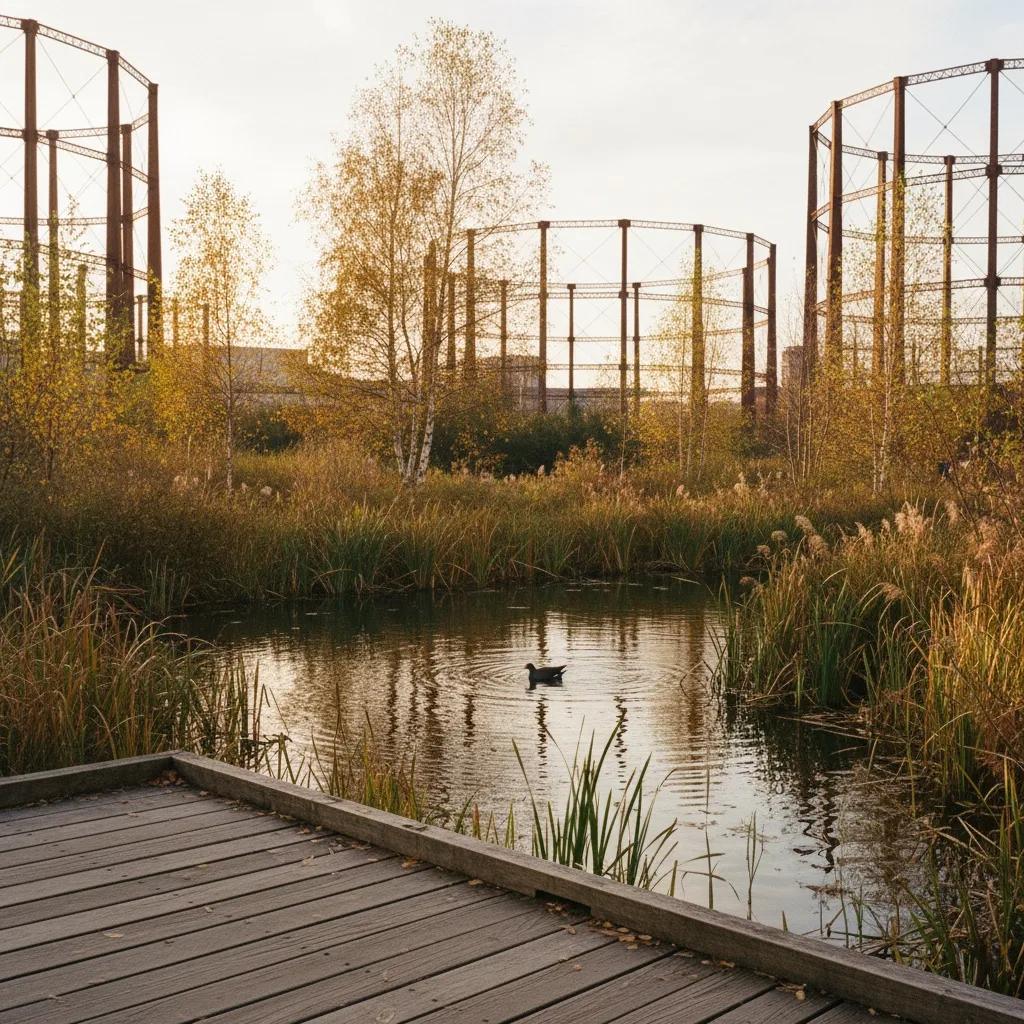
After St Pancras Lock the view opens out. On the far bank you will see the restored Victorian gasholder frames, now wrapped around apartments and a small park, and the converted coal sheds of Coal Drops Yard. Keep following the towpath until it reaches the edge of Camley Street, where a footbridge and a low fence mark the reserve. The natural park sits in a narrow wedge of land between the canal and the railway tracks, which makes its calm feel even more improbable.
What Makes Camley Street Feel Like a Neighbourhood Garden
Camley Street began life as industrial land beside the coal drops, and local campaigners pushed for it to become a wildlife site rather than another lorry park. That origin still shapes how it feels. Instead of clipped lawns you find ponds, reeds, wet woodland and wildflower patches, laid out so that frogs, dragonflies and birds have somewhere to live in one of the most built-up corners of north London.
The reserve is run by London Wildlife Trust, and much of the day-to-day work is done by volunteers who cut back reeds, clear paths and help with school groups. On a weekday you are likely to see someone in waders in a pond or a small team stacking cut branches into habitat piles. Ask them what they are doing and you will usually get an enthusiastic answer about newts, bats or which plants are winning this year.
A floating viewing platform on the canal edge lets you look back across the water towards the reserve and the gasholders, and the visitor centre gives you somewhere to shelter if the weather turns. Inside the reserve, stick to the boardwalks and gravel paths, keep children away from the deeper pond edges and leave any frogspawn or fungi where you find them. It is a wildlife site first and a park second.
When to Walk and How Long to Allow
Weekday mornings are the sweet spot. The towpath is quieter, the light along the canal is soft, and the reserve's volunteers are most likely to be working. Allow about forty-five minutes for the towpath at a gentle pace, then another half hour or so inside the reserve. If you are a photographer, late autumn rewards you with copper reeds and low sun on the gasholder frames.
Weekends are livelier. Camden Market brings big crowds to the lock, and the towpath fills with runners, families and cyclists heading for King's Cross. An honest verdict: if you only have a Saturday, start early and walk the route in reverse, beginning at King's Cross and finishing in Camden for lunch once the market is in full swing. That way the busiest stretch comes last, when you are ready for food rather than calm.
Rain is not a reason to cancel, since the reserve looks its moodiest in grey weather and the visitor centre offers cover. The real issue is daylight. In November, the towpath gets dark early and some stretches feel isolated after dusk, so plan to be back on the streets of King's Cross before the light goes.
Turning the Walk Into a Half Day
From Camley Street, Granary Square and the canalside steps are a few minutes away, with fountains, benches and plenty of places to buy a coffee. If you still have energy, the British Library on Euston Road has free exhibition galleries, and the Gasholder Park lawn inside the old iron frames is a good place to sit. Both keep the day free and give you a very different picture of how King's Cross has changed.
For a green loop instead, walk back west along the canal past Camden Lock and continue towards Primrose Hill. The climb is short and steep, and the top gives one of the best free skyline views in London. Primrose Hill's village high street, with its pastel terraces and independent shops, makes a calm end to the day before you drop back down to Chalk Farm station.
Joining In Rather Than Just Passing Through
If the reserve wins you over, London Wildlife Trust lists volunteering sessions, family activities and wildlife walks on its website. Regular volunteers often start with a single taster day, so there is no pressure to commit. Locals who want something closer to home can also look out for small community growing projects around Camden's housing estates, which often share seeds, tools and know-how with bigger reserves like this one.
Practical Notes for the Camden Canal Walk
The route is roughly two kilometres one way, entirely flat and paved or gravel. Pushchairs manage fine, but a few towpath pinch points under bridges are tight when bikes come through. Wear shoes that can handle damp gravel and leaves, and pack a light waterproof, because the canal corridor channels wind. There are toilets and cafés at both ends of the walk, so you do not need to carry much.
The Karpo APP can help you shape the outing around your day, for example listing a few lunch spots near Camden Lock, suggesting which end to start from on a busy weekend, or adding Primrose Hill or the British Library as a finish. Ask it to keep every stop free and walkable, and it will lay out a sensible order for you to follow.
Ask Karpo for more information.
Keep reading
- Brixton Christmas Light Up Walk Planner: Rainy Arcades
 Hackney Christmas Light Up Walk Planner: Canal Boats
 Islington Christmas Light Up Walk Planner: Square Dates