 Shoreditch Comic Shop Crawl Planner: Murals to Manga
Hidden Gems & Odd Finds
Peckham Linocut Printmaking Supply Walk: Studio Picks
Compare lino blocks and artist brayers on a Peckham linocut printmaking supply walk. Discover independent craft spots across south London on Karpo APP.
Venturing into the converted railway arches, bustling market avenues, and communal art complexes of Peckham immerses relief printmakers in one of south London's most dynamic DIY maker cultures. Known for its grassroots print collectives, independent risograph presses, and experimental textile workshops, Peckham provides an energetic landscape for artists seeking modern relief carving media and versatile printmaking sundries. Instead of formal heritage salons, visitors here encounter maker-run co-operatives and open-access studios where contemporary illustrators, poster designers, and fabric crafters share workspace and exchange practical advice. Planning a self-guided exploration across this neighborhood offers a hands-on way to test synthetic carving substrates, compare roller durometers, and pick up vibrant relief supplies for home press setups.
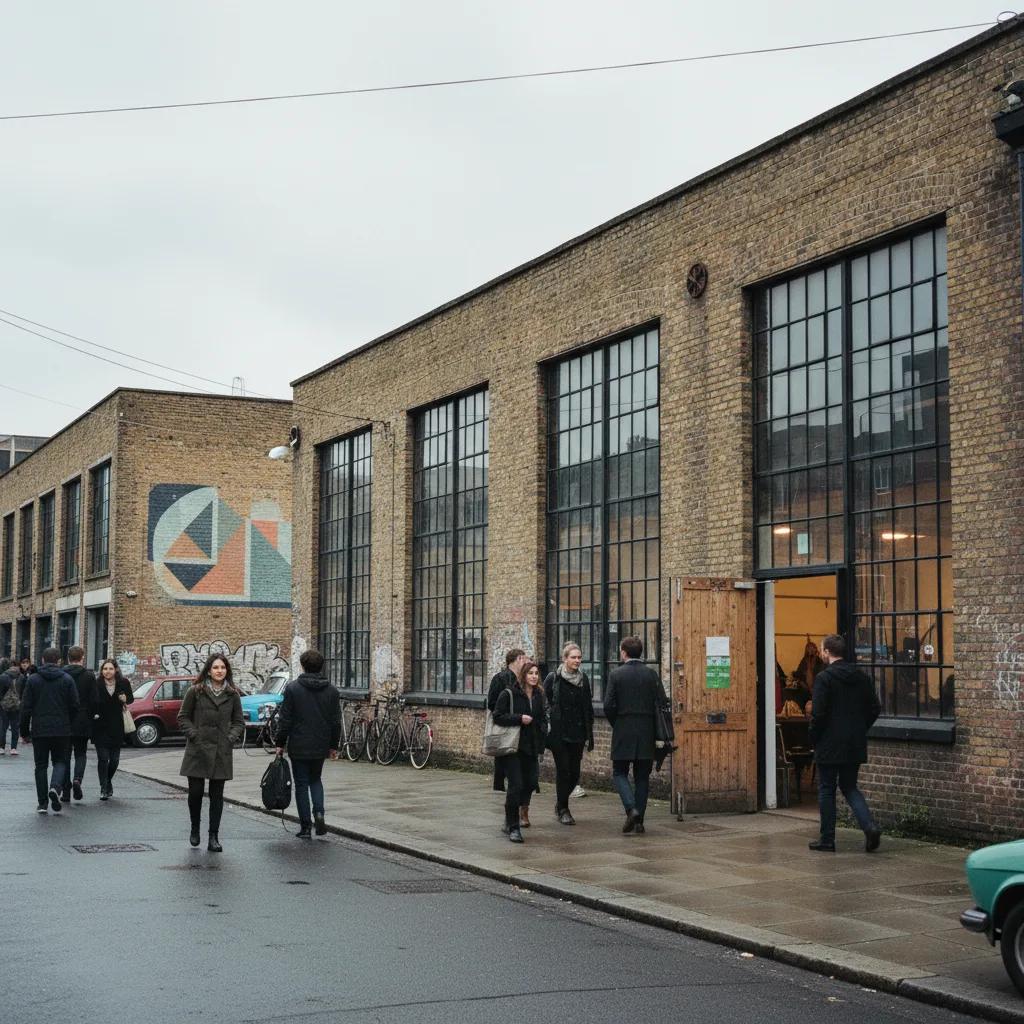
The physical character of Peckham strongly shapes how artists approach their printmaking practice. Many local creatives operate out of compact residential lofts, shared warehouse spaces, or kitchen worktables, creating strong demand for low-toxicity supplies and compact printing tools that do not require heavy cast-iron presses. Wandering through the pedestrian corridors near Rye Lane reveals a creative community deeply invested in accessible art forms, from bold political protest graphics to limited-run streetwear prints. The surrounding streets provide immediate inspiration, with weathered industrial brickwork, vibrant storefront signage, and hand-painted commercial lettering reflecting decades of cultural layering.
Engaging with studio members across Peckham often leads to practical discussions about block durability, hand burnishing efficiency, and ink economy. Printmakers here place strong emphasis on adaptable workflows that accommodate rapid prototyping and multi-disciplinary experimentation. A conversation might center on how a flexible vinyl block speeds up bold silhouette carving for poster editions, or why high-density polyurethane rollers ensure consistent ink slabs across wide graphic expanses without leaving roller lap marks. These candid artisan perspectives help visiting makers refine their supply checklists before tackling demanding studio prints.
Traditional Battleship Linoleum Versus Soft-Cut Blocks
When deciding on relief carving substrates, printmakers in Peckham weigh the classic resilience of traditional hessian-backed linoleum against the pliability of modern synthetic soft-cut blocks. Traditional battleship linoleum, manufactured from natural linseed oil, pine rosin, and wood flour, provides a firm, responsive surface that holds razor-sharp line work and fine cross-hatching without crumbling. However, carving natural linoleum requires consistent hand pressure, steady palm gouge control, and occasional block warming under desk lamps during chilly London mornings to prevent brittle chipping along intricate borders.
By comparison, synthetic soft-cut polymers and flexible vinyl blocks have become staples in community workshops and multi-color print experiments. These pliable rubber-like compounds carve with butter-smooth resistance, allowing gouges to glide effortlessly in any direction without catching on organic grain. Soft-cut blocks can be easily trimmed to custom silhouettes with craft utility blades, making them exceptionally popular for repeat pattern printing on linen totes and handmade stationery. Inspecting sample blocks in local studio spaces helps makers determine whether their current illustration style demands the rigid precision of natural lino or the swift fluid responsiveness of synthetic vinyl.
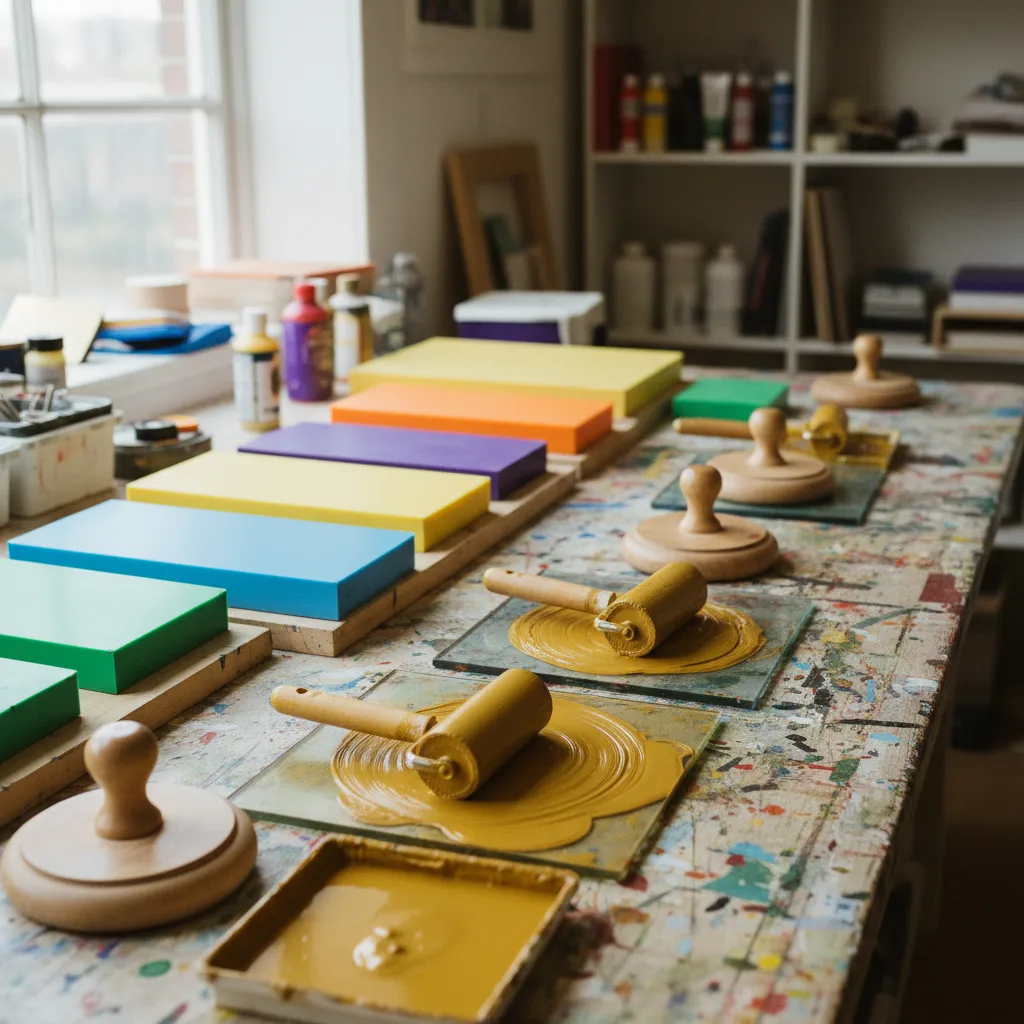
Choosing Brayers and Inking Plates for Bold Layering
The application of an even ink film is vital to the success of any linocut edition, placing roller selection at the heart of studio procurement. In Peckham workshops, printmakers carefully evaluate brayer durometer ratings, which measure the hardness of the rubber roller sleeve. Softer rubber rollers, typically rated around thirty to forty durometers, conform easily to slight surface irregularities in hand-carved blocks, depositing rich deposits of ink into textured grain. Firmer sixty-durometer rollers, by contrast, skim lightly over the surface, preserving shallow uncarved negative areas from unwanted ink transfer and roller skidding.
Equally important is the selection of stable, non-porous inking surfaces such as heavy plate glass or polished acrylic slabs. Studio practitioners frequently advise opting for wide inking palettes that allow ample room for charging the brayer in cross-hatch motions, building up a velvety micro-texture of ink before touching the block. Exploring studio supply shelves in Peckham allows artists to check the balance of metal roller frames, inspect the smoothness of brass bearings, and pick up sturdy bench hooks that hold carving blocks securely against table edges during vigorous gouging sessions.
Water-Washable Inks for Communal Workshop Setups
Because many south London creatives share domestic work areas or communal maker spaces without industrial extraction hoods, water-washable oil-based relief inks have emerged as the preferred medium across Peckham. These advanced printing inks utilize modified linseed oil vehicles that offer identical working properties to historic oil inks—including long open rolling times, high pigment loading, and rich lightfast finishes—while dissolving effortlessly with simple biodegradable household soap. This formulation eliminates the need for harsh white spirits or mineral solvents, making the cleanup process quick and non-hazardous.
Evaluating ink colors in Peckham studios often involves checking transparency and mixing capabilities across contemporary color palettes. Artists frequently blend process cyan, magenta, and yellow with opaque mixing white to create nuanced pastel backdrops for relief poster layers. Adding small drops of water-miscible transparent extender opens up luminous glaze effects where subsequent linocut impressions interact on the paper surface. Learning how local printmakers adjust ink body with drops of boiled linseed oil or gel modifiers provides valuable technical confidence for home printing setups.
Connecting Creative Spaces Around Rye Lane and the Common
A productive supply walk in Peckham is best enjoyed by pairing studio stops with the neighborhood's varied public spaces and creative hubs. After inspecting carving tools or ink swatches, strolling along Bellenden Road or through the open green expanses of Peckham Rye Common provides a refreshing change of tempo. Sitting on a park bench while reviewing block layout thumbnails or feeling paper sample textures in open daylight allows your creative ideas to settle before you finalize supply choices.
The neighborhood boasts an abundance of independent coffee roasters, rooftop community gardens, and casual food kiosks that make ideal resting points between stops. Taking a midday break to jot down notes on roller sizes and paper weights helps avoid impulsive purchases while keeping your overall project budget focused. By immersing yourself in Peckham's vibrant neighborhood fabric, you connect with an authentic urban creative spirit that directly enriches the expressive energy of your relief prints.
Choosing a Personal Printmaking Outing in Peckham
Give a Peckham material hunt a practical starting point by deciding what your next relief print needs. Perhaps you want a clearer cut, a softer ink impression, or a paper that takes hand pressure gracefully. Describe your browsing interests to the Karpo APP and consider its nearby recommendations. Select the places that appeal to you and arrange your own journey between them. Carry project notes in a personal journal, where you can compare conversations and samples afterward. A short, thoughtfully chosen outing can be satisfying even if you return with questions to explore instead of a bag full of new supplies.
Before heading out on your supply walk, review your project specifications, including paper stock counts, target ink colors, and carving tool sweeps to streamline your browsing. Consulting Karpo APP throughout the day keeps your excursion organized and responsive, helping you uncover hidden creative corners across south London at your own comfortable pace. Immerse yourself in Peckham's grassroots printmaking community, secure quality tools that elevate your craft, and head back to your workspace ready to roll fresh ink and pull vibrant new prints.
Ask Karpo for more information.
Keep reading
- Shoreditch Comic Shop Crawl Planner: Murals to Manga
 Bermondsey Comic Shop Crawl Planner: Zines Under the Arches
 Clapham Comic Shop Crawl Planner: Charity Shelves and Common