 Shoreditch Comic Shop Crawl Planner: Murals to Manga
Hidden Gems & Odd Finds
Bloomsbury Linocut Printmaking Supply Walk: Paper Picks
Browse relief papers and carving gouges on a Bloomsbury linocut printmaking supply walk. Explore nearby studio recommendations on the Karpo APP.
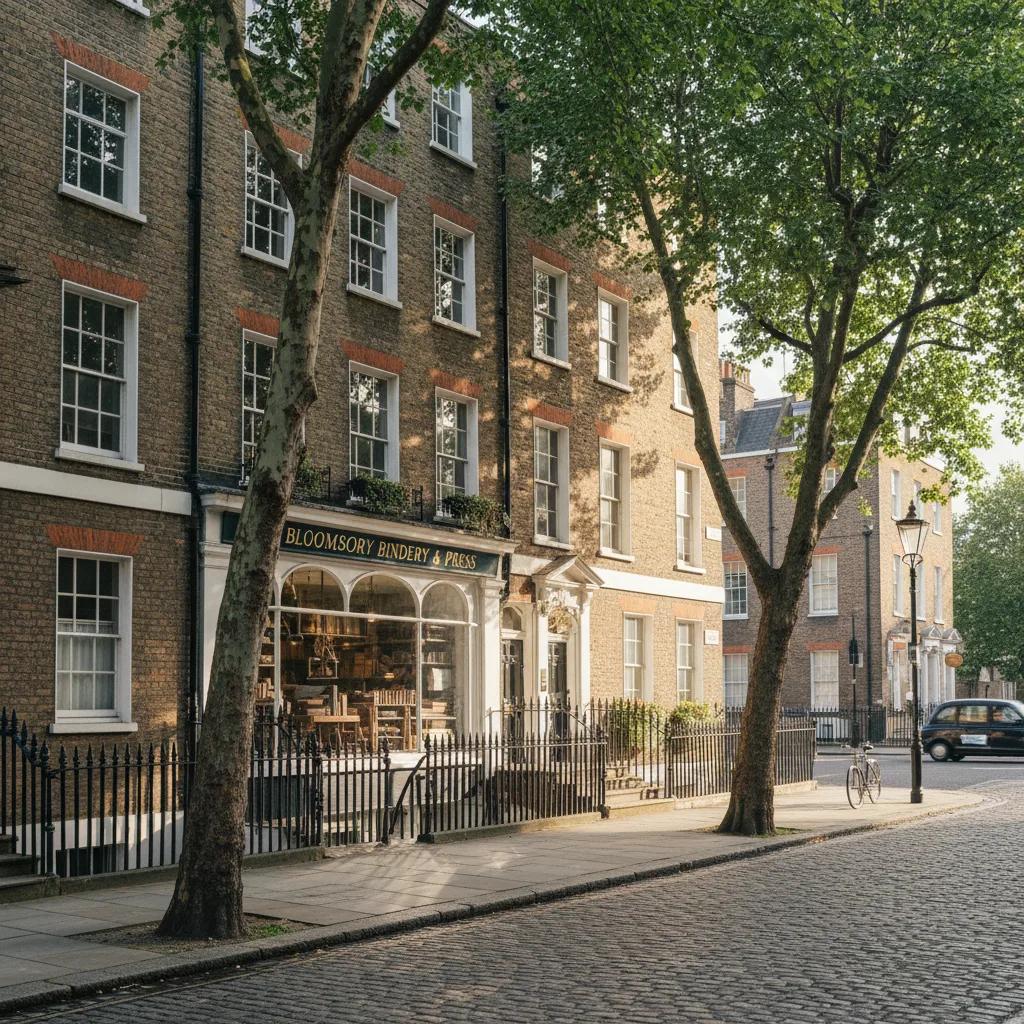
Walking through the stately Georgian garden squares, academic libraries, and book-lined avenues of Bloomsbury immerses relief printmakers in London's richest literary and publishing heritage. For print artists, fine art illustrators, and book arts conservators, Bloomsbury provides a uniquely contemplative setting to evaluate tactile linoleum printmaking supplies, specialized woodcutting chisels, and handmade rag papers. Here, amidst quiet residential enclaves and historic college courtyards, makers can browse specialist materials away from commercial noise, handling raw linoleum blocks, testing ink tackiness, and selecting printmaking tools tailored to detailed relief editions. Planning a dedicated neighborhood studio outing allows printmakers to closely compare natural materials in clean daylight before committing to extensive multi-block printing projects.
The quiet atmosphere of Bloomsbury creates an ideal environment for assessing fine differences in printmaking surfaces and materials. The wide sash windows and tall ceilings typical of Bloomsbury properties provide consistent northern light, which is essential when checking the flatness of unmounted battleship linoleum or inspecting the grain of Japanese vinyl blocks. Taking time between independent studios to walk beneath the mature plane trees of Russell Square or Bedford Square gives makers a peaceful interval to review technical sketches, examine registration margins, and organize upcoming printing steps without feeling hurried.
Beyond its tranquil garden squares, Bloomsbury carries a century-long tradition of private press printing, bookbinding, and small-batch publishing that directly informs the studio culture found here today. Historically associated with avant-garde writers, typographic designers, and independent illustrators, the area continues to attract artisans who value meticulous handcraft over industrial mass production. Conversations with neighborhood studio assistants often turn to subtle technical nuances, such as balancing oil viscosity for delicate typographic cuts or seasoning fresh linoleum slabs with fine sandpaper to achieve uniform ink transfer across delicate halftones.
Archival Cotton Rag and Japanese Kozo Papers
Selecting the appropriate paper substrate is one of the most critical decisions in linocut printmaking, determining ink absorption, tonal depth, and tactile finish. In Bloomsbury, printmakers frequently compare heavyweight European cotton rag papers against delicate, long-fibered Japanese washi sheets. Cotton rag papers like Somerset and Zerkall offer velvety, mould-made surfaces that cradle rich oil-based relief inks with exceptional sharpness and subtle embossment. These substantial sheets provide dimensional stability for complex multi-color reduction prints where sheets must withstand multiple passes through a cylinder press or repeated manual burnishing sessions.
For hand-burnished relief prints produced without a mechanical etching press, Japanese kozo papers such as Hosho and Kitakata provide remarkable tensile strength despite their featherweight appearance. Crafted from the inner bark of mulberry plants, kozo fibers flex under hand pressure, allowing the paper to draw ink cleanly from the shallowest cut troughs without tearing or buckling. Examining sample paper swatches under raking daylight in Bloomsbury studios reveals the delicate translucency and warm organic textures of unsized washi, guiding artists toward papers that complement quiet minimalist line work.
Selecting Steel Carving Gouges and Chisels
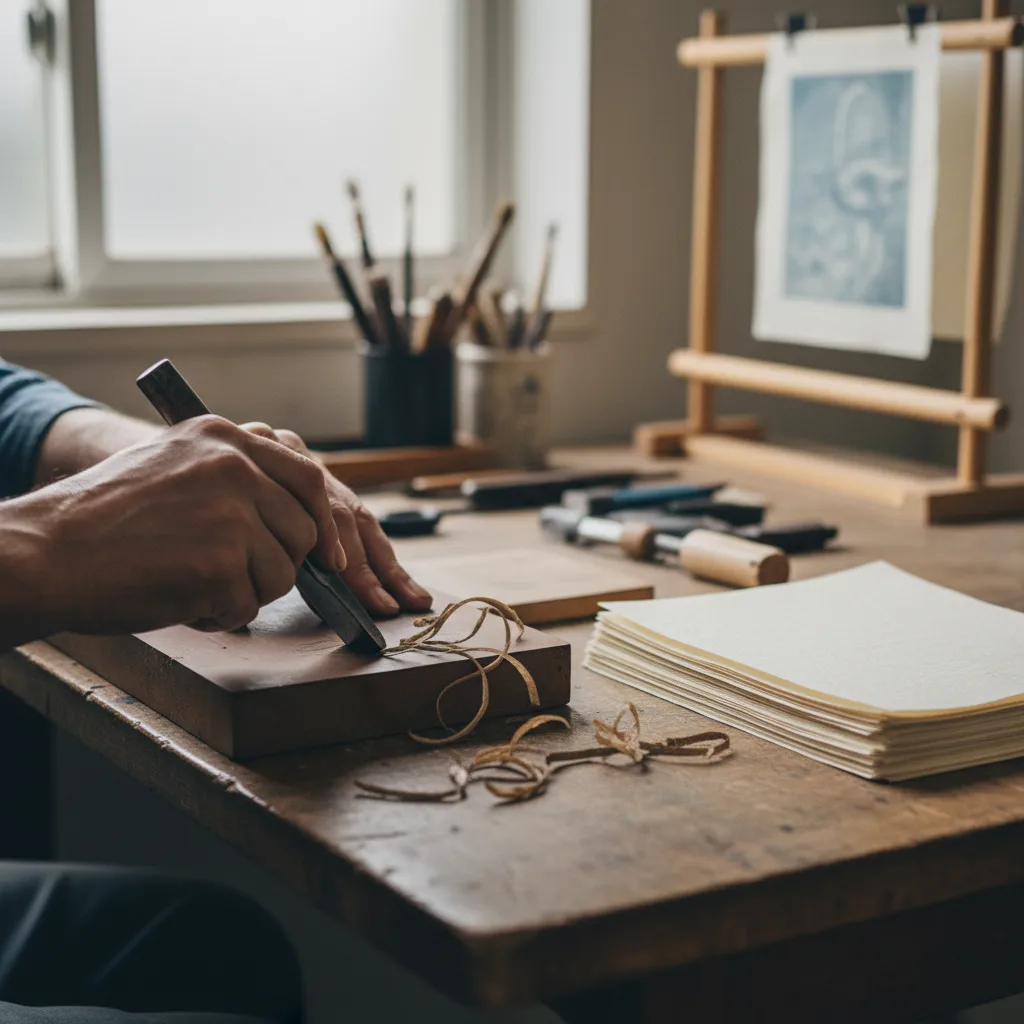
The precision of any linocut print depends fundamentally on the sharpness and geometry of the carver's gouges and knives. In Bloomsbury, relief artists typically weigh the distinct handling qualities of traditional palm-grip gouges against elongated European tool handles. Palm-grip tools, often favored in Japanese moku hanga and fine wood engraving, nestle comfortably in the cup of the hand, offering intimate wrist control when carving tight curved contours and intricate textural cross-hatching. In contrast, longer wooden handles allow printmakers to use forearm momentum when clearing wide negative spaces on dense hessian-backed linoleum slabs.
Maintaining razor-sharp tool edges is essential for clean cutting without tearing linoleum edges or slipping across the block. Printmakers exploring Bloomsbury studios often look for high-carbon tool steel or laminated steel gouges that hold a keen edge through hours of repetitive carving. Inspecting delicate micro-U gouges for hairline detail and shallow sweep V-gouges for crisp lettering ensures that an artist's toolkit can execute both sweeping contour lines and delicate stippling textures. Gathering fine Arkansas stones, leather stropping blocks, and micro-fine polishing pastes forms an indispensable part of an artisan's studio preparation.
Oil-Based Versus Water-Washable Relief Inks
Choosing an ink formulation dictates both the printing workflow and the visual characteristics of the final dried edition. While traditional oil-based relief inks remain the gold standard for pigment saturation, slow drying times, and velvety matte finishes, they require studio setups with proper ventilation and solvent cleanup procedures. In Bloomsbury, many printmakers working from shared studios or home desk spaces gravitate toward professional oil-based water-washable relief inks. These innovative formulations deliver the rich tack and open working time of linseed oil inks while cleaning up safely with simple vegetable soap and warm water.
Testing ink opacity and rolling consistency on polished glass or marble inking slabs is a central ritual for Bloomsbury relief artists. Evaluating how smoothly a soft rubber brayer picks up a thin, even ribbon of ink—producing that characteristic whispering hiss—reveals whether an ink has the right tack for sharp line reproduction. Modifiers such as raw linseed oil, wax pastes, and magnesium carbonate transparent extender allow artists to dial in transparency levels for delicate overlay prints, creating luminous secondary tones where colors gently overlap on the finished print.
Pairing Studio Browsing With Bloomsbury Squares
A linocut supply excursion through Bloomsbury is most rewarding when structured as an unhurried, contemplative walk that incorporates the neighborhood's generous public gardens. Taking quiet intervals between studio visits to sit on shaded benches in Gordon Square or Tavistock Square allows printmakers to inspect paper fiber swatches under natural canopy light and sketch out composition thumbnails. The rhythm of moving between historic print stops and leafy open spaces fosters creative focus, turning a utilitarian shopping chore into an inspiring aesthetic ritual.
The neighborhood's numerous historic tea rooms and quiet independent cafes provide welcome pauses to review supply notes and compare tool balance over hot drinks. Observing the contrasting textures of Bloomsbury's weathered stone arches and wrought-iron garden railings provides immediate visual inspiration for relief block compositions and decorative border motifs. By pacing your outing through these peaceful collegiate streets, you maintain fresh eyes and steady focus, ensuring that every tool and paper sheet chosen matches your upcoming creative vision.
Selecting Your Bloomsbury Studio Stops
Preparing for a printmaking supply afternoon across Bloomsbury becomes much simpler when you clarify your creative goals before stepping out. Using the Karpo APP allows printmakers to describe their project interests and explore relevant nearby studio recommendations. Readers can review these suggestions at their own pace, choose the independent stops that best suit their relief printing work, and freely decide their own visiting sequence between garden squares.
Before setting out on your walk, assemble a concise project checklist outlining required paper dimensions, block counts, and desired ink palettes to guide your conversations at each stop. Keeping personal notes throughout your excursion supports a relaxed, self-directed exploration that balances technical supply sourcing with the tranquil historic charm of Bloomsbury. Embrace the enduring craftsmanship of relief printmaking, source premium archival materials that enhance your creative output, and return to your home studio fully prepared to carve striking new editions.
Ask Karpo for more information.
Keep reading
- Shoreditch Comic Shop Crawl Planner: Murals to Manga
 Bermondsey Comic Shop Crawl Planner: Zines Under the Arches
 Clapham Comic Shop Crawl Planner: Charity Shelves and Common