 Shoreditch Comic Shop Crawl Planner: Murals to Manga
Hidden Gems & Odd Finds
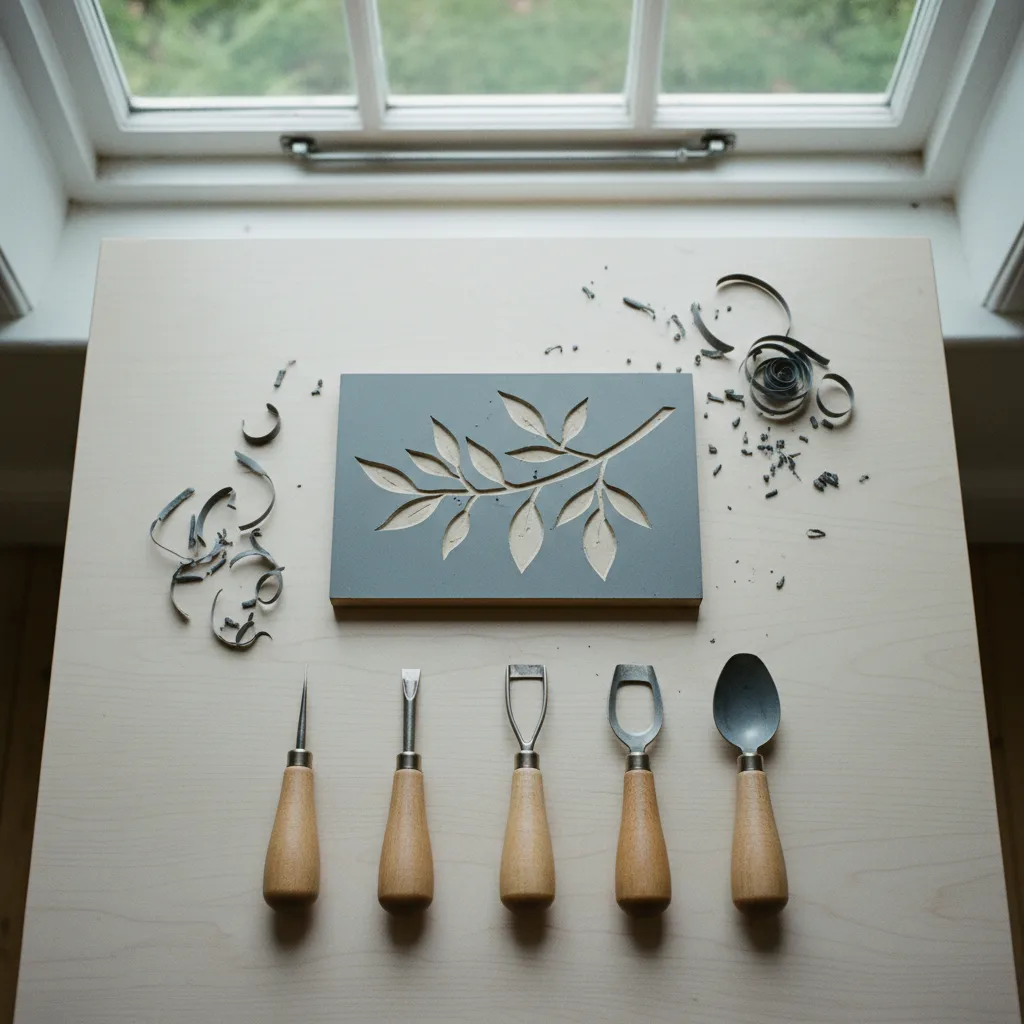
Islington Lino Cutting Blade Picker: V Tips Before U Scoops
In Islington's Georgian terraces, the fine V gouge decides whether a linocut reads crisp or fuzzy, so learn its angle before buying a single wide scoop.
A small V-shaped gouge does more to decide how a first linocut looks than any other blade in the set, because every outline, every hatched shadow and every lettering-free border starts as a V groove. If you are using this lino cutting blade picker in Islington, start there: test how deep and how sharp a fine V cuts, then add a U scoop or two for clearing. Islington, with its long Georgian terraces, antique arcades off Upper Street and quiet canal stretches, rewards a printmaker who likes to look slowly and choose carefully.
Why the V profile comes first
A V gouge has two flat walls meeting at a point. Pushed into linoleum, it leaves a groove with clean sloped sides, and the angle between those walls controls the look of the printed line. A narrow angle produces a deep, steep-sided cut that holds ink away from fine lines even under heavy pressure. A wider angle produces a shallower, softer groove that is friendlier on thin or crumbly lino but can fill with ink if the block is rolled too generously.
For beginners, the practical lesson is that a V tool is less forgiving than it looks. When the walls are slightly dull, the point tears rather than slices, and the line wobbles. When the angle is too narrow for the hand pressure you use, the tip dives and sticks. Holding a sample tool at a low angle and sliding it along a scrap of lino tells you more in ten seconds than any product description.
Reading U curvature without the jargon
U gouges are described by width and by how deep the curve is. A shallow U, sometimes almost flat, clears broad areas with gentle ridges that can print as texture if you leave them. A deeper U carves a rounded channel that feels more like scooping, removes material faster and leaves taller walls on either side.
Curvature matters because it decides what the background of your print will look like. A tight, deep U leaves visible scalloped tracks, which some printmakers love for energy and movement. A broad shallow U makes calmer, smoother clearings. Neither is better; they suit different temperaments. When you compare tools, look along the tip from the end and imagine the shape it will press into the block.
Matching blade sets to the kind of print you imagine
Before choosing, picture the first three prints you want to make. Botanical studies with fine veins and stems lean heavily on one or two small V tips plus a medium U. Bold graphic images with large black and white shapes need a wide U and a sturdy medium V, while very fine tools sit unused. Patterned repeat blocks for cards or fabric often want a middle-sized V and a shallow U that clears evenly.

This is where many first purchases go wrong. Large beginner sets include five or six profiles, but several overlap, and the tiniest tip is often the one that breaks or dulls first. A smaller selection of well-sharpened tools that match your planned images tends to serve better than a long row that mostly sits in a drawer.
How Islington's streets shape a browsing day
Islington's character makes it a gentle place to think about tools. The stretch along Upper Street mixes bookshops, cafes and independent stores, and the narrow lanes around the antique arcades feel suited to people who enjoy handling small objects. Nearby, the Regent's Canal towpath offers a quieter thread where you can sit with a sketchbook and work out which motifs you want to carve.
The neighbourhood also attracts illustrators, designers and hobby printmakers who treat a craft errand as part of a slow day out. That mood helps: choosing blades is easier when you are not rushing between appointments. If you prefer a steady pace, pair an afternoon of browsing with a long coffee and an hour of sketching before deciding which profiles you actually need.
A simple in-hand test for each blade
If a shop or studio lets you handle tools, try three gestures. First, press the tip lightly into a scrap and notice whether it bites cleanly or slides. Second, push a short straight line and watch whether the groove walls stay even. Third, curve the cut gently and see whether the blade turns with your wrist or wants to wander.
Pay attention to handle shape during these tests. A mushroom-style handle sits in the palm and lets you push with the whole hand, which suits steady, longer cuts. A straight, pencil-like handle gives more fingertip control for detail but can tire the hand faster. Neither is universal; what matters is which one keeps your line steady without strain.
Where to skip spending and where not to
An honest judgement: skip the very cheapest multi-blade sets with soft steel nibs if you plan to cut more than a handful of prints. They work for an afternoon experiment, yet dull quickly on traditional battleship lino, and a dull V tip is the fastest way to lose confidence. It is better to spend thoughtfully on one fine V and one medium U that hold an edge.
On the other hand, there is little need to chase the widest gouges at the start. Large clearings can be handled by a medium U with patience, and many printmakers only add a broad scoop once they find themselves carving bigger blocks. Starting narrow and expanding later keeps the toolkit honest to the work you actually do.
Keeping fine tips sharp between sessions
Fine V tools lose their point first. Storing them with caps or in a tool roll prevents the tips from knocking against each other in a bag. A quick strop on leather loaded with a little polishing compound after each session keeps edges keen far longer than waiting until cutting feels heavy.
Warmth helps too. Traditional lino cuts more cleanly when it is slightly warm, which reduces the force needed on fine tips and lowers the risk of chipping. Many printmakers lay the block near a radiator or under a lamp for a few minutes first. Soft-cut vinyl blocks need less warmth but still benefit from a sharp edge.
When a shop does not have what you want
Small craft stops sometimes carry only a few profiles at once. If the exact V angle you want is missing, try a set with an interchangeable handle so you can add single nibs later, or pick up a medium V and practise sharpening it to a finer point. Many experienced carvers reshape tools over time.
If it rains, Islington's arcades and covered passages make browsing comfortable, and a cafe table becomes a good place to sketch the composition you plan to cut. On a dry day, a canal walk is a calm way to let ideas settle before you commit to a purchase.
Using Karpo APP for nearby suggestions
Karpo APP can suggest nearby art supply stores, printmaking studios and craft spaces around Islington when you ask it. It does not decide your day for you; you pick which suggestions sound useful, and you choose the order and how to travel between them. Treat the suggestions as a starting point for your own browsing.
Quick takeaways for an Islington blade search
Start with a fine V and a medium U, test bite and groove walls in hand, match profiles to the images you plan, and keep tips sharp with a strop. Islington's slower pace suits that careful approach, and leaving room for later additions keeps your toolkit useful rather than crowded.
Ask Karpo for more information.
Keep reading
- Shoreditch Comic Shop Crawl Planner: Murals to Manga
 Bermondsey Comic Shop Crawl Planner: Zines Under the Arches
 Clapham Comic Shop Crawl Planner: Charity Shelves and Common