 Clapham Board Game Night Finder: New to London Meetups
Weekend Plans
Soho Life Drawing Drop In Finder for Lapsed Art Students
Looking for a Soho life drawing drop-in after years away? Start with short poses, pack light, and walk the lanes where Bacon and Freud once argued over drinks.
Some people leave art school and keep drawing every week. Many more pack the portfolio away, take a job, and only notice years later how much they miss the hush of a life room. If that sounds like you, Soho is a fine place to come back. The streets have been home to painters, models and late-night arguments about art for generations, and a drop-in session here can feel less like a lesson and more like returning to a conversation you left halfway. This life drawing drop in finder is written for the lapsed art student who wants a gentle, honest way back in.
Why Soho Suits a Return to the Life Room
Soho has a long memory for artists. In the decades after the Second World War, painters such as Francis Bacon and Lucian Freud were regulars in its pubs and private drinking clubs, and the neighbourhood became a byword for bohemian life. You do not need to care about that history to enjoy a session, yet it helps to know that people have been looking hard at the human figure on these streets for a long time. It takes some of the pressure off. You are not trying to impress anyone, just joining a very old habit.
The area also works on a practical level. It sits in the middle of town, so it is easy to reach after work from almost any direction, and the streets around it are full of places to eat before or after. A drop-in format, where you turn up for a single session rather than signing up for a whole course, suits someone testing whether the old spark is still there. One evening is a small commitment, and you can leave knowing whether you want more.
What a Drop-In Session Usually Feels Like
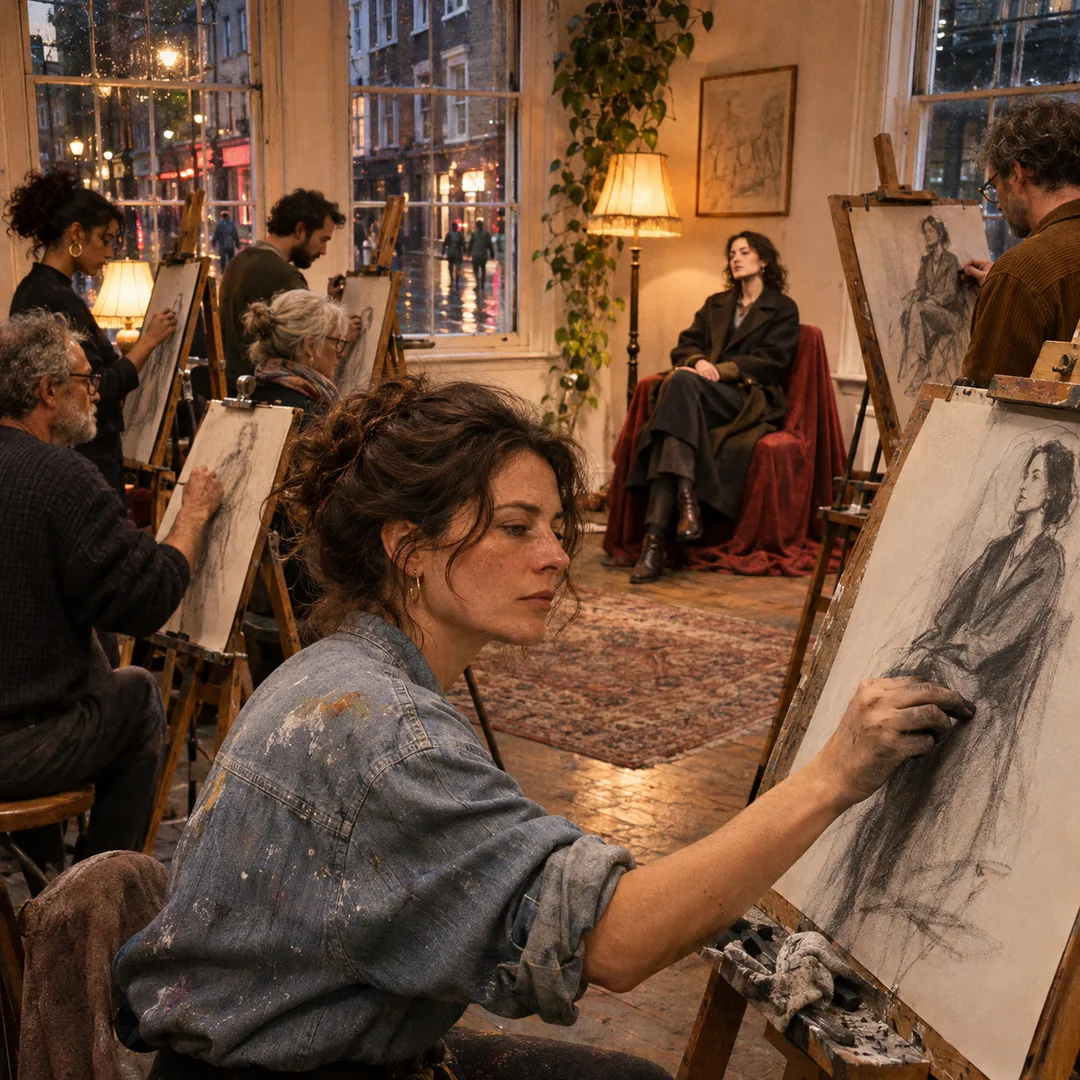
Most life drawing sessions follow a familiar rhythm. A model takes a series of poses, often starting with very short ones of a minute or two that force you to capture movement rather than detail. The poses then lengthen, and towards the end there may be a single long pose that gives you time to build tone, correct proportions and settle into the drawing. Someone keeps time, and the room goes quiet in a way that few places in central London ever do.
Sessions come in two broad flavours. Untutored ones simply provide the model, the space and the timing, leaving you to work however you like. Tutored ones add a teacher who may set a theme for the evening, suggest exercises or walk round offering quiet comments. After years away, a tutored session can help you rebuild confidence, while an untutored one lets you rediscover your own way of seeing. Both are worth trying, and many lapsed students alternate between them.
Packing for Your First Night Back
Resist the urge to buy a whole new kit. A pad of cheap cartridge paper, a few sticks of willow charcoal, a putty rubber and a rag will carry you through the first evening. Cheap paper matters more than it sounds, because it gives you permission to make bad drawings quickly. The aim on night one is loosening up, not producing something to frame. If you still have an old portfolio in the cupboard, bring it, since some rooms have easels and some have donkeys or chairs, and a stiff board is useful either way.
Wear clothes you do not mind smudging, and expect to get charcoal on your hands, cuffs and probably your face. Many rooms provide some materials, so if you arrive with only a pencil you will rarely be turned away, yet bringing your own tools helps you feel settled. A small bottle of water and something to wipe your fingers will make the long pose more comfortable. Leave the expensive pastels at home until you know you are coming back.
Working Through the Rust
The first few warm-up poses will probably feel clumsy, and that is fine. Hands that once moved easily may hesitate, and you may find yourself fussing over a nose while the rest of the figure goes unfinished. Give yourself a simple rule for the opening half hour: draw the whole figure every time, however rough, before adding a single detail. It is the same advice art tutors have given for generations, and it works because it trains the eye to see relationships rather than parts.
By the middle of the session something usually shifts. The room's quiet, the scratch of charcoal from other easels and the steady presence of the model start to pull you into the work. Notice which poses you enjoyed and which frustrated you, because that tells you where to focus next time. If you studied painting or sculpture rather than drawing, you may find your instincts for weight and balance come back faster than your line, which is a good sign rather than a problem.
Life Room Etiquette Worth Remembering
A few courtesies apply almost everywhere. Never photograph the model, even during breaks, and keep your phone away unless the organiser asks otherwise. Avoid commenting on the model's body, and give them space when they step down to rest. If you want to show a model your drawing, wait until the end of the session and let them decide whether they want to look. These small habits keep the room comfortable for everyone and are the reason good models keep returning.
Treat fellow artists with the same consideration. Do not wander behind other easels to peer at their work while a pose is running, and keep conversation for the breaks. Arriving a few minutes early lets you set up without disturbing the first poses, which is especially kind in a small room. If you are unsure about anything, from where to sit to whether you can use ink, ask the organiser quietly before you begin.
After the Session: Soho Streets to Wander
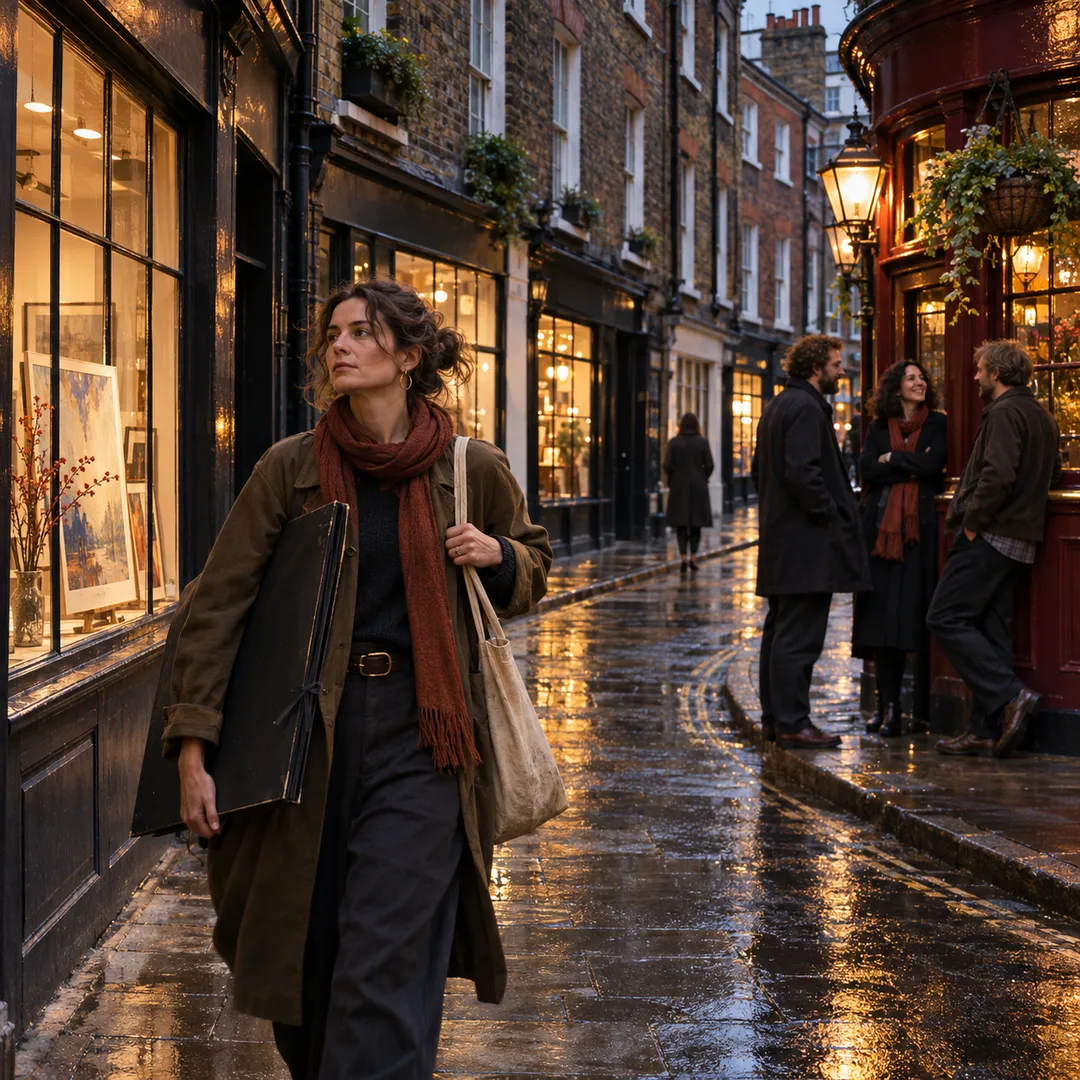
When the last pose ends, give yourself a little time before heading home. Golden Square and Soho Square are both pleasant places to pause on a dry evening, and the narrow lanes between them are full of small shops, restaurants and lit windows that reward a slow walk. Carry your pad under your arm and you will blend right in, since Soho has long been used to people with portfolios. Some returning artists like to make a quick street sketch on the way out, just to keep the hand moving.
If you came with a friend, use the walk to compare drawings and talk about what worked. Lapsed students often find that this conversation is half the pleasure, because it reconnects them with the way they used to talk about art. William Blake was born in Soho in 1757, a nice detail for anyone who likes to think about the long line of artists who have walked these pavements.
Finding Your Next Drop-In With the Karpo APP
Once you know you want to keep going, the next step is finding sessions that fit your week and your style. Open the Karpo APP and describe what you are after in plain words, for example a relaxed untutored life drawing drop-in in Soho for someone returning after years away, and use the suggestions as a starting shortlist. You can ask follow-up questions about the feel of a room, whether it tends to suit beginners or seasoned artists, and what else is nearby for before or after.
Keep a simple record of each session you try: the type of poses, whether it was tutored, and how you felt walking out. After a few weeks you will know which rooms bring out your best work and which ones you return to purely for the company. The old portfolio will start filling up again, and the habit you thought you had lost will feel like yours once more.
Ask Karpo for more information.
Keep reading
- Clapham Board Game Night Finder: New to London Meetups
 Marylebone Board Game Night Finder: Baker Street Mysteries
 Notting Hill Board Game Night Finder: Two-Player Rainy Dates