 Clapham Board Game Night Finder: New to London Meetups
Weekend Plans
Brixton Life Drawing Drop In Finder for Gesture Practice
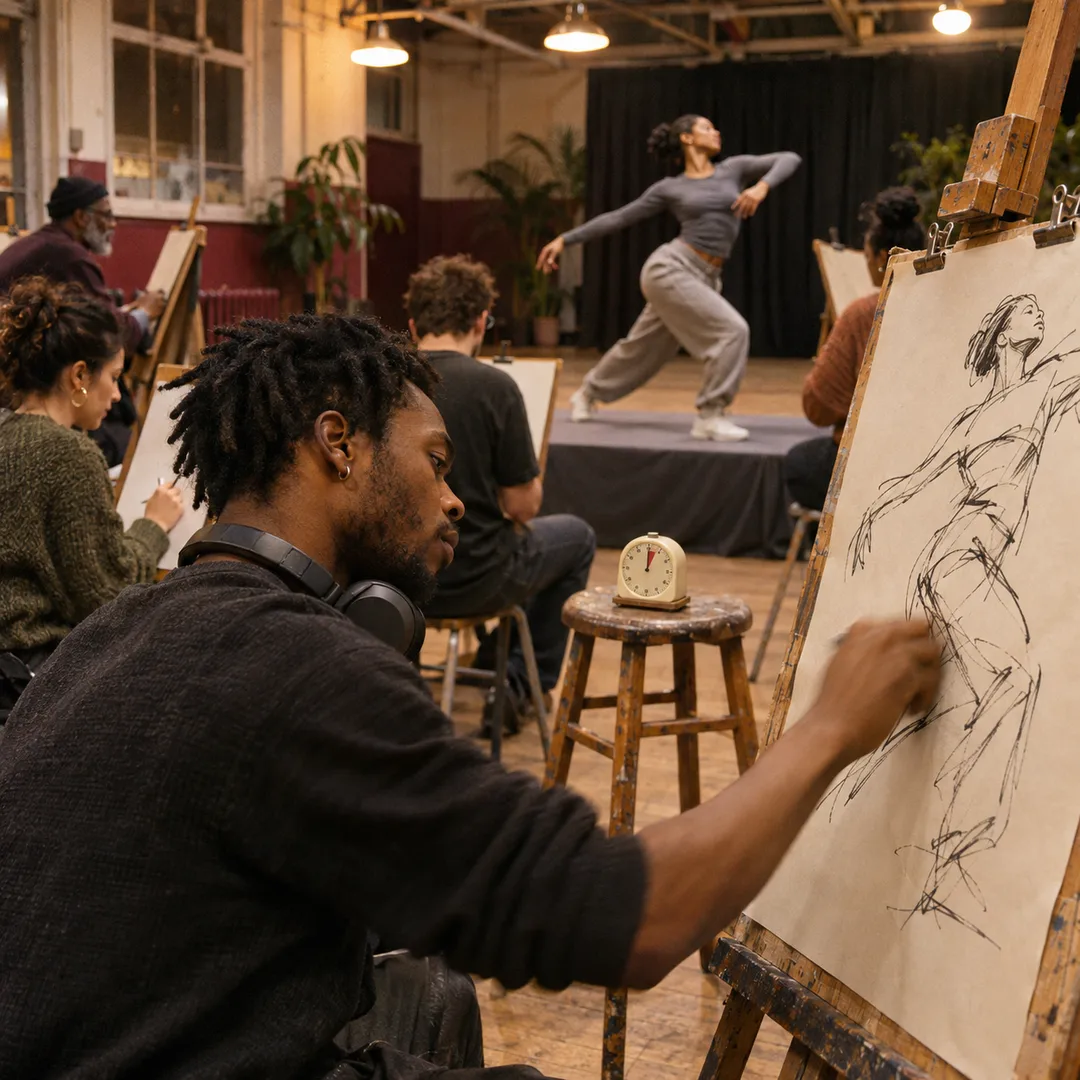
Need a Brixton life drawing drop-in to sharpen gesture work? Chase the short poses, draw from the hips outward, and debrief over food in Brixton Village after.
If you draw for a living on a screen, it is easy to lose touch with the body. Animators, game artists and comic makers spend hours refining shapes on a tablet, yet the characters that feel most alive usually start with a quick, honest gesture drawn from a real person. Life drawing drop-ins are the classic way to keep that skill sharp, and Brixton is a great place to do it. This life drawing drop in finder is for digital artists who want to spend an evening chasing movement with pen and paper, then refuel in one of the liveliest neighbourhoods in South London.
Why Gesture Drawing Matters for Digital Artists
Gesture drawing is about capturing the action, weight and rhythm of a pose in a few seconds. It is less concerned with anatomy or detail than with the line of movement running through a figure. Animation schools have taught it for decades because it trains you to see the whole pose at once, which is exactly what you need when designing key frames or a character's silhouette. Digital tools make it easy to fix every line, which can quietly erode that instinct.
Sitting in front of a live model with a timer running forces a different habit. You cannot zoom in, undo or adjust layers. You simply have to commit. Many artists find that a single evening of short poses loosens their digital work for days afterwards, giving their characters a more natural sense of weight and energy. Regular practice compounds that effect, and it is far more enjoyable than repeating the same exercises from reference photos at your desk.
Choosing a Session That Favours Short Poses
Not every life drawing session is built for gesture work. Some rooms focus on long, still poses for careful tonal studies, which is valuable but less useful if you want quick-fire practice. Look for drop-ins that describe themselves as dynamic, energetic or focused on short poses, or that welcome dancers, performers and costumed models who can hold strong action poses. The best evenings for gesture practice often open with a long run of one-minute and two-minute poses before moving to anything longer.
Brixton's creative community includes many performers, dancers and illustrators, and its drawing rooms tend to reflect that mix. You may find sessions that pair life drawing with music, or that invite models to move between poses rather than stay frozen. These formats are perfect for gesture work, because they encourage you to catch the transitions as well as the poses themselves.
What to Bring for Fast Work
Swap your usual tools for something that rewards speed. A pad of cheap newsprint is ideal, because you will go through dozens of sheets and should never hesitate to start fresh. A brush pen, a soft graphite stick or a chunk of charcoal all encourage bold, sweeping marks. Avoid fine liners and hard pencils, which tempt you into fiddly detail. If you normally draw small on a tablet, try working larger than feels comfortable to engage your whole arm.
Some digital artists like to bring a single coloured pencil to mark the line of action first, then add the figure around it in black. Others set themselves a rule of no more than five lines per pose for the first ten minutes. Whatever approach you choose, pack light, since a big bag of supplies just slows you down between poses. A bulldog clip and a stiff board keep loose sheets steady on any easel or chair.
Drawing From the Hips Outward
A useful tip for gesture work is to start from the hips or pelvis, which usually carry the weight of a pose, then sweep outward to the head and limbs. Look for the tilt of the shoulders against the tilt of the hips, and the curve running from the neck to the supporting foot. These relationships tell you more about a pose than any amount of detail on the hands or face.
Between poses, glance at your previous drawings and ask yourself whether you captured the feeling of the pose or just its outline. If a drawing looks stiff, exaggerate the curve on the next one. Animators often push poses further than reality, and practising that push in the life room makes it easier to apply to characters later. By the end of the session your page should feel full of movement, even if no single figure is finished.
Respecting the Room and the Model
Even in a relaxed, music-filled session, the usual etiquette applies. Never photograph the model, keep your phone in your bag while poses are running, and avoid commenting on the model's body. If you want reference for later, rely on your drawings, not your camera. Models who hold dynamic poses are working hard, so give them space during breaks and thank them at the end.
Be considerate with fellow artists too. Fast drawing can get messy, so keep your newsprint and charcoal within your own space, and try not to rustle pages loudly during quiet moments. If the organiser asks for feedback on the poses, take part, since many sessions adjust their format based on what regulars enjoy. That small contribution helps keep gesture-friendly evenings on the programme.
Refuelling in Brixton After the Session
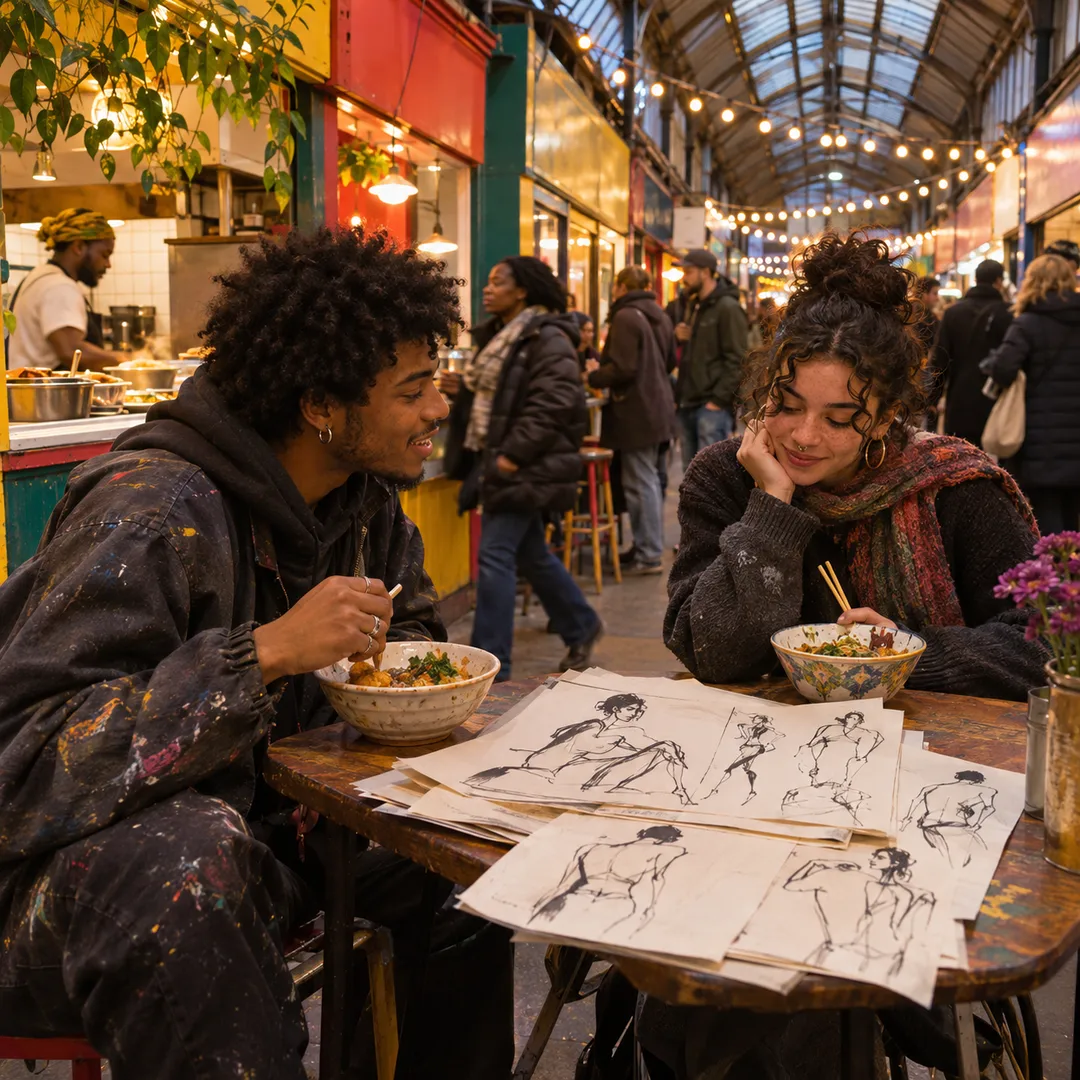
When the last pose ends, Brixton gives you plenty of ways to unwind. The covered arcades of Brixton Village and Market Row are full of small food counters from many corners of the world, making them a good place to spread out your drawings over a shared table and compare notes. The buzz of the arcades is a nice contrast to the focus of the life room, and it often sparks ideas for characters and scenes.
On a clear evening, Windrush Square is worth a slow walk. It is home to the Black Cultural Archives, a reminder of the area's deep Caribbean heritage and its long history of artists, musicians and storytellers. If you have time on a weekend, Brockwell Park offers wide views across London and plenty of people moving in interesting ways, perfect for a few extra gesture sketches from life.
Building a Gesture Routine With the Karpo APP
To make gesture practice a habit, open the Karpo APP and describe what you need in plain words, for example a Brixton life drawing drop-in with lots of short dynamic poses for an animator who wants to loosen up after a week on a tablet. Use the suggestions as a shortlist, and ask follow-up questions about the mood of each room, whether it suits fast work, and where to eat nearby afterwards.
Save the sessions that suited you and note the pose lengths and atmosphere. Over time you will build a small rotation of rooms that sharpen different skills, from quick action to careful weight and balance. Bring a few of your favourite gestures back to your desk and use them as warm-ups before digital work. Your characters will thank you for it.
Ask Karpo for more information.
Keep reading
- Clapham Board Game Night Finder: New to London Meetups
 Marylebone Board Game Night Finder: Baker Street Mysteries
 Notting Hill Board Game Night Finder: Two-Player Rainy Dates