 Shoreditch Comic Shop Crawl Planner: Murals to Manga
Hidden Gems & Odd Finds
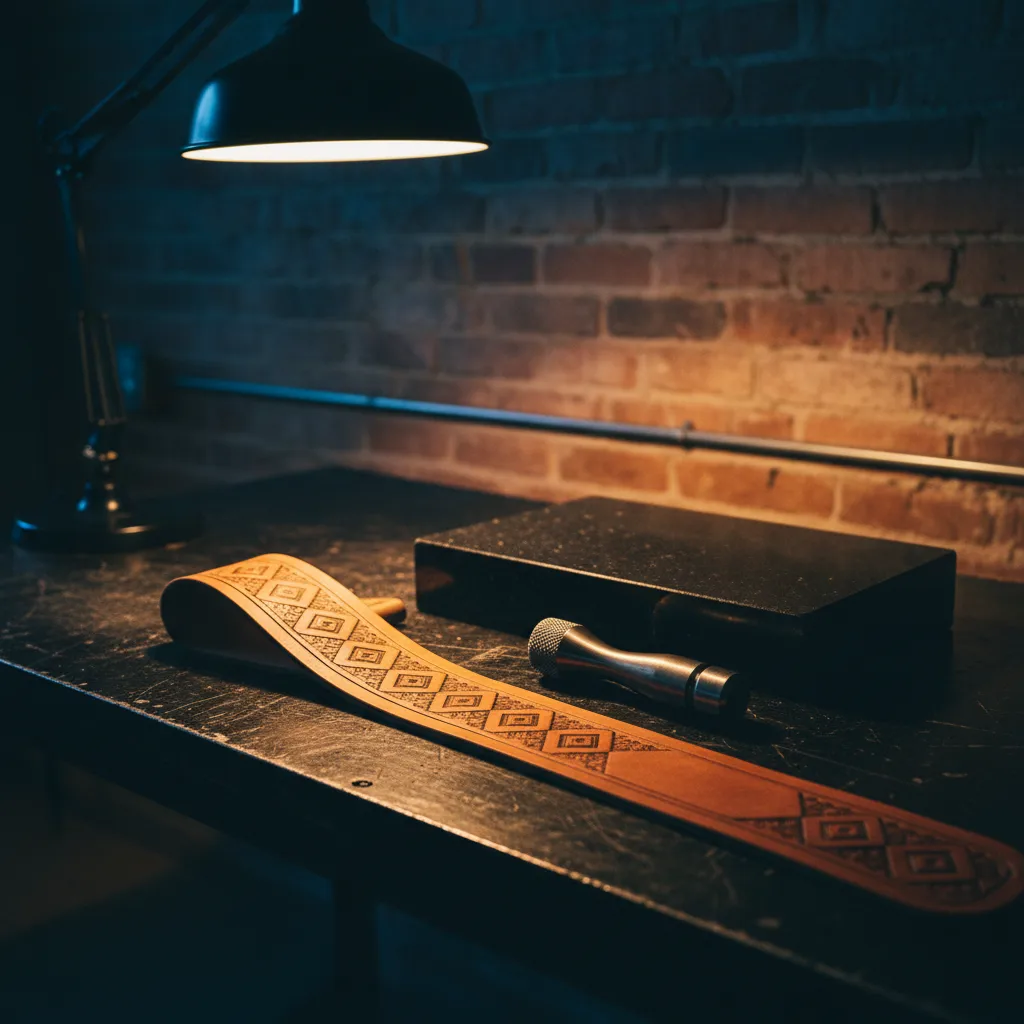
Shoreditch Leather Stamping Tool Picker: 3D or Classic
Shoreditch's warehouse lofts and graphic street art suit comparing deep three-dimensional stamps with classic small faces for bold geometric strap designs.
Three-dimensional leather stamps, with large faces that press an entire motif in one strike, sit at the opposite end of the spectrum from classic small tools that build a design strike by strike. Shoreditch, full of design studios, warehouse lofts and graphic murals, is a fitting place to think about that contrast. Modern strap designs with bold geometry suit both approaches, but each demands different leather, force and finishing.
What Three-Dimensional Stamps Actually Do
A three-dimensional stamp carries a full image, such as a geometric medallion, an animal head or a sculpted leaf, cut in relief across a broad face. Struck firmly into well-cased vegetable-tanned leather, it leaves a deep, finished impression in one go. That speed appeals when you want matching emblems on a run of straps or bag flaps. The trade-off is flexibility, because the motif is fixed and you cannot adjust its proportions.
Because the face is large, these stamps need substantial force. Many makers use a heavy maul or a press rather than a light mallet, and some use a small arbor press for perfectly even depth. A single mistimed blow can leave half the image shallow. Test on thick scrap, ideally from the same hide, and examine the shallowest part of the impression before trusting the stamp on a finished piece.
Classic Small Faces for Custom Geometry
Classic small tools build a design gradually: bevellers outline shapes, background matting faces push down space, and small geometric punches repeat accents. Geometric strap designs, with chevrons, interlocking triangles or concentric diamonds, can be assembled from a few simple faces. The process is slower but endlessly adaptable, since you control the scale, angle and density of every element as you go.
The skill lies in consistency. Repeated triangles must share the same depth and spacing, or the geometry looks crooked. Faint guidelines scored with a divider and a ruler help hugely. Compared with a single three-dimensional strike, a hand-built geometric pattern rewards precision and patience. It also produces something unique, which matters in a neighbourhood where originality is valued on every wall and shopfront.
Ergonomic Shafts and Comfortable Grip
Modern stamping tools increasingly come with ergonomic shafts: knurled grips, thicker diameters and rubberised sleeves. These reduce hand fatigue during long sessions, which helps anyone stamping a full set of straps in one sitting. Traditional thin shafts remain popular because they let you feel the leather through the tool. Hold both styles if you can and notice which keeps your hand steady after a dozen strikes.
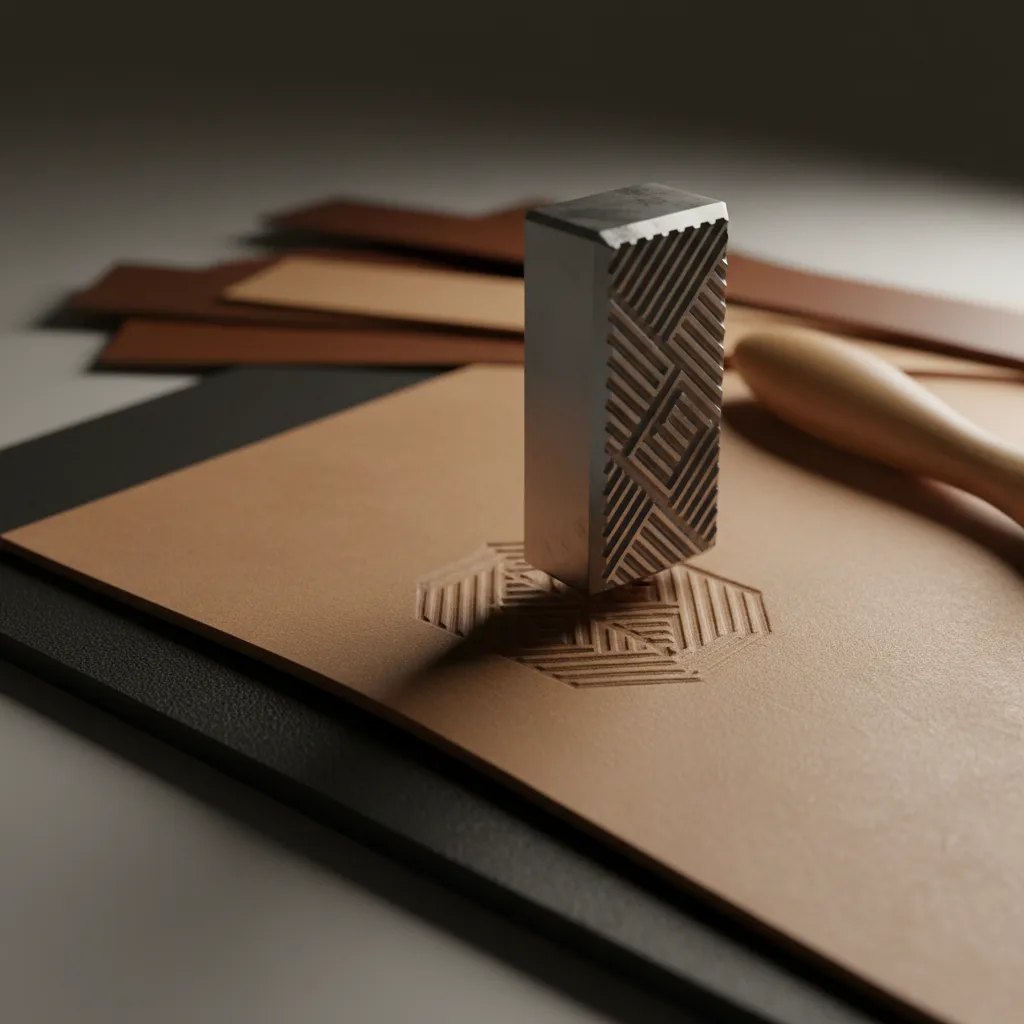
Tool length matters too. Shorter tools give more control for fine geometry, while longer ones keep knuckles clear of the mallet on large faces. Some makers prefer a single long ergonomic handle with interchangeable heads, swapping faces for different motifs. That system saves drawer space but can loosen with heavy use, so check that the head locks firmly before relying on it for deep impressions.
Browsing Lofts, Murals and Studio Fronts
Shoreditch is dense with visual ideas. Warehouse conversions, galleries and murals sit side by side, and geometric patterns appear everywhere, from brickwork and window grids to painted walls. Leather goods in design shops here often favour clean lines, dark dyes and bold hardware, which helps you picture how stamped geometry will look on a finished strap. Let the street scenery guide your attention rather than following a fixed list.
Collecting shapes is a productive way to spend an hour. Photograph patterns that catch your eye, such as repeating tiles, railings or a striking mural, then simplify them into a few lines on paper. Those sketches can become a custom geometric design built with small faces, or help you decide whether a ready-made three-dimensional motif suits your style. Either way, the neighbourhood becomes a source book.
Leather, Dye and Finish for Bold Designs
Deep impressions need thicker leather. Three-dimensional stamps generally ask for heavy vegetable-tanned shoulder or belly that will not punch through or curl. Classic geometric work can manage slightly thinner leather, though straps still benefit from substantial weight. Case evenly and work while the grain has just returned to its natural colour, because uneven moisture is the most common reason a large impression goes patchy.
Finishing defines the look. Dark dyes with a resist and antique stain make geometry pop, settling into recesses while the raised surface stays lighter. Natural leather left to tan in light gives a subtler, aging effect over time. Seal straps with a flexible top coat so they bend without cracking. Test the whole sequence of dye, resist and stain on a stamped offcut before risking a finished piece.
Storage looks different for the two families as well. Three-dimensional stamps are heavy and broad, so they rest best face-up in a shallow drawer lined with felt, where nothing can knock their relief. Small geometric faces fit an upright drilled block. Either way, wipe steel with a lightly oiled cloth after each session, because loft workshops with large windows and cold brick walls can gather condensation through the winter months.
Choosing Between the Two Approaches
If you want a repeated emblem on many pieces quickly, a well-made three-dimensional stamp is efficient. If you want designs that feel personal and adjustable, invest in a small kit: two bevellers, one background matting face, a triangle and a diamond punch. Skip oversized novelty stamps with cartoonish motifs; they look dated on minimal straps and are hard to resell or reuse. Choose depth and clarity over novelty.
Be cautious with very cheap three-dimensional stamps cast from soft metal. They can leave rounded, indistinct relief, and their faces sometimes chip under a heavy maul. A blurred emblem undermines a modern strap, where crisp lines carry the whole design. If you can examine a stamp before buying, look for sharp internal corners and smooth, polished surfaces across the face.
Letting Karpo APP Point to Nearby Studios
For fresh ideas, Karpo APP can suggest nearby design studios, leather suppliers, galleries and cafés around Shoreditch. You choose which of those suggestions to visit, in your own order, travelling however suits you. The app gives starting points, and the murals, lofts and side streets supply plenty more along the way.
At home, stamp a short strap offcut in both styles: one with a single three-dimensional emblem, one with hand-built geometry. Dye and finish both, then wear or flex them for a few days. Whichever still looks sharp after handling and feels most like your style is the approach worth building on for your next strap or bag flap.
Ask Karpo for more information.
Keep reading
- Shoreditch Comic Shop Crawl Planner: Murals to Manga
 Bermondsey Comic Shop Crawl Planner: Zines Under the Arches
 Clapham Comic Shop Crawl Planner: Charity Shelves and Common