 Shoreditch Comic Shop Crawl Planner: Murals to Manga
Hidden Gems & Odd Finds
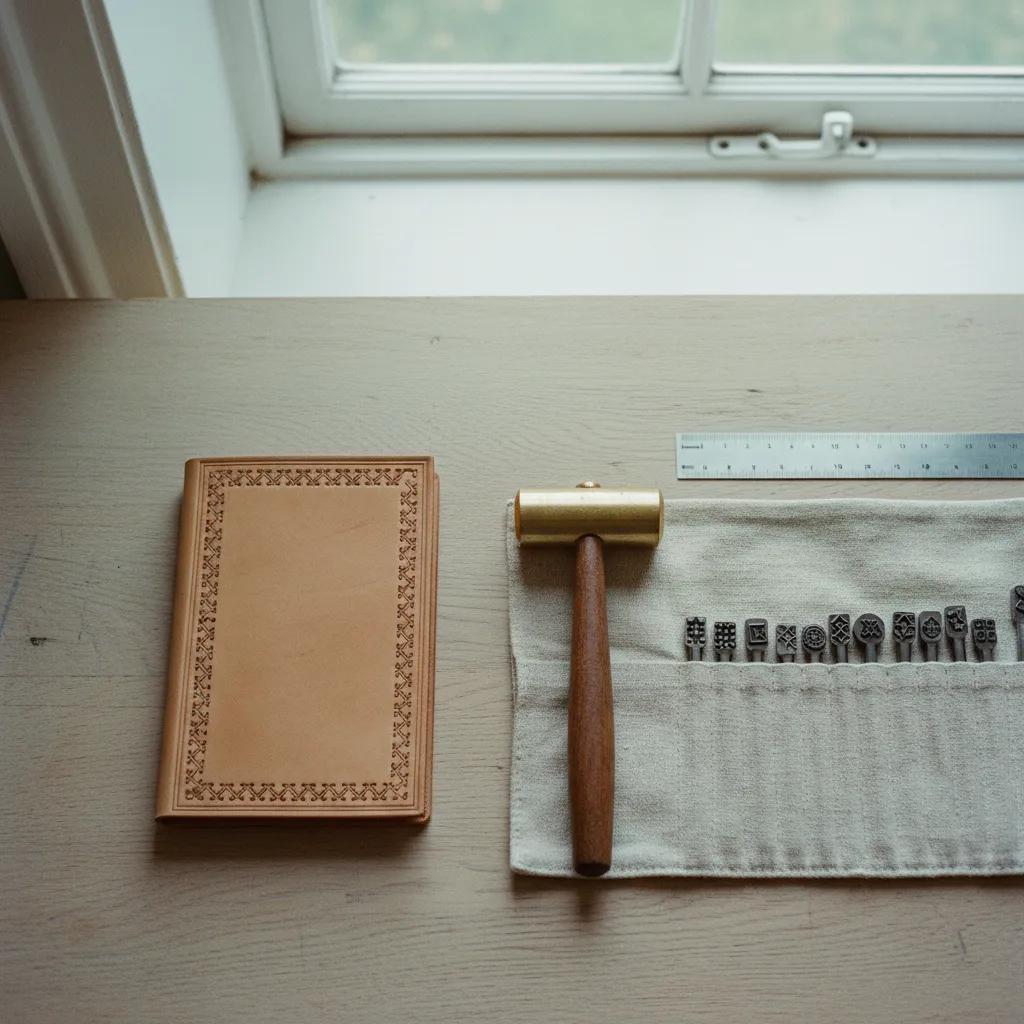
Islington Leather Stamping Tool Picker for Notebook Borders
Georgian terraces and antique arcades make Islington a calm place to compare fine border stamps, tiny geometric faces and vintage steel for notebook covers.
A leather notebook cover lives or dies by its edges, so the stamping tools worth choosing for one are border stamps rather than bold motifs. Islington, with its Georgian squares, antique arcades and independent stationers, is a natural setting for weighing that choice. Here the conversation tends to drift toward vintage tools, paper and bookbinding, which happens to be exactly the right company for anyone planning a tooled journal or sketchbook cover.
Why Borders Suit a Notebook Cover
A notebook cover is mostly flat space framed by edges and a spine. A repeated border impression, running a short distance in from the edge, gives the whole object a finished, bound look without overwhelming it. Small geometric faces such as diamonds, dots, chevrons and tiny fleurs work well because they repeat neatly around corners. Large florals feel heavy on a cover that will be opened and closed many times a day.
The spine is the hardest part. It flexes constantly, and deep impressions there crack or fade over time. Many makers leave the spine plain or use a very light texture, concentrating border work on the front and back panels. When you study bound journals in Islington's shops and arcade windows, notice how often the spine is left calm. It is a deliberate design decision, not laziness.
Comparing Small Geometric Faces
Border stamps differ in footprint and repeat length. A short repeat, such as a single dot or a small diamond, demands many strikes but turns corners gracefully. A longer repeat, like a chain of three linked shapes, covers ground faster yet can leave awkward gaps where the pattern meets a corner. Measure your cover's edge and imagine how many strikes it will take; that arithmetic often settles which face makes sense.
Depth and crispness matter as much as shape. Some border faces are cut sharply with steep walls, giving a precise, almost engraved line. Others have softer, rounded walls that burnish into a gentle relief. Sharp faces suit structured covers with square corners, while soft faces suit slouchy, travel-worn journals. Test both on scrap from the same hide, then rub the impressions with a thumb to see which survives handling.
Vintage Steel Versus New Tools
Islington's antique dealers and arcade stalls sometimes surface old hand tools, and leatherworkers occasionally find stamps among them. Vintage stamps can be beautifully cut, with faces that newer production rarely matches. They can also be worn, chipped or rusted. Hold any old tool up to daylight and check the face for pits or rounded edges. A tiny chip will repeat in every impression, so it quickly becomes a visible flaw.
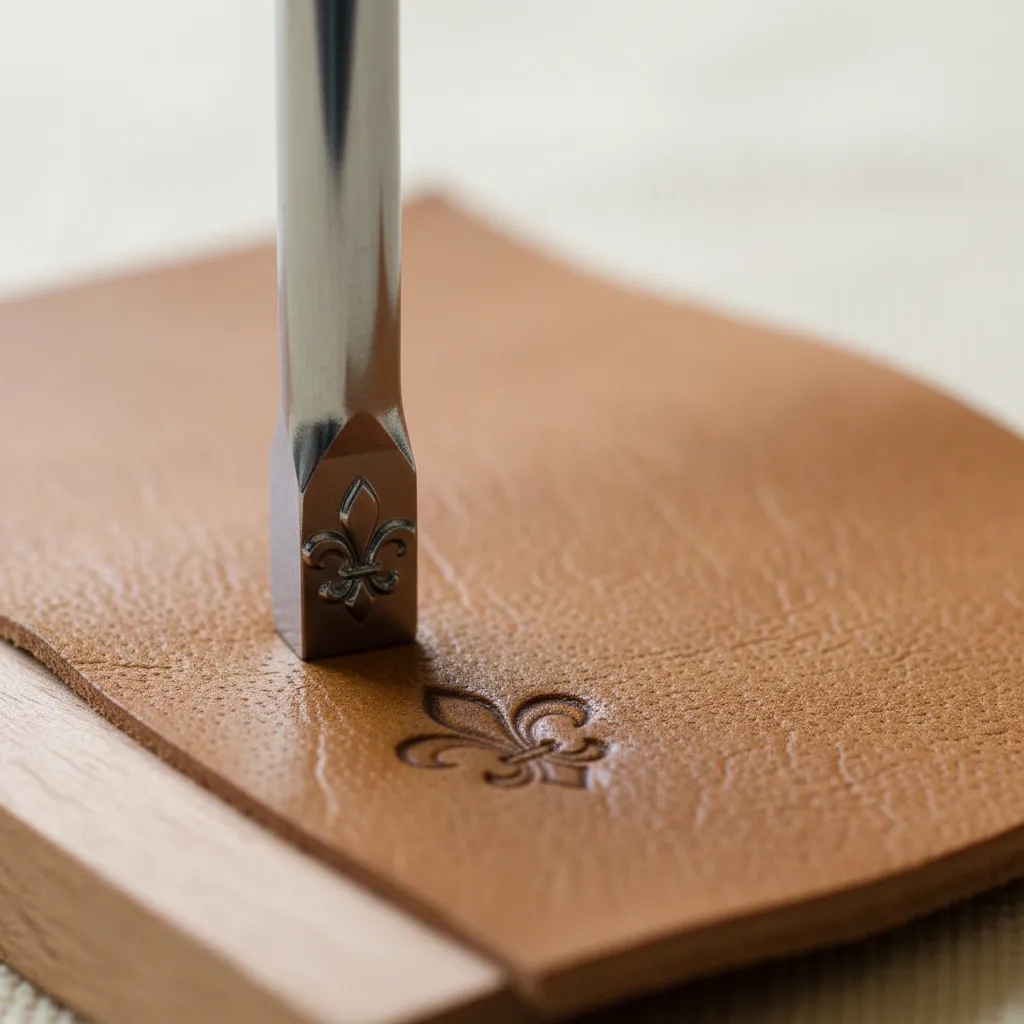
Newer tools offer predictability. Their faces are usually even, their shafts straight and their markings legible. If you want a matching set for a series of notebooks, new tools make consistency easier. Vintage pieces shine as one-off accents, for example a single unusual fleur pressed in each corner. Mixing the two is perfectly sensible: a modern border stamp for the frame, an old character stamp for a signature detail.
Browsing Squares, Passages and Stationers
Islington rewards slow browsing. Antique passages, quiet garden squares and busy main streets sit close to each other, so you can drift between them without much effort. Stationers and bookbinding suppliers in the area often carry paper, thread and board, the natural companions to a leather cover. Seeing your leather alongside the paper you plan to use helps you judge colour, thickness and how the edges will meet the block.
Take a sample of your leather with you if you can. Holding it against paper stock, linen thread and binding tape reveals mismatches immediately: a cool grey paper may clash with warm tan leather, while cream paper flatters it. You may also notice ideas for border motifs in the surroundings, from railings and fanlights to tiled thresholds. Sketch those shapes on a scrap of paper; they can inspire a custom border later.
Guidelines, Spacing and Strike Rhythm
Even border work depends on preparation. Score a faint guideline with a wing divider set a short distance from the edge, then stamp along it with each impression touching the last. Some makers press the first impression in the centre of each side and work outward so corners meet symmetrically. Others start at a corner and accept a slight adjustment at the end. Both methods work; choose one and keep it consistent across a set.
Rhythm comes from the mallet. A light, consistent tap gives even depth, while uneven force leaves some impressions deep and others faint. Count strikes in your head, keep your wrist relaxed and reset your grip at every corner. A small marble slab under the cover keeps the base hard. If you are working at a desk in a period flat, a folded towel beneath the stone dampens noise for neighbours.
What to Skip When Starting Out
Skip large decorative motifs for a first notebook; they tempt you to fill space that looks better empty. Skip wide background matting tools too, which flatten too much of a cover. A single well-cut border stamp, a fine beveller for any lettering and perhaps one vintage accent tool are enough. Restraint shows off the leather itself, which on a good vegetable-tanned hide is often the most beautiful part.
Be wary of very cheap mixed sets sold as notebook kits. They often include borders with uneven repeats that refuse to line up, which turns every corner into a struggle. If you cannot test before buying, look closely at photographs of the face and check that the pattern is symmetrical. A border that is off by a fraction will drift visibly over the length of a cover.
Using Karpo APP for Nearby Ideas
When you want fresh ideas, Karpo APP can suggest nearby stationers, leather suppliers, antique arcades and cafés around Islington. You pick which suggestions appeal, the order you take them in and how you get around. The app simply offers starting points, and the squares, passages and side streets fill in the rest of the afternoon as you choose.
Finish by stamping a full border on an offcut cut to the exact size of your cover. Wrap it around a notebook, open and close it a dozen times, and watch the corners. If the impressions stay clean and the spine flexes without cracking, your border stamp is the right one. Then you can case your good leather knowing the edges will look as intended.
Ask Karpo for more information.
Keep reading
- Shoreditch Comic Shop Crawl Planner: Murals to Manga
 Bermondsey Comic Shop Crawl Planner: Zines Under the Arches
 Clapham Comic Shop Crawl Planner: Charity Shelves and Common