 Shoreditch Comic Shop Crawl Planner: Murals to Manga
Hidden Gems & Odd Finds
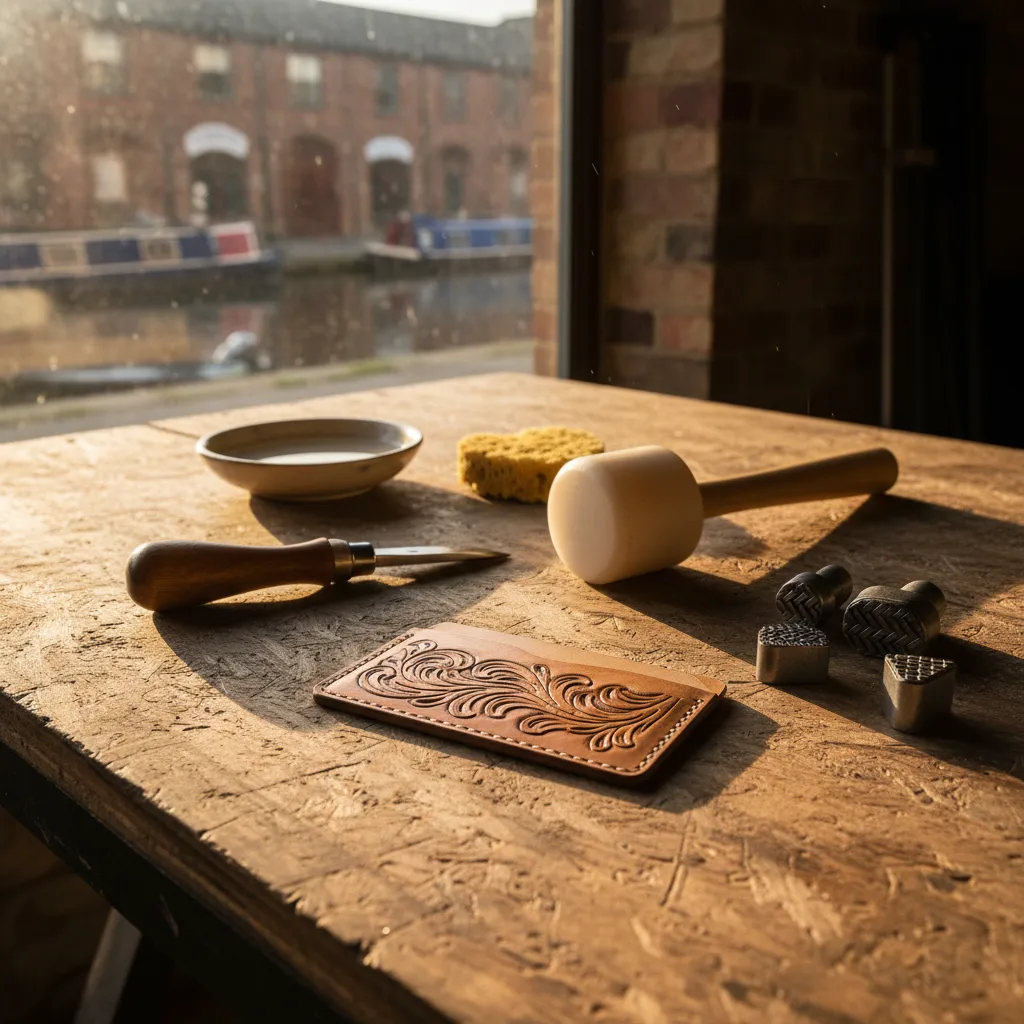
Hackney Leather Stamping Tool Picker for Floral Card Wallets
Canal light and studio culture in Hackney suit a slow comparison of basketweave, seeder, veiner and pear shader stamps for small floral card wallets.
Card wallets are small, thin and handled every day, so the stamping tools you pick for them need finer faces than anything meant for belts. Hackney, with its canal towpaths, converted studios and weekend markets, is a relaxed place to compare those finer faces in person. Before you set out, decide whether your wallet will carry a floral motif, a woven texture or simple accents, because each direction calls for a very different handful of steel.
Thin Leather Changes the Rules
Card wallet leather is usually far thinner than belt stock, and thin vegetable-tanned leather behaves differently under a stamp. Strike too hard and the impression punches through to the flesh side, showing as a ridge inside the pocket. Strike too lightly and the texture fades once the leather is folded and stitched. The aim is a shallow, clean impression made with modest force, so smaller tool faces and lighter mallets become sensible choices rather than compromises.
That also means a backing matters. Many makers glue a temporary layer of stiff paper or packing tape to the flesh side before stamping thin leather, which stops stretching and keeps the panel flat. When you see finished wallets at Hackney stalls or studio windows, look at the inside of the pockets. A smooth interior suggests the maker supported the leather while stamping; a rippled one hints that they did not.
Basketweave Faces for an All-Over Texture
A basketweave stamp creates an interlocking pattern of short ridges that imitates woven cane. On a card wallet it can cover the entire outer panel, giving grip and hiding scratches as the wallet ages in a pocket. The catch is alignment: basketweave must march in straight rows, so a faint pencil guideline is essential. Narrow faces suit wallets, because wide ones leave awkward partial impressions at the edges of a small panel.
Basketweave stamps come with smooth or lined faces. Smooth faces look modern and polished, while lined faces add a hint of grain within each ridge that catches antique stain. If your wallet will be left natural to tan in sunlight, smooth may suit you better. If you plan to darken it with a stain that settles into recesses, the lined version rewards that choice with more depth.
Seeders, Veiners and Pear Shaders for Florals
Floral carving on a small panel relies on a few modest tools rather than a big set. A seeder leaves a small round dome, perfect for flower centres and berries. A veiner presses a curved row of fine lines, suggesting the ribs of a leaf. A pear shader, tapered and slightly rounded, sinks gentle shadows into petals so they appear to curl. These three, together with a small beveller, can carry an entire wallet design.
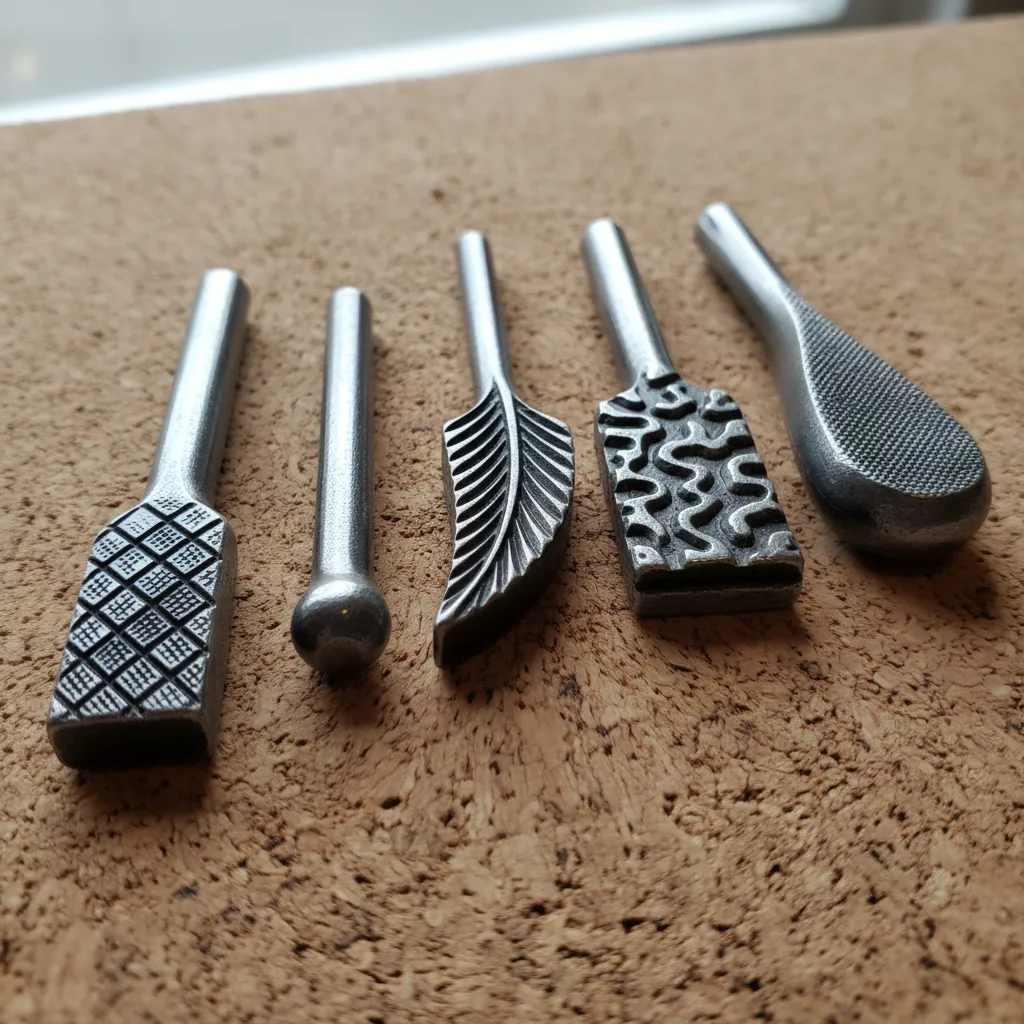
Test each on scrap from the same hide you plan to use. Seeders vary widely in size, and an oversized dome swamps a delicate flower. Veiners differ in curve and line count; a tight curve suits small leaves, a gentle sweep suits long fronds. Pear shaders come smooth or checkered, and the smooth versions burnish into a soft sheen that photographs beautifully under the warm afternoon light that reaches canal-side windows.
Browsing Along the Canal and Market Streets
Hackney's appeal for a craft afternoon is its mix of quiet and bustle. The towpath offers narrowboats, herons and calm water; the streets nearby carry markets, small galleries and studio fronts. Leather goods often appear alongside ceramics, prints and plants, which helps you see how stamped textures hold up next to other handmade objects. There is no single correct order for exploring, so follow whichever street or bridge catches your attention.
Studio culture here leans toward small batches and visible process. You may notice makers working at benches through open doors, or finished samples pinned beside works in progress. Watching how someone holds a shader, tilts a seeder or rocks a veiner across a curve teaches more than reading instructions. Be courteous, of course, and do not interrupt concentrated work, but a quiet look at technique is often welcome.
Mallets and Strike Force for Small Panels
Small faces need less force, so a lighter poly mallet usually suits wallet work. Heavy mauls are designed for belts and holsters, and on thin leather they make it too easy to overstrike. A mallet with a modest head and a comfortable handle lets you repeat gentle taps with control. Some makers prefer a smaller head simply because it keeps the strike centred over a tiny shader face.
A hard surface still matters, even for small pieces. A compact marble or granite tile is enough for card wallets and travels easily if you work at a kitchen table. Place a thin rubber mat beneath the stone to soften noise for neighbours in shared buildings, a real consideration in Hackney flats and warehouse conversions. The stone keeps impressions crisp; the mat keeps the peace with people downstairs.
An Honest Shortlist and What to Skip
A sensible wallet kit is short: one narrow basketweave, one small seeder, one veiner, one pear shader and one fine beveller. Skip the giant boxed sets with dozens of near-identical faces, since most will never touch a wallet panel. Skip heavy background matting tools too; on a small surface they flatten too much area and make florals look crowded. You can always add a single specialist face later once your designs develop.
If a stamp feels wobbly in the hand or the face looks rough under daylight, put it back. Fine wallet work exposes every flaw, and a poorly finished seeder will leave a ragged dome that no amount of dye can disguise. Prefer tools whose shafts are knurled for grip and whose faces look evenly cut. Holding a candidate up to a window and turning it slowly reveals more than any product description.
Letting Karpo APP Suggest Nearby Spots
Karpo APP can surface nearby leather suppliers, craft studios, markets and coffee spots around Hackney when you want ideas for the afternoon. Which ones you visit, in what sequence and by bike, bus or on foot is entirely your call. Use the suggestions as prompts, then let the canal, a market stall or a studio window decide where you linger longest.
Back at home, cut a small practice panel the same size as your wallet front and stamp a full trial design before touching your good leather. Fold it, slip a few cards inside and carry it for a day. You will see which textures soften, which stay sharp and where the impressions wear. That small experiment turns a list of stamps into a confident choice for your first proper card wallet.
Ask Karpo for more information.
Keep reading
- Shoreditch Comic Shop Crawl Planner: Murals to Manga
 Bermondsey Comic Shop Crawl Planner: Zines Under the Arches
 Clapham Comic Shop Crawl Planner: Charity Shelves and Common