 Shoreditch Comic Shop Crawl Planner: Murals to Manga
Hidden Gems & Odd Finds
Bermondsey Leather Stamping Tool Picker: Matting Textures
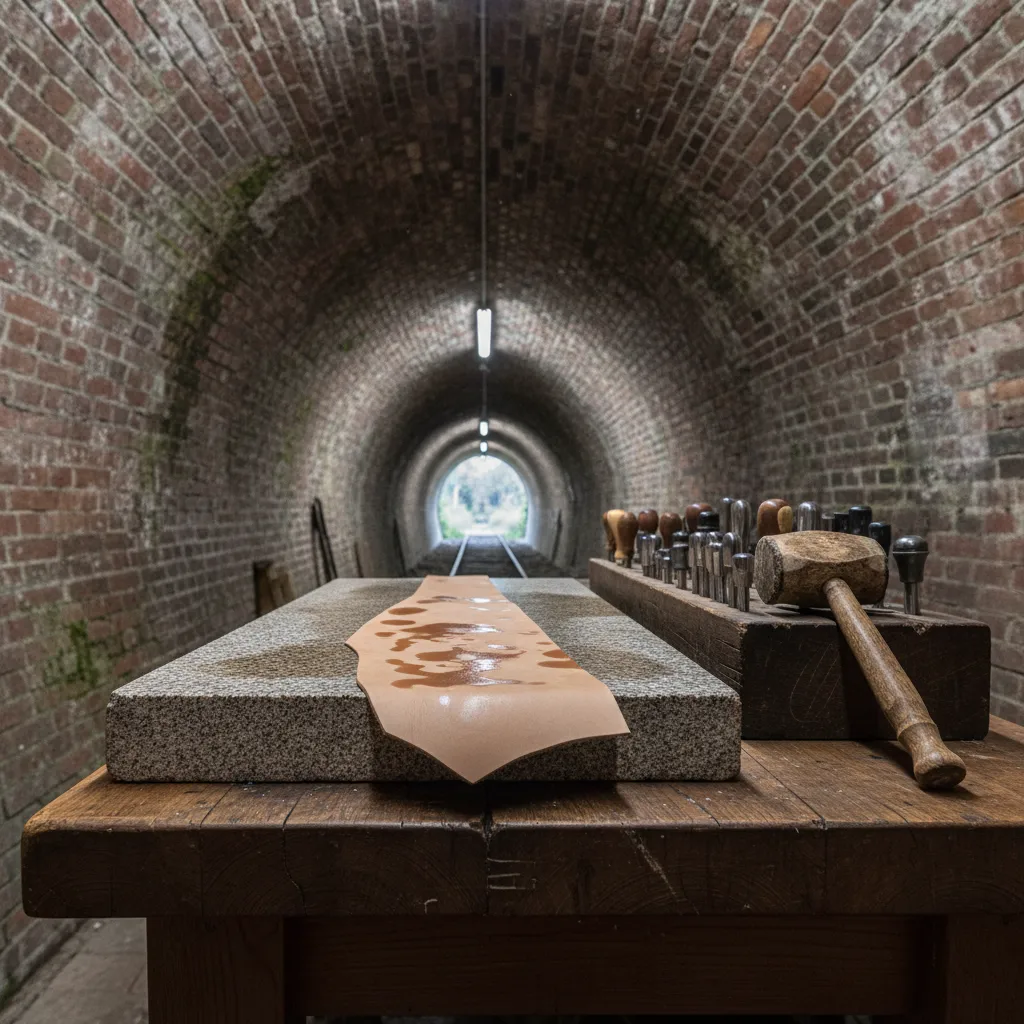
Railway-arch workbenches and an old tanning reputation make Bermondsey a fitting place to compare checkered, pebbled and crosshatch stamps on veg-tan belts.
The first decision in any leather stamping tool picker is not the motif but the background texture, and Bermondsey is a good place to think that through. The neighbourhood carries a long reputation as a tanning quarter, and the brick railway arches south of the river still shelter makers who work with heavy hides. For vegetable-tanned belts and straps, the matting stamp you choose decides whether a carved design looks crisp, soft or busy.
Why Background Stamps Matter More Than Motifs
Most people buying their first set reach for the decorative faces: flowers, leaves, a basketweave. Yet on a belt blank, the background matters more, because matting stamps push the surrounding leather down so the carved element stands proud. A coarse texture reads boldly from across a room, while a fine one rewards a close look. Thinking about distance of view before you browse will narrow your shortlist far faster than scrolling through endless catalogue pages.
Vegetable-tanned leather responds to stamping because it compresses and holds a shape once it dries. Chrome-tanned leather, by contrast, springs back and refuses to burnish, so stamps are mostly wasted on it. When you handle offcuts at any Bermondsey bench or supplier counter, press a thumbnail into the grain side. If the dent lingers and darkens slightly, that hide will take a matting stamp cleanly. If it bounces back instantly, set it aside for stitched projects.
Checkered, Pebbled and Crosshatch Faces Side by Side
Checkered matting faces carry a tiny grid of squares cut into the steel. They leave an orderly, slightly mechanical texture that suits Western floral carving and anything with straight borders. Their weakness is visible overlap: if you walk the stamp unevenly, the grid shows doubled lines. Beginners often find that checkered faces expose rhythm problems, which is frustrating at first but teaches a steady, overlapping strike pattern quickly.
Pebbled or smooth-dotted faces scatter rounded bumps instead of a grid. They forgive uneven spacing because random texture hides small misalignments, which makes them friendly on long belt runs where your hand tires halfway down. The trade-off is depth: pebble faces look softer and can make a bold design feel muddy if the leather is too wet. They work best on medium-firm shoulder leather that has been cased until it just returns to its natural colour.
Crosshatch faces sit between the two. Fine diagonal lines give a woven, engraved look that reads well on narrow keepers and dog collars. Because the lines have direction, you need to keep the tool oriented consistently, or the background begins to swirl. Some makers like that swirl as a deliberate effect around curved motifs. Try all three on a single test strip, side by side, before committing to a full belt.
Reading the Railway Arches as a Browsing Backdrop

The arches themselves are part of the appeal. Vaulted brick ceilings, roller doors and the rumble of trains overhead create a workshop mood that suits slow, tactile comparison. Weekend stalls and maker spaces in this part of south London tend to mix food, furniture restoration and textiles, so leather tools may sit beside reclaimed timber or ceramics. Wander without a fixed checklist and let the materials you notice prompt your questions.
If you are browsing on a busy Saturday, allow time simply to look at finished pieces. A tooled wallet or belt on display tells you more about a matting stamp than its steel face does. Notice how deep the background sits, whether the edges of the carving are burnished, and how the dye has pooled into the texture. Those details hint at which face the maker preferred, even when nobody is around to ask.
Asking good questions makes these conversations useful. Rather than asking which stamp is most popular, ask what leather weight a texture was designed for, and whether the face has been polished after casting. A polished face burnishes as it strikes, giving a glossy floor, while a rougher face leaves a matte one. Neither is wrong; they simply produce different finishes under dye and antique stain.
Matching Mallets, Slabs and Moisture to Your Stamps
A stamp is only half the system. Bermondsey benches often carry granite or marble slabs, and that hard base is non-negotiable for crisp impressions; a wooden tabletop absorbs the blow and leaves shallow, uneven marks. Pair the slab with a poly mallet or a rawhide maul rather than a steel hammer, which will mushroom the tool head and jar your wrist. Weight matters more than size: a heavier maul lets you strike once instead of tapping repeatedly.
Casing, or dampening the leather, changes everything. Too wet and the texture blurs and spreads; too dry and the stamp bounces with barely a mark. A useful habit is to sponge the flesh side, wrap the piece briefly, then wait until the grain lightens back toward its original colour. Test your chosen matting face on a corner first. If the impression darkens and holds a clean edge, the moisture is right.
Storage deserves thought before you start collecting. Steel faces rust quickly in a damp London flat, and a rusty matting face transfers stains into pale leather. A wooden block drilled to hold each shaft upright keeps faces apart and visible. Wipe each tool with a lightly oiled cloth after a session, and keep silica sachets in the drawer if your workspace shares a wall with a bathroom or kitchen.
A Shortlist for a First Veg-Tan Belt
For a single belt project, three stamps are enough: one matting face for the background, one beveller to round the cut edges of your design, and one border tool to finish the edges. Choose the matting face according to the motif. A geometric pattern favours checkered texture, an organic vine suits pebbled dots, and narrow lettering panels read cleanly with crosshatch lines. Buying more before finishing the first belt usually leads to unused steel.
Size also guides the pick. Larger matting faces cover a long belt quickly but cannot reach into tight corners between leaves or letters. Smaller faces reach those corners yet multiply the number of strikes, and with it the risk of uneven overlap. Many makers solve this by owning one large and one small face with the same texture, so the background stays consistent from wide panels into the tiniest gaps.
Leave room for honest disappointment too. Cheap unbranded sets sometimes ship with faces that are shallow, off-centre or rough-cast, and those flaws show up immediately on firm leather. If a tool leaves a lopsided impression on your test strip, set it aside rather than trying to compensate with angled strikes. A single well-cut stamp is worth more than a tin of twenty that each need correcting.
Finding Nearby Spots With Karpo APP
Once your shortlist is clear, Karpo APP can suggest nearby craft studios, leather suppliers, markets and cafés around Bermondsey. You decide which of those suggestions interest you, in what order to visit, and how you travel between them. Treat the results as a starting point for your own wandering, then let the arches, the river edge and whatever you discover along the way shape the rest of the afternoon.
After browsing, it helps to rest somewhere quiet and lay your test strips out on a table. Compare the textures in daylight rather than under workshop bulbs, since warm artificial light flatters every impression. Note which strip you keep returning to; that instinct usually points to the right matting face. Then head home to case a fresh blank while the comparison is still vivid, because the first belt you stamp will teach you more than any catalogue.
Ask Karpo for more information.
Keep reading
- Shoreditch Comic Shop Crawl Planner: Murals to Manga
 Bermondsey Comic Shop Crawl Planner: Zines Under the Arches
 Clapham Comic Shop Crawl Planner: Charity Shelves and Common