 Clapham Weekend Brunch Planner: Parkside Morning Cafes
Restaurants
London Late Night Bites Locator: Solo Supper Near The Tube
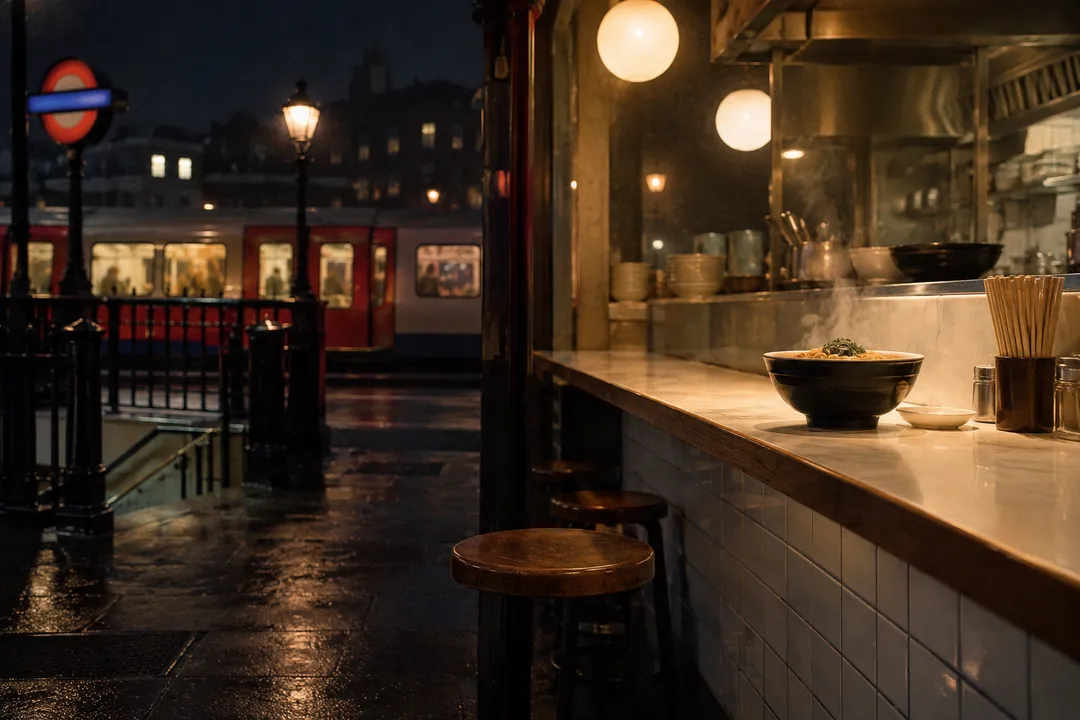
Eating alone late in London? Tell Karpo your station area, seating preference, appetite and walking comfort to find a calm solo-supper plan with an easy fallback.
Eating alone after dark can be wonderfully simple when the plan respects the person doing it. Start with the station area, the kind of seat that feels comfortable and whether the meal should be quiet, observant or gently social. Add how far you want to walk and whether you need an easy exit. The best result will feel like an invitation to settle, not a challenge to perform confidence in public.
Describe the solo mood
Seat choice often matters more than cuisine. A counter can make ordering easy and give the room a natural rhythm. A small table can create a little privacy. A window seat may turn the meal into a pause between parts of the night. Tell Karpo what you prefer, and say what would feel awkward. That distinction lets the shortlist protect your comfort without making the request sound like a rigid checklist.
Solo planning benefits from an exit rule. You may want to leave as soon as the food is finished, linger with a book, or keep the next route close enough that the decision never feels heavy. Mention whether a short walk afterward would be pleasant or whether you want the meal to end near transport. A clear exit preference helps the result feel safe and flexible at the same time.
Choose the seat before the dish
Give appetite a useful texture. Perhaps you want one warm bowl, a few small bites, something sweet, or food that can be eaten without a long explanation. Add dietary boundaries and a rough sense of fullness. You do not need to list every possible dish. One or two honest clues are enough for the planner to understand what relief the meal should bring after a solitary day.
Waiting feels different alone. If a queue is fine, give it a limit and say what you can do while waiting. If you would rather avoid uncertainty, ask for a clear first choice and a low-friction alternative. A good shortlist acknowledges the emotional cost of standing without a plan. It can show when to stay, when to walk and when to choose the option that keeps the evening gentle.
Keep the exit easy
A small ritual can make the route feel intentional. You might want to read a few pages, sketch a street corner, listen to the room or simply watch the city pass. Add that preference if it helps you decide. The planner can then look for a meal shape that supports the ritual instead of treating it as an unrelated hobby. Solo time becomes part of the brief, not an obstacle to it.
Keep the route easy to carry in your head. A simple turn, a familiar station or one short neighbourhood loop can be more useful than an ambitious itinerary. Say whether you are comfortable navigating a new area and whether lighting, shelter or a direct approach matters. These details let the result protect the feeling of autonomy that makes eating alone enjoyable in the first place.
Set the appetite
The room mood should be described as a range. “Quiet but not empty,” “lively enough to blend in,” or “somewhere I can leave without ceremony” are more useful than a single adjective. Tell Karpo whether conversation with staff is welcome or whether you want a low-interaction meal. The shortlist can then suggest a pace and setting that match your energy without pretending to know your whole night.
When the first result feels too public, change the seat preference before changing the appetite. If it feels too isolated, loosen the room rule while keeping the easy exit. If the walk is the issue, keep the mood and ask for a tighter route. One edit at a time shows what you actually need and prevents the search from turning into a mirror of indecision.
Make waiting feel safe
A solo supper can include a small neighbourhood story. Ask for a route that passes a bookshop window, a lit square, a canal edge or a calm stretch of pavement if that would make the transition feel complete. If you want no extra scenery, say that instead. The planner should follow your version of a good evening, whether it is a tiny loop or a straight line home.
Use the Karpo APP to keep your personal defaults close. Save the seating preference, the queue limit, the appetite cue and the exit rule, then adjust only what changes tonight. A late shift, a rainy walk or a need to be home early can be added without losing the parts that make solo dining comfortable. The tool becomes more useful when it remembers the shape of the decision you actually make.
Add a small ritual
The shortlist should help you act without a companion’s second opinion. Look for a first choice, an alternative and a clear reason to switch. If the result asks for a compromise, decide whether you are trading atmosphere, walking or appetite. Keep the choice visible so you can move with confidence. Solo planning works when the next step feels obvious enough to take without an audience.
If you are tired, say so. A person coming off a long shift may want a seat quickly, minimal ordering and a route that ends near transport. Another night may invite a slower meal and a little wandering. The planner can work with either mood when the request is direct. There is no need to make the solo experience sound more adventurous than it feels.
Plan the walk home
Before leaving, read the brief for kindness. Does it allow you to change your mind? Does it protect the seat, the appetite and the route home? Does it include one fallback that would still feel acceptable? Remove any requirement that only exists because it sounds impressive. The most useful solo plan leaves room for instinct while giving you enough structure to avoid a lonely or tiring detour.
A late solo bite should close the night with a sense of choice. Set the scene, let the planner sort the practical constraints, and keep one easy alternative. When the first option feels right, go; when it does not, use the one edit that matters most. The meal can be small, quiet or briefly social. What makes it satisfying is that the plan belongs to you from the first question to the walk home.
Leave room for change
If you change your mind at the door, that is useful information rather than failure. Keep the appetite and the exit rule, relax the room mood, and ask for the nearest comfortable alternative. A solo plan earns its value by making that pivot easy and private, so the night can continue without a story about having chosen badly.
Ask Karpo for more information.
Keep reading
- Clapham Weekend Brunch Planner: Parkside Morning Cafes
 Hackney Weekend Brunch Planner: Canalside Roastery Tables
 Soho Weekend Brunch Planner: Historic Townhouse Tables