 Notting Hill Budget Lunch Route Planner: Golborne Road Cafes
Restaurants
Spitalfields Jacket Potato Lunch Picker: Market Tray Picks
Choose the crispest jacket potato in Spitalfields across covered Victorian market stalls and Brushfield Street counters, with warm seating near Arnold Circus.
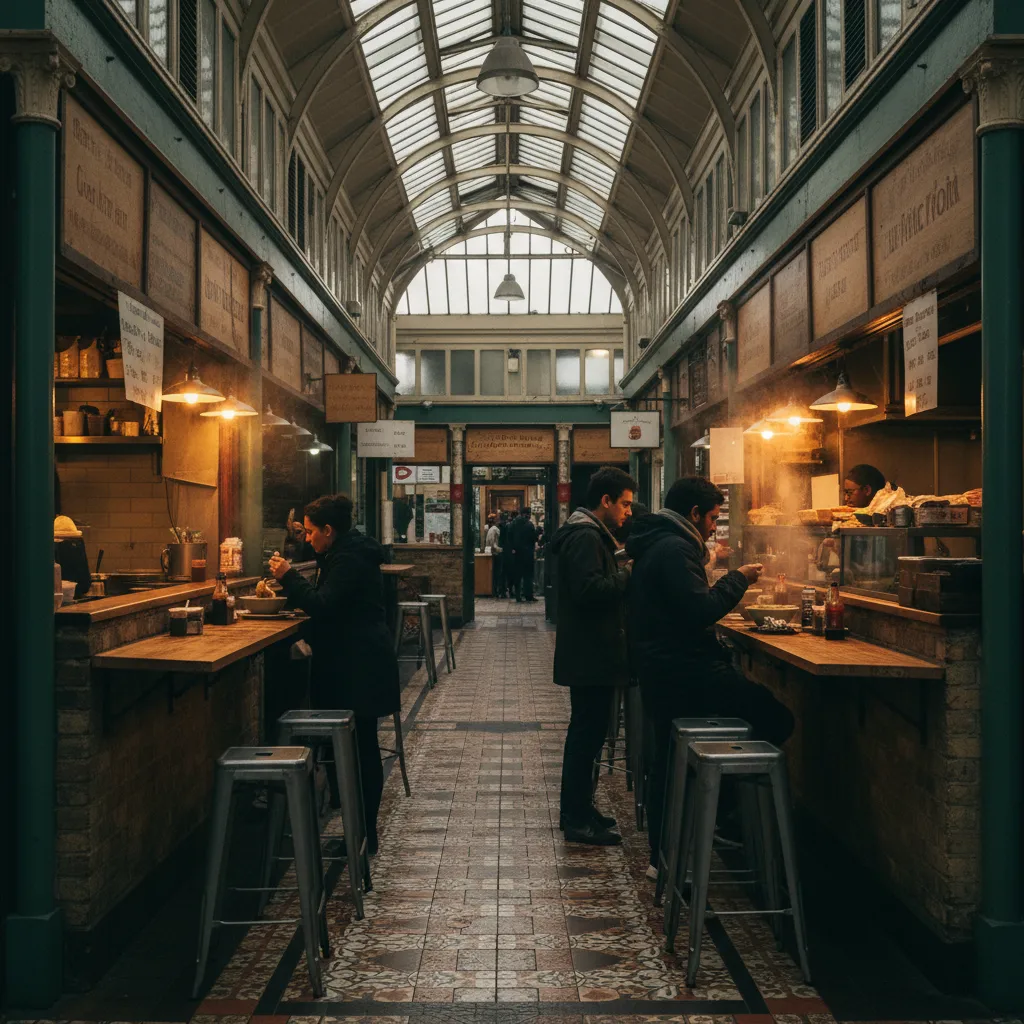
Stepping out of a brick warehouse studio off Wilkes Street with a visiting Amsterdam typographer on a brisk Thursday afternoon calls for a lunch that shows off East London market craft without requiring a formal table, and a Spitalfields jacket potato lunch picker does exactly that. Beneath the soaring iron-and-glass canopy of Old Spitalfields Market and along the surrounding lanes of Brushfield Street, Crispin Street, and Commercial Street, humble baked tubers share counter space with slow-braised meats, spiced pulses, and farmhouse British cheeses. Telling apart a rush-steamed potato from a two-hour dry-roasted beauty—and knowing where to carry your tray once the central communal benches fill up—makes all the difference to a cold-weather midday break in E1.
Reading the Skin Blister Under the Victorian Glass Canopy
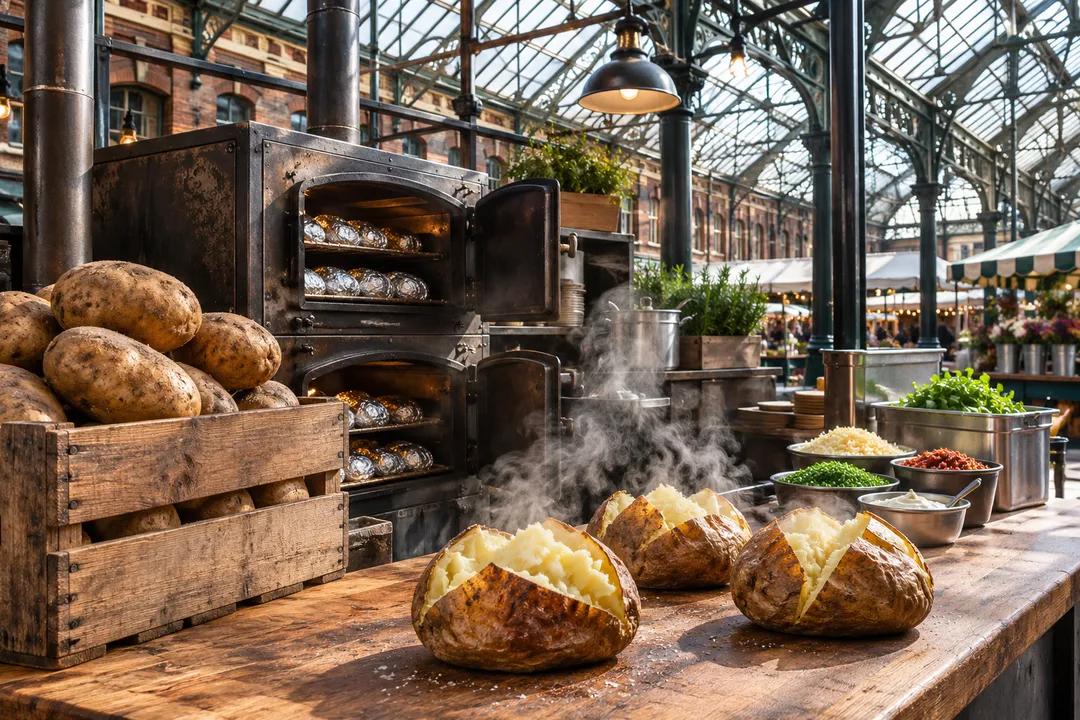
Inside the covered hall of Old Spitalfields Market, half a dozen hot food stalls compete for the lunchtime crowd, yet the telltale sign of a proper jacket potato sits right on the counter edge. Look for big, oval tubers with deeply wrinkled, dark mahogany skins and small salt crystals clinging to the crevices. That dry, parchment-like exterior only forms when washed potatoes go into a high-heat deck oven bare, allowing moisture to evaporate slowly while the starch granules inside swell and separate.
When the server cuts the potato open with a serrated knife and squeezes both ends from underneath, the flesh should burst upward in dry, snowy peaks rather than slumping into a dense, waxy wedge. If you see a vendor pulling pale, smooth-skinned potatoes out of a closed plastic steamer or microwaving pre-parboiled halves to order, walk another thirty paces down the aisle. A steamed skin turns chewy under a fork, whereas a dry-baked shell shatters cleanly and tastes like toasted hazelnuts.
Pairing East End Brisket, Dhal, and Farmhouse Cheese Curds
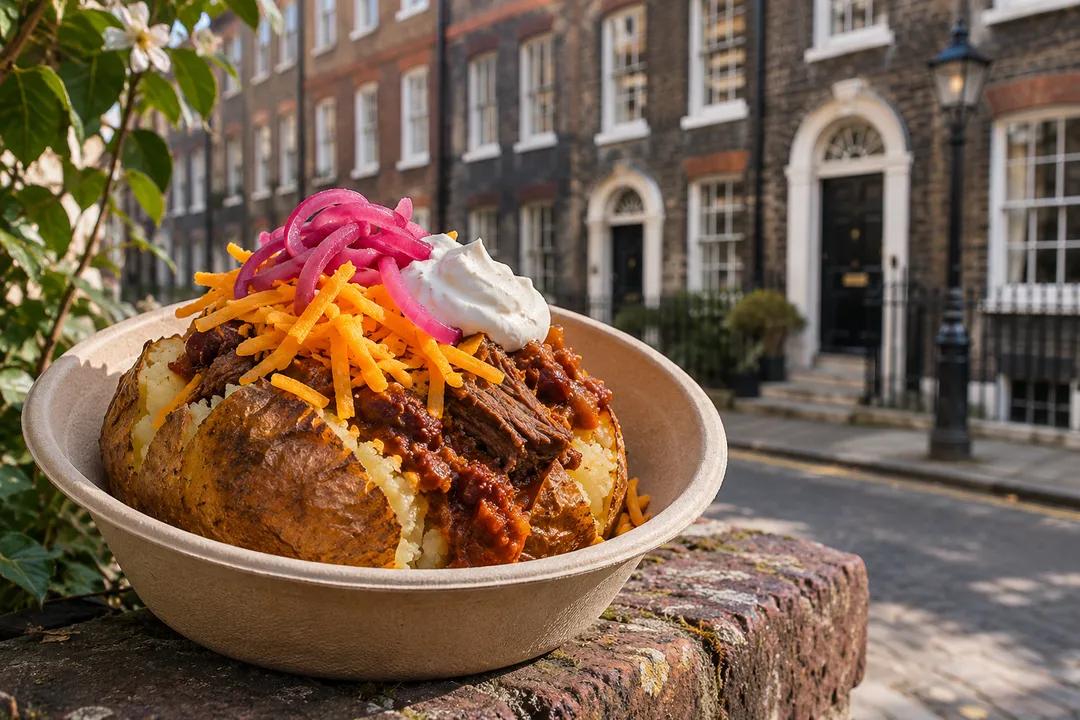
What sets Spitalfields apart from standard commuter station potato kiosks is the calibre of the hot toppings bubbling in cast-iron pots beside the ovens. Graphic designers and architects who work along Hanbury Street and Princelet Street treat the potato as a roasted vessel for slow-cooked stews: twelve-hour pulled beef brisket in rich tomato-cumin gravy, black turtle bean and roasted sweet potato chili, or fragrant Bengali-inspired tarka dhal finished with crispy fried shallots and fresh coriander.
To keep every mouthful balanced, ask the server to fork salted butter and a handful of coarse-grated vintage Red Leicester or extra-mature coastal cheddar directly into the hot mash before ladling the stew on top. Skip the mild, pre-shredded yellow cheese sitting in lukewarm plastic tubs near the heat lamp, which sweats oil without adding flavour. Instead, finish a rich meat or lentil topping with a cool spoonful of soured cream, pickled pink onions, or green chilli chutney on one corner of the tray so the contrast stays sharp.
For groups with mixed appetites, Spitalfields counters also make it easy to split toppings across two smaller baking potatoes rather than committing to one giant mound. Pairing half a potato dressed with herbed Lancashire curd and roasted winter squash alongside a second half topped with spicy masala chickpeas gives you two distinct textures on a single wooden board, while keeping the salted outer skin crisp from the first forkful to the last.
Timing Thursday Market Crowds Versus Side-Lane Counters
Because Spitalfields straddles the boundary between City finance towers around Bishopsgate and creative studios toward Brick Lane, the central wooden picnic tables inside the market hall hit capacity rapidly between twelve-thirty and one-fifteen, especially on Thursdays and Fridays when antique and independent fashion traders draw extra browsers. Joining the longest central queue at peak hour can leave you standing with a cooling tray while hunting for a spare stool.
Arrive ten minutes before noon to catch the fresh midday oven batch with zero wait, or step outside the main glass roof onto Brushfield Street and Artillery Passage. Small independent brick-fronted delis and traditional East End cafes along the perimeter pull baking potatoes from countertop convection ovens all afternoon, offering quieter service and deep paper bowls that hold their heat while you walk. If a sudden cold snap drains the first oven tray at your chosen stall, pivoting two minutes south to Middlesex Street or Wentworth Street reliably turns up backup hot-counter kitchens.
Walking From Huguenot Weavers' Attics to Arnold Circus
Rather than perching on an elbow-to-elbow bench beside the market food trucks, use your lunch break to walk through three centuries of East End street history. Exit the east gates onto Fournier Street, where tall Georgian townhouses with wide attic windows—originally built to let daylight fall onto Huguenot silk weavers' looms—create a calm, traffic-light canyon leading toward Brick Lane. Halfway along, the brick portico of Christ Church Spitalfields rises above the pavement, offering a dramatic architectural backdrop as you stroll.
For the most peaceful outdoor seat in the neighbourhood, continue five minutes north across Old Montague Street or Calvert Avenue into the Boundary Estate. At its centre stands Arnold Circus, a raised circular garden crowned by a Victorian bandstand and ringed by warm terracotta tenement blocks. The curved brick walls and timber benches under the mature trees stay remarkably sheltered from street noise, giving your group plenty of room to set down coffee cups and eat a hot jacket potato in comfort before heading back to the studio.
When East London drizzle makes open garden benches impractical, stay closer to the market's western perimeter around Crispin Place and Lamb Street. Deep architectural overhangs and sheltered pedestrian passages between the modern glass pavilions and Victorian brick arches provide dry standing ledges and covered timber benches where you can eat without getting your sleeves wet.
Planning Your E1 Lunch Loop With the Karpo APP
When you are hosting an out-of-town colleague or trying to coordinate four different dietary preferences on a tight midday schedule, the Karpo APP takes the guesswork out of East London's shifting market stalls. You can browse Spitalfields, Shoreditch, and Whitechapel lunch spots in the Karpo APP to see which counters pair vegetarian dhal, gluten-free toppings, and classic butter-and-cheese spuds within a five-minute walk of Liverpool Street or Aldgate East.
After finishing your potato at Arnold Circus or on the sunny steps of Crispin Place, check the Karpo APP to string together a quick fifteen-minute digestif walk past the independent print shops of Artillery Lane, the historic courtyard of Dennis Severs' House on Folgate Street, or a flat white bar along Redchurch Street. Always ask for your cold garnishes on the side if you plan to walk more than five minutes, and use the bottom skin boat to scoop up the last melted cheese.
Ask Karpo for more information.
Keep reading
- Notting Hill Budget Lunch Route Planner: Golborne Road Cafes
 Camden Budget Lunch Route Planner: Lock or Drummond Street
 Brixton Budget Lunch Route Planner: Covered Arcades When Wet