 Richmond Park Sunset Viewing Planner: Deer Meadow Horizons
Weekend Plans
London Indoor Craft Workshop Finder: Bloomsbury Studios
Discover Bloomsbury and Russell Square maker studios specializing in bespoke bookbinding, traditional marbling, and archival paper crafting.
Set against a dignified backdrop of leafy Georgian garden squares, grand neoclassical colonnades, and quiet literary heritage, Bloomsbury harbors an exceptional enclave of traditional book arts and fine paper workshops. In historic ground-floor rooms and atmospheric basement ateliers surrounding Russell Square and Great Ormond Street, dedicated artisans keep venerable bookbinding, paper marbling, and archival restoration crafts vibrantly alive. For creative seekers drawn to quiet contemplation, tactile paper textures, and historic craft precision, this central district provides an incomparable weekend retreat.
Traditional Bookbinding and Exposed Stitch Bindings
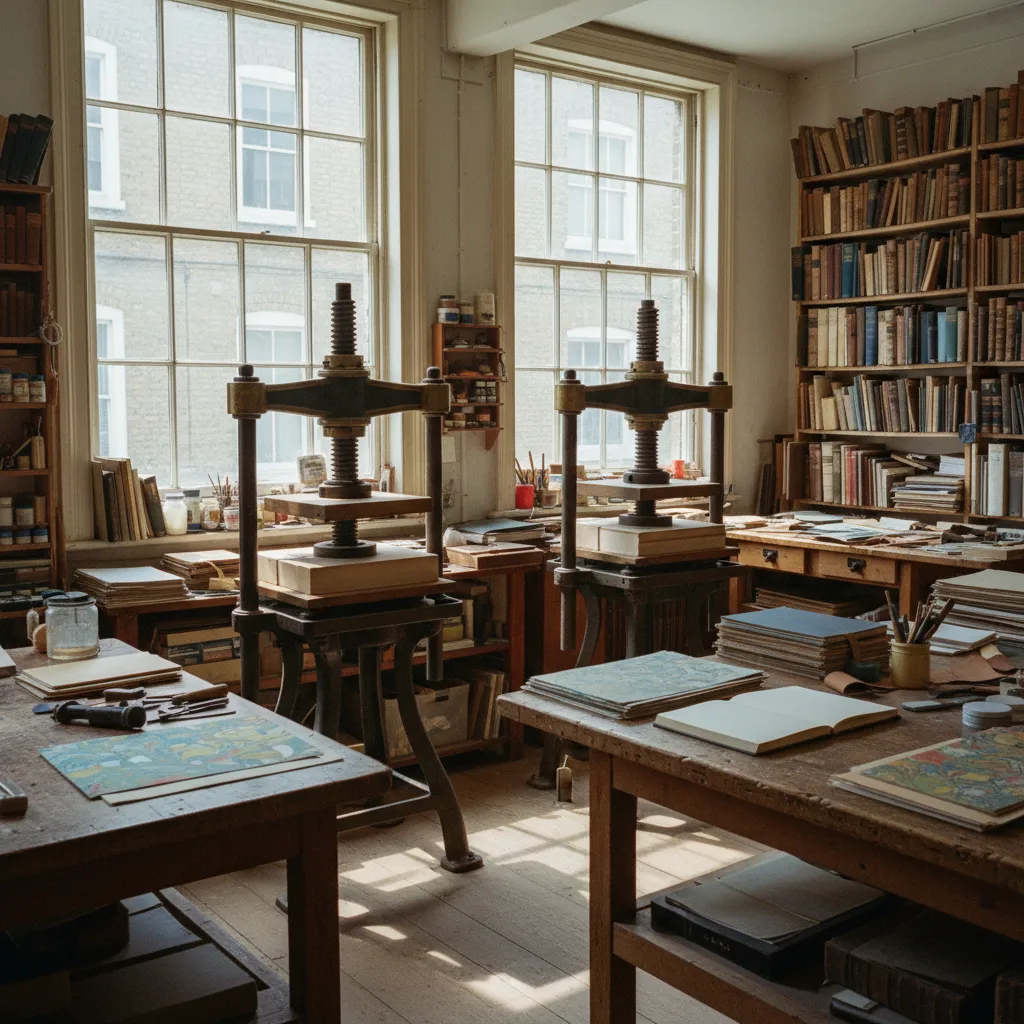
Entering a Bloomsbury bookbinding studio feels like stepping directly into an artisan archive from an earlier century. Antique cast-iron nipping presses, brass line finishing tools, and standing guillotine paper cutters occupy center stage beneath generous sash windows. Master binders guide participants through the structural architecture of codex bookmaking, explaining grain direction, signature folding, and the structural necessity of linen sewing tapes.
Crafters select fine archival bookbinding papers and dense bookcloth covers, learning how to fold 120gsm unbleached cotton paper sheets into precise four-page signatures with smooth bone folders. Students practice sewing signatures together using waxed unbleached linen thread, employing exposed French link stitch and elegant Coptic chain sewing that allow the completed notebook to lie perfectly flat across a writing desk.
The tactile precision of measuring mull cloth backings, gluing split boards, and casing signatures into custom hardcovers demands patient focus. Applying water-based PVA adhesive with stiff round bristle brushes requires an even, confident hand to eliminate air bubbles before placing newly bound volumes under weighted press boards for steady overnight curing.
Students also learn the delicate art of hand-stitching decorative headbands across book spines using contrasting colored silk threads. This subtle structural reinforcement protects exposed page edges from dust and wear, imparting a refined, archival quality reminiscent of private library volumes produced in the eighteenth century.
Suminagashi and Ebru Paper Marbling Techniques
Marbling ateliers located in nearby quiet mews corridors invite participants to explore the mesmerizing interplay of surface tension, floating pigments, and fluid dynamics. Students stand before shallow zinc marbling trays filled with distilled water thickened with carrageenan moss extract, a natural gelatinous seaweed medium that suspends mineral paints along the liquid surface.
Instructors demonstrate traditional Japanese Suminagashi rings using organic sumi ink and ox gall surfactant, as well as complex Middle Eastern and European Ebru combed patterns. Crafters gently flick droplets of mineral pigment onto the bath, watching concentric rings bloom across the water before dragging wire rakes and styluses through the floating colors to weave intricate peacock, nonpareil, and chevron motifs.
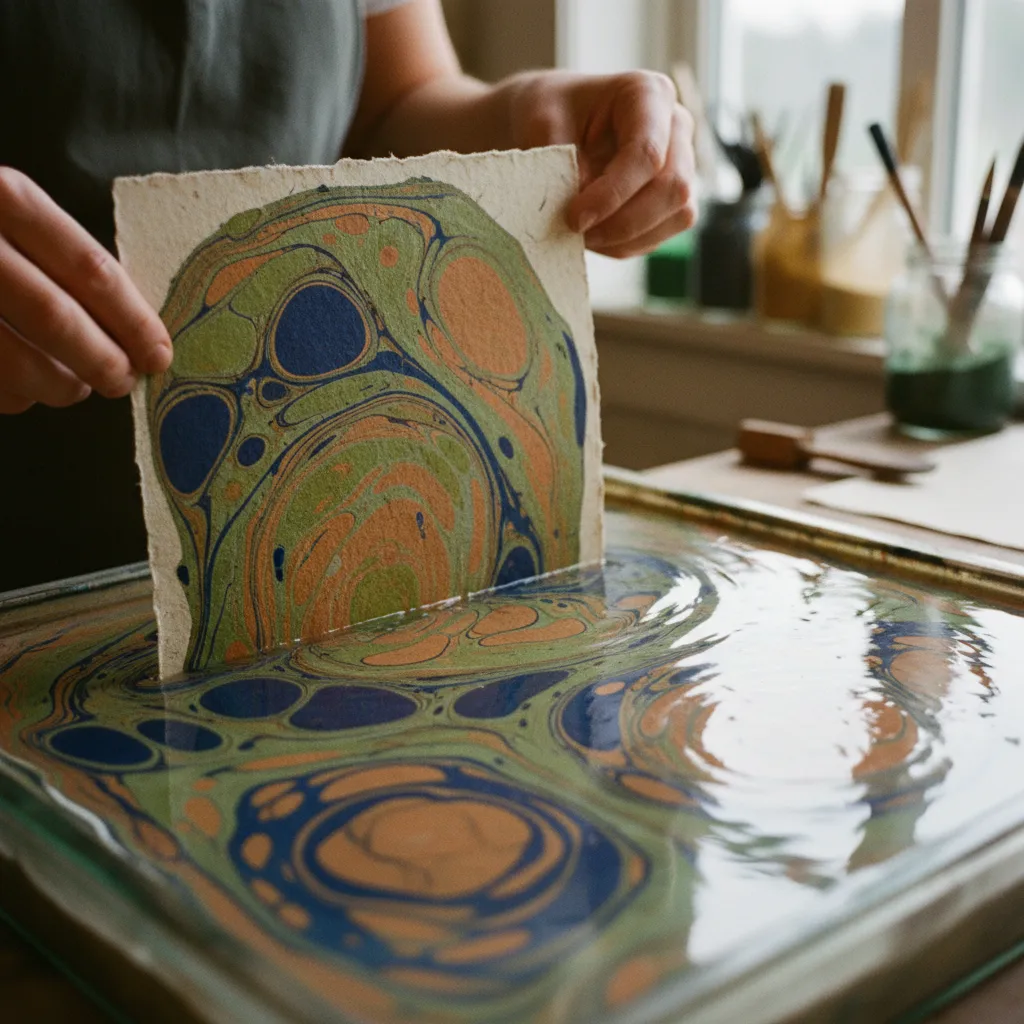
The defining climax of the workshop occurs when alum-treated paper is lowered smoothly onto the swirling bath without introducing air pockets. In a single breathless second, the floating pigment transfers completely onto the paper fibers, lifting out to reveal an exquisite one-of-a-kind pattern that is carefully rinsed in a clean water trough and hung to air dry across wooden clotheslines.
Understanding how temperature and atmospheric humidity alter viscosity gives participants intuitive command over pigment dispersion. Watching organic earth pigments dance across the viscous bath encourages playful experimentation with bold color contrasts and delicate hairline striations.
Letterpress Printing and Hand-Set Metal Typography
Typography enthusiasts can delve into the tactile realm of letterpress printing in specialized Bloomsbury studios equipped with historic tabletop platen presses and floor-standing proofing presses. Surrounded by wooden California job cases holding thousands of lead and hardwood type sorts, crafters experience the intellectual satisfaction of composing text by hand, letter by individual letter, from left to right and upside down in a handheld composing stick.
Instructors explain typographic anatomy, point sizes, line spacing with metal leads, and precise letter spacing using paper brasses. After locking the composed chase into the press bed with quoins and keys, students hand-roll rich linseed oil inks across the rollers, observing how tactile bite and roller height create the distinct crisp debossed impression characteristic of artisanal letterpress.
Participants produce bespoke sets of heavyweight cotton stationery cards, personalized poetry broadsides, or customized bookplates. The physical impression pressed into soft paper fibers creates a deeply satisfying sculptural texture that mass-produced modern digital printing cannot replicate.
The physical rhythm of hand-setting individual metal glyphs fosters deep respect for historic typesetting pioneers. Tutors guide students through inking trials on tissue proofing sheets, refining impression depth and packing paper thickness until every punctuation mark prints with razor-sharp clarity.
Neighborhood Atmosphere and Literary Respite
Bloomsbury's intellectual atmosphere seamlessly complements the mindful pacing of its paper and book workshops. Following an engrossing studio session, participants can take contemplative strolls through Russell Square or Queen Square, settling onto park benches beneath towering London plane trees to examine their newly crafted volumes in soft natural daylight.
The surrounding grid of streets boasts legendary independent bookshops, second-hand print dealers, and quiet historic cafes where visitors can read over freshly baked scones and steaming pots of Earl Grey tea. Browsing specialized stationery shops stocking Japanese dip pens, brass inkwells, and French deckled-edge paper cards provides endless inspiration for continued home practice.
Wandering westward past the British Museum toward Museum Street reveals antique print sellers and historic tea emporiums housed in bow-fronted Georgian shops. Settling into a quiet corner with a pot of loose-leaf Keemun black tea allows crafters to carefully examine their hand-sewn signatures and dry marbled patterns under warm brass lamp glow. The calm, bookish character of these historic lanes offers effortless transitions between rigorous manual studio practice and quiet personal contemplation.
The quiet dignity of Bloomsbury makes it particularly suited for solo makers seeking restorative weekend mindfulness away from commercial distractions, offering an intellectual and creative haven in the historic heart of London.
Studio Preparation and Archival Etiquette
Working with delicate handmade papers and archival adhesives requires clean hands and deliberate, patient movement. Studios provide necessary protective aprons, but wearing comfortable clothing with short sleeves prevents accidental contact with wet marbling baths or oily typographic inks. Bringing a sturdy flat folder ensures safe transport of damp marbled paper sheets after class concludes.
Workshops maintain quiet, contemplative environments with strict class capacity limits to guarantee each maker ample workbench surface and dedicated access to heavy press machinery. Booking well ahead of your intended weekend date guarantees your place in these highly regarded specialist courses.
Ask Karpo for more information.
Keep reading
- Richmond Park Sunset Viewing Planner: Deer Meadow Horizons
 South Bank Sunset Viewing Planner: Thames Riverside Walks
 Parliament Hill Sunset Viewing Planner: London Heath Vistas