 Brixton Vintage Thrift Shop Finder: South London Retro Gems
Hidden Gems & Odd Finds
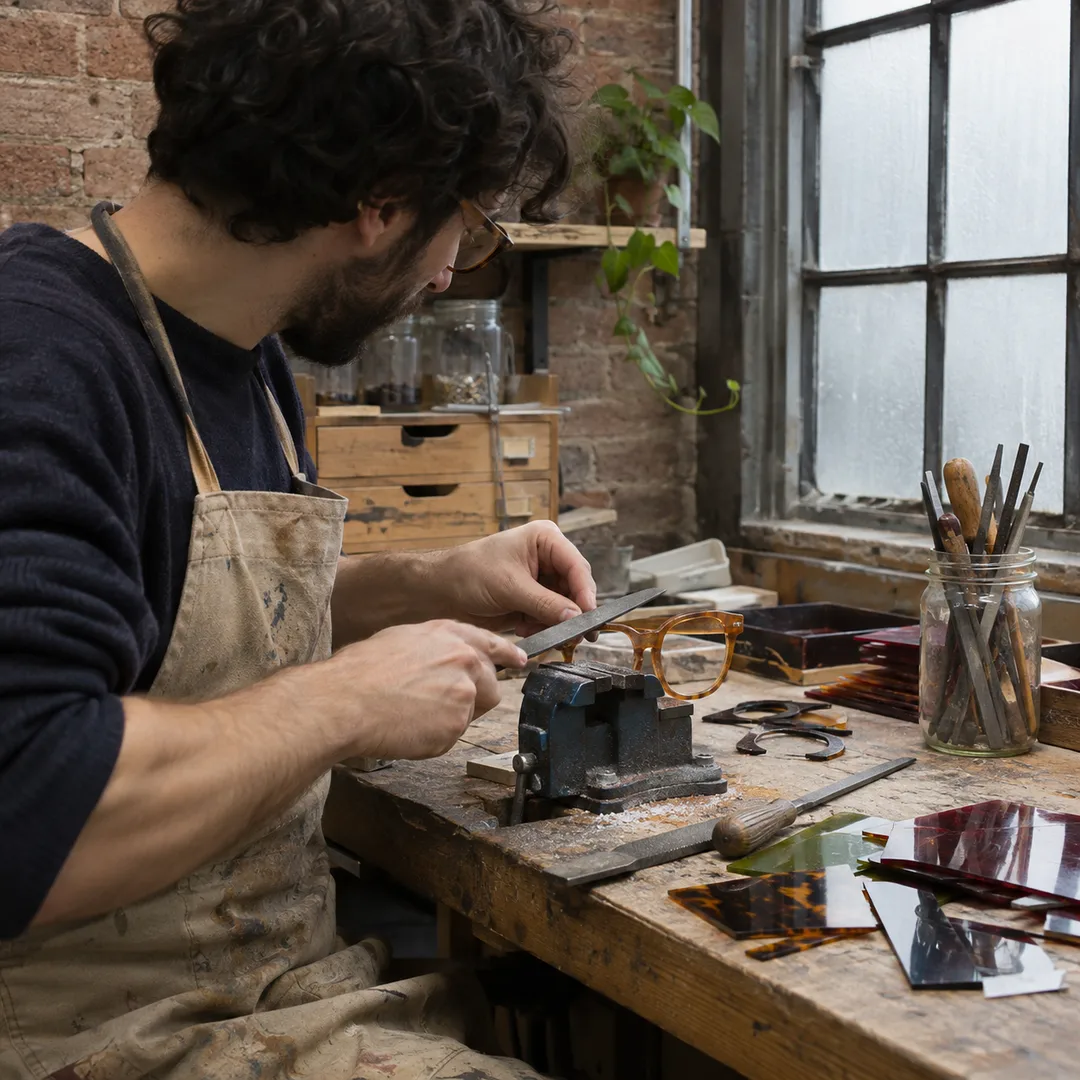
Shoreditch Independent Eyewear Shop Finder: Handmade Frames
Shoreditch's small frame makers let you watch acetate being shaped and talk through a design with the person making it, ideal for a pair that feels truly yours.
Most glasses are cut by machines in a distant factory and arrive in a shop already finished. In Shoreditch, a few independent eyewear makers still do much of the work by hand, often in small studios where you can see the files, sanding wheels and offcuts of acetate behind the counter. That makes the area a rewarding place for anyone who wants frames made for their face rather than chosen from a wall. This finder explains how to approach a frame maker in Shoreditch, what to ask, how long to expect, and how to spend the waiting time around Columbia Road and Brick Lane.
Why Shoreditch Is Home to Frame Makers
East London has a long tradition of small workshops, from furniture makers to printers, and many of the old warehouses and arches around Shoreditch still house people who make things. Independent eyewear studios fit naturally into that world. They tend to be small, run by a designer or maker who started out at a bench, and they often share streets with leather workers, ceramicists and tailors.
Because the spaces double as workshops, you often meet the person who actually shapes the frames. That changes the conversation. Instead of asking a sales assistant for a medium size in black, you talk about your face, your habits and the kind of feeling you want the glasses to have.
Decide Between Made to Order and Fully Bespoke
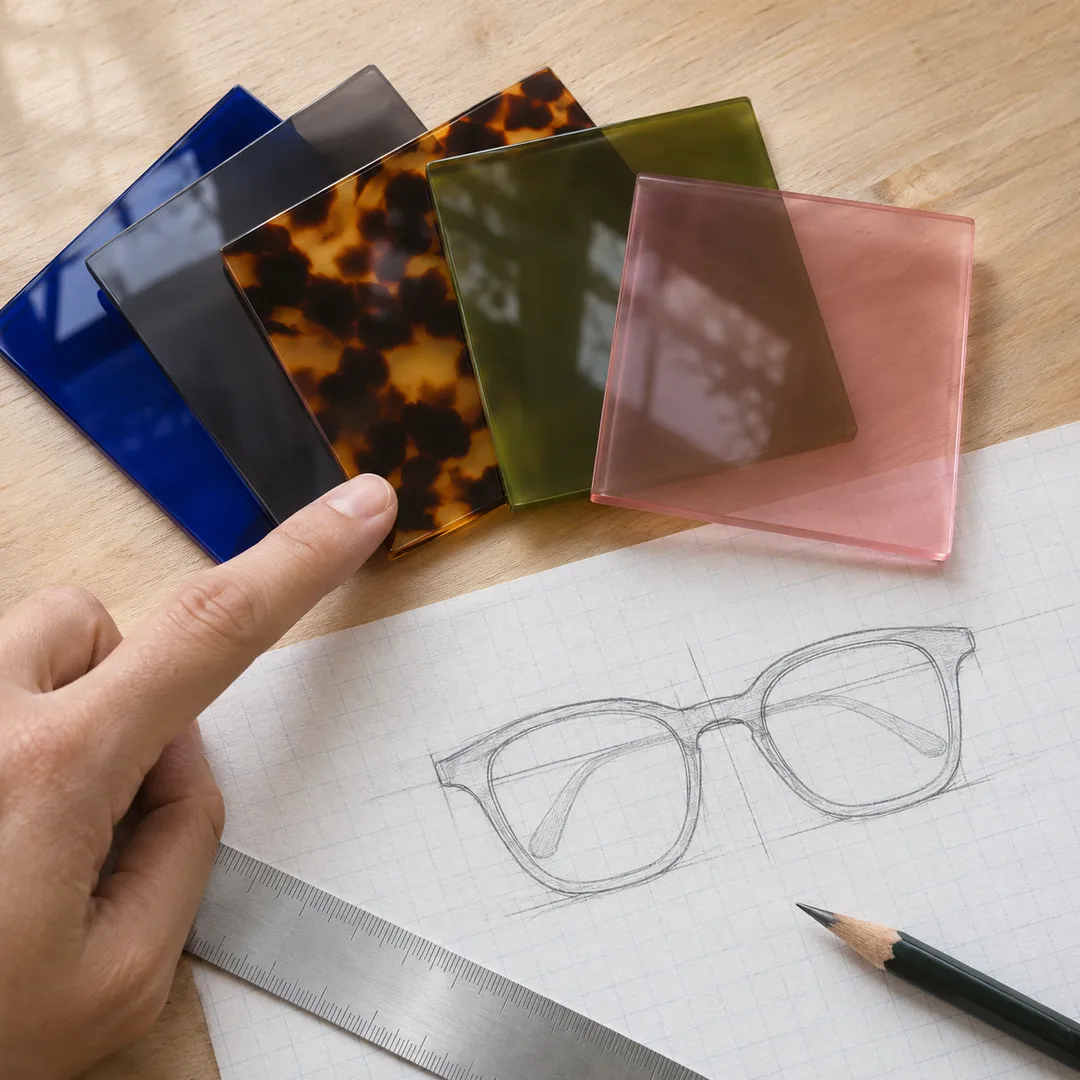
Ask early what kind of service the studio offers. Some makers have their own collection of designs that they cut by hand in your choice of colour and size. Others offer fully bespoke frames, where the shape is drawn for you from scratch after measuring your face. Both are handmade, but bespoke takes longer and involves more conversation.
If this is your first time, a made to order pair from the maker's own range is a sensible start. You can try sample shapes on, pick a colour from their sheets of acetate and get a frame tailored to your measurements. If you have a very particular idea or an unusual face shape, a bespoke design may be worth the wait.
Bring Ideas, Not Just a Prescription
A frame maker will want to know how you use your glasses. Are they for reading at a desk, for cycling across town, for long screen days, or for wearing everywhere? Do you push them up on your head? Do they keep slipping down your nose? These habits shape decisions about bridge height, arm length and frame weight.
Bring pictures of frames you like, including old family photos if a grandparent's pair inspired you. Bring your current glasses too, especially if there is something you love or hate about them. The more the maker understands, the less guesswork there is. Your prescription matters for the lenses later, but the design conversation starts with you.
Choose the Material by Touch
Most handmade frames in Shoreditch are cut from acetate, a plant-based plastic that comes in rich colours and patterns. Ask to see and hold sample sheets. Some are deep and solid, others translucent or layered so the colour changes at the edges. Hold them up to your face in daylight and see which tones suit your skin and hair.
Some studios also work with wood, horn or titanium. Each has its own feel: horn is warm and light, wood is natural but needs care, titanium is thin and strong. The maker can explain which materials suit your prescription and lifestyle. Choosing by touch rather than by photo is one of the real pleasures of buying here.
Expect to Wait and Plan for It
Handmade glasses take time. A frame might need several stages of cutting, shaping, polishing and hinge fitting before the lenses go in. Ask the maker for a realistic idea of how long your pair will take and whether they need you back for a fitting halfway through. Bespoke work usually involves at least one extra visit.
Do not order handmade frames if you need glasses in a hurry. Keep your current pair going, or buy a simple ready-made pair as a backup while you wait. The slower pace is part of the value, and rushing a maker rarely produces a better result. Treat the wait as anticipation rather than delay.
Watch the Work if You Can
Many Shoreditch studios are happy to show you the bench if they are not in the middle of a delicate job. Ask politely whether you can see how a frame front is cut and shaped. Watching someone file the edges of a bridge or polish an arm gives you a new respect for what ends up on your face.
It also helps you understand why handmade frames feel different. The edges are often softer, the hinges sit more neatly and the finish has a depth that mass-produced frames can lack. Those details are easier to appreciate once you have seen the time that goes into them.
Who Comes to Shoreditch Makers
The customers are varied: designers and architects who care about small details, musicians who want something nobody else has, couples ordering matching colours, and people with hard-to-fit faces who have never found a comfortable pair on the high street. Many first come for a single pair and return years later for a second.
There is an unspoken etiquette in small studios. Do not drop in at closing time expecting a long consultation, and do not haggle over a handmade piece. Book an appointment if the studio offers them, arrive with your ideas ready, and respect that the maker's time is split between customers and the bench.
An Honest Note on Expectations
Skip the idea that handmade automatically means perfect. Handmade frames can have tiny variations, and a first bespoke design sometimes needs adjustment once you wear it for a while. That is normal. A good maker will invite you back and fine tune the fit rather than send you away with something that pinches.
Also skip ordering a wildly experimental design for your only pair of glasses. If you want something sculptural or unusual, consider it as a second pair for evenings or weekends. Your everyday frame should be comfortable for long hours, and comfort is where a maker's skill really shows.
Fill the Waiting Time on Columbia Road
If your consultation falls on a Sunday morning, walk up to Columbia Road for the flower market afterwards. The narrow street fills with stalls of cut flowers and plants, and the small shops behind them sell ceramics, prints and odd antiques. It is a lively, cheerful contrast to the quiet focus of a frame studio.
On other days, wander down Brick Lane and the side streets around Redchurch Street to look at the murals and independent shops. Many of the walls change often, so there is always something new to see. It is a good way to let your design decision settle before you commit.
Plan B for Busy Weekends
Shoreditch can be very crowded on weekend afternoons, especially around Brick Lane. If a studio is full when you arrive, ask when a quieter slot might be and return then rather than squeezing into a rushed conversation. Weekday mornings are usually the calmest time to talk properly with a maker.
If the weather is wet, the old market buildings around Spitalfields offer covered space to wait between appointments. And if no maker quite fits your idea, ask them to recommend someone else. Small studios often know each other and are happy to point you to a colleague who specialises in what you want.
Use the Karpo APP to Find Studios
If you want to see which independent eyewear makers and frame shops are near Shoreditch before you set out, the Karpo APP can help you find studios nearby and plan a walking route that takes in Columbia Road or Brick Lane along the way.
Buying handmade glasses is a slower, more personal experience than picking a pair from a rack. Talk to the maker about your habits, choose the material with your hands, accept the wait, and enjoy watching a little piece of craft come together. The result is a frame that carries a story every time you put it on.
Ask Karpo for more information.
Keep reading
- Brixton Vintage Thrift Shop Finder: South London Retro Gems
 Notting Hill Vintage Thrift Shop Finder: Preloved Rails
 Soho Vintage Thrift Shop Finder: West End Designer Archives