 Brixton Vintage Thrift Shop Finder: South London Retro Gems
Hidden Gems & Odd Finds
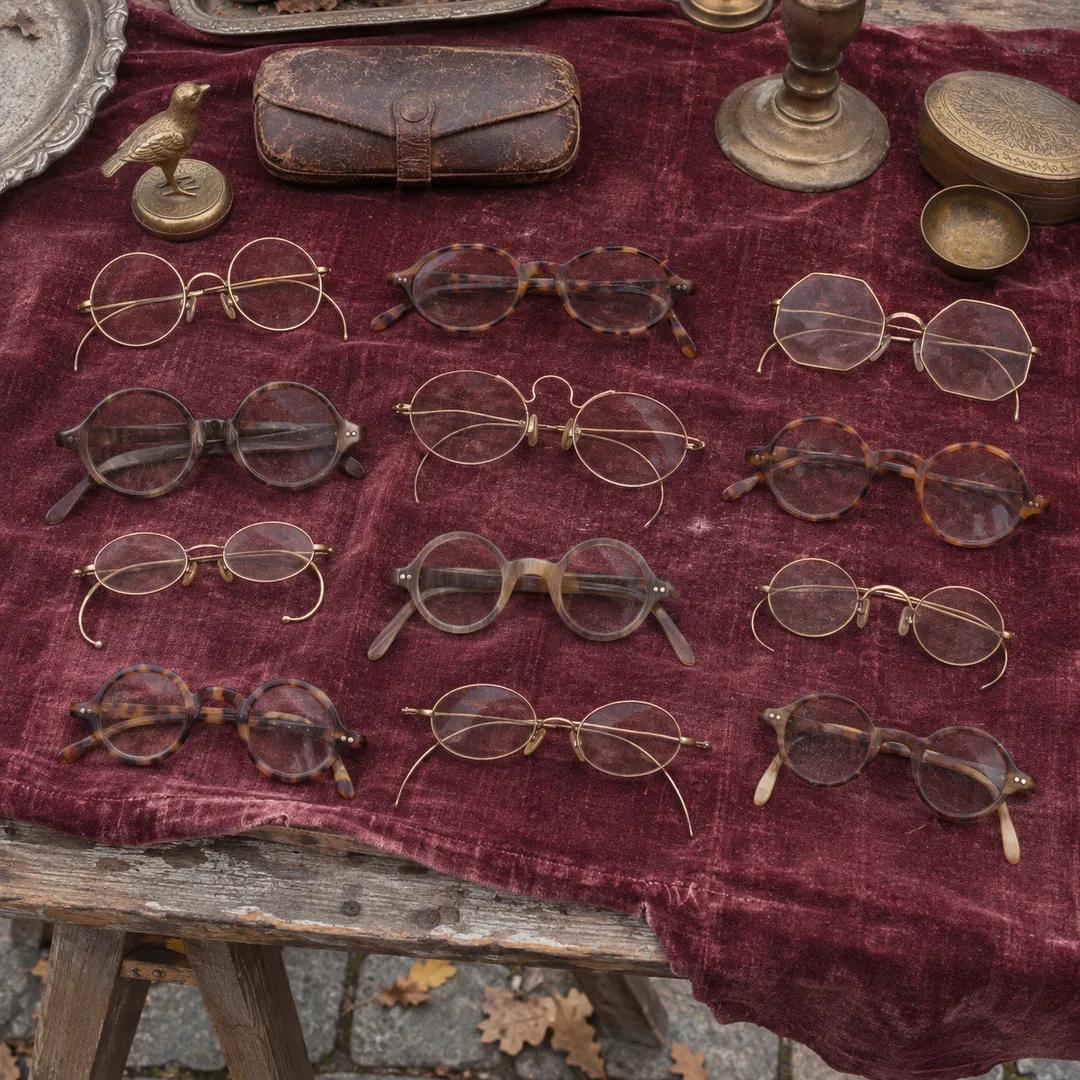
Notting Hill Independent Eyewear Shop Finder: Vintage Frames
Vintage frames from Portobello Road can become your everyday glasses. Check hinges and acetate, then take them to a Notting Hill optician to glaze and fit.
Some of the best glasses in London were made decades ago and are still sitting in a box on a market stall. Notting Hill is the place to find them and to bring them back to life. Saturday on Portobello Road turns up old gold wire frames, chunky horn-rims and odd little pince-nez among the antiques, while the side streets around Westbourne Grove and Ledbury Road hold independent opticians who know how to glaze them. This finder explains how to spot a vintage frame worth buying and how to turn it into glasses you can wear every day.
Why Notting Hill Is Good Ground for Old Frames
Portobello Road has been an antiques market for a very long time, and spectacles have always passed through it alongside silverware, cameras and clocks. On a busy Saturday, dealers in the arcades near the top of the road lay out trays of old frames, often mixed in with buttons, pens and pocket watches. Some are rubbish. Some are beautiful pieces that simply need new lenses.
What makes Notting Hill unusual is that you can buy and get advice in the same walk. A handful of independent eyewear shops nearby stock vintage and deadstock frames themselves, and their opticians are used to customers walking in with a market find and asking whether it can be saved.
What to Check Before You Buy at a Stall
Hold the frame up to the light and look along each arm and across the front. Small chips on the surface are fine, but cracks near the hinge or across the bridge are bad news, because that is where the frame will be stressed when an optician fits new lenses. Open and close the arms several times. They should move smoothly without wobbling or grinding.
Look at the colour and texture too. Old acetate that looks cloudy, chalky or sticky may be breaking down and will not survive glazing. Metal frames should not have green corrosion at the joints. If a dealer has a box of frames, take your time and ask which pieces came from a single old shop's stock. Unworn deadstock tends to be in the best condition.
Check the Size Against Your Own Glasses
Bring your current glasses to the market. Hold the vintage frame next to them and compare the width across the front, the size of the lens openings and the length of the arms. Many older frames were made smaller than modern ones, which can look charming but may pinch at the temples if your face is wider.
Try the frame on with a dealer's mirror if they have one. Check that the bridge sits on your nose without sliding and that the arms reach comfortably over your ears. If the frame is close but not quite right, an optician can often adjust the arms. A frame that is far too narrow is best left on the table.
Take the Frame to an Independent Optician
Once you have a find, walk it over to one of the independent opticians in the streets off Westbourne Grove. Explain where you bought it and ask for an honest opinion. A good optician will examine the hinges, test the material and tell you whether it is safe to glaze. Some will decline if the risk of breakage is too high, which is a sign they take the frame seriously.
Bring your prescription with you so they can say whether your lenses will fit the shape. Very strong prescriptions can be tricky in small round frames or in thin wire rims. The optician may suggest a thinner lens material or advise you to use the frame for sunglasses or reading glasses instead.
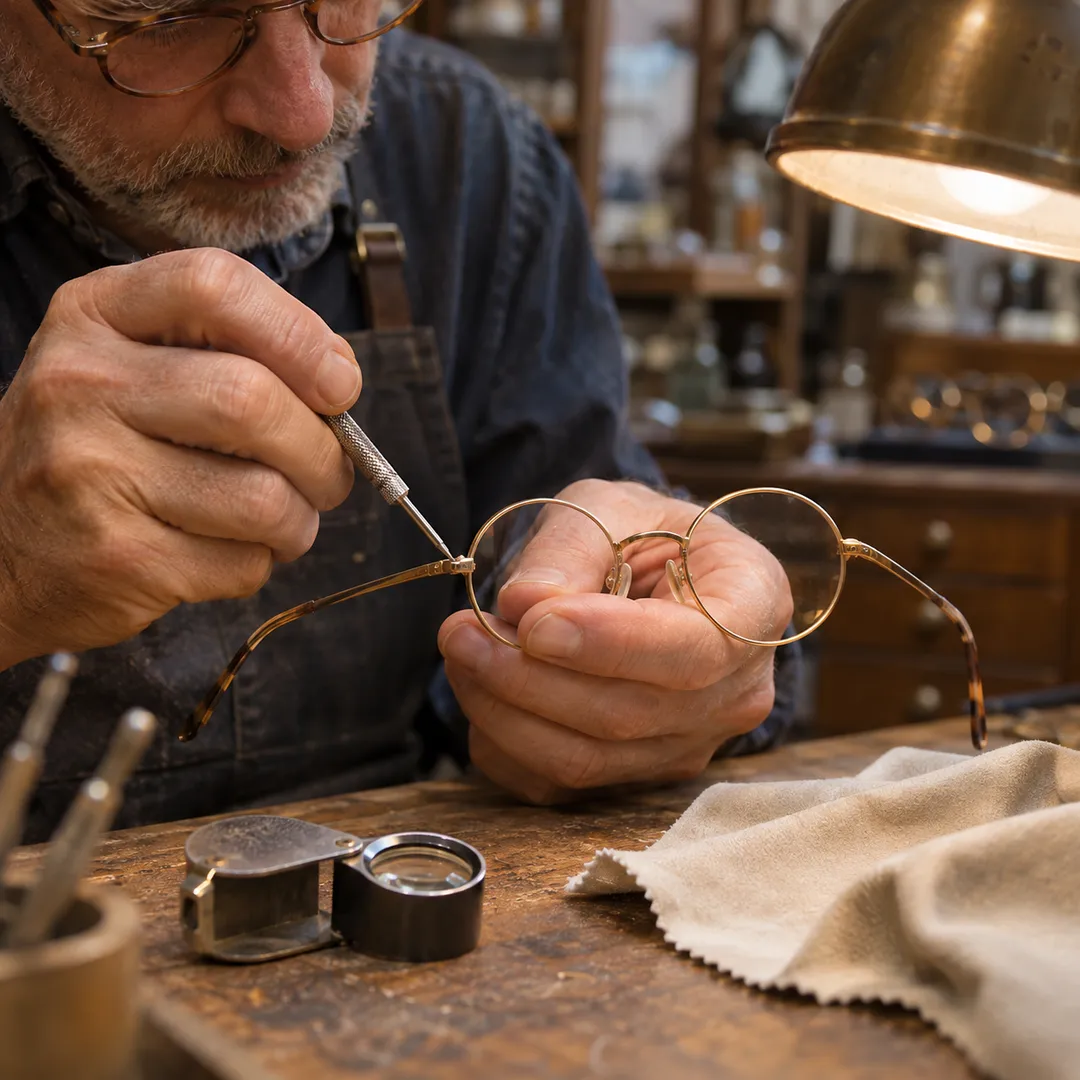
Decide How You Will Wear It
Not every vintage frame needs to become your main pair. A delicate gold wire frame might be perfect as reading glasses for the evening. A bold horn-rim might be a better pair of prescription sunglasses than an everyday frame. Talking this through with the optician helps you get the most from a piece that has already lasted a long time.
Ask about tints too. Many old frames look wonderful with a soft brown or green tint, which suits sunny afternoons and adds to the period feel. If you need a clear lens, ask for an anti-reflective coating so the old frame looks crisp rather than glassy in photos.
Who Hunts Vintage Glasses Here
Spend a Saturday morning around the stalls and you will see collectors with loupes, costume designers looking for a particular decade, students on a small budget and long-time residents who have bought their glasses this way for years. Dealers often know the regulars and keep good pieces aside for them.
If you become a familiar face, ask a dealer to look out for a particular style or size for you. Many of them enjoy the hunt and will remember. That kind of slow relationship is part of the pleasure of buying vintage in Notting Hill, and it often leads to better frames than a single hurried visit.
An Honest Word on Fragile Finds
Skip frames that look stunning but are clearly fragile, such as very thin tortoiseshell with old repairs, heavily bent wire frames or pieces with glued joints. They might survive as decoration, but they are unlikely to handle daily wear or the pressure of new lenses being fitted. An optician cannot guarantee them.
It is also wise to skip frames sold as being of a specific famous make unless the dealer can show you clear markings. There are many good unnamed frames on the market, and they often wear better than a disputed big name. Buy what fits and feels solid, not just the story attached to it.
Plan Your Walk Around the Market
Arrive early on a Saturday, before the crowds thicken at the top of Portobello Road. Browse the antique arcades first, where the frame dealers tend to sit, then drift down towards Westbourne Grove to see an optician while the frame is fresh in your mind. Later in the day the road becomes very busy and harder to browse.
After the shops, walk into the quieter streets behind Ledbury Road to look at the pastel terraces and garden squares. It is a nice way to let the decision settle. If you have bought a frame, you will be thinking about it anyway, and the walk gives you time to imagine wearing it.
When It Rains or the Market Is Quiet
Portobello's covered arcades are a good shelter on a wet Saturday, and many frame dealers sit inside them anyway. If the weather is truly awful, spend more time with the optician and less on the street. Some independents keep their own small trays of vintage stock, so you may still find something without braving the rain.
On weekdays the market is much quieter and many antique stalls are closed. That is a fine time to visit the opticians themselves and ask about their vintage pieces. You will get more of their attention, and you can always come back for the full market experience on a weekend.
Caring for Glazed Vintage Frames
Once your frames are glazed and fitted, treat them a little more gently than modern glasses. Use both hands to put them on and take them off, keep them in a hard case, and avoid leaving them on a hot windowsill or car dashboard. Old acetate can warp with heat, and fine wire can bend if you sit on it.
Ask the optician how often to bring them back for a check. Many will tighten screws and adjust the fit as part of the service for customers who bought lenses with them. A quick visit every few months keeps a vintage frame wearable and catches small problems before they turn into breaks.
Use the Karpo APP to Find Nearby Opticians
If you want to know which independent eyewear shops are close to Portobello Road before you start hunting, the Karpo APP can help you find opticians and frame shops nearby and plan a walking route from the market to the side streets.
Buying vintage frames in Notting Hill is part detective work and part patience. Check the hinges, compare the size, ask an optician before committing, and think about how you will actually wear the glasses. The reward is a pair with a past that nobody else on your street will have.
Ask Karpo for more information.
Keep reading
- Brixton Vintage Thrift Shop Finder: South London Retro Gems
 Notting Hill Vintage Thrift Shop Finder: Preloved Rails
 Soho Vintage Thrift Shop Finder: West End Designer Archives