 Clapham Bouldering Gym Finder: New in Town, Climb to Mingle
Sports Social

Strand Ice Skating Rink Planner for First-Time Adult Skaters
First time skating as an adult near the Strand? Pick a quiet session, hug the barrier for ten minutes, then walk it off along the Thames at Embankment.
Plenty of Londoners reach adulthood without ever stepping onto ice, and the first time can feel oddly high stakes, with children zipping past and friends filming. The Strand is a good place to break that spell, because the seasonal rinks around this stretch of central London sit in handsome, sheltered spaces and the river is two minutes away for a calm walk afterwards. This ice skating rink planner is written for nervous adult beginners who want a gentle first session and a proper evening around it.
Why the Strand Works for a First Skate
The Strand runs between Trafalgar Square and the Aldwych, a long, busy street of theatres, colleges and old stone buildings. Its courtyards and terraces feel enclosed even in the middle of the city, which matters on a first skate. You are not out on an exposed plaza in a cold wind; you are inside walls, under lights, with the noise of the street turned down. That sense of shelter makes it easier to relax your shoulders.
It also helps that everything you need for the rest of the evening is close. Covent Garden is just north for food, the river is just south for a walk, and Waterloo Bridge gives one of the best night views in London when you want to cool down. You can plan the whole outing on foot, which takes the pressure off. If the skate goes badly, the evening still goes well.
Choosing a Calm Session
The biggest favour you can do yourself is to avoid the busiest slot. Weekend evenings in December tend to be the most crowded, with groups, parties and confident skaters weaving in and out. A weekday session, or an earlier slot before office crowds arrive, usually gives beginners far more room. Fewer people means fewer sudden stops in front of you and more space along the barrier, where most first timers spend their opening minutes.
Go with one friend rather than a big group. A patient companion who is happy to skate slowly beside you is worth more than a crowd cheering from the side. If both of you are beginners, even better: you can wobble together and nobody feels left behind. Agree beforehand that the goal is simply to finish the session smiling, not to skate a full lap without holding on.
What to Wear on the Ice
Dress for a cold walk rather than a party. Warm, flexible trousers are better than stiff jeans, because you will be bending your knees more than you expect. Thin gloves are essential, partly for warmth and partly because your hands may touch the ice when you fall. A hat helps on outdoor rinks, and a scarf you can tuck in is safer than one that flaps loose.
Socks matter more than people think. One pair of medium-thick socks that come above the ankle is ideal, because hire boots rub at the top and too many layers make your feet slide around inside. Leave large bags with a friend or in a locker if one is provided, and keep your phone in a zipped pocket. Having both hands free is the single most useful thing on your first skate.
Your First Ten Minutes
Lace the boots firmly, especially around the ankle, so your foot feels held rather than squeezed. Step onto the ice next to the barrier and hold it with one hand. Bend your knees slightly and lean a little forward, as if you were about to sit on a high stool. Standing upright with locked knees is what makes beginners topple backwards, so keep that soft bend the whole time.
Now march on the spot, lifting each foot just a little, then start small duck steps forward with your toes turned slightly out. Let go of the barrier for a few steps, then take it again. Repeat this until it feels boring. Boredom is a good sign: it means your body has stopped panicking. Most adults find that after ten minutes of this, the ice starts to feel far less hostile.
How to Fall and Get Up
Every skater falls, and the trick is falling well. If you feel yourself going, bend your knees further and try to drop to the side, landing on your hip and thigh rather than reaching back with straight arms. Keep your fingers curled into fists so that nobody's blade can come near them. Then move away from the busy track toward the barrier before you try to stand.
To get up, roll onto your hands and knees, bring one foot flat onto the ice between your hands, then the other, and push up slowly with your hands on your front knee. It looks clumsy, but it works every time. After one or two falls, many beginners find they actually relax, because the thing they feared most has happened and it was fine.
Thawing Out on the Embankment
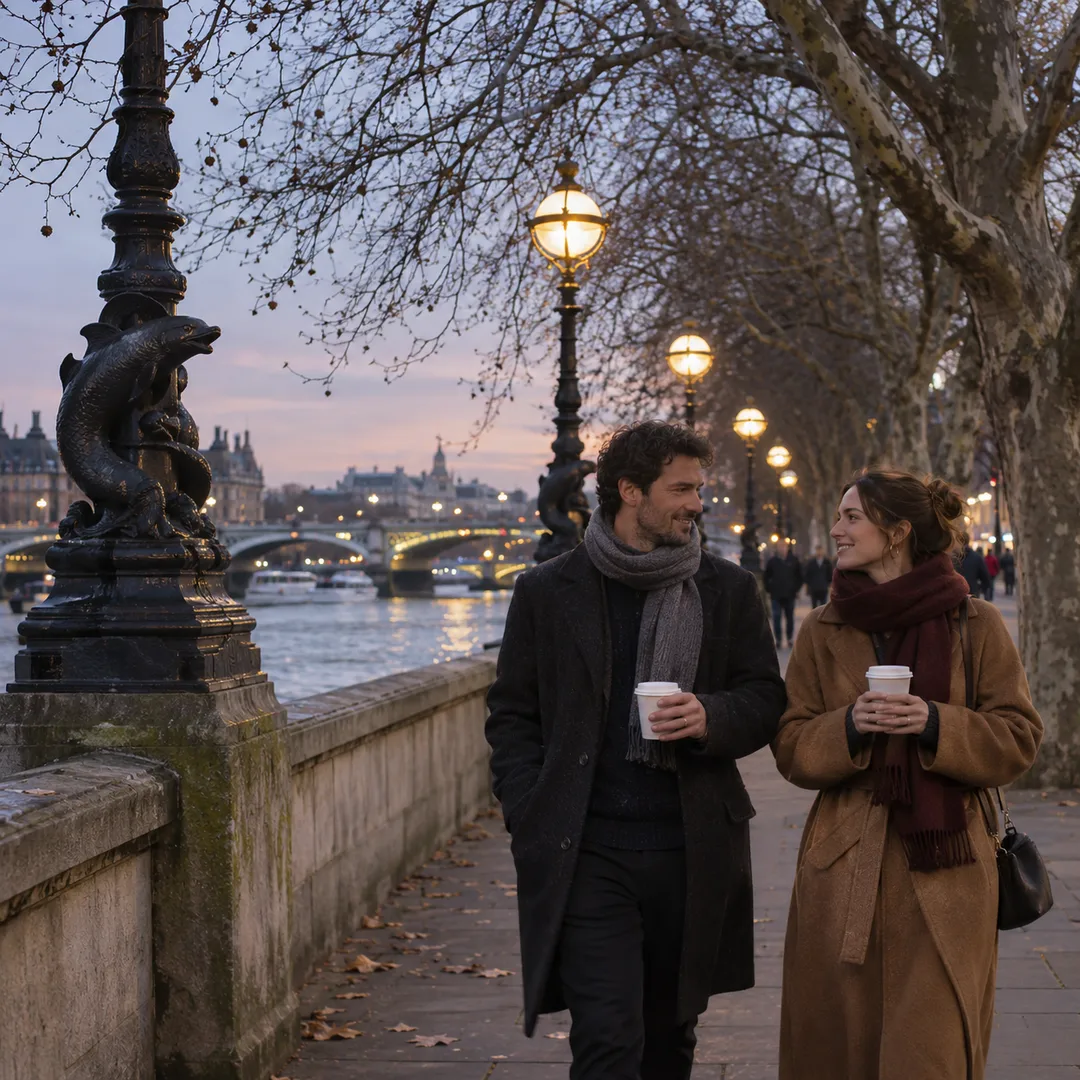
When the session ends, take the short walk down to the river. The Victoria Embankment, with its old lamp posts and long granite wall, is quiet in the evening compared with the Strand above it. Victoria Embankment Gardens offer a few calm paths under bare winter trees, and the river views open up toward the London Eye and the South Bank lights across the water.
If you still have energy, walk up onto Waterloo Bridge and stop halfway. Looking east you can see St Paul's and the City towers; looking west you can see Westminster and the Eye. It is one of the great free views in London, and after an hour of staring at your own feet on the ice, looking at a wide horizon feels like a reward.
Food and Warm Drinks Nearby
Covent Garden, a few minutes north, has plenty of places for an easy dinner after skating, from busy noodle bars to quieter side-street pubs. Aim for somewhere informal where you can arrive a little windswept and nobody minds. A bowl of something hot is the ideal end to a cold evening, and your legs will be glad of a proper sit-down.
If you prefer something lighter, a hot chocolate or tea on the walk back is enough. Many beginners find they are hungrier than expected, because balancing uses more energy than it seems. Have a snack in your coat pocket for the walk between rink and river, and keep a little water in your bag, since cold air dries you out faster than you notice.
Planning Your Skate With Karpo APP
Open Karpo APP and describe the evening you want, for example a first skate near the Strand for two nervous adults, followed by a river walk and a relaxed dinner. Karpo can suggest an order for the evening, nearby places to eat that suit a casual post-skate meal, and gentle walking routes along the Embankment, so the plan feels finished before you leave home.
You can also ask Karpo for quieter rinks elsewhere in London if you want a second session once you have gained confidence, or for other winter evenings around the Strand, such as a theatre night or a lights walk. Save the plan and share it with your skating partner. The first time on the ice is the hardest, and by the end of the night it will already be behind you.
Ask Karpo for more information.
Keep reading
- Clapham Bouldering Gym Finder: New in Town, Climb to Mingle
 Marylebone Bouldering Gym Finder: Lunch Break Climbs
 Notting Hill Bouldering Gym Finder: Family Climbing Weekends