 Clapham Board Game Night Finder: New to London Meetups
Weekend Plans

London Horror Experience Near Me: The Clink Prison Museum
Explore The Clink Prison Museum on Bankside, stepping inside Britain's most notorious medieval jail to examine authentic torture devices and chilling prisoner lore.
The Clink Prison Museum stands along the narrow cobblestones of Bankside at 1 Clink Street, London SE1 9DG, occupying the exact physical site of England's oldest and most notorious medieval lockup. Established in the year 1144 by Henry of Blois, the powerful Bishop of Winchester, the facility served as the primary penal institution for the Liberty of the Clink—an autonomous ecclesiastical district exempt from the legal jurisdiction of the City of London. For more than six centuries, until the structure was razed during the anti-Catholic Gordon Riots of 1780, this grim stone jail housed debtors, heretics, cutpurses, and political dissenters. First opened to the public in 1988 following archaeological excavations of the bishopric foundations, the modern museum brings this carceral legacy to life. The institution famously gave the English language the enduring slang term "in the clink," derived from the sharp metallic clinking sound of blacksmith hammers riveting iron shackles onto prisoners' ankles.
Stepping into the Brutal Reality of Medieval Incarceration
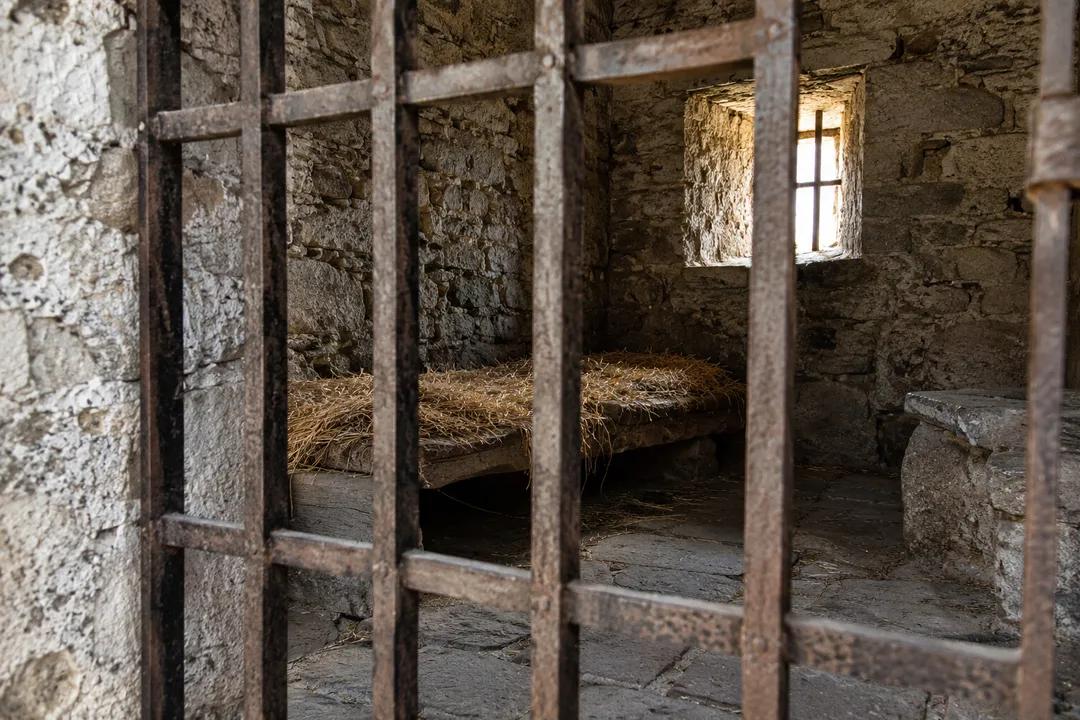
Unlike polished municipal museums with roped-off showcases, The Clink delivers an intimate, tactile confrontation with historic penal cruelty. The self-guided walkthrough immerses visitors in dimly lit subterranean vaults featuring damp masonry walls, sawdust-covered stone floors, and the heavy scent of antique timber. Informational panels chronicle how the Bishop of Winchester licensed Bankside's notorious "Winchester Geese"—the registered prostitutes operating along the Thames—while systematically imprisoning anyone who failed to pay tithes or fines into the bishopric treasury.
Visitors examine the harsh social stratification that governed daily survival inside the complex. Wealthy gentlemen prisoners could pay gaolers hefty extortion fees to secure private upper chambers with hearths and wine, while destitute commoners were plunged into squalid ground-floor cells. Impoverished inmates relied on iron street-facing grates where they dangled begging bowls to passing pedestrians, crying for crusts of bread or copper farthings simply to purchase daily water from corrupt turnkey wardens.
The institution also housed significant historical and religious figures during the turbulent Tudor and Stuart eras. Marian Protestant martyrs, Jesuit priests evading Elizabethan spy networks, and seventeenth-century Puritans who later sailed aboard the Mayflower all spent months chained within the Clink's stone dungeons. The museum's displays recount these dramatic struggles with authentic trial transcripts and surviving letters penned from the cellars.
Hands-On Torture Instruments, Iron Restraints, and Dark Lore
The museum's central exhibition halls display a comprehensive array of authentic and meticulously recreated medieval punishment devices. Rather than merely observing behind protective glass, visitors are explicitly permitted to touch, handle, and lift many of the iron implements to appreciate their sheer weight and psychological terror. Displays feature heavy iron leg irons, wrist manacles, neck collars, and weighted ball-and-chain assemblies that inmates dragged across unpaved floors.
Among the most sobering artifacts on view is the scold's bridle, an iron muzzle fitted with a spiked curb plate designed to painfully compress the tongue of women accused of gossiping, rioting, or speaking against authority. Nearby stands the drunkard's cloak, an open-ended wooden barrel forced over offenders' shoulders for public shaming along Bankside, alongside heavy wooden pillories and whipping posts where public flagellations took place under municipal supervision.
For darker corporal interrogation, the museum showcases thumbscrews, stretching ropes, and the scavenger's daughter—an agonizing compressional iron hoop that forced the victim's body into a crushing fetal crouch. Due to its long history of suffering and violence, The Clink is widely recognized among British paranormal researchers as a hotspot for unexplained phenomena. Staff and nighttime ghost hunting groups frequently report cold temperature drops, sudden acoustic footsteps in empty corridors, and unprompted spectral sightings near the historic punishment pit.
Admission Prices, Visiting Hours, and Family Information
The Clink Prison Museum operates an accessible, straightforward ticketing structure with transparent entry fees. General admission for adults aged 16 and over costs £10.00 at both the box office and online. Tickets for children under 16 years old cost £8.00, while concessionary admission priced at £8.00 is available for senior citizens aged 60 and over, university students with valid identification, and disabled visitors. A dedicated family ticket admitting two adults and two children under 16 costs £29.00, providing excellent value for small travel groups.
Children aged three and younger are admitted free of charge. While the museum displays historical torture apparatus and skeletal mannequins, it focuses on social education and historical context rather than theatrical jump scares, making it suitable for older children and teenagers studying British history. All major credit cards, debit cards, and contactless mobile payments are accepted at the front desk. Pre-booking online is recommended for peak weekend afternoons, though walk-up visitors are smoothly accommodated during regular weekday sessions.
The museum opens seven days a week, operating 364 days a year from 10:00 am to 6:00 pm, remaining closed solely on Christmas Day, December 25. The final entry batch is admitted thirty minutes prior to closing at 5:30 pm. Exploring the complete self-guided route generally occupies between 45 and 60 minutes. Because the exhibits are housed within self-contained underground vaults, arriving between 10:00 am and 11:30 am or after 4:30 pm offers a quiet, unhurried atmosphere to inspect the historical artifacts at leisure.
Due to the genuine archaeological character of the site, entry into the subterranean levels requires descending a historic flight of stone stairs, meaning full step-free wheelchair accessibility is unfortunately limited.
Bankside Transit Connections, Surrounding Pubs, and Walking Trails
Reaching 1 Clink Street is convenient from multiple central London transit hubs. London Bridge Underground Station, served by the Northern and Jubilee lines, is a scenic five-minute walk westward along Stoney Street and Clink Street. Alternatively, visitors can cross the pedestrian Millennium Bridge from St Paul's Cathedral, walking five minutes eastward past Shakespeare's Globe, or take the London Underground to Mansion House, Cannon Street, or Southwark stations.
After finishing your dungeon tour, take time to explore the atmospheric alleys of historic Southwark. Directly around the corner stands the Golden Hinde on St Mary Overie Dock, a full-scale reconstruction of Sir Francis Drake's Tudor galleon that circumnavigated the globe between 1577 and 1580. Continuing two minutes east brings you to Southwark Cathedral, London's oldest Gothic church building, featuring the tomb of poet John Gower and a memorial window dedicated to William Shakespeare.
For traditional British refreshments following the tour, walk one block east to The Anchor on Park Street, an iconic 18th-century riverside public house where diarist Samuel Pepys sat and watched the Great Fire of London across the Thames in September 1666. Grabbing a timber bench on the Anchor's river terrace overlooking the City of London skyline provides a relaxing conclusion to an afternoon spent immersed in Bankside's dark heritage.
Ask Karpo for more information.
Keep reading
- Clapham Board Game Night Finder: New to London Meetups
 Marylebone Board Game Night Finder: Baker Street Mysteries
 Notting Hill Board Game Night Finder: Two-Player Rainy Dates