 Richmond Pantomime Evening Planner: Green Walk to Curtain
Weekend Plans
Notting Hill Holiday Lights Walk Planner: Pastel Terraces
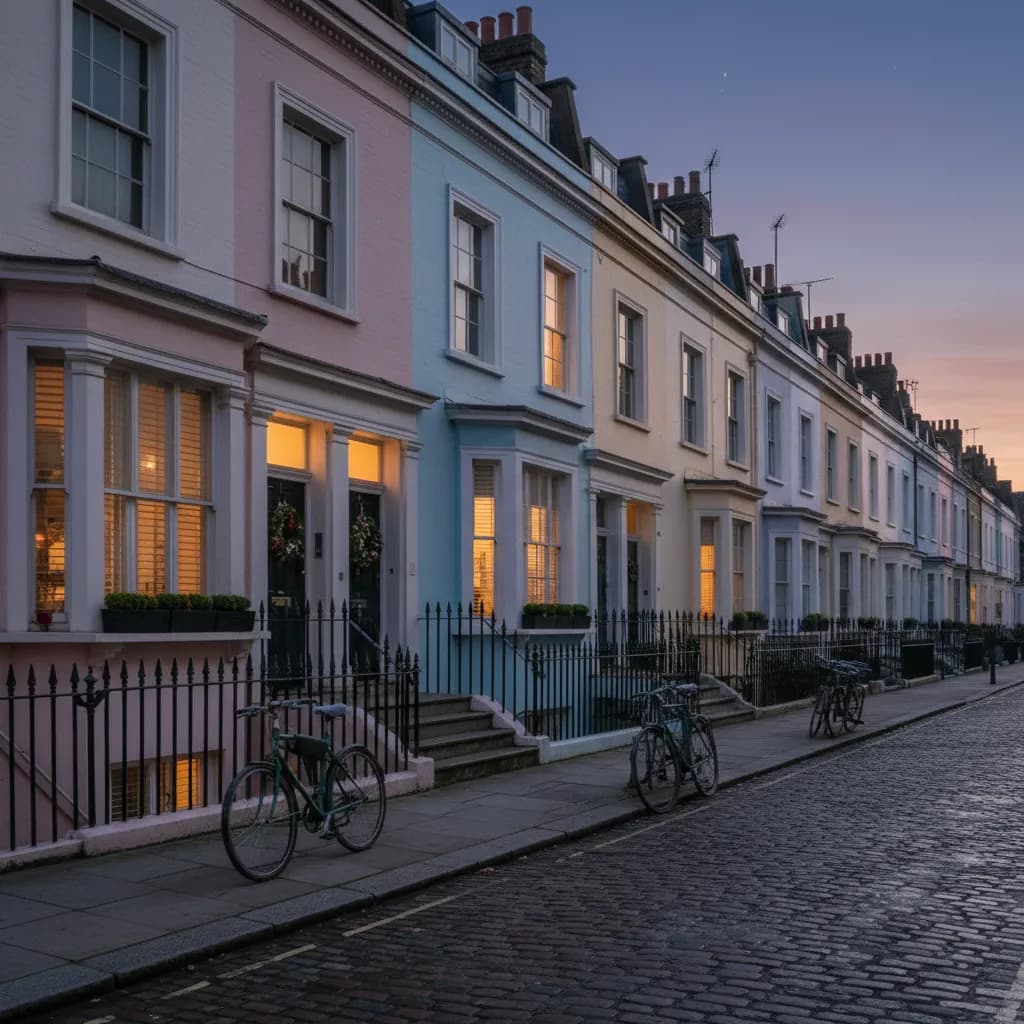
Notting Hill's holiday lights are homely: wreaths on pastel doors, trees in bay windows and lit crescents. Walk side streets at dusk, then end near Portobello.
Notting Hill's festive lights belong to its homes rather than its high streets. In December, the pastel terraces that made the neighbourhood famous wear wreaths on their glossy front doors, tall bay windows frame glowing Christmas trees, and the white stucco crescents look almost like stage sets in the dusk. A holiday lights walk here is about gentle residential streets, not giant displays. Go at dusk, wander the side streets around the market road and finish with something warm near Portobello.
The Charm of Lights at Home
Unlike the commercial centres of London, Notting Hill's decorations are personal. Each household chooses its own wreath, garland or window display, so every street has a slightly different mood. Some doors carry simple greenery, others elaborate ribbons, and some windows show a family tree glowing through the glass. The variety makes the walk feel like a series of small discoveries.
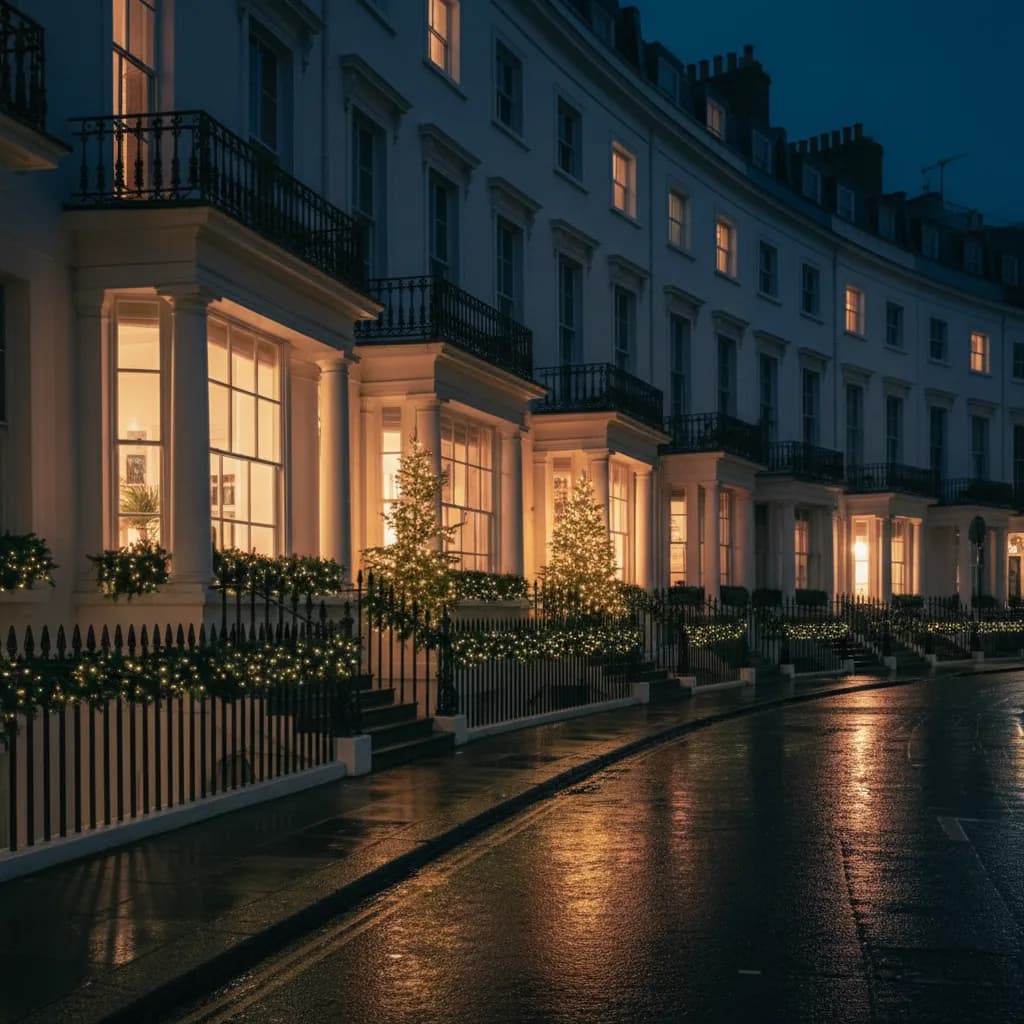
The architecture helps. Rows of painted houses in pink, blue, lilac and yellow look softer under winter light, and the grand white crescents to the south curve around private gardens whose trees are sometimes strung with lights. As the sky darkens, the lit windows stand out against the pale facades, and the whole neighbourhood takes on a warm, lived-in glow that is very different from a shopping street.
A Route Through the Side Streets
Start near the main station at the southern end and walk north into the quieter residential streets rather than heading straight for the market road. The streets just east and west of Portobello Road hold many of the famous coloured houses, and wandering them in a loose zigzag is the best way to see the decorations. Allow about an hour at an easy pace.
Include at least one of the curved stucco crescents, which look especially elegant at night with their ironwork railings and lamplit pavements. Then drift toward the market road itself, where the antique shops, cafes and bakeries are lit for the season. Finish at the northern end, near the iron bridge and the canal, or loop back south toward the station to head home.
The small mews lanes tucked behind the main terraces are worth a detour too. Former stables turned into tiny houses, they often have flower boxes swapped for evergreen in winter, and a single lantern by a door can look more charming than a whole avenue of starlight. Peek in, enjoy the hush, then slip back out to the wider streets.
The Right Time to Stroll
Dusk is the sweet spot, when there is still enough light to see the colours of the houses but the windows and wreaths have begun to glow. As the evening goes on, the pastel facades fade into the darkness and the lit windows take over, which is lovely in a different way. Either moment is good, but arriving in that blue twilight lets you enjoy both.
Weekday evenings are very calm, which suits a residential area like this. Saturdays are a different story because of the famous market, when Portobello Road fills with visitors; walk the side streets instead on those days. A still, frosty evening is ideal, and a light drizzle adds shine to the pavements. Heavy rain is no fun here, as there are fewer covered places to shelter than in the West End.
Cafes, Pubs and a Warm Finish
Portobello Road and the streets around it have plenty of cafes and bakeries where you can stop for a hot drink and a pastry. Traditional pubs with fires and cosy corners are scattered through the neighbourhood and are perfect on a cold December evening. Choose somewhere off the main market road if you want a quieter seat.
An honest suggestion: skip the busiest cafes on the market road at weekends, where queues can be long, and look one street over for something calmer. Notting Hill also has a range of restaurants for dinner, from casual neighbourhood places to smarter dining rooms. The Karpo APP can suggest cafes, pubs or restaurants near where you finish, which saves you wandering in the cold.
Who Will Enjoy This Walk
This walk suits couples, film fans who know the neighbourhood from the screen, families with children who love spotting Christmas trees in windows, and anyone who prefers calm and charm to crowds. It is a good choice for visitors who have already seen the big West End displays and want a quieter, homelier side of London at Christmas.
It is less suited to anyone who wants spectacle or nightlife; the area goes quiet in the evening, and that is part of its appeal. Remember that these are private homes. Admire the decorations from the pavement, keep voices low and avoid photographing people through their windows. A respectful visitor gets the best experience here.
Photographers should think about angles. The prettiest shots usually come from across the street, with a row of coloured doors in frame and a lit window or two breaking up the pastel. Wait for the brief moment when the sky is still blue, and avoid using a flash, which flattens the glow and disturbs the people inside.
Connecting to Nearby Areas
Notting Hill is close to several other festive spots. Walk south toward Kensington and you reach its high street, which usually has its own lights, plus the edges of Kensington Gardens. Head east to Bayswater and Queensway for a livelier, more international atmosphere. A little further on lies Hyde Park, where a large winter fair often runs through the season.
A good evening might begin with the quiet side streets of Notting Hill at dusk, then continue south through the leafy streets of Holland Park, where grand villas sometimes carry elegant decorations. Ending at Kensington High Street gives you shops, restaurants and easy transport home. Keep the total walking to about two hours so it stays enjoyable.
Practical Notes for Notting Hill
Wear comfortable shoes, as some side streets are steep. Layers are better than one heavy coat, since you will move between cold streets and warm cafes. Pavements are mostly smooth, which makes the walk easy with a pushchair, although a few corners are narrow.
Several Tube stations serve the area, so you can start at one and finish at another. On market days, give yourself extra time to get through the crowds. Above all, slow down. The beauty of a Notting Hill lights walk lies in small details, a wreath here, a glowing window there, and they reward those who take their time.
Ask Karpo for more information.
Keep reading
- Richmond Pantomime Evening Planner: Green Walk to Curtain
 Hackney Pantomime Evening Planner: Arch Slices to Curtain
 Wimbledon Pantomime Evening Planner: Broadway to Curtain