 Brixton Christmas Light Up Walk Planner: Rainy Arcades
Free Things to Do
Brompton: Historic Cemetery Arboretum With Free 7am Entry
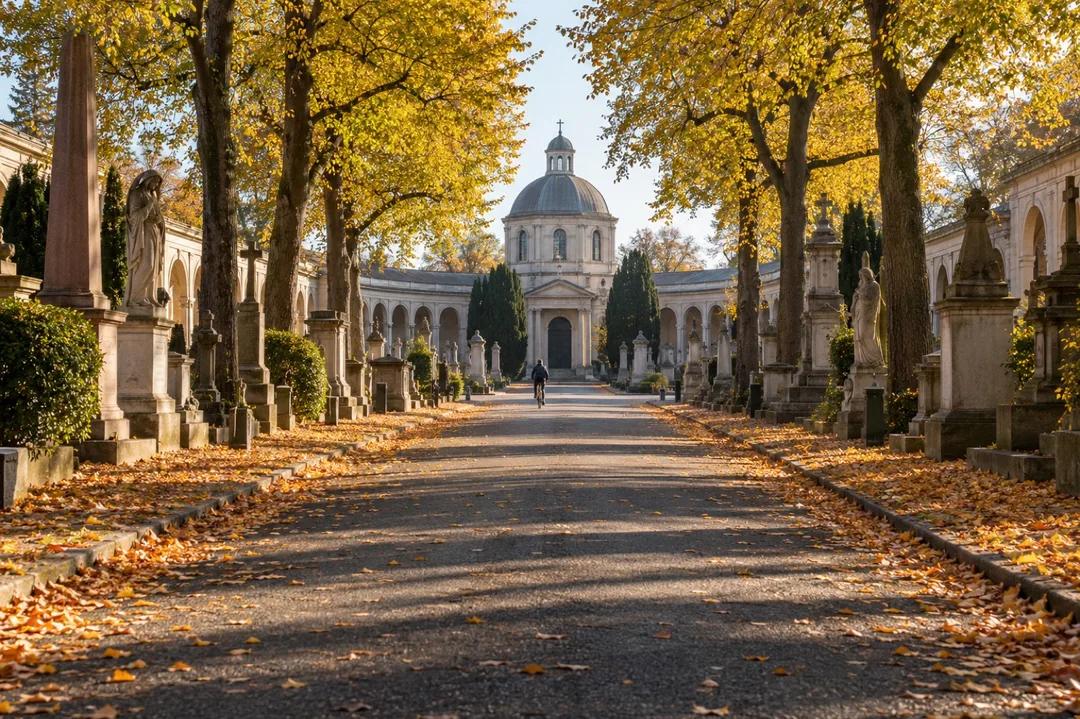
Brompton Cemetery on Fulham Road, London SW10 9UG, is a free historic cemetery arboretum laid out in 1840. Its pedestrian gates open at 7am daily.
Brompton Cemetery, on Fulham Road, London SW10 9UG, is free to enter, and its pedestrian gates open at 7am every day. Laid out in 1840, it is the largest of London's Magnificent Seven cemeteries at about 16 hectares, or 39 acres, and it is run today by the Royal Parks. For anyone after a historic cemetery arboretum, it is the one where the planting itself tells the story of Victorian botany.
A Garden Planned on a Flat Field
The cemetery was founded in 1840 by the architect and entrepreneur Stephen Geary, but the directors rejected his own designs in an open competition and chose those of Benjamin Baud. Baud's task was to make a flat, uninspiring plot feel monumental. His answer was a vast open-air cathedral: a straight Central Avenue, flanked by trees, leading to the curved colonnades of the Great Circle and on to the domed Chapel at the far end.
The planting was laid out by the garden designer J.C. Loudon, the most influential horticultural writer of the period, who believed a cemetery should teach visitors about trees as well as remember the dead. The Royal Parks say the geometric plan of 1840 is all but complete today, and the cemetery is Grade I listed, with the Chapel itself listed Grade II*.
The Plant Hunters Buried Here
What makes Brompton special for tree lovers is who lies in it. Robert Fortune, the plant collector who smuggled tea plants out of China to India, is buried here. So is Thomas Moore, who wrote books on ferns at the height of the Victorian fern craze and succeeded Fortune as curator at the Chelsea Physic Garden. Nurseryman James Veitch Jnr supplied many of the cemetery's original plants from his Chelsea nursery nearby.
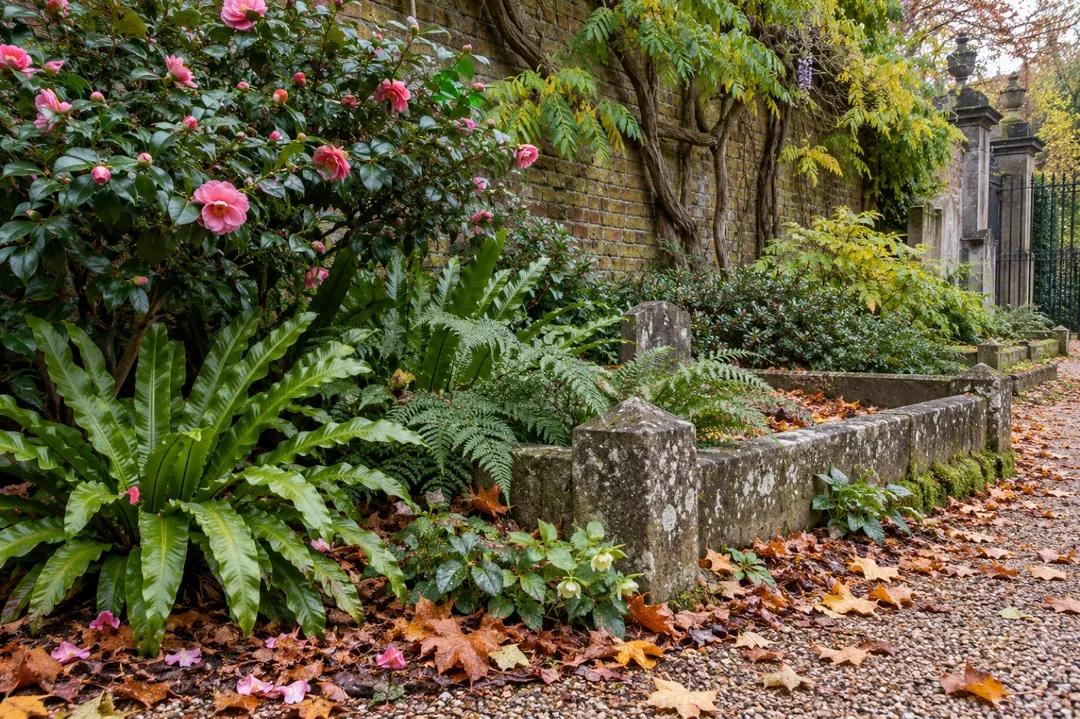
The modern gardeners have planted in their honour. At the north entrance, the borders are filled with specimen tea plants underplanted with ferns and other plants the Victorians used to symbolise life and death. Around the south entrance, beds are planted for a more tropical display in the spirit of Veitch, whose family grave lies on the raised path along the east wall. Look for both before heading down the avenue.
Walking the Avenues and Meadows
Start at the north gate by West Brompton station and walk the full length of Central Avenue under its avenues of stately lime trees. In autumn the limes go gold and the long view to the Chapel is at its clearest once the leaves start to fall. The Garden of Remembrance, near the middle, has walls covered with wisteria, star jasmine and kiwi, divided into rooms by timber pergolas.
The west side is different again. There the cemetery opens up into flower-rich meadows, at their best in early summer with yellow rattle, ox-eye daisy and cow parsley among the long grasses. In late October the meadows have been cut back, but they are still where you are most likely to see birds and, on mild evenings, bats. The whole perimeter path is about 1.1 miles if you want a full loop.
Rules and Who You Will Share It With
Brompton is still a working cemetery, and you will share it with an unusually wide cast: Chelsea joggers, residents with dogs, Chelsea fans cutting through on match days from Stamford Bridge next door, and quiet visitors at family graves. Dogs are welcome but must be kept on a lead and on the signposted paths. Running is allowed if you give others space, but no other sports are permitted.
Cycling is permitted only along Central Avenue, and every other path is strictly no cycling, with pedestrians having priority even on the avenue. Do not feed the birds or squirrels; the Royal Parks ask visitors not to. Among the 200,000 people buried here you may come looking for Emmeline Pankhurst, leader of the suffragettes, or the pioneering doctor John Snow, both marked on the cemetery map.
An Honest Verdict and a Plan B
Skip Brompton if you want the wild, overgrown feel of Abney Park or Nunhead. This is the tidiest of the Magnificent Seven, managed as a garden, and on a sunny weekend the avenue can feel more like a park than a cemetery. Come instead on a weekday morning, soon after the 7am opening, when the avenue is almost empty and mist sits low over the monuments.
Avoid Chelsea home match days, when the crowds around Stamford Bridge spill along Fulham Road and the south gate gets busy. If the cemetery is closed for an event or maintenance, which the Royal Parks post on the cemetery's own page, walk instead to the Chelsea Physic Garden by the river, where Fortune and Moore both worked; it charges for entry, unlike Brompton.
Coffee, Catacombs and Getting There
Café North Lodge, by the north entrance, is the cemetery's one café, and the same building houses an Information Centre run by volunteers. The Friends of Brompton Cemetery run regular guided tours, including visits to the catacombs, entered through heavy cast-iron doors carved with snakes and inverted torches. Vehicles are not allowed in the cemetery except on cemetery business, so come by Tube or train.
West Brompton station, on the District line and the Overground, sits just metres from the north gate, and Earls Court and Fulham Broadway stations are each less than ten minutes away on foot. From the south gate on Fulham Road it is an easy walk to the King's Road, which makes Brompton easy to fit into an afternoon in west London.
Practical Notes
Address: Brompton Cemetery, Fulham Road, London SW10 9UG, with the north gate by West Brompton station. Pedestrian gates open at 7am daily and close at seasonal times; this week the Royal Parks list them as 7am to 5pm. Entry is free. General questions go through the Royal Parks online enquiry form. Dogs must be on a lead.
There is no car parking inside, and nearby parking is paid. Ask Karpo in the Karpo APP to plan a slow Sunday that starts with the plant hunters' borders at the north gate, walks Central Avenue to the Chapel and finishes with lunch on the King's Road.
Ask Karpo for more information.
Keep reading
- Brixton Christmas Light Up Walk Planner: Rainy Arcades
 Hackney Christmas Light Up Walk Planner: Canal Boats
 Islington Christmas Light Up Walk Planner: Square Dates