 Richmond Park Sunset Viewing Planner: Deer Meadow Horizons
Weekend Plans
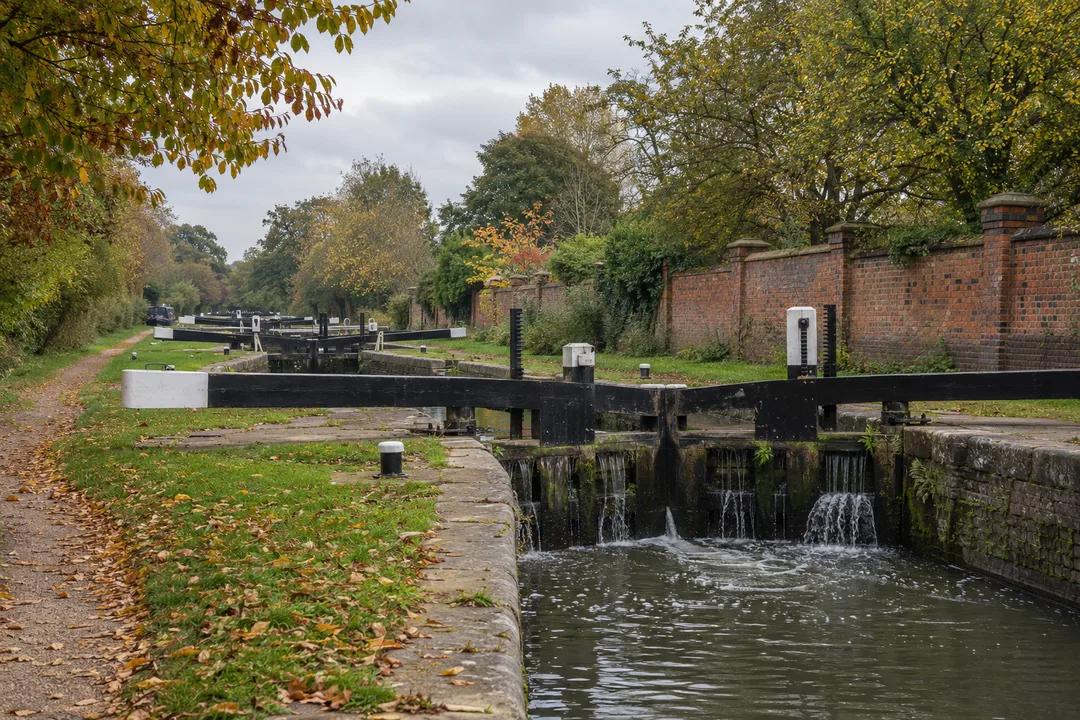
Hanwell Historic Canal Towpath Walk: Six Locks to Explore
Hanwell's historic canal towpath walk links six protected locks with a brick boundary wall and a 2.5-mile council circuit through west London's green spaces.
Hanwell's six-lock flight makes a historic canal towpath walk in west London about looking closely rather than covering miles. The locks and the long boundary wall beside them form a scheduled monument, and Ealing Council publishes a 2.5-mile circular walk linking the canal with Brent Meadow and Glade Lane. Choose that circuit for an outing with a clear return, or keep your visit to a slow exploration of the lock flight. Neither version needs a boat trip to make sense of the waterway.
Start with the whole flight
At the first comfortable place to stand back, look along the line of water before moving towards an individual gate. The sequence is what makes Hanwell rewarding: separate chambers carry a navigable route through a change in ground level. A photograph of one lock can look like a picturesque interruption. Seeing several in relation to one another reveals a piece of transport infrastructure. Give yourself a moment to understand that arrangement before concentrating on the smaller fittings.
Historic England's listing identifies six locks and the brick boundary wall as the protected monument. That is the count used here. Canal & River Trust descriptions sometimes cover a wider group of locks around Hanwell, so counting every gate encountered on a longer walk can produce a different number. Treat the designated flight as the historical focus, rather than turning the afternoon into a dispute about where the surrounding waterway starts and ends.
Read the wall as part of the canal
The wall alongside St Bernard's Hospital deserves as much attention as the lock chambers. It establishes an unusually strong edge to the route, giving the walk a different character from an open riverside promenade. Look at the relationship between its continuous line and the repeated breaks created by the locks. You do not need access to the buildings behind it to appreciate how a working waterway and a neighbouring institution occupied the same narrow corridor.
The Trust draws attention to old canal features including lock keepers' cottages and a ramp made to help horses out of the water. Use those as things to notice, without assuming every cottage or waterside opening is somewhere visitors may enter. Looking from the public path is sufficient. An architectural detail becomes more interesting when you can connect it to an actual task: tending a lock, moving a load or recovering an animal, rather than simply calling it quaint.
Take the council's circuit if you want a destination
Ealing's Brent Meadow to Top Locks route begins by Hanwell Bridge. Its directions lead along Fitzherbert Walk, turn onto the canal towpath and continue past the flight. After Three Bridges, the route leaves the towpath for Glade Lane Meadow, crosses Canalside Park and reaches Glade Lane. It then returns to the canal at Top Lock before retracing the waterside connection towards Brent Meadow. Carry those named points as the route sequence, rather than improvising a shortcut across waterside land.
The council suggests allowing one hour for its 2.5-mile circuit. For a heritage outing, budget additional time for looking at the locks and stopping for photographs. That extra allowance is a planning choice, not a promise about walking speed. A group that wants to read every notice will move differently from someone using the route for exercise. Decide together whether the circuit or the lock flight is the main purpose before adding further miles.
Let a boat passage set the pace
If a boat arrives, move to a place where you can watch without occupying a landing or the sweep of a balance beam. The interesting sequence is the changing water level and the boat's movement between chambers. Waiting for that process can give more context than hurrying to the next lock. Boat crews are carrying out a task, so do not treat a conversation, a demonstration or help with the gates as part of the visitor experience you are entitled to receive.
A quiet lock is still worth your attention. Compare the level of the water on either side of the gates and look at the chamber from a settled position on the path. Avoid making the day depend on seeing a boat, because this is a public walk rather than a scheduled performance. With children, turn the pause into a question about how a vessel could move uphill, then look for the answer in the arrangement in front of you.
Keep the walk comfortable for everyone sharing it
Towpaths are shared spaces, and the Trust gives pedestrians priority. That does not make the path an ideal place to spread out with bags, a tripod or an extended dog lead. Stay aware of people approaching from either direction, especially when you stop to look through a camera. Choose somewhere with enough room for others to pass. Near working lock equipment, leave the crew's space clear even if it would otherwise make a convenient place to rest.
For a first visit, choose daylight and shoes with a sole you trust on damp ground. Those are practical recommendations, rather than a claim that every stretch has the same surface or lighting. Keep children beside an adult near the water and avoid stepping backwards while composing a photograph. If the conditions make a particular section uncomfortable, shorten the walk. Completing the whole council circuit is optional, and the lock flight does not become more meaningful because you pushed through unpleasant weather.
Use the return to notice a different scale
On the outward walk, the flight naturally draws your attention to engineering. On the return, look at how the canal sits within the surrounding green space. The council's route brings the meadow and Canalside Park into the same outing, giving you a change of setting without requiring a second attraction. Resist adding Brentford or another distant destination merely because the water continues in that direction. A compact walk leaves room to look, and avoids making the last part feel like a commute.
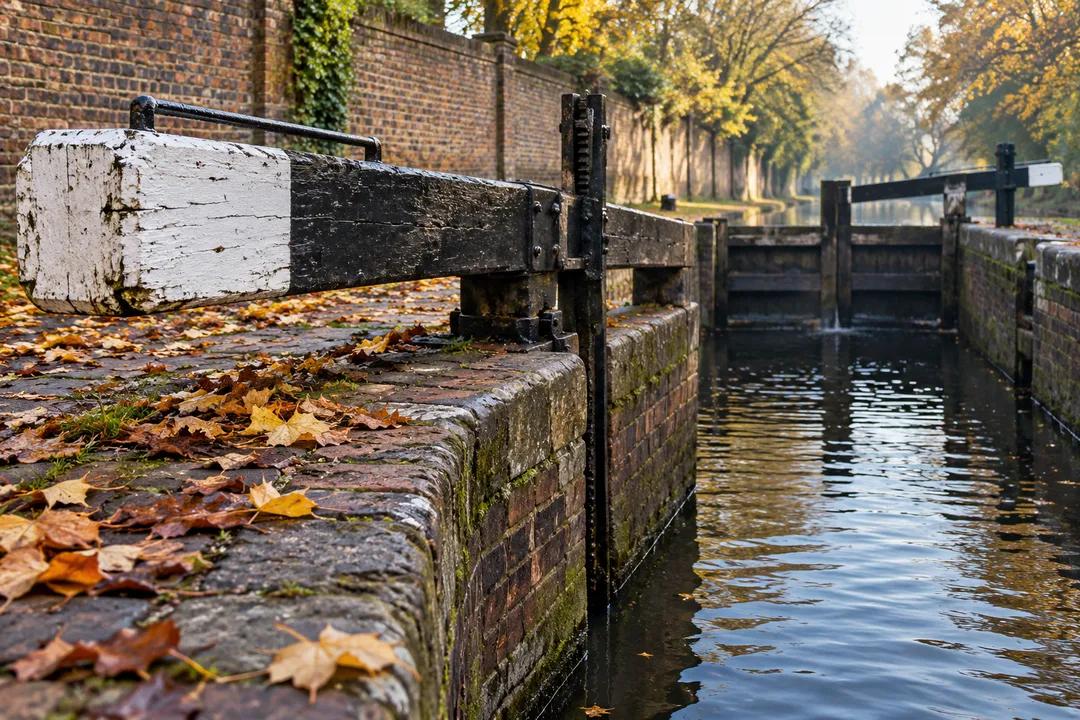
For photographs, try one wide view that explains the relationship between wall, path and lock, then a closer view of a single material or fitting. Take the closer picture from a stable position, without crossing barriers or leaning over the chamber. The editorial images accompanying this article are AI-generated illustrations of canal features, rather than photographs documenting today's conditions at Hanwell. Use the actual place, its notices and your own observations to understand the setting when you arrive.
Practical Notes
Use Hanwell Lock Flight as the destination and the council's Brent Meadow to Top Locks page as the route reference. The Trust identifies Green Lane as its visitor approach and lists no toilets on site. Plan a short visit accordingly, carrying drinking water and a layer suitable for standing still. The council also warns that the underpass at Hanwell Bridge can flood after wet weather. Keep that specific pinch point in mind when choosing how to reach the circuit.
Skip this outing if your main aim is a busy shopping waterfront or a guaranteed boat demonstration. Choose it for the close relationship between locks, wall and landscape. In the Karpo APP, ask for an afternoon around Hanwell with a short canal walk and a separate stop afterwards. Keep that request modest: a useful plan needs an arrival point, a comfortable amount of walking and an endpoint, while the value of the visit comes from what you notice between them.
Ask Karpo for more information.
Keep reading
- Richmond Park Sunset Viewing Planner: Deer Meadow Horizons
 South Bank Sunset Viewing Planner: Thames Riverside Walks
 Parliament Hill Sunset Viewing Planner: London Heath Vistas