 Richmond Park Sunset Viewing Planner: Deer Meadow Horizons
Weekend Plans
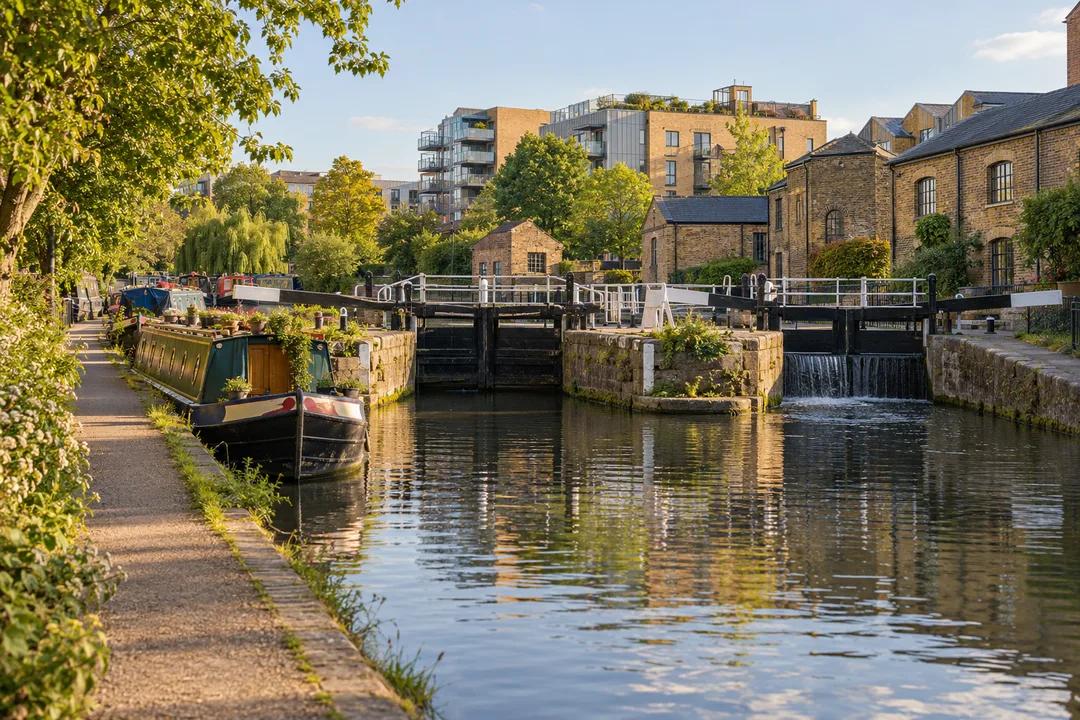
Brentford Historic Canal Towpath Walk: Two Locks to Decode
A short historic canal towpath walk in Brentford connects the gauging locks with Thames Lock, tracing the gateway between inland freight and the tidal river.
Brentford Gauging Lock and Thames Lock make a short historic canal towpath walk at the meeting of the Grand Union Canal and the tidal Thames. The Canal & River Trust puts the waterside connection at about half a kilometre, so this is a small-scale heritage visit rather than a distance challenge. Start with the gauging locks and follow the public route towards Thames Lock. The point is to understand how cargo moved between inland canal and river, with time left for the town around the water.
Why begin where cargo was measured?
A gauging lock gives this walk a particular subject. The Trust's local guide describes boatmen paying tolls according to the weight and value of their cargo. Goods passing through the waterway included timber, coal, bricks and coffee. That is a useful way to read the basin: as a place where movement, measurement and payment came together. You do not need to turn the visit into a list of dates to understand why this part of Brentford mattered.
Stand where you can see the lock chambers without obstructing anyone using them. Imagine a load making its way from the Thames into the inland network, then separate what is visible today from what belongs to that historical explanation. A modern building beside an old waterway does not make the waterway less interesting. It helps you see how a working transport corridor has become part of a different urban setting, while the locks still explain its original purpose.
Follow the connection, not an ambitious mileage target
The Trust describes Thames Lock as the last lock on the Grand Union Canal and the gateway to the Thames. Its visitor guidance suggests a roughly ten-minute walk from the gauging locks. Treat that as an indication of scale, not a walking deadline. Allow room for pauses and for finding the public connection. There is little benefit in arriving at the river quickly if you have not looked at the transition between the two ends.
Choose the simple outward-and-back version if you want to keep navigation decisions to a minimum. It lets you revisit the basin after seeing the riverward end, when the purpose of the route may be clearer. Avoid assuming that every waterside terrace, pontoon or gap between buildings continues the public path. A visual connection with the water is not the same thing as a walking connection. Follow the signed public route, and leave working access points unobstructed.
Two kinds of water in one small outing
The River Brent and Grand Union Canal share a more complicated relationship here than a straight blue line on a map suggests. The Trust explains that the Brent is canalised on the approach to the Thames, with locks linking navigable sections and side loops reflecting the earlier river course. Look for that difference in character as you move. The changing relationship between bank, channel and buildings is a better subject than trying to photograph every vessel in the basin.

At the Thames end, let the larger river be the conclusion of the outward walk. You have moved from enclosed lock chambers towards a different scale of water. This is a good point to stop and decide whether you want to return or continue elsewhere in Brentford. There is no need to manufacture a circular route just because an app draws one neatly. A short return can preserve the thread of the visit more effectively than an unrelated extra mile.
Watching working locks without joining the operation
If a boat is passing, watch from somewhere that leaves access to the gates and landing areas. Keep clear of moving beams and lines. You may see an ordinary piece of work rather than a narrated demonstration, and that is part of the appeal. Let the crew concentrate on the passage. Do not touch equipment to help unless the people responsible have explicitly asked and you understand what they want you to do.
The visitor route and a boat booking are separate things. The Trust requires vessels using Thames Lock to book passage in advance, and tidal conditions shape those movements. A walker does not need to organise a boat transit to enjoy the path, but should not expect continuous activity at the lock. Make the architecture and the waterway connection the core of your visit. A passage happening while you are there is an additional opportunity to observe, rather than a promised attraction.
A compact visit for people who dislike long itineraries
This route suits someone curious about industrial history who would rather examine a small area than march through a checklist. Bring a companion who enjoys asking how something works, and you have a natural conversation: what was being weighed, why locks were needed and how the river affected the journey. If your group is divided between looking and walking, agree on the short canal section first. Everyone can then make a separate decision about continuing afterwards.
For a family, give the outward walk one question to answer: why would a canal need a gateway to a river? Use the actual gates and changes in water level to discuss it, from a secure place on the public path. Avoid a game that sends children running between features or leaning out for a better view. The route is compact enough that you can leave plenty of time for one useful explanation, instead of trying to keep everyone moving.
Let Brentford town be a separate chapter
The Trust also points visitors towards Syon House and Park from the locks. Keep that as a separate extension with its own purpose, rather than presenting the towpath as an admission route to another attraction. You can finish the canal walk successfully without entering any building. That distinction matters when planning a low-commitment afternoon: the heritage route remains complete even if your group decides to leave the next activity for a different day.
A town-side pause can also change the rhythm after looking at machinery and water. Choose your next stop according to what you need at that moment, rather than treating a particular café or pub as a compulsory finish. This article does not assign a menu, price or trading schedule to nearby businesses. Keeping the canal as the fixed element and the rest of the afternoon optional makes the plan easier to adapt to your own company and energy.
Practical Notes for a riverward walk
The Trust names Brentford Gauging Lock as the visitor destination and places Brentford railway station about eleven minutes away on foot. Build the approach into your outing, rather than counting only the half-kilometre waterside connection. If you intend to return to the same station, leave room for that leg too. Bring what you need for a short outdoor visit, and choose a dry, daylight window if you want to spend time standing still beside the locks.
Public path signs and barriers govern where to walk. Stay out of boat facilities, avoid blocking mooring points and keep your attention on your footing when looking towards the river. The images here are newly generated editorial illustrations, not photographs proving present-day access or conditions. In the Karpo APP, describe the plan as a short Brentford lock walk with an optional town stop. The useful outcome is a manageable afternoon built around one clear piece of canal history.
Ask Karpo for more information.
Keep reading
- Richmond Park Sunset Viewing Planner: Deer Meadow Horizons
 South Bank Sunset Viewing Planner: Thames Riverside Walks
 Parliament Hill Sunset Viewing Planner: London Heath Vistas