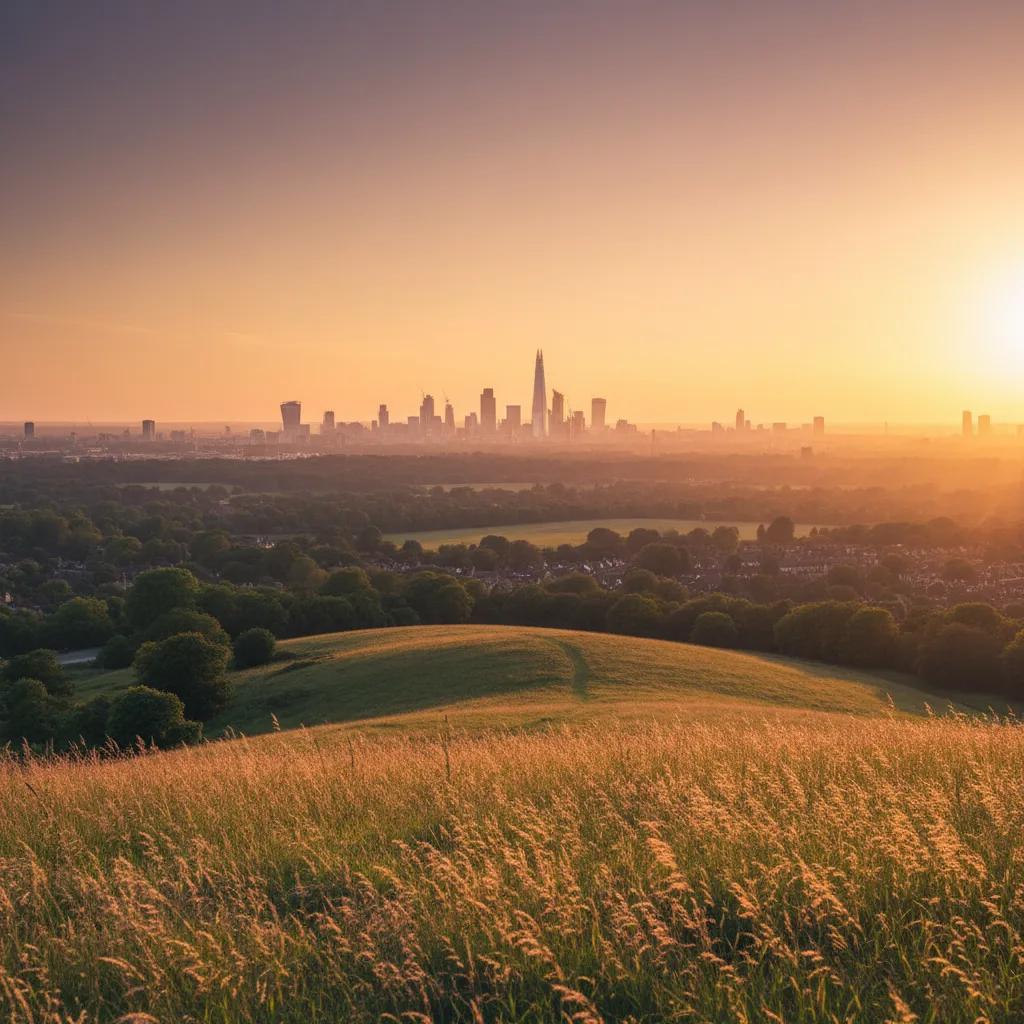
 Richmond Park Sunset Viewing Planner: Deer Meadow Horizons
Weekend Plans
London Hidden Courtyard Garden: V&A Pool and Planting
The V&A's John Madejski Garden brings a pool and planting into a museum courtyard. Look at reflections and ornament, then choose your next cultural stop.
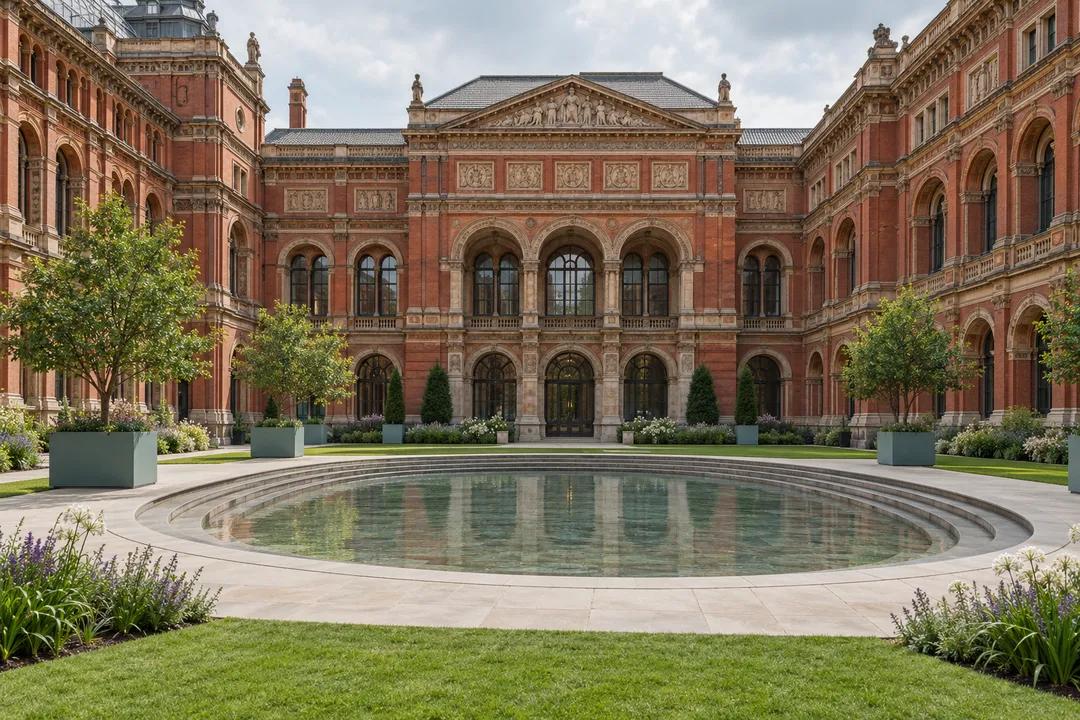
The John Madejski Garden puts an outdoor courtyard inside a museum day. At the V&A in London, the pool, planting and decorated façades offer a way to keep looking after the galleries have filled your attention. For a hidden courtyard garden outing, make the garden a destination with its own subject: the relationship between water, ornament and the people moving between them. It can be a change of medium rather than simply a break from art.
Move from an object to a whole space
Inside a gallery, it is easy to look at one object at a time. The courtyard asks for a different kind of attention. Its subject is distributed: buildings form an enclosure, the pool introduces a curve and the planted areas soften parts of the view. Begin by noticing that change. Instead of trying to identify the most important thing, ask what holds the composition together. A line of sight across water may connect features that seem separate from another position.
The V&A's own account describes the garden as a meeting point and a resting place. It also treats the surrounding buildings as part of what there is to see. That makes an architectural visit a reasonable choice even if you are not planning to work through a long list of collections. The garden belongs to the museum's visual conversation. Looking at its enclosure can be as deliberate an activity as looking at an object displayed indoors.
Follow a curve across the pool
The stepped elliptical pool is the garden's clearest contrast with the façades around it. Follow part of its outline with your eyes before trying to make a photograph. A curve can pull attention sideways, while a building front encourages you to look upward. The tension gives you a useful subject for a small sketch: a broad curved line in the foreground, a flat block of wall behind it and a strip of sky above.
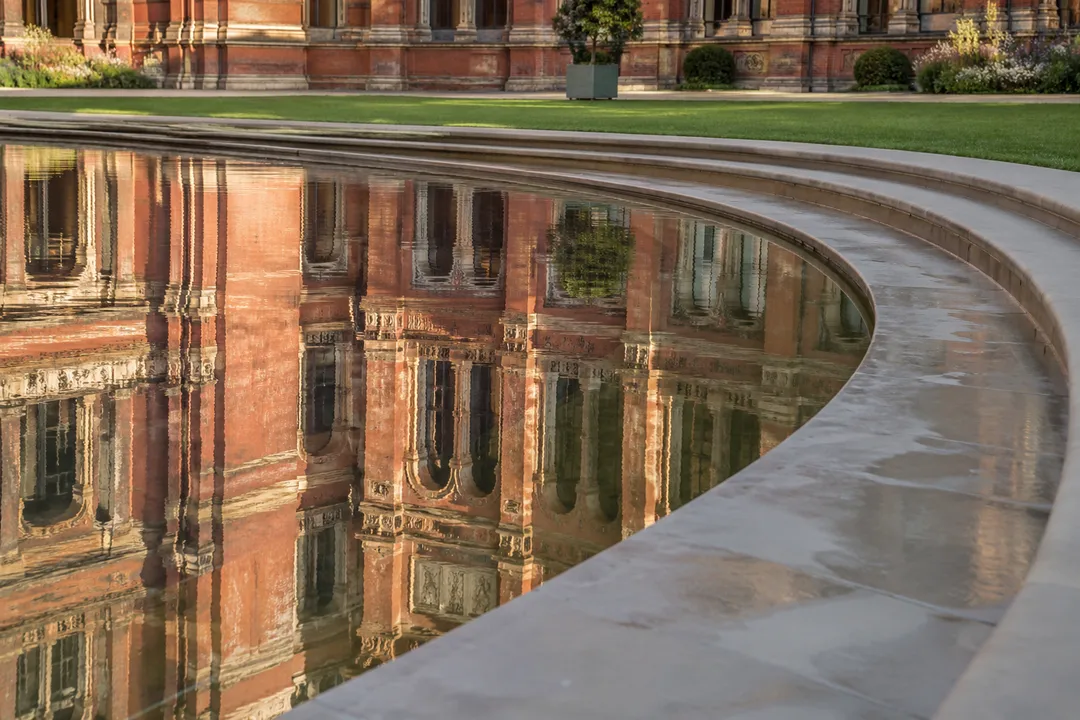
Water adds another layer without needing to become a spectacle. A reflected building is an altered version of the building itself. Its edges can break when the surface moves, and a piece of ornament becomes a patch of colour. Look at the real façade and the reflection in turn. You do not have to decide which one is the main subject. The comparison is enough to make a brief stop feel like an act of looking rather than waiting.
Keep the pool edge clear for other visitors and do not assume that a visual feature is an invitation to use the water. Follow the museum's directions in the space. An atmospheric photograph cannot tell you which activities are appropriate during a particular visit. For an ordinary garden pause, the most rewarding choice is to observe the relationship between the surface and the architecture, leaving plenty of room for people who are simply passing through.
Read the façades without turning them into a quiz
The V&A points to terracotta, mosaic and tile among the decorative work around the garden. Choose one kind of surface and look for the way it is repeated. Does it form a border, mark an opening or fill a larger area? You do not need to name a style to ask those questions. They direct attention toward what the decoration does in the building, rather than whether you can correctly classify it.
This can become a compact activity for two people with different interests. Each person chooses a detail, then explains what first caught their eye. One may respond to colour and another to the shape of an opening. Neither needs to persuade the other. The courtyard can support a conversation about taste without turning it into a competition over expertise. If one person would rather sit quietly, let the looking exercise remain optional.
The museum's architectural trail distinguishes the John Madejski Garden from its other courtyards. Keep those spaces separate when planning or describing your visit. The garden with the elliptical pool is the subject here. A photograph of another courtyard may belong to the same museum while showing a very different design. Giving a place its proper identity is more useful than collecting a broad set of images under the general label of a hidden museum garden.
Use the pause to choose the rest of your museum day
The outdoor setting gives you a useful point to decide whether you want more gallery time. Ask yourself whether you are still curious or merely continuing because another room is available. Curiosity suggests choosing one collection or theme to follow. Fatigue suggests ending the museum portion. Both decisions are legitimate. The garden does not need to function as a compulsory reset that sends everyone back indoors for the same amount of additional looking.
For a mixed group, replace a vague agreement to keep exploring with a specific choice. Someone interested in materials might choose a related gallery. Someone who wants conversation might prefer to finish the visit together and continue elsewhere. A family might decide that the outdoor pause is the last part of the outing. Making that decision consciously prevents an enjoyable garden stop from becoming another negotiation over how much cultural activity is enough.
Give photographs a subject smaller than the whole museum
A picture of the entire courtyard can establish the setting, but a second picture should do a different job. Choose the curve of the pool, a reflection or a meeting between stone and planting. Think about what the close view adds to the wide one. If both images tell the same story, you may not need both. A small set of considered photographs often describes an outing more clearly than many frames made from almost the same position.
Work around people rather than trying to remove them from the space. A courtyard inside a major museum has many purposes, and your composition is only one of them. Avoid directing strangers or occupying a route while you wait for a clear view. The images accompanying this essay are newly generated photographic illustrations of the garden's themes. They should not be used as a current record of an installation, a crowd level or the precise arrangement of furniture.
Practical Notes for an outdoor chapter
Treat the garden as an outdoor part of the outing when choosing clothing and deciding what to carry. Keep a sketchbook or camera easy to put away if weather makes lingering uncomfortable. Use the V&A's visitor and access information for arrangements that depend on the actual route through the museum. The courtyard's visual openness is not a substitute for detailed access planning, and a garden essay cannot establish every part of the journey for every visitor.
In Karpo APP, describe what you want after the courtyard: another cultural idea, a neighbourhood walk or a place to continue talking. Keep decisions about museum entry and any separate reservations with the relevant venue. The garden works most clearly when it has a place in your day without being asked to fulfil every purpose. Follow the pool's curve, look back at the decorated walls and let that outdoor view help you choose what kind of attention you want to give next.
Ask Karpo for more information.
Keep reading
- Richmond Park Sunset Viewing Planner: Deer Meadow Horizons
 South Bank Sunset Viewing Planner: Thames Riverside Walks
 Parliament Hill Sunset Viewing Planner: London Heath Vistas