 Richmond Park Sunset Viewing Planner: Deer Meadow Horizons
Weekend Plans
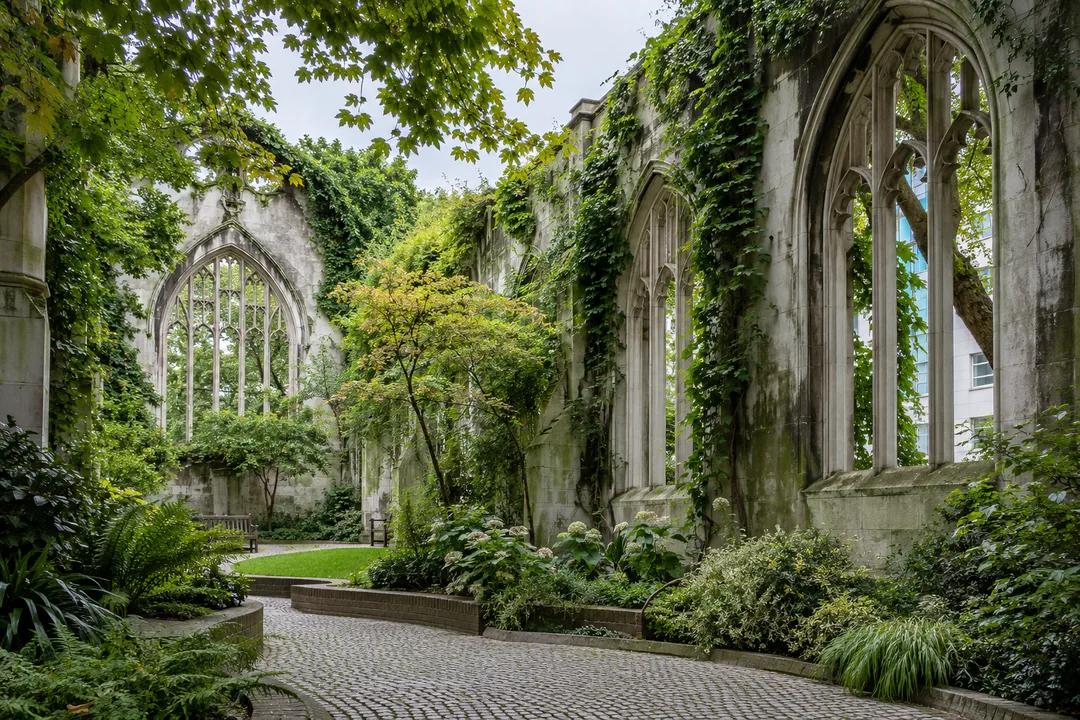
London Hidden Courtyard Garden: St Dunstan in Two Views
St Dunstan frames a London hidden courtyard garden with church ruins and climbing greenery. Look closely at stone windows, then plan a quieter city pause.
St Dunstan turns a hidden courtyard garden visit into an exercise in looking upward. Greenery crosses the surviving church walls, and the empty windows frame sky instead of glass. The useful way to approach this London stop is as a small architectural encounter: choose a wall, follow its outline, then look at the planting that interrupts it. You do not need to turn the whole garden into a photo backdrop to enjoy the relationship between stone and leaves.
Start with the window rather than the camera
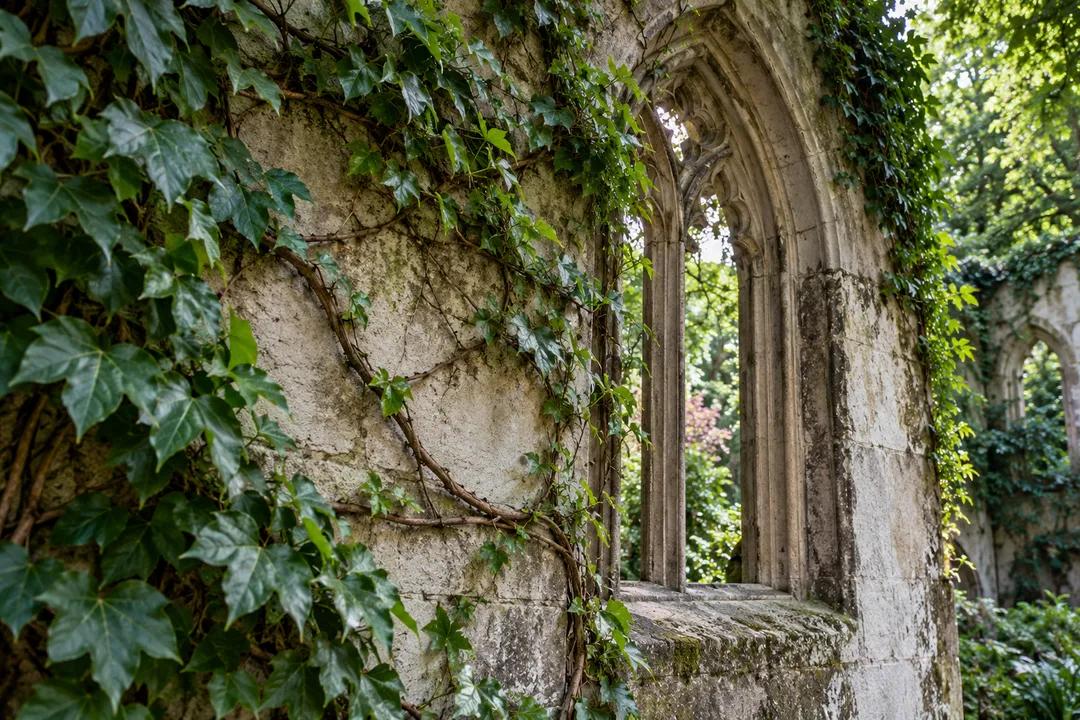
A pointed opening gives your eye a shape to hold. Look along its curve and then through it. The outside world becomes a separate picture, bordered by masonry rather than a screen. For someone interested in architecture, that is a more rewarding starting point than trying to fit every surviving wall into a wide photograph. It asks a smaller question: what does a window do when there is no longer an enclosed room behind it?
Try making your first circuit without taking pictures. This is a suggested way of looking, rather than a promise that the garden will be empty. Other visitors may be walking through the same view. Let their movement reveal the scale of an opening, then let the frame clear again. The sequence can be more memorable than an isolated image. A person beside a wall gives you a sense of height that a tightly cropped architectural photograph often removes.
Stone and leaves tell different parts of the story
The City of London's description identifies the church ruins, the benches and fountain, and greenery draping the walls. Those elements explain the garden's appeal without requiring a romantic story about abandonment. This is a maintained garden within surviving architecture. Treat the plants as part of that composition, rather than evidence that nature has somehow taken possession of an entirely forgotten place. The distinction changes how you look at both the planting and the building.
Compare an exposed stretch of stone with a section crossed by leaves. One makes the outline easy to read. The other breaks that clarity into smaller shapes. Neither view needs to be declared the better one. If you enjoy sketching, use the contrast as your subject: a firm line for the window edge, a loose cluster for the foliage, and blank paper for the sky. Leave out details that do not help you understand that relationship.
Follow the building from garden wall to skyline
The windows give the garden an inward frame, but the surviving tower offers an upward continuation. Historic England describes a Gothic Portland stone tower whose spire is supported on open diagonal arches. The openness is a striking companion to the empty windows below: stone carries the outline while air remains visible within it. Looking at the two together gives the visit a subject that belongs to this church, rather than to an arbitrary planted courtyard.
The heritage description also identifies traceried windows, buttresses and pinnacles in the surviving church walls. Those details provide different rhythms. Tracery divides an opening into smaller parts, a buttress gives the wall an outward emphasis and a pinnacle carries attention upward. Read them as variations in the garden's enclosure. The plants then introduce another kind of line, crossing those deliberate architectural patterns without making the structure beneath them disappear from view.
Make a photograph that still belongs to a garden
Start with a single opening and decide what matters inside the frame. A broad view emphasises the relationship between walls. A closer view can make the texture of leaves and stone the subject. Taking both is more useful than making many nearly identical pictures from one position. Stay on the visitor route while composing. Plants and masonry are not props to rearrange, and an interesting angle is not a reason to step into a bed.
The City distinguishes ordinary visitor photography from organised photoshoots that require permission. That distinction is worth carrying into your planning. A personal camera does not give a group ownership of the background, and a tripod or elaborate setup can change how much room an activity occupies. For an ordinary visit, work around the garden's other users. If you need a controlled location, use the City's photography process rather than trying to create one informally.
Give the next part of the walk a different scale
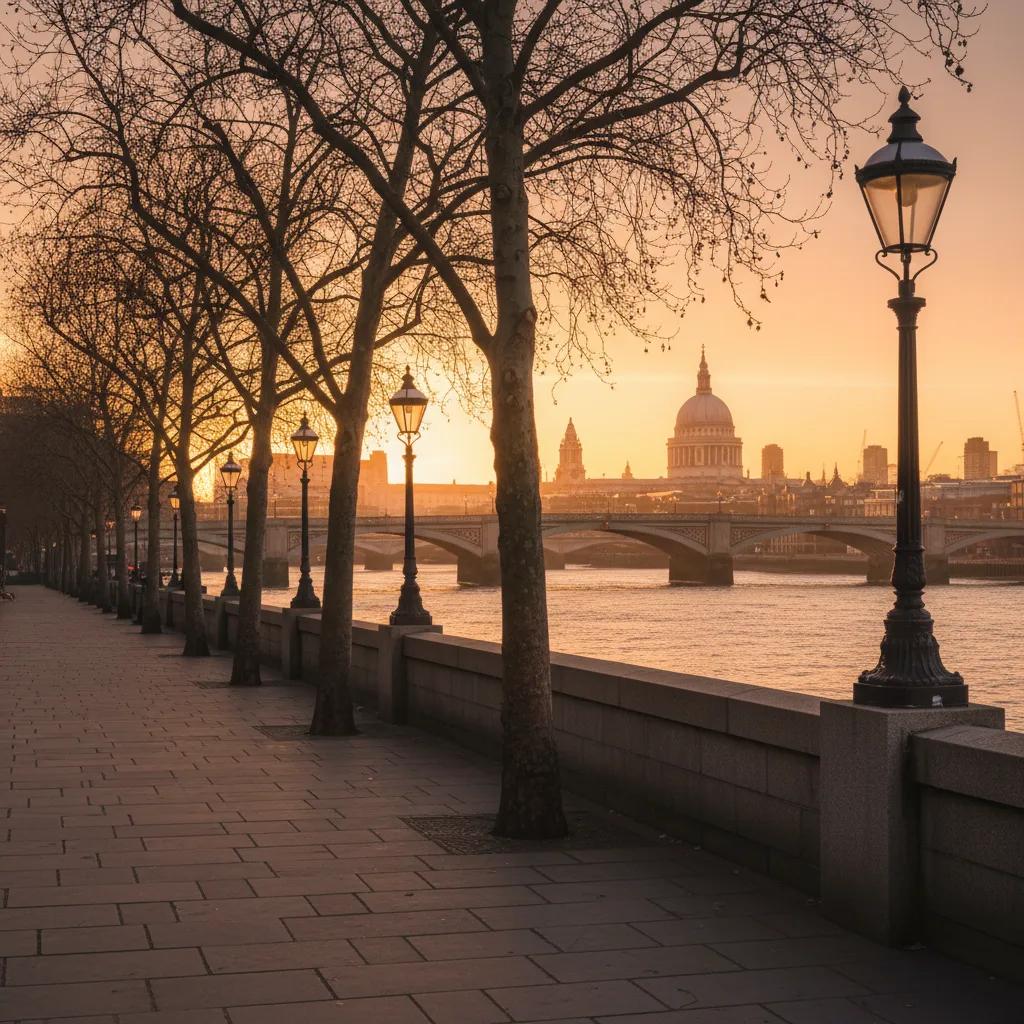
After concentrating on the enclosed garden, choose an onward walk with a broader horizon. A route toward the Thames offers a change in the way you look: the garden asks you to study boundaries, while a riverside walk invites you to follow distance. This is an editorial pairing, not a timed itinerary. Make the route suit the people with you, especially if somebody would rather end the outing than add another destination.
Alternatively, keep the next leg focused on the surrounding streets. Notice how a doorway, narrow passage or change in building material alters the feeling of a block. You do not have to discover another hidden attraction to continue the theme. The garden can sharpen attention to ordinary urban details. Pick one of those details and carry it into the walk, instead of making the next stop compete with the church ruins for visual drama.
Practical Notes for a visit with a clear purpose
The pale wall surfaces are not the whole story of the building's material. Historic England describes yellow brick faced externally with Portland stone. That distinction encourages a closer look at the relationship between a building's visible surface and its underlying construction. You do not need to locate or identify every material during a short visit. It is enough to resist treating the ruin as a single anonymous texture called old stone, especially when making a detailed drawing.
The empty window is also a useful way to understand what the garden has changed. A window normally mediates between an interior and an exterior. Here, looking through an opening does not take the eye from a sheltered room into an outdoor scene in the familiar way. Sky and planting enter the architectural frame itself. That is why the close view and the wider courtyard view tell different stories, even when both contain the same leaves and masonry.
Use Karpo APP to ask for nearby ideas that fit the rest of your day, stating whether you want another walk or an indoor pause. Describe the garden as one possible stop rather than a guaranteed private retreat. Keep any eventual booking with the relevant venue. The strongest version of this outing remains simple: give the window openings your attention, let the planting complicate their geometry, and return to the surrounding city with a more observant eye.
Ask Karpo for more information.
Keep reading
- Richmond Park Sunset Viewing Planner: Deer Meadow Horizons
 South Bank Sunset Viewing Planner: Thames Riverside Walks
 Parliament Hill Sunset Viewing Planner: London Heath Vistas