 Richmond Park Sunset Viewing Planner: Deer Meadow Horizons
Weekend Plans
London Hidden Courtyard Garden: Fox Garden Leaf Study
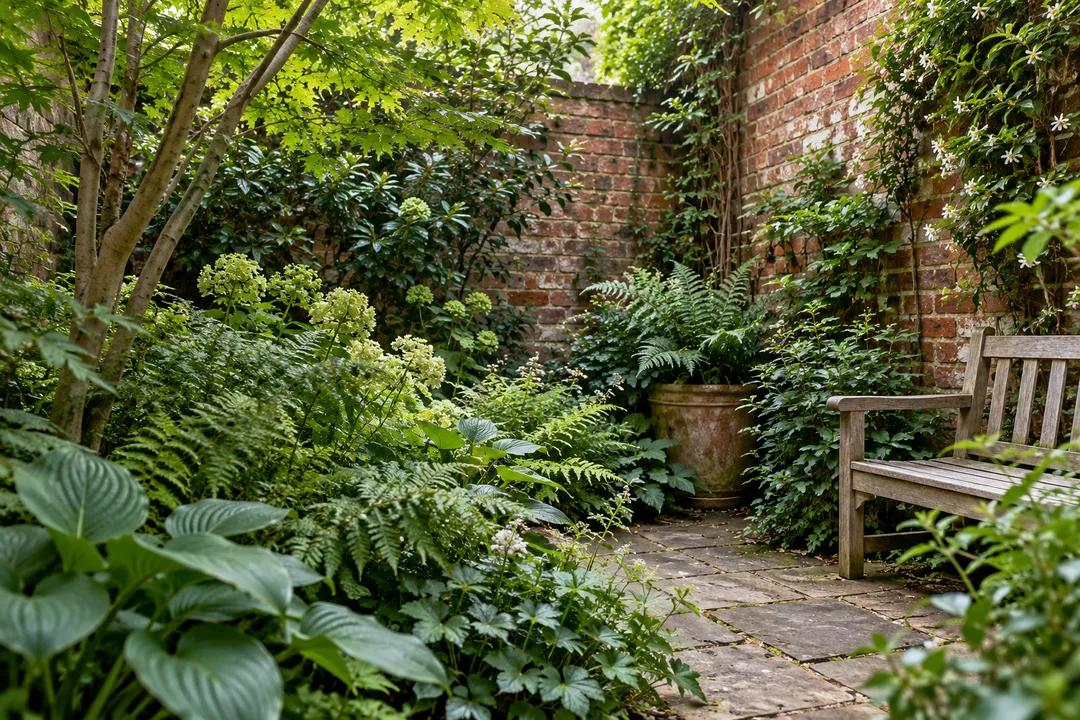
The Fox Garden encloses woodland planting at South London Gallery. Compare leaves, brick and oak benches for a focused hidden courtyard garden pause.
The Fox Garden at South London Gallery makes a hidden courtyard garden visit about the meeting of brick, woodland planting and a place to sit. The gallery describes an enclosed garden beside its original exhibition space, with Cornus trees and specially commissioned oak benches. In this London setting, the reward is small scale: a planted room that asks you to notice how a wall changes the way leaves, branches and furniture appear together.
Begin with the room around the plants
Imagine entering with a friend who tends to look at pictures quickly. Instead of asking them to become a gardener, suggest one simple comparison: which part of the space seems most deliberately drawn, and which part seems most free to grow? The enclosing brickwork gives you a firm boundary. The leaves soften its outline. This is a suggested way to look together, rather than an account of people observed on a particular visit. It gives the conversation a subject beyond whether the garden is pretty.
Let the wall remain visible in your view. A close photograph filled entirely with greenery could belong to almost anywhere, whereas a strip of brick gives the planting a scale and an urban context. You can try the same exercise without a camera by shifting your attention between the edge of a leaf and a mortar joint. One is irregular, the other repeated. The pleasure lies in holding both patterns in mind, with neither reduced to a backdrop for the other.
A woodland idea inside an exhibition boundary
South London Gallery identifies Fraser & Morris as the designers of the Fox Garden. Its description sets a woodland planting scheme against the walls of the exhibition space, rather than presenting an ornamental lawn as the main attraction. That distinction helps shape an outing. Approach it as a close encounter with layers of growth. Look at the relationship between low planting, the middle height of the beds and the branches that carry the eye upward.
The gallery names hellebores, Japanese anemones, foxgloves and Cornus in its planting account. Treat those names as a record of the scheme, not a promise that every flower will be visible during your visit. A bed can still reward attention when its most conspicuous blooms are absent. Compare leaf sizes and the amount of wall revealed between stems. If you cannot identify a plant, a description of its shape is a better souvenir than a confident but mistaken name.
Try making a tiny drawing with only three kinds of mark: a straight line for the wall, an angular line for a branch and a loose shape for a cluster of leaves. Artistic skill is beside the point. The restriction makes you decide what belongs to the enclosure and what belongs to the planting. It also offers a useful activity for a companion who enjoys looking but finds a long plant list uninviting. Keep the drawing small enough to make from one unobtrusive position.
The bench is part of the composition
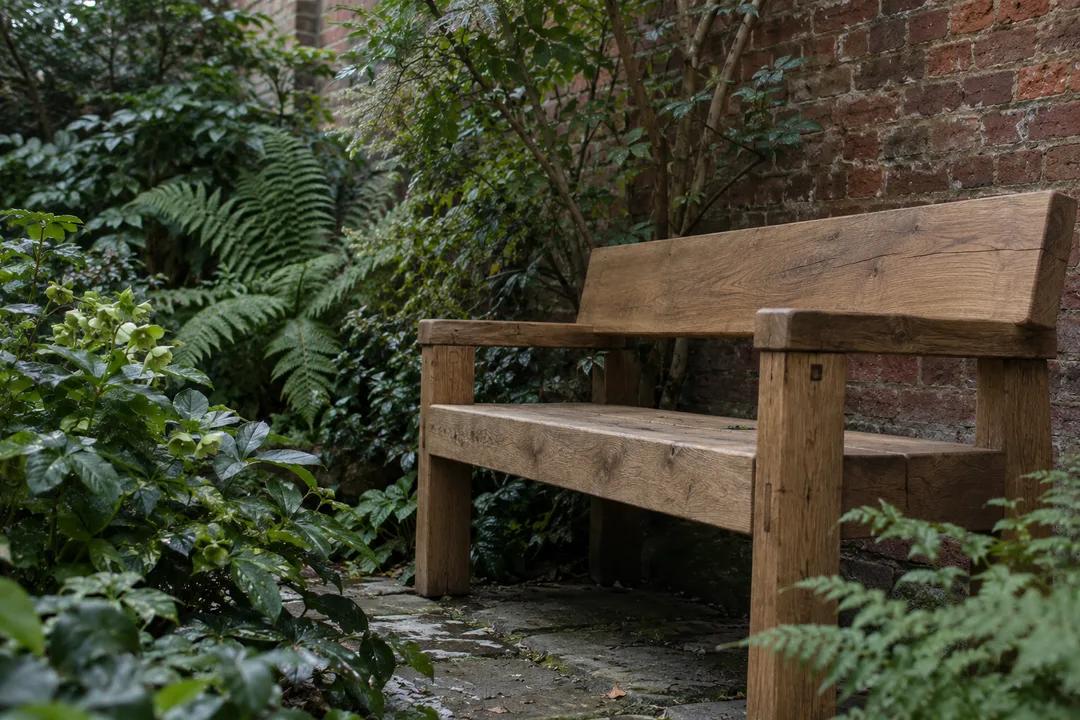
AI-generated photographic illustration; the garden details are illustrative and do not document the named site.
Ed Brooks made the oak benches described by the gallery. They introduce another material into the garden's conversation: worked timber beside living growth and masonry. If a seat is available, notice how sitting changes the balance of what you see. The lower viewpoint may make the planting seem denser and the enclosing wall more continuous. You do not need to remain for a prescribed length of time. The useful change is in perspective, rather than in the number of minutes recorded.
If the benches are occupied, do not hover over the people using them or turn their rest into the subject of a photograph. Make the standing view your visit instead. A shared garden works better when no one has to perform being picturesque for somebody else. Keep bags close to you and leave the route through the space clear. These are ordinary considerate habits, not a claim about a special seating policy operated by the gallery.
Keep the two gardens distinct
The Fox Garden and the Orozco Garden are separate named spaces within South London Gallery's garden programme. The path and reception connect their settings, but their visual ideas differ. The Fox Garden's woodland character can be appreciated on its own. Avoid treating it merely as a corridor to a more celebrated destination. If you are choosing one subject for a short garden visit, the relation between the oak bench and the surrounding planting is already enough to sustain close attention.
A useful conversation prompt is to ask what you would remove from a picture of this garden. Would the image lose more if the wall disappeared, or if the bench disappeared? Different answers reveal different interests: enclosure, plants, or the possibility of sitting among them. There is no correct response and no need to settle the disagreement. A small courtyard can support a surprisingly specific discussion when you give its ordinary elements the attention usually reserved for an artwork.
Carry a texture into the neighbourhood
For an onward walk in the Camberwell and Peckham area, let brick be the connecting theme. Notice the difference between a wall seen behind leaves and a street facade seen across a pavement. The same material can feel protective in one view and expansive in another. This is an observation exercise, not a route with guaranteed access through side gates. Use the ordinary public streets and allow the garden to sharpen attention to what is already around you.
If your companion wants a change of subject, agree on a different texture to find outside: painted timber, reflective glass or a worn threshold. Each person can choose one example without turning the walk into a competition. Skip the urge to collect several more gardens simply to complete a list. The Fox Garden works particularly well as a single concentrated encounter followed by an ordinary walk, because its interest depends on looking carefully rather than covering a large area.
Practical Notes for a modest garden outing
Bring what helps you observe without occupying extra space: a compact camera or a small notebook, rather than equipment that needs an elaborate setup. Leave planting untouched and keep your feet on the visitor route. If you are accompanying a child, turn plant naming into shape finding instead. Ask them to point out a rounded leaf and an angular shadow from where they are standing. Looking can be active without requiring picking, rubbing or stepping into beds.
Rain can change the outing without making it a failure. Give up the drawing or camera exercise if handling wet equipment starts to dominate the experience. The gallery context offers a different direction for the day, while the garden remains one part of it. Use the Karpo APP to ask for ideas around Camberwell or Peckham when you want an onward plan. Keep the request specific to your energy and interests, rather than asking another place to recreate this enclosed patch of woodland.
Ask Karpo for more information.
Keep reading
- Richmond Park Sunset Viewing Planner: Deer Meadow Horizons
 South Bank Sunset Viewing Planner: Thames Riverside Walks
 Parliament Hill Sunset Viewing Planner: London Heath Vistas