 Richmond Park Sunset Viewing Planner: Deer Meadow Horizons
Weekend Plans
London Hidden Courtyard Garden: St John's Olive Tree Pause
Clerkenwell's Cloister Garden pairs an olive tree, herbs and flint walls. Shape a London garden pause around close looking and an unhurried conversation.
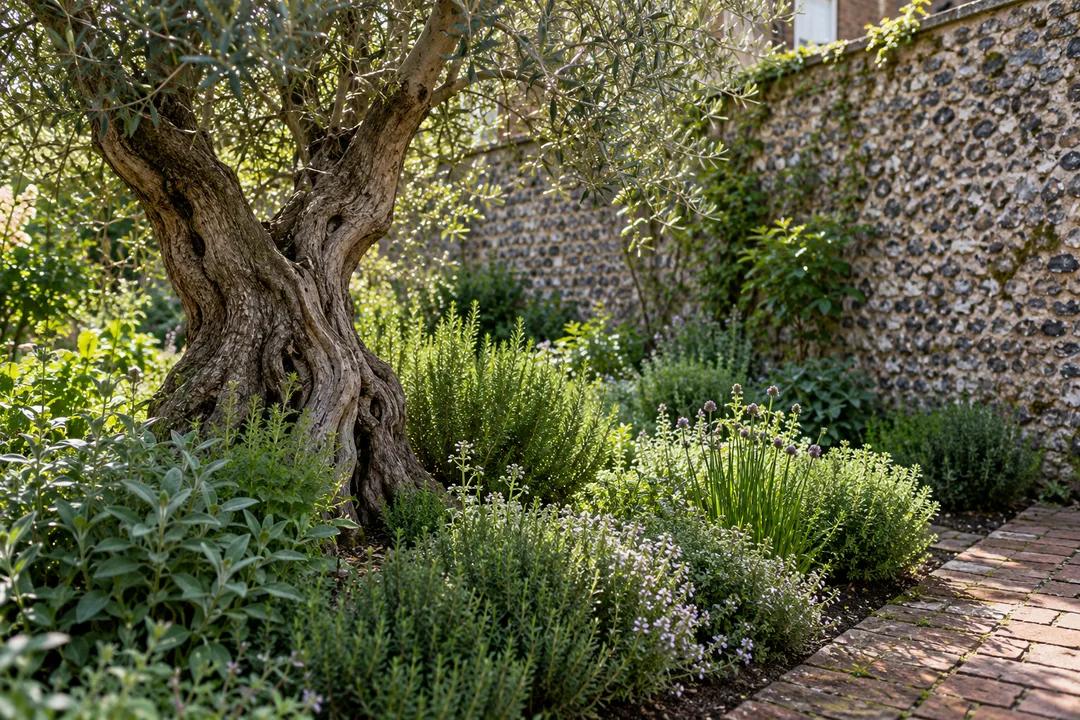
An olive tree gives Clerkenwell's Cloister Garden a centre of gravity. Around it, the Museum of the Order of St John's garden brings together herbs, lavender, roses and the texture of flint. For a London hidden courtyard garden outing, come with a small question rather than a long checklist: how does an enclosed planted space change the way you pay attention? This is a place to explore through texture, scent and the relationship between a tree and its surroundings.
Let the olive tree organise your attention
Begin by looking at the trunk before trying to identify everything planted nearby. An older tree can be understood through the shape of its branches, the direction of its growth and the spaces between its leaves. You do not need specialist vocabulary to notice any of those things. Pick an outline you can follow with your eye, then trace it from the base outward. The exercise makes a single tree feel like a subject rather than scenery.
The olive is particularly useful as a focal point because its branching outline can be read against the harder surface of the enclosure. The museum places the tree at the heart of its garden description. Consider how a central tree differs from a central statue or fountain: it offers a form that grows and changes while still giving the composition a recognisable anchor. The herbs around it belong to the same living arrangement rather than serving as a decorative frame for an inert object.
Read the wall as another kind of planting
The museum's own garden description pairs herb and citrus planting with a flint cloister wall. That contrast provides a useful way into the space. Foliage presents edges that bend and overlap. Flint presents surfaces that catch light in smaller, harder fragments. Look from one to the other instead of studying them separately. The enclosure becomes more than a boundary once you notice how its colour and texture affect the way the plants appear beside it.
You can borrow that approach for a sketchbook without attempting a full architectural drawing. Divide a page into two areas. In one, record the repeated marks you see in the wall. In the other, draw the larger movement of the foliage. Keep your pencil on the page for a while instead of continually correcting the result. The point is to find the difference between the surfaces, rather than to produce a polished souvenir of the whole garden.
A sensory visit can stay gentle
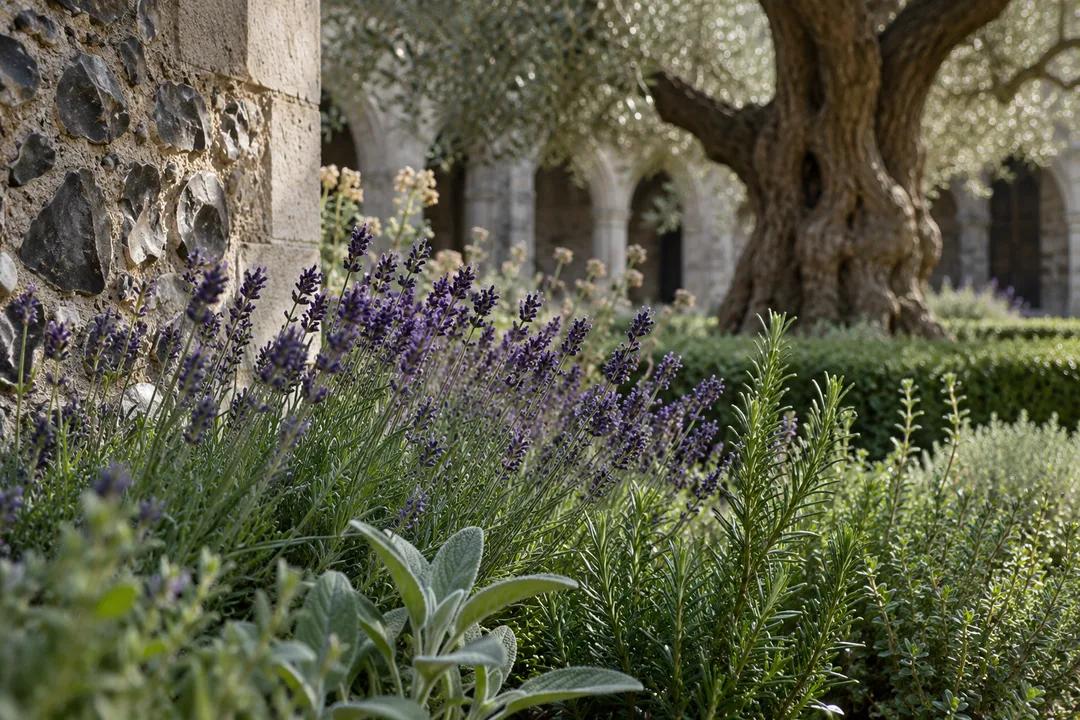
The museum names lavender and roses among the garden's planting. Treat those as an invitation to notice, rather than a guarantee that a particular flower or scent will greet you on every visit. Plants have different seasonal rhythms. An outing built around the overall character of the garden can remain worthwhile when one feature is less prominent than you expected. Look for the structure of a bed, the pattern of leaves or a change in the light instead.
Smell what reaches you naturally. There is no need to pick, rub or crush foliage to turn the visit into a sensory experience. If a plant is unfamiliar, leave identification as an unanswered question rather than guessing at its use. The connection between gardens and care can be interesting without becoming advice about medicine or edible plants. Observing a herb in a garden is different from knowing whether it is safe to handle or consume.
Herbs connect the garden to the idea of care
The museum's account of its Herbal Harvest work connects the garden with learning about plants, bee-friendly planting and herbs. It gives the beds another dimension beyond an attractive surface. They can be a place where attention to growing things becomes an activity people share. That connection does not require turning an ordinary visit into a workshop. Looking at the mixture of planting is enough to raise questions about why useful plants belong in an enclosed garden.
Keep those questions observational. A herb garden can suggest relationships between cultivation, learning and care without making a claim about what any plant will do for your health. Compare the foliage, consider the way the beds are arranged and let the museum's own interpretation establish any more specific connection. The interest is in the garden as a setting for attention and exchange, rather than in finding a remedy or a practical use for everything growing there.
The cloister gives a tree a different setting
A tree beside a flint wall reads differently from a tree in an open park. The enclosure limits the background and brings the outline of branches into conversation with a built surface. That is the particular attraction of a cloister garden for someone who enjoys looking at trees. You can notice the olive's form while also seeing the garden as a room. Neither the architectural boundary nor the planting needs to become subordinate to the other.
The museum's garden imagery includes the relationship between herb and citrus planting and the flint cloister wall. Follow that relationship across the view, from a recognisable leaf to the irregular pattern of the masonry behind it. Fine foliage and small stone surfaces offer different scales of detail. A wide photograph may hold them together as texture, while a closer view separates them. That difference gives a pair of images a purpose beyond collecting alternative pictures of the same tree.
Take a planting idea back into Clerkenwell
As you leave, choose one thing to carry into the surrounding walk: the silver-green quality of olive foliage, the contrast between herbs and stone, or the way an enclosure creates a focal point. Use it as a way of noticing the streets rather than searching for an identical garden. A city block can offer a related texture in an ordinary wall, a planted threshold or a changing view between buildings. The connection can stay personal and small.
If you want a longer excursion, choose between a neighbourhood walk and an indoor conversation before setting off. Putting both on the plan can make an unhurried garden visit feel unexpectedly demanding. There is nothing wrong with finishing after a single satisfying stop. The garden has done its job if you leave noticing more than you did on arrival. Another destination should add something you want, rather than merely extend the number of places visited.
Practical Notes for a slower outing
Bring what helps you look comfortably: a light notebook, a pencil or a camera you can carry without spreading equipment around you. Dress for an outdoor pause. For anyone in your group who needs detailed access information, the museum's access page is the relevant planning resource. A photograph of a path cannot establish the whole route or answer every mobility question. Keep those practical needs distinct from the atmospheric impression you get from garden images.
Karpo APP can be part of deciding what follows: ask for ideas around Clerkenwell and explain whether the priority is plants, cultural history or a place to talk. Do not ask a recommendation to promise solitude. The most useful plan leaves room for other visitors and for your own changing energy. Start with the olive tree, let the surrounding surfaces complicate the view, and give yourself permission to finish with a small, complete experience.
Ask Karpo for more information.
Keep reading
- Richmond Park Sunset Viewing Planner: Deer Meadow Horizons
 South Bank Sunset Viewing Planner: Thames Riverside Walks
 Parliament Hill Sunset Viewing Planner: London Heath Vistas