 Shoreditch Comic Shop Crawl Planner: Murals to Manga
Hidden Gems & Odd Finds
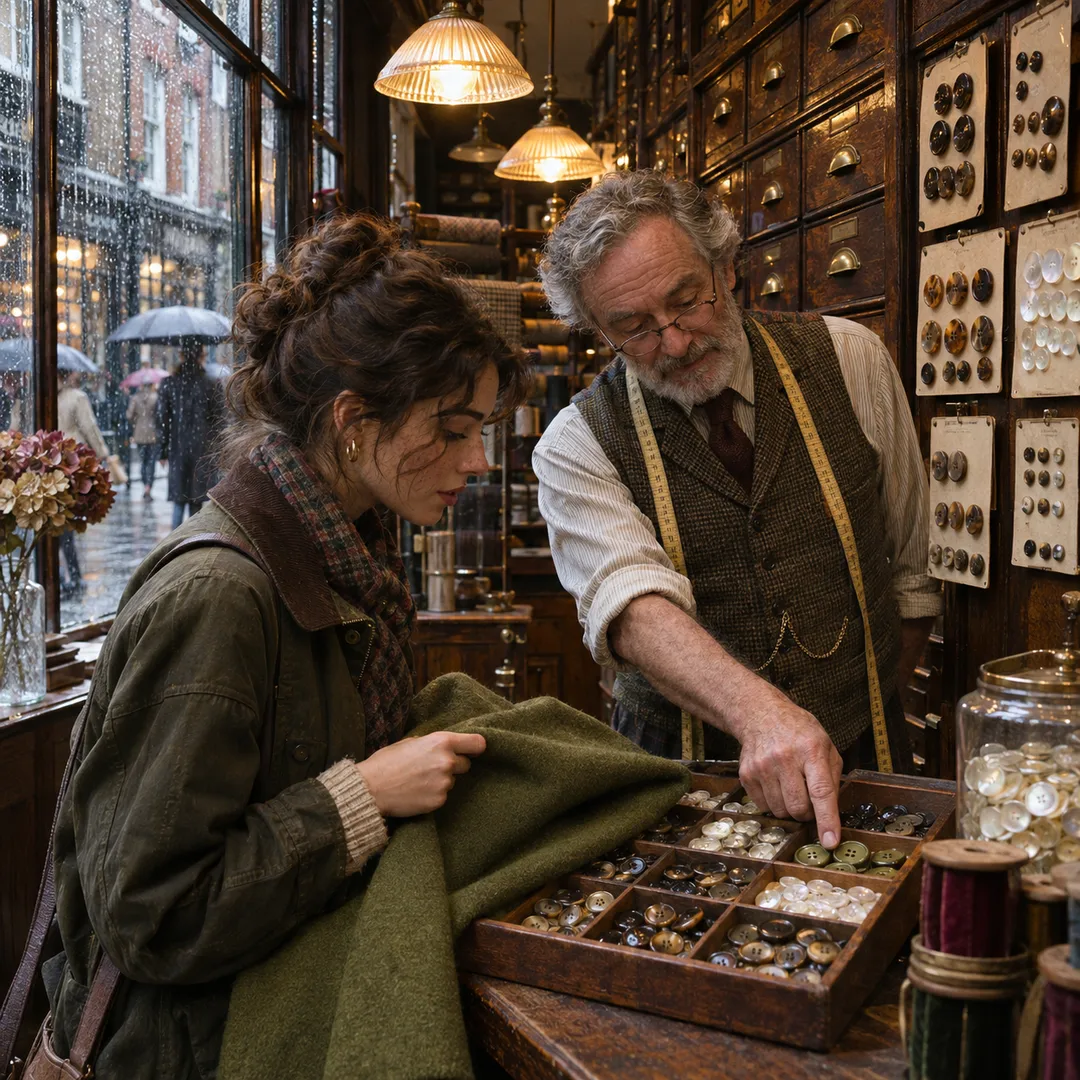
Soho Haberdashery Shop Picker for West End Costume Repairs
Use this Soho haberdashery shop picker to match horn buttons, silk thread and canvas interlining around Berwick Street, then rest in Golden Square.
A haberdashery shop picker in Soho starts with a simple truth: the streets between Berwick Street Market and Golden Square were built around working tailors, theatre wardrobe rooms and trimmings merchants who do not waste words. On a rainy Wednesday between a morning rehearsal and a matinee call, assistant wardrobe supervisor Clara Vane walked out of a Shaftesbury Avenue stage door with a torn period overcoat, two missing horn buttons and a swatch of dark moss lining silk pinned to an index card. She had ninety minutes to match the thread, replace the buttons and find a length of horsehair canvas before the actors arrived for half-hour call. This guide follows her loop through Soho's notions counters and shows how anyone repairing a coat or finishing a garment can use the same streets without feeling intimidated.
Why Soho Still Works Like an Open-Air Workroom
Long before Soho became known for late-night espresso bars and editing suites, its narrow streets and courtyard workshops served the cutters of Savile Row to the west and the playhouses of Shaftesbury Avenue and Covent Garden to the south. Tailors needed places within a five-minute walk where an apprentice could fetch pocketing cotton, basting thread, collar melton, hook-and-eye tape or a single buckle without waiting for a wholesale delivery. Because rent was tight, shops specialised: one counter stacked woollens and suitings, the next filled every wall with ribbon reels, Petersham belting and zip drawers, and a basement down the lane kept nothing but bridal lace and feather trims.
That division of labour still shapes how you choose a shop here. If you walk into a heavy wool merchant asking for invisible zip feet or fine beading needles, they will politely point you two doors along or across the market cobbles. Clara treats the neighbourhood as one distributed workroom rather than a single department store. Before she leaves the theatre, she sorts her list into three buckets: structural internals like canvas and shoulder pads, surface fastenings like buttons and zips, and decorative trims like braid or silk cord.
How to Prepare Your Swatch Card Before Stepping Out
Soho counter staff move briskly because half their customers are on a studio break or between fittings. Walking in with a vague memory of a navy jacket is the fastest way to buy the wrong shade. Clara keeps a folded piece of stiff card in her work bag with three things stapled to it: a snip of the outer cloth taken from an inside seam allowance, a snip of the lining, and one surviving button still attached to its thread shank so the thickness and hole spacing are obvious.
If you are replacing a full set of coat buttons rather than matching a survivor, measure the buttonhole slit on your garment with a small metal gauge or mark the width on your card with two pencil ticks. Under warm shop spotlights, dark navy, charcoal and Barathea black look almost identical, so counter regulars always ask to step toward the front door glass for two seconds to read the colour under grey London daylight before anything is cut from the reel.
Berwick Street Versus the Quiet Side Lanes
Berwick Street itself is the spine of the walk. Between the fruit barrows and lunch stalls, the shopfronts along the road carry broad fabric rolls, dressmaking silks and everyday sewing notions where you can pick up machine needles, tailor's chalk, bias binding and standard metal zips in one stop. It is the practical choice when you need core dressmaking supplies and want to see dozens of cloth bolts side by side.
Turn off the market into the quieter cross streets toward Broadwick Street, Noel Street or the lanes leading to Carnaby and Golden Square, and the mood shifts from general dressmaking to specialist tailoring and theatrical trimmings. Here the drawers hold real horn, corozo nut, mother-of-pearl, leather-covered toggles, heavy military bullions and stiff buckram for millinery. Clara starts on the quiet lanes for the hardest match on her list, then drops back to Berwick Street for thread and everyday tape so she is not carrying bulky rolls into cramped button rooms.
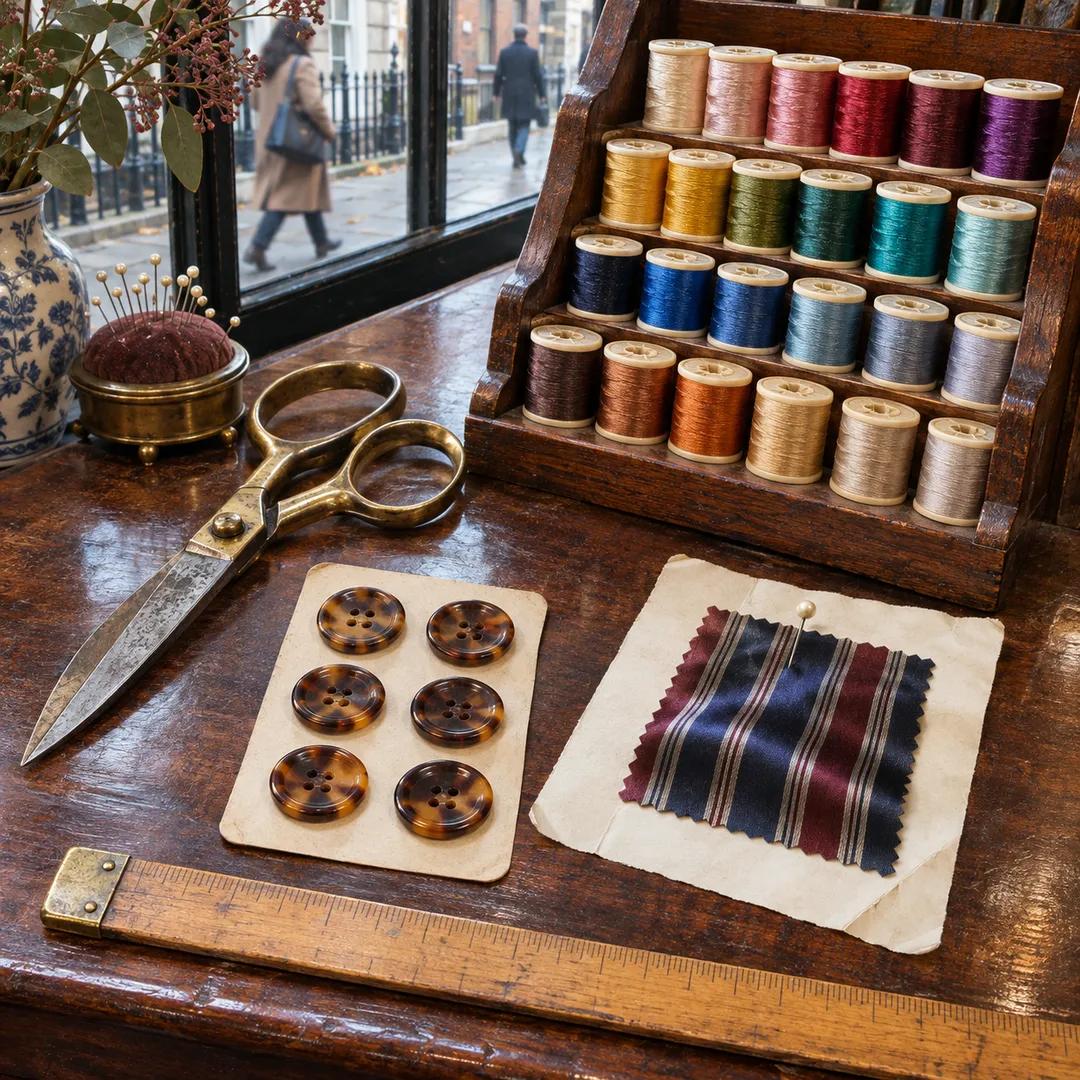
Counter Etiquette: Minimum Cuts and Button Trays
Every small notions shop has its own rhythm for serving. At button counters, sample cards hang on hooks or sit in shallow wooden trays arranged by material and diameter, measured in lignes or millimetres. Rather than pulling loose buttons out of stock boxes yourself, point to the sample on the card and tell the assistant how many coat-front and sleeve-cuff sizes you need; they will pull the matching batch from the numbered drawers behind the counter so dye lots stay together.
For ribbon, Petersham, elastic and braid, cuts are usually made by the half-metre or full metre with a pair of heavy brass shears chained to the table. Once a length is snipped, it cannot be returned, so ask to lay the ribbon against your swatch first. When a shop is three deep with costume students from central art colleges, Clara uses the Karpo app to spot another haberdashery or fabric counter a couple of streets over rather than standing in a slow queue while her rehearsal clock ticks down.
Checking Thread Shade and Weight in Natural Light
Thread is where amateur repairs give themselves away. A polyester all-purpose spool will hold a seam, but on a wool overcoat a silk buttonhole twist or a waxed linen thread sits flatter and catches the light like original tailoring. Clara pulls two shades from the rack: one that looks right under the ceiling bulbs and one a half-tone darker, because thread sewn into cloth always reads slightly lighter than it does on the spool.
She takes both spools to the threshold, lays a single strand across the wool swatch, and squints slightly to see which strand disappears into the weave. For topstitching or hand-worked buttonholes, she also runs the thread between thumb and forefinger to check whether it needs beeswax before going into the needle. Picking up a small block of beeswax and a packet of hand-sewing betweens at the same counter saves a second trip later.
Stringing the Errand into a Golden Square Loop
Once the brown paper packets are tucked into her tote, Clara never walks straight back down the loudest stretch of Wardour Street. Instead she cuts south to Golden Square, the calm Georgian garden square where tailors and wool merchants once had their counting houses. Even in November, the benches under the plane trees give you enough elbow room to organise your purchases, label each paper bag by garment, and thread a needle if an emergency repair has to happen before you reach the stage door.
If the weather turns wet, the covered arcades and historic department store halls toward Regent Street and Great Marlborough Street offer a dry route back toward the West End or Oxford Circus. You can also loop east into Soho Square to look at the timbered gardener's hut in the centre of the green before heading down to Charing Cross Road. Planning the walk as a figure-eight through the squares keeps a technical supply run feeling like a proper London outing.
How to Use Karpo to Build Your Own Sewing Route
Whether you are rescuing a vintage trench coat found in a charity shop, hunting frog closures for a winter cape, or putting together a starter sewing kit in a small London flat, start by writing your list by material rather than by brand name. Open the Karpo app to map haberdashery and textile counters across Soho and neighbouring Fitzrovia, then group your stops from the most specific trim to the most common spool.
Go on a weekday morning or early afternoon if you want time to talk through interlinings or button shanks with staff who have decades of trade knowledge. Bring fabric clippings, measure your buttonholes in advance, carry a small tote so delicate lace or stiff canvas does not crease, and give yourself twenty quiet minutes in Golden Square afterward to admire the small, sturdy things that hold good clothes together.
Ask Karpo for more information.
Keep reading
- Shoreditch Comic Shop Crawl Planner: Murals to Manga
 Bermondsey Comic Shop Crawl Planner: Zines Under the Arches
 Clapham Comic Shop Crawl Planner: Charity Shelves and Common