 Brixton Vintage Thrift Shop Finder: South London Retro Gems
Hidden Gems & Odd Finds
Notting Hill Haberdashery Shop Picker for Vintage Finds
Use this Notting Hill haberdashery shop picker after Portobello Road Market to match grosgrain ribbon, velvet trim and invisible zips before Holland Park.
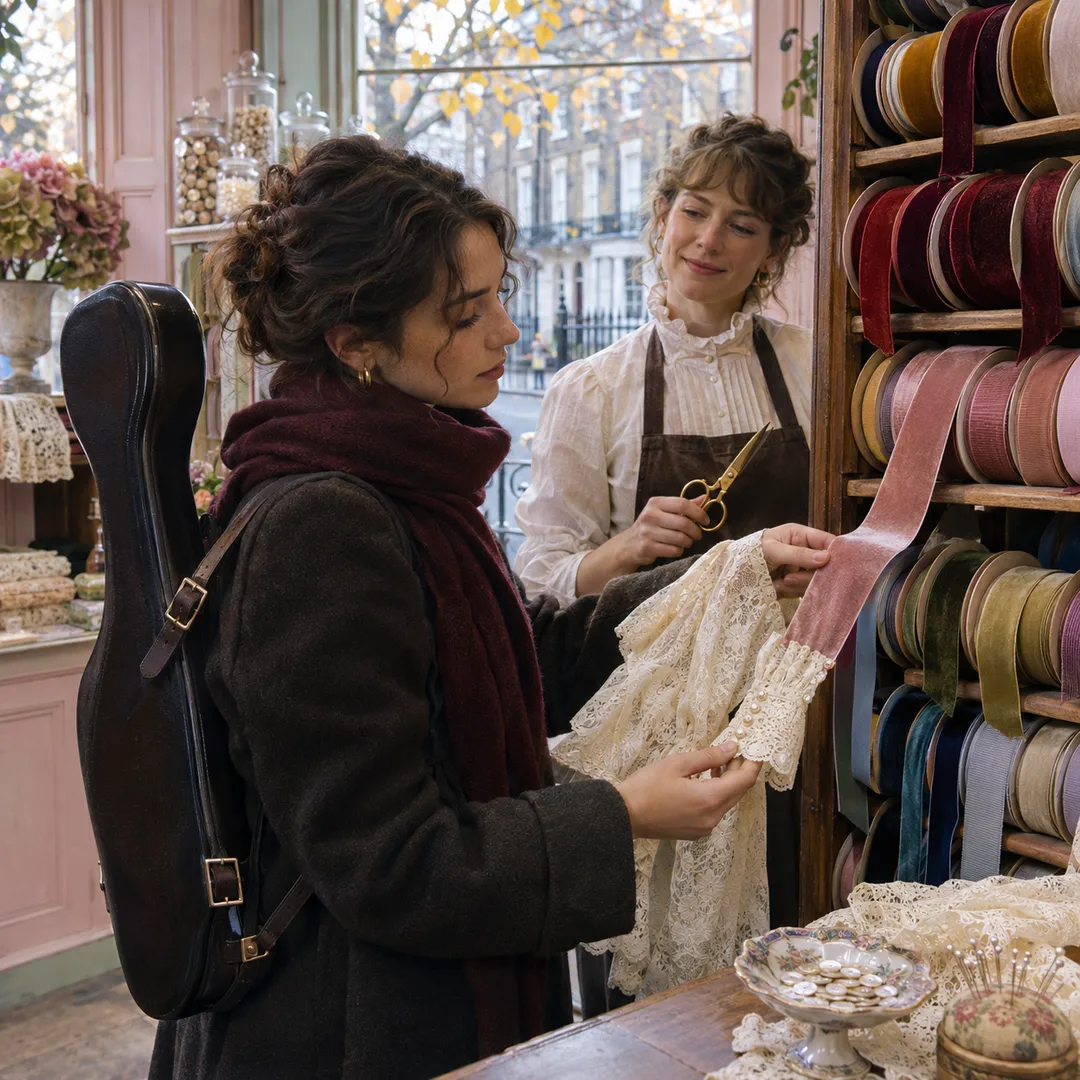
A haberdashery shop picker in Notting Hill belongs to anyone who has ever fallen for a vintage coat or silk evening dress under the canopies of Portobello Road and Golborne Road, only to discover a split seam, a perished metal zip or a frayed velvet waistband on the walk home. In the streets branching off Westbourne Grove and Ladbroke Grove, trimmings counters and ribbon merchants treat decorative detail as the main event rather than an afterthought. When cellist Freya Lindqvist found an Edwardian-inspired cream lace blouse near Golborne Road with brittle underarm seams and missing cuff ribbons, she spent the rest of her Friday morning tracing matching silk organza strips, narrow French velvet ribbon and tiny brass hooks across Notting Hill. This guide follows her route and shows how to turn a market rescue into a wearable piece.
Why Notting Hill Trimmings Counters Pair with Portobello Finds
West London's antique clothing stalls have drawn collectors, wardrobe stylists and touring musicians for decades, and the neighbourhood's haberdashery counters evolved alongside that trade. When you pick up a garment that has already lived through fifty winters, standard polyester tape from a supermarket sewing kit looks harsh and shiny against aged silk, wool crepe or fine cotton tulle.
The trimmings rooms around Notting Hill and Westbourne Grove stock materials with a softer, gentler lustre: rayon-velvet ribbons woven with a smooth satin back, yarn-dyed grosgrain with a delicate picot edge, real shell buttons with a muted patina, and fine cotton net for reinforcing fragile lace panels. Freya never leaves Portobello Road without walking straight to a trimmings counter while the vintage garment is still in her canvas bag.
Assessing a Vintage Garment Before You Choose Trims
Before you fall in love with a decorative braid or beaded fringe, turn the vintage garment inside out in good daylight and check three structural points: the seam allowances, the metal fastenings, and the internal waist stay. Old cotton or silk thread often rots long before the woven fabric itself gives way, so gently tug an inside seam with two fingers to see whether the stitches pop or hold firm.
On Freya's blouse, the cream lace panels were sound, but the narrow satin ribbon threaded through the cuff casing had shredded and the metal hooks at the high collar had rusted onto the net. By listing those two structural fixes first, she knew she needed rust-proof brass hooks and eyes, a strip of sheer silk organza to stabilise the collar edge, and a supple ribbon narrow enough to thread through original eyelet holes without tearing them.
French Grosgrain, Velvet Ribbon and Picot Edges
Ribbon counters in West London are organised by weave as much as by width. Classic grosgrain has fine horizontal ribs that hold a crisp bow and work brilliantly as an internal waist stay or a hatband, whereas double-faced satin glides through lace beading slots without catching on delicate threads.
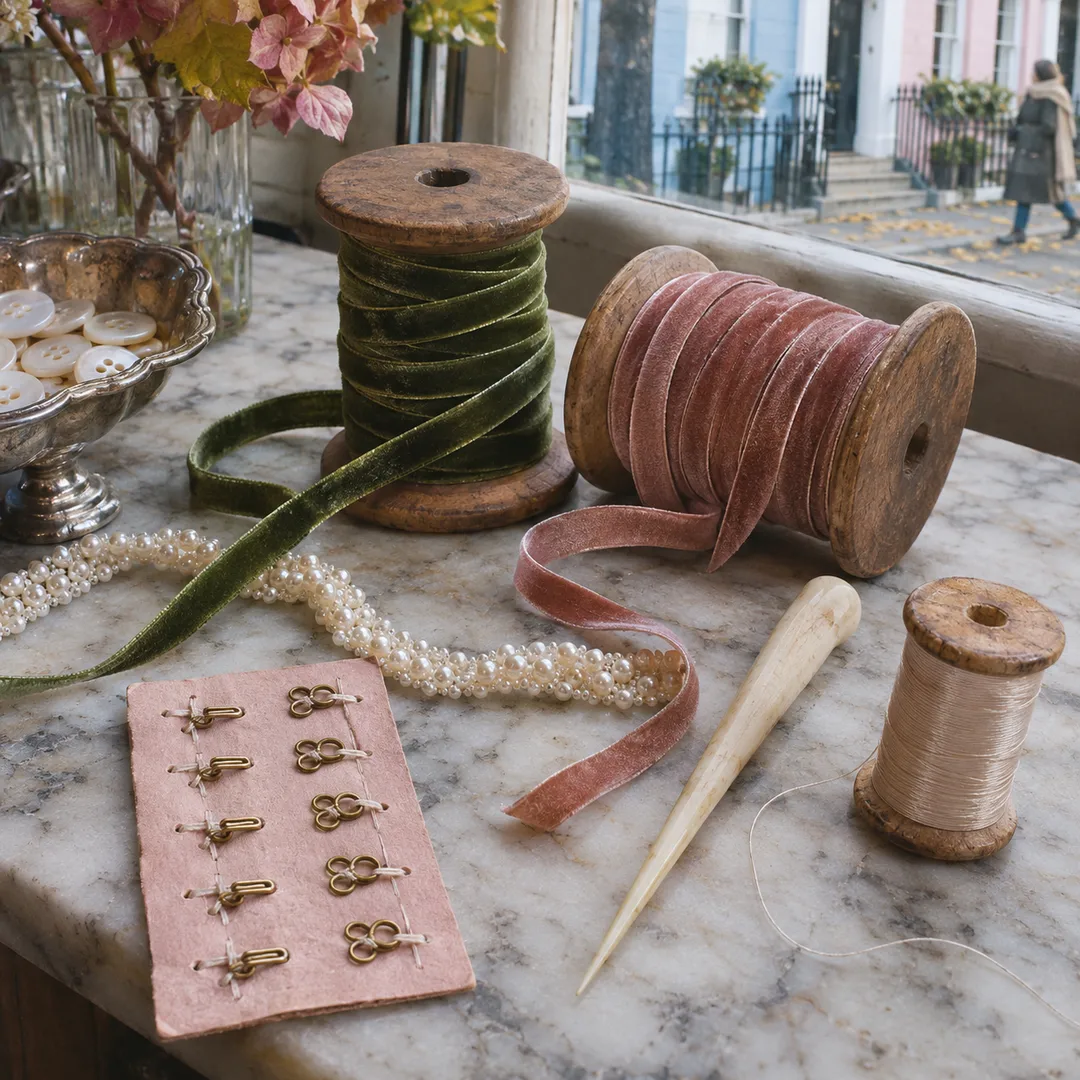
For winter dresses and recital skirts, narrow velvet ribbon adds warmth and depth around a high neck or cuff. Ask the counter assistant whether a velvet ribbon is woven with a cotton or viscose pile rather than stiff nylon; softer pile drapes smoothly around a wrist instead of kinking at the corners. Freya chose a dusty-rose velvet ribbon for the cuffs and asked for an extra half-metre so she could snip the ends on a diagonal to prevent fraying during her concert.
Invisible Zips, Hook-and-Eye Tape and Waist Stays
If you are rescuing a mid-century wool dress whose original metal side zip has lost teeth, you have a choice at the haberdashery counter: replace it with a modern concealed zip that disappears into the seam, or pick a brass-toothed dress zip and hand-prick stitch it in by hand so the fabric does not ripple.
Heavy vintage skirts and beaded bodices also benefit from an internal petersham waist stay—a snug band of ribbed ribbon fitted inside the waistline and fastened with its own flat hook and bar. That inner ribbon carries the weight of the skirt on your waist so the fragile outer silk or lace never pulls against the zipper teeth when you sit down.
Sorting Your Ribbons Along Westbourne Grove and Ladbroke Gardens
Shopping along Portobello Road on a Friday or Saturday can feel breathless once the antique arcades fill up, so step off the market spine into the stuccoed crescents of Ladbroke Gardens or Arundel Gardens as soon as your paper packets are wrapped. The quiet curved streets behind the pastel terraces let you slow down and check your purchases in calm daylight.
When Freya realised she also needed a bodkin—the blunt, flat metal needle used to draw ribbon cleanly through a lace casing without snagging—she used the Karpo app to check which nearby sewing or craft counter toward Westbourne Park or Bayswater kept hand tools in stock. Checking the map on the corner saved her from walking all the way back through the busiest stretch of the fruit market.
Finishing with a Walk Down to Holland Park
From Notting Hill Gate, a ten-minute walk south up Campden Hill brings you to the wooded paths and brick courtyard walls of Holland Park. Even in late autumn, the Kyoto Garden pond, the peacocks wandering near the orangery and the sheltered benches along the Dutch Garden offer one of West London's loveliest places to sit after a morning of market rummaging and colour matching.
Freya sat on a bench outside the old icehouse gallery to wind her new velvet ribbon around a piece of stiff card so it would not crease in her bag before her evening rehearsal. Taking ten quiet minutes outdoors to coil ribbons, label silk thread spools and pin small packets of hooks inside your tote ensures that delicate trims arrive home ready for the sewing table.
How to Plan a Notting Hill Vintage-and-Trimmings Walk
Arrive at Portobello Road or Golborne Road early in the morning to hunt for your vintage garment first, then head to the haberdashery counters before midday with the piece in hand so you can hold ribbons against the original cloth in daylight. Always inspect old seams for metal rust and thread rot before choosing decorative braids or buttons.
Use the Karpo app to pair vintage clothing stalls with specialist trimmings, ribbon and fabric counters across Notting Hill, Westbourne Grove and Kensington. Pick up a flat metal bodkin, a card of rust-proof brass hooks, a metre of ribbed waist ribbon and a spool of fine silk thread, and finish your walk under the trees of Holland Park with everything you need to bring an old London garment back to life.
Ask Karpo for more information.
Keep reading
- Brixton Vintage Thrift Shop Finder: South London Retro Gems
 Notting Hill Vintage Thrift Shop Finder: Preloved Rails
 Soho Vintage Thrift Shop Finder: West End Designer Archives