 Brixton Vintage Thrift Shop Finder: South London Retro Gems
Hidden Gems & Odd Finds
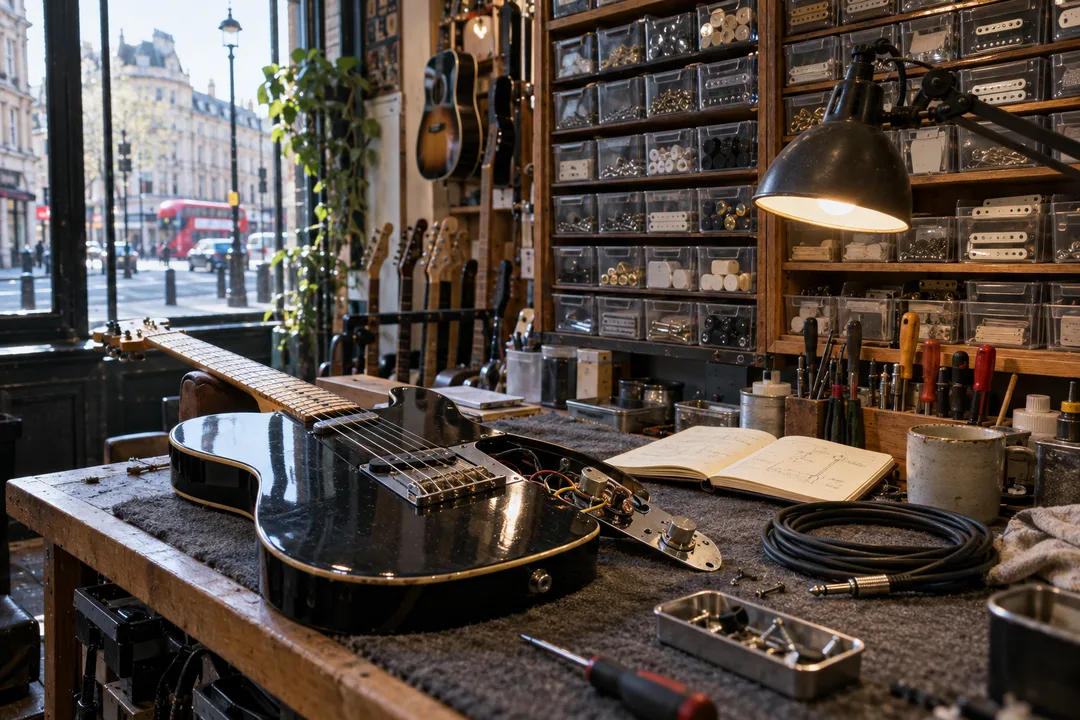
Guitar Repair Shop in Covent Garden: Charing Cross Craft
Tim Marten Guitar Repairs at 125 Charing Cross Road offers specialist diagnosis, setup advice, and careful repair planning for London players carrying a case.
For a guitar repair shop near me between Covent Garden and Soho, Tim Marten Guitar Repairs is a useful central-London answer because the workshop is at 125 Charing Cross Road, London WC2H 0EW. The address puts the repair stop on one of the city’s most practical music-and-theatre corridors, but the service is more focused than a general instrument shop. The sensible approach is to contact the workshop before travelling, describe the instrument and fault, and treat the first visit as a diagnosis and handover rather than assuming a quick retail-counter adjustment.

### The Charing Cross Road approach
Charing Cross Road is straightforward by Tube but hectic on foot. Leicester Square is the closest obvious landmark, while Tottenham Court Road and Covent Garden stations give you slightly different approaches depending on the case you are carrying. Use 125 Charing Cross Road in your map rather than searching only for a nearby music shop, because the repair address is easy to blur with the surrounding booksellers, theatres, and instrument businesses. A hard case is awkward on the pavement, so choose a quieter arrival time and avoid adding a long shopping loop before the guitar is safely handed over.
### Why a diagnosis matters
Repair language can be misleading when you are describing a guitar from memory. A high action may come from relief, saddle height, a bridge issue, neck movement, or a combination of small changes. A dead pickup may be a loose connection, a switch, a jack, or a cable that fails under movement. Start with symptoms and let the repairer identify the cause. Tim Marten’s specialist positioning makes that first exchange important: the value is not only in the final adjustment but in avoiding an unnecessary part replacement or a repair that solves the wrong problem.
### Bring the whole playing setup
Take the guitar in the tuning, string gauge, and configuration you normally use. Bring the strap if the balance feels wrong, the cable if the fault is intermittent, and a pedal or amplifier only when it is part of the failure. If you changed from standard tuning to a lower one, say so. A setup that feels perfect in the workshop can feel wrong at home if the repairer is working from a different string tension or action preference. A short written note with the symptom, when it started, and what changed recently is more useful than a long story after the case is open.
### What to ask about the work
Ask for the proposed order of operations. A good sequence usually separates inspection from adjustment, then checks playability before any irreversible work. For a fret problem, ask whether a dress is enough or whether a refret is being considered. For electronics, ask whether the fault can be reproduced and whether the replacement part will preserve the instrument’s original control layout. For structural damage, ask how the repair will be supported while it cures. You do not need to speak like a luthier; you do need to know which decisions are reversible and what will change the feel of the guitar.
### Collection and testing
When the repair is ready, test the instrument with the same posture and technique you use at home. Play open chords, barre chords, bends, harmonics, and the passages that exposed the problem. Check tuning stability after several minutes rather than only striking one chord in the doorway. If you use a tremolo, verify the return to pitch. If the repair involved electronics, move the cable gently and turn every control through its range. A calm, complete test is good workshop etiquette and prevents a second trip caused by a detail neither side noticed during a rushed collection.
### A central London walk after drop-off
The location makes it easy to turn a repair appointment into a focused afternoon without dragging the guitar through every attraction. Walk toward Covent Garden for the Piazza and Seven Dials, or head north on Charing Cross Road toward Soho Square and the small streets around Denmark Street. If you need a quiet break, choose a café away from the theatre crowds and keep the case upright and close. The route is especially convenient for musicians who want to compare strings, books, or accessories after a repair conversation while keeping the actual instrument safely stored.
### Practical notes before you go
Use the official Tim Marten site as the current contact point, ask whether the workshop is taking the type of repair you need, and ask the workshop for the handover arrangement before setting out. Do not assume an old listing’s opening hours still apply, and do not leave a valuable guitar in a hot car or on a wet bicycle journey. Photograph the guitar’s condition, note any original parts, and keep the repair estimate with the case. The best result comes from a precise brief: what the guitar does now, what you want it to do, and which parts of its history you want preserved. A useful handover note can be as short as three lines: the fault, when it appears, and the result you want. Keep the original strings or parts that come off the instrument unless the workshop tells you otherwise, especially when the guitar has a distinctive or historic configuration. If you are collecting before a rehearsal or gig, leave a buffer for testing rather than planning to plug in for the first time backstage. The Charing Cross Road location is convenient, but convenience should not turn a specialist repair into a rushed transaction. The best central-London repair visit ends with both sides agreeing what ‘fixed’ means. Before leaving home, write down the three notes that will make the visit efficient: the first symptom, the playing situation that triggers it, and the feel you want after repair. Keep loose parts in a labelled bag and photograph the bridge, control cavity, or damaged finish before the case closes. At collection, test the same passage that exposed the fault and describe any remaining issue by fret, string, or control. That level of detail turns a central-London handover into a useful technical conversation instead of a vague request for the guitar to feel better.
Ask Karpo for more information.
Keep reading
- Brixton Vintage Thrift Shop Finder: South London Retro Gems
 Notting Hill Vintage Thrift Shop Finder: Preloved Rails
 Soho Vintage Thrift Shop Finder: West End Designer Archives