 Brixton Vintage Thrift Shop Finder: South London Retro Gems
Hidden Gems & Odd Finds
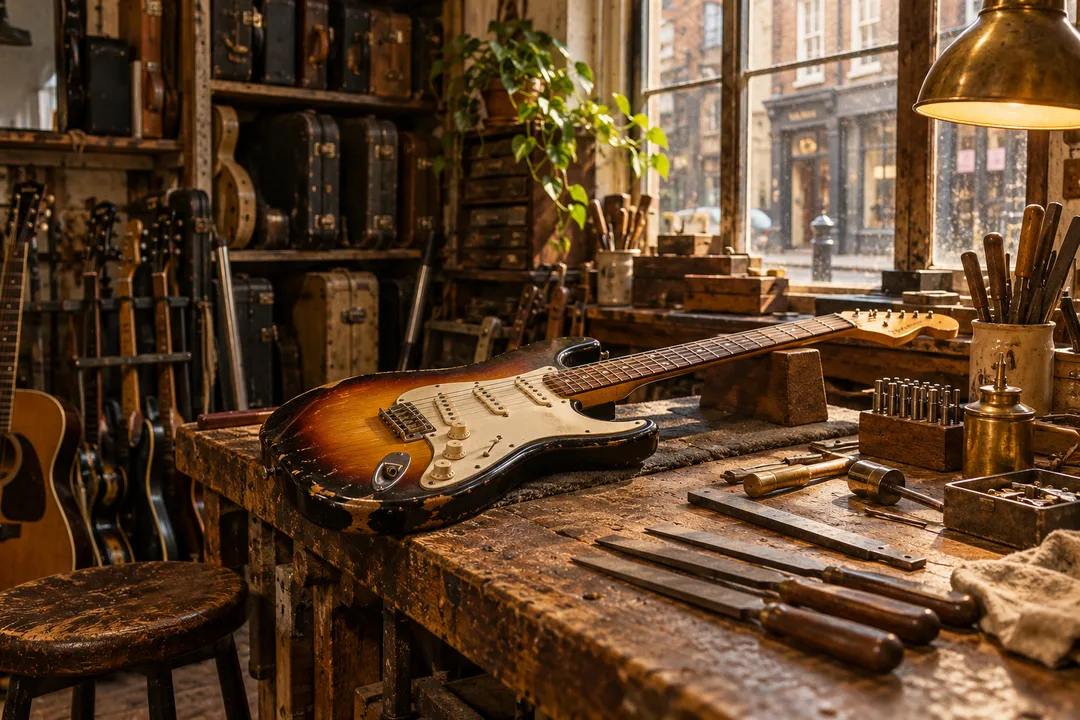
Guitar Repair Shop in Soho: Vintage Setups Without Guesswork
Visit The Vintage Instrument Workshop at 6 Denmark Street for guitar repairs, vintage setups, restoration advice, and practical drop-off guidance in Soho.
If you are searching for a guitar repair shop near me in central London, The Vintage Instrument Workshop is the specialist stop to put first on your list. The workshop is at 6 Denmark Street, London WC2H 8LP, in the stretch of Soho long associated with instrument shops and working musicians. Its own description focuses on guitar and vintage-instrument repairs, restoration, and setup work rather than retail browsing. That distinction matters: bring a specific problem, an instrument with a story, or a guitar that no longer responds the way it once did, and expect a conversation about what should be preserved before anything is altered.
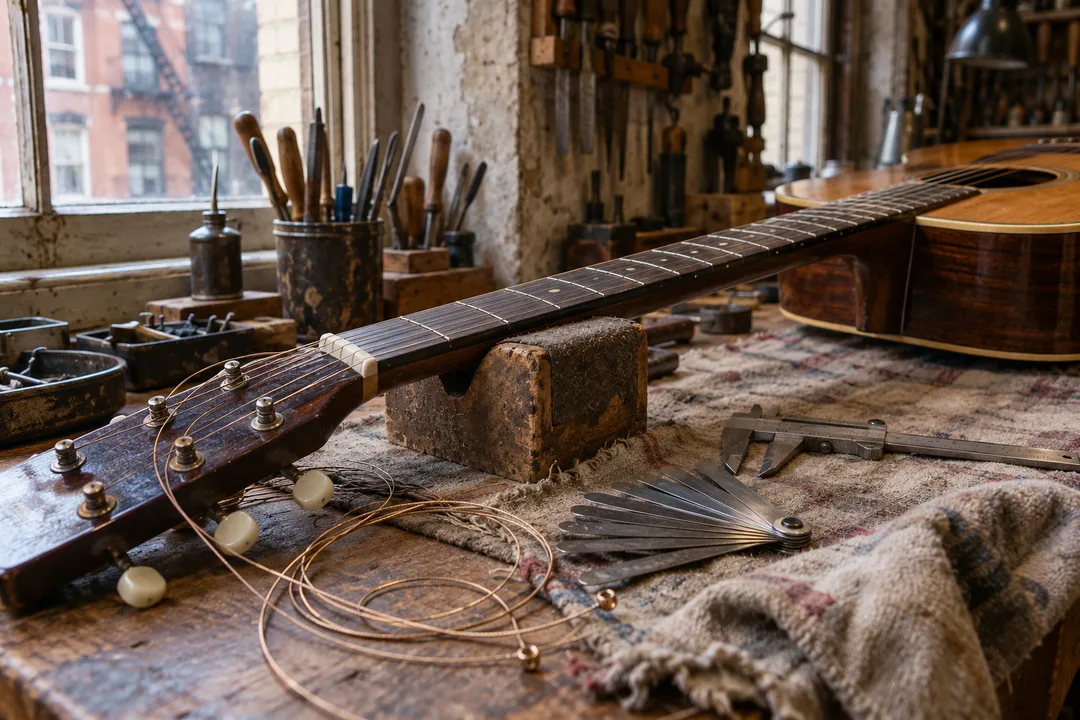
### Finding the workshop on Denmark Street
Denmark Street is compact, busy, and easy to overshoot when you are carrying a hard case. Approach from Charing Cross Road, keep the case close on the narrow pavement, and use the house number rather than relying on a shopfront that may be partly hidden by neighboring guitar displays. The workshop sits in Soho, within a short walk of Tottenham Court Road, Leicester Square, and Covent Garden stations. If you are coming by Tube, allow a few extra minutes for the final block, especially at the end of the working day when the street fills with shoppers and musicians comparing instruments.
### What the workshop is built to do
The Vintage Instrument Workshop presents itself as a central London specialist offering the full range of guitar repair services and setup work. In practical terms, that points to the jobs players notice immediately: neck relief, action, intonation, fret condition, hardware alignment, electrical diagnosis, and the careful adjustment of an older instrument that has moved with age. The word vintage is useful here because restoration is not the same as making everything look new. A thoughtful repair can stabilize a bridge, clean a noisy control, or make a tired neck comfortable while leaving the marks that tell you where the guitar has been.
### How to describe the problem
Before you book, write down what you hear and feel rather than only saying that the guitar is playing badly. Note whether the buzz appears on open strings or fretted notes, whether tuning drifts after bends, whether a pickup cuts out, and whether the problem changes with weather. Bring the guitar in its normal tuning and with the strings you actually use. A repairer can then separate a setup issue from a structural one. If the instrument has been modified, list the changes honestly; undocumented wiring, replacement bridges, and non-original tuners all affect the safest next step.
### The right way to think about restoration
A vintage instrument rarely benefits from an automatic parts swap. The best conversation is about priorities: playability, stability, originality, or appearance. Those goals can conflict. A new bridge may improve reliability but change the look; a refret may make a neck feel new but remove original material; a finish repair may protect wood without making a scar disappear. The workshop’s restoration focus makes it a strong fit for owners who want the reasoning explained before work starts. Ask which intervention is reversible, which is preventative, and which can wait until the next service.
### Timing, handover, and workshop manners
The official site lists Monday to Friday from 11 AM to 6 PM, Saturday from 10 AM to 6 PM, and Sunday closed. Treat those hours as the window for a planned handover, not as permission to assume a same-day repair. Call or use the contact route before carrying a valuable instrument across town, especially if the job involves a crack, loose brace, bridge lift, or intermittent electrical fault. Arrive with the case, cable, strap, and any unusual power supply that helps reproduce the problem. A tidy handover saves a second trip and makes the first inspection more useful.
### A small Denmark Street repair-day route
The surrounding walk is unusually good for a guitar appointment. Start with the workshop, then continue south toward Charing Cross Road for instrument browsing and music-book shops before turning toward Soho Square. If your appointment ends near lunch, keep the route flexible rather than scheduling a loud meal immediately beside the case. The British Museum is a longer northbound detour, while Covent Garden is the easier westward wander for a coffee, a market circuit, and a quieter place to test how the instrument feels after collection.
### Practical notes for a first visit
Keep the receipt or written job description, photograph unusual damage before leaving home, and ask what the collection process will be. If the guitar is valuable or irreplaceable, confirm how it will be stored and whether the workshop wants the original case. Do not arrive with wet equipment after a rainy walk and immediately open the case in a warm room; give the instrument time to settle. Most importantly, resist the temptation to ask for every adjustment at once. A clear first priority gives the repairer a better chance of preserving the instrument’s character while solving the problem that brought you in. Keep the original bridge, tuners, pots, and case paperwork together if the instrument has collector value. Ask whether the repairer wants the guitar left in its usual tuning or relaxed for transport, and follow that instruction rather than making a last-minute change. If you are travelling from outside central London, build in enough time to arrive settled; rushing a vintage handover makes it harder to describe a subtle change in tone or feel. A useful final question is what symptom should improve first and what sign would mean the guitar needs to come back. That gives you a practical baseline for collection and protects both the instrument and the repair relationship. Before leaving home, check the case latches, remove loose picks and batteries, and label any accessories that must stay with the instrument. At handover, describe the player’s normal posture, volume, and tuning rather than asking for an abstract ‘professional setup.’ At collection, compare the repaired guitar with the note you made at the start. If the sound or feel is still not right, explain the exact position on the neck or control where it happens. Specific observations are easier to act on than a general sense that something is different, and they help the repairer make a precise final adjustment.
Ask Karpo for more information.
Keep reading
- Brixton Vintage Thrift Shop Finder: South London Retro Gems
 Notting Hill Vintage Thrift Shop Finder: Preloved Rails
 Soho Vintage Thrift Shop Finder: West End Designer Archives