 Brixton Vintage Thrift Shop Finder: South London Retro Gems
Hidden Gems & Odd Finds
Cable Street Guitar Repair Shop: London Repair Guide
London Guitar Repairs at 566 Cable Street is appointment-only, offering setups, restoration and electronics work with a practical East London handover.
London Guitar Repairs is at 566 Cable Street, London E1W 3HB, and the official site sets an appointment-only rule. Juan Ignacio Diaco Vidal presents himself as a guitarist and luthier, with repair, setup and restoration work for guitars, basses, ukuleles and other stringed instruments. The site shows examples of fret, electronics, bridge and structural work. This is a booked bench visit rather than a drop-in counter, so send the instrument details first and arrive at the agreed time with the whole guitar and its case.
An Appointment-Only Workshop In Whitechapel
Juan Ignacio’s biography gives the workshop useful context. He writes that he has played guitar for 27 years and worked in luthiery for more than 23, including Denmark Street workshops and sessions at Abbey Road Studios. That mix of player and technician matters when the complaint is about feel. Explain a stiff bend, sudden buzz, dead pickup, lifting bridge or changed action in the language of your hands. A precise description helps the technician choose an inspection path before the instrument is on the bench.
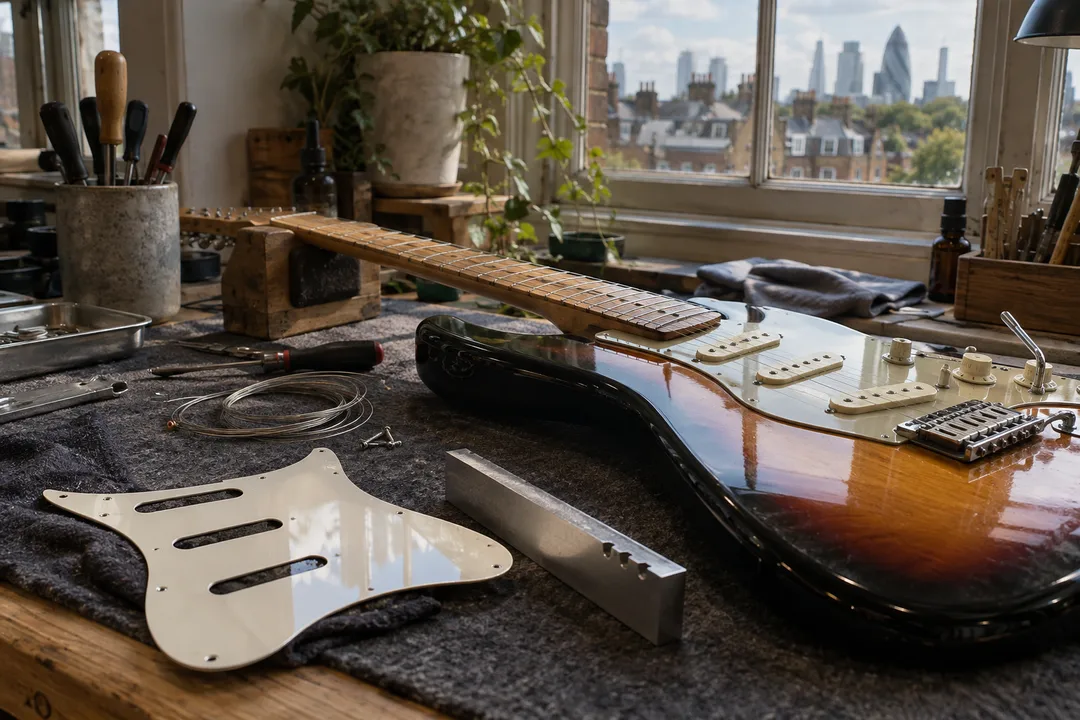
The service list covers routine maintenance and demanding restoration. A setup may involve relief, action, intonation and string choice.fretwork addresses worn or uneven playing surface.electronics work follows the signal path.a structural repair protects geometry and finish. Use the official categories to frame the request, then ask what the proposed scope includes. If the guitar is vintage or sentimental, state whether preservation matters more than a modern playing target. That information can change the sensible repair without changing the instrument’s identity.
The Technician Behind The Bench
Appointment preparation starts with photographs. Take the front, back, headstock, neck joint, bridge and any visible crack in good light. Pack the cable, tremolo arm, loose hardware and serial number. Note the tuning, string gauge and previous work. If the fault is intermittent, describe the trigger and carry the cable that reproduces it. Cable Street is not a place to arrive hoping the door will open for an unplanned inspection.the booked handover protects the technician’s time and the instrument’s security.
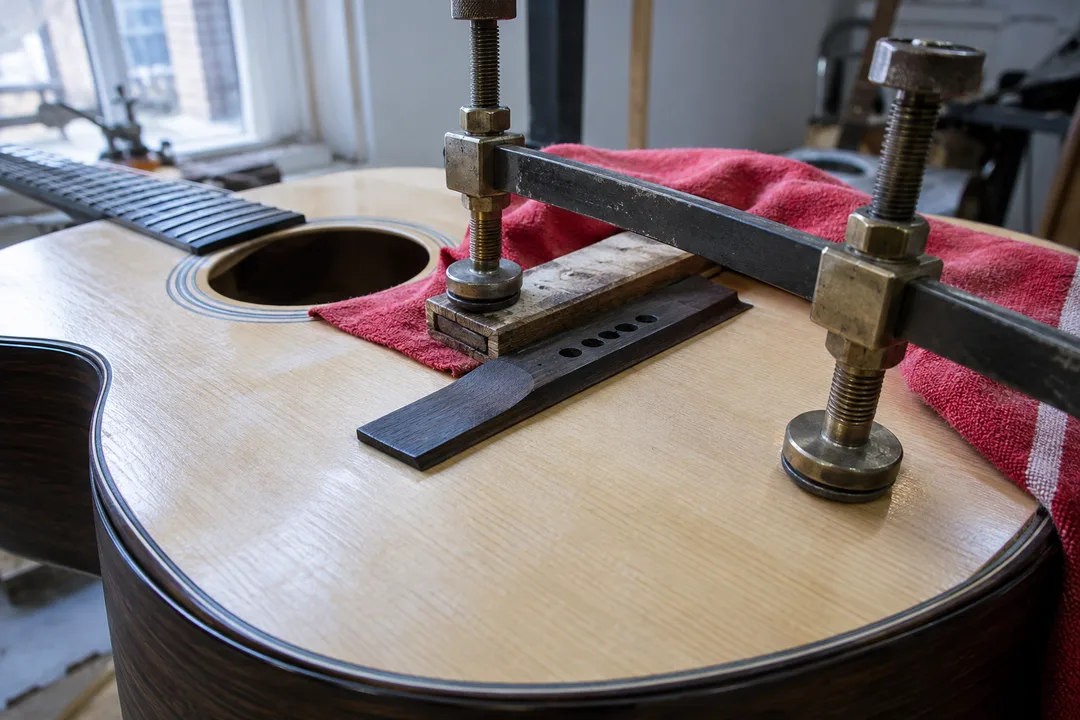
For a headstock, bridge or neck problem, protect the joint from tension and keep every fragment with the case. Do not glue a crack at home or alter a lifting bridge before the appointment. For electronics, identify the control, pickup or jack that fails. For a setup, say how hard you pick and whether the guitar travels between humid and heated rooms. These details turn a general repair request into a useful technical brief and reduce the chance of an unsuitable quick fix.
Describe The Repair Before You Travel
Once the job is agreed, keep the written scope. Ask which parts remain original, what finish work is involved and what collection test will show success. A restoration can be a sequence rather than one dramatic intervention, while a setup may be complete after a measured adjustment. Separating essential safety work from optional playability changes protects both budget and originality. If the technician needs more photographs or measurements, add them to the same note so the handover remains consistent.
After the instrument is inside, follow Cable Street toward Shadwell for a short walk that keeps you near the transport links. The neighbourhood’s changing storefronts and canal-side edges make a useful pause, but do not leave the guitar in a hot car or exposed case. If you need strings or a replacement part, wait for the bench measurements. Buying first can create a mismatch in gauge, post spacing or bridge dimensions. The best route is diagnosis, scope, repair and then supplies.
Pack For A Structural Job
Collection is where the booked process becomes audible. Use the same tuning and cable that exposed the fault. Play the original buzz positions, check bends, turn every control and listen for intermittent noise. For structural work, inspect the joint and finish in daylight without pressing on it. Ask what changed, whether a settling period is expected and what maintenance follows. Write the next step beside the original scope. A clear handover makes a specialist repair useful long after the appointment ends.
If the repair involved frets, test upper positions and chords with the attack you normally use. If it involved a bridge or saddle, listen for intonation at the twelfth fret. If it involved electronics, move each control slowly through its range. Small tests reveal whether the result matches the way you play. Keep removed parts labelled and carry them home. Original hardware can be valuable evidence, even when the new component makes the instrument easier to use.
A Cable Street Walk After Handover
At home, keep the guitar away from radiators, damp boots and sharp temperature changes while the work settles. Play several short sessions and record any returning symptom by fret, string, tuning and trigger. Avoid changing strings, pedals and amplifier settings all at once.one stable variable makes follow-up easier. If the same fault reappears, send a concise account and the original photos. A repeatable detail lets the workshop begin from evidence rather than restarting the diagnosis.
Practical planning is clear: use the official appointment route, bring the complete instrument, keep 566 Cable Street and the technician’s instructions with the case, and reserve time for collection testing. London Guitar Repairs suits players who want a luthier-led conversation about setup, restoration or structural work. Its appointment rule asks for preparation, but that discipline protects a valuable guitar and gives the bench the information needed for careful East London service.
The appointment rule protects a specialist bench. A complete brief, protected instrument and patient collection give the luthier room to work carefully on feel, finish and structure instead of improvising at a doorway. For a structural repair, pack the guitar as carefully as the repair brief. Loosen tension only when the technician asks, cushion a cracked headstock, and keep every fragment with the case. Write down the tuning and string gauge that were on the instrument when the problem appeared. At the appointment, describe the sound, feel and timeline without guessing at the cause; a clean account lets the technician choose the right inspection. Collection deserves the same care. Play the affected notes, test the instrument at normal picking force, turn every control and inspect the repaired joint under ordinary light. Keep the written scope and any parts list with your records. That routine makes an appointment-only visit at London Guitar Repairs easier to plan around work, rehearsal and travel through Whitechapel.
Ask Karpo for more information.
Keep reading
- Brixton Vintage Thrift Shop Finder: South London Retro Gems
 Notting Hill Vintage Thrift Shop Finder: Preloved Rails
 Soho Vintage Thrift Shop Finder: West End Designer Archives