 Brixton Vintage Thrift Shop Finder: South London Retro Gems
Hidden Gems & Odd Finds
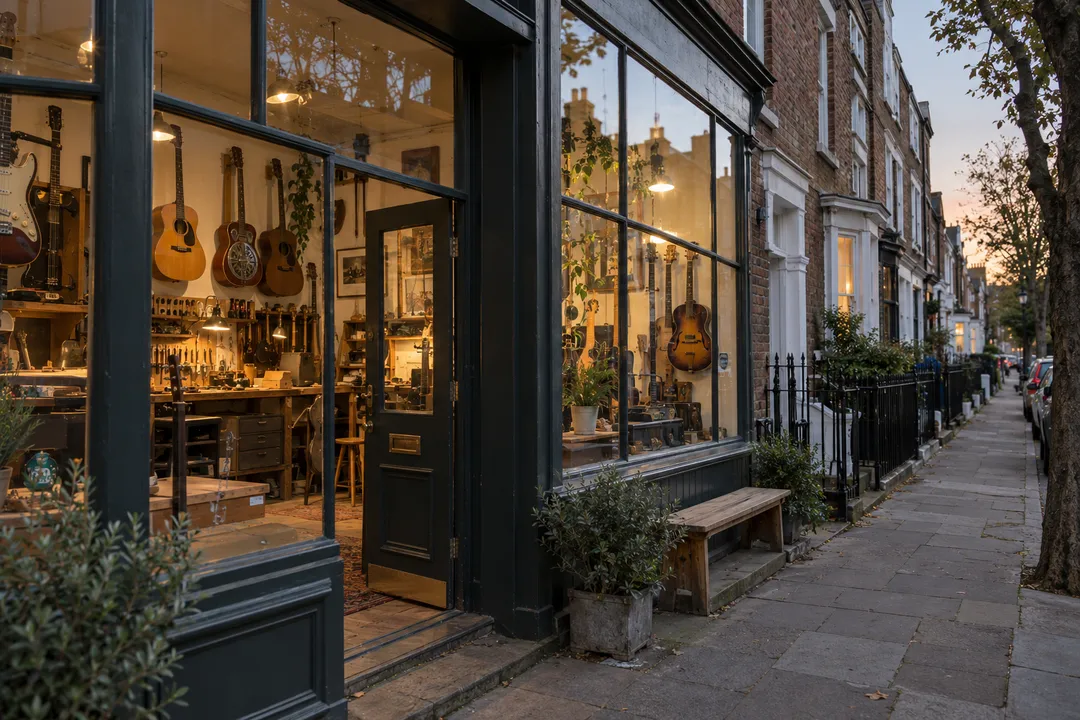
Guitar Repair Shop on Lavender Hill: Free Appraisal First
Guitar Repairs London at 58 Lavender Hill starts with a free appraisal, then handles setups, restringing, electrical work, fret stoning, and refrets.
If the phrase guitar repair shop near me takes you toward Clapham Junction or Battersea, Guitar Repairs London gives you a concrete South London starting point: 58 Lavender Hill, London SW11 5RQ. The official site says the workshop repairs and services all makes and types of guitar and offers a completely free appraisal before work is agreed. It also publishes a contact number, 07946 594822. That free first look is the central reason to use this shop: you can bring in a problem guitar, understand what is necessary, and avoid approving work based on guesswork.
### Reaching Lavender Hill with a case
Lavender Hill is a busy South London high street, so plan the final approach around the instrument rather than the fastest map route. Clapham Junction is the useful transport anchor for many visitors, while Battersea and Clapham Common approaches can work depending on the day. Keep the guitar in its case, avoid long stops in rain, and use 58 Lavender Hill as the navigation point. The exact address matters because the road mixes cafés, services, and residential entrances; do not rely on a search result that shortens the business name or drops the house number.
### What a free appraisal should answer
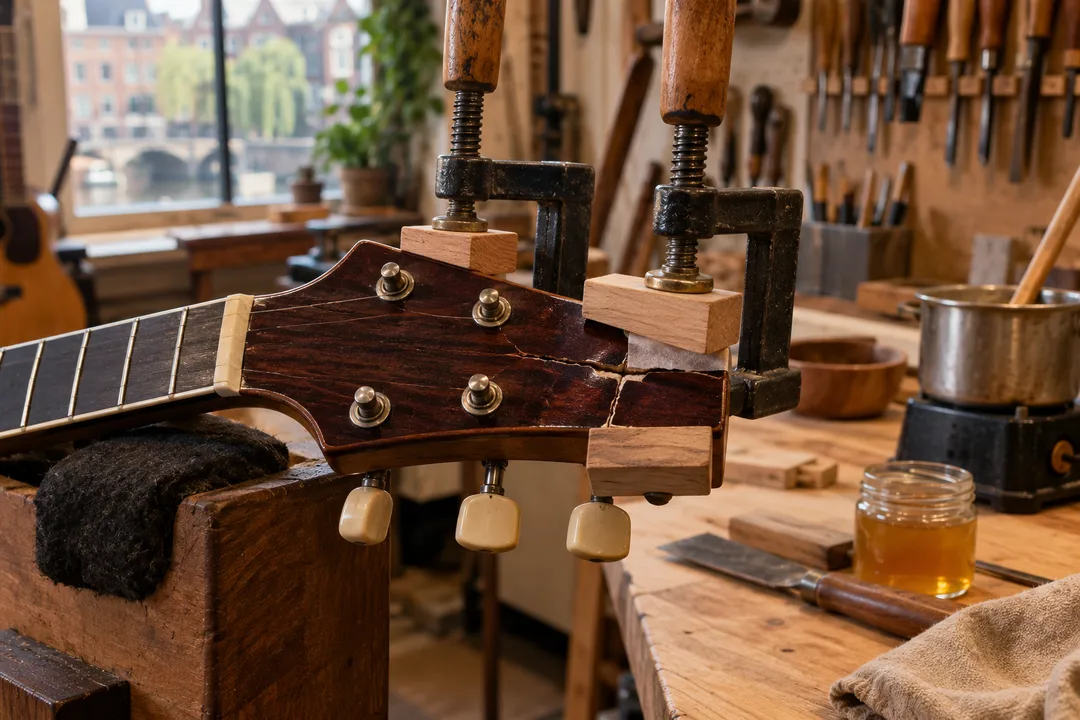
A free appraisal is most useful when you arrive with a defined question. Ask whether the problem is a setup issue, a component failure, a fret condition problem, or evidence of structural movement. Guitar Repairs London lists work ranging from full setups and servicing to restringing, electrical faults involving pots and sockets, fret stoning, and refrets. That range means the first assessment can help you choose the right scale of repair. A guitar that feels uncomfortable may only need adjustment, while uneven frets or a noisy jack can require a different plan.
### Bring the evidence, not just the guitar
Before you travel, take a short video of the buzz, rattle, intermittent signal, or tuning problem if it is difficult to reproduce. Bring the cable and strap that expose the issue, and tell the workshop which string gauge and tuning you normally use. If the guitar has been dropped, modified, or stored in a damp room, say so. A repairer can work faster when the history is accurate. Do not remove a loose bridge, tighten a truss rod, or spray contact cleaner just before an appraisal; those home interventions can conceal the original symptom or add a new one.
### Choosing between service levels
The site’s wording makes the workshop suitable for both routine maintenance and more involved repair. A service can include restringing and a general setup, while a refret or electrical repair needs a more specific conversation about parts, labour, and timing. Ask what the appraisal found, what should be done first, and what can wait. If a guitar is sentimental or vintage, ask whether the proposed work changes original hardware or finish. If it is a working instrument, explain whether speed, low action, tuning stability, or quiet electronics is the main priority.
### Testing the result at collection
Test the guitar as a player, not only as an owner. Work through open chords, barre chords, bends, slides, harmonics, and the parts of your repertoire that expose the original fault. Check intonation at several positions and turn every control if the job involved electronics. If a refret or fret-stoning job was completed, run your hand lightly along the neck and listen for dead spots. The goal is not to search for an imaginary flaw; it is to confirm that the agreed problem has been addressed and that the instrument matches the brief you gave at the appraisal.
### A Battersea-to-Clapham follow-on walk
After dropping off a guitar, Lavender Hill gives you an easy South London route without needing to turn the repair into a full tourist day. Walk toward Clapham Junction for cafés and transport connections, or head toward Battersea Park if you have time before collection and the case is safely stored. Keep the return trip simple after a repair involving finish, glue, or a neck. A guitar benefits from a calm transition home, especially if the temperature outside differs sharply from the workshop.
### Practical notes for Guitar Repairs London The workshop visit is also a good moment to decide whether the guitar needs a seasonal check rather than a dramatic overhaul. Changes in humidity can move relief and action, while new strings can reveal a fret or nut issue that was hidden by the old set. Ask the appraiser to explain what is measurable now and what should simply be monitored. That turns the free assessment into a maintenance plan: one clear repair today, one observation for later, and no unnecessary work added just because the guitar is already on the bench.
Use the official site and the number 07946 594822 to arrange the appraisal before visiting, because the site does not publish a fixed public opening schedule. Photograph the instrument, list its current strings and tuning, and write down the sound or feel you want changed. The free appraisal is a chance to make the repair legible: ask for the necessary work, the optional work, and the reason for each. For a player who wants a straightforward South London repair conversation before spending money, 58 Lavender Hill is a practical and well-defined first stop. Keep the appraisal distinct from approval: understanding the work is free, while the repair itself is the decision that follows. Ask whether a proposed setup includes a fresh restring, whether electrical parts are quoted separately, and whether a refret changes the instrument’s current feel. If the guitar is needed for a rehearsal, say so early, but leave enough time for a proper collection test. Lavender Hill is easy to reach, yet a guitar should travel directly home after a structural or finish repair. Clear photos, a short symptom note, and the official phone number make the first conversation faster and more useful. Before leaving home, photograph the instrument, note its string gauge and tuning, and record the sound of the fault if it is intermittent. At the appraisal, describe the result you want in playing terms: lower effort, cleaner fretting, stable tuning, or quiet electronics. At collection, test the same passage that exposed the issue and ask which part of the work produced the improvement. That simple before-and-after record keeps a free appraisal focused, helps the workshop separate necessary repair from optional work, and makes the Lavender Hill visit useful even when the final job is smaller than expected. The workshop visit is also a good moment to decide whether the guitar needs a seasonal check rather than a dramatic overhaul. Changes in humidity can move relief and action, while new strings can reveal a fret or nut issue that was hidden by the old set. Ask the appraiser to explain what is measurable now and what should simply be monitored. That turns the free assessment into a maintenance plan: one clear repair today, one observation for later, and no unnecessary work added just because the guitar is already on the bench. Keep the final recommendation written down with the address and phone number so you can compare it with later servicing.
Ask Karpo for more information.
Keep reading
- Brixton Vintage Thrift Shop Finder: South London Retro Gems
 Notting Hill Vintage Thrift Shop Finder: Preloved Rails
 Soho Vintage Thrift Shop Finder: West End Designer Archives