 Fitzrovia Solo Dining Finder: Central Counter Stools
Restaurants
Bermondsey Greasy Spoon Cafe Guide for Film Photographers
A Bermondsey greasy spoon cafe guide for photographers: when the light is kindest, how to ask before shooting, what to eat, and an arches walk to Shad Thames.
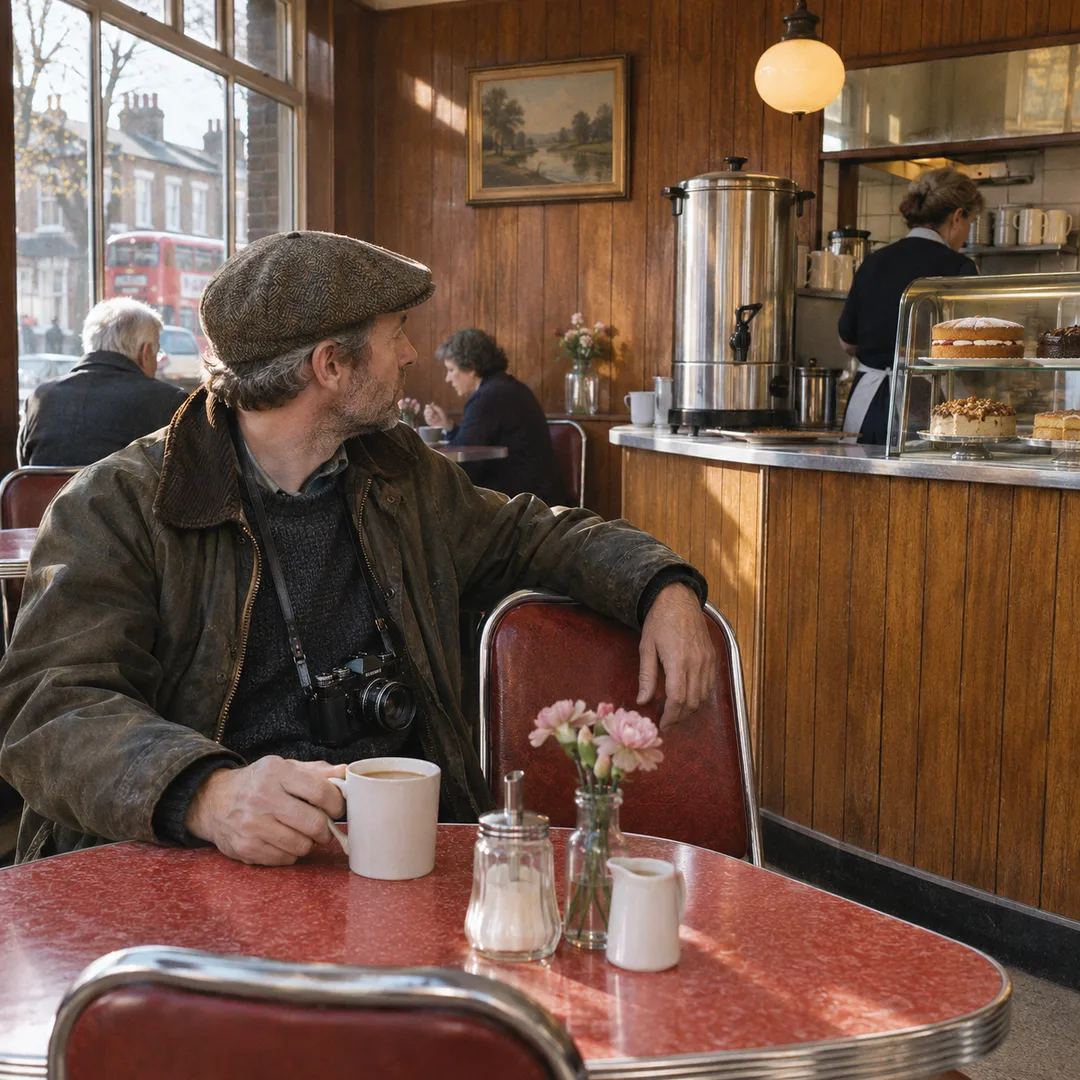
The old caffs of Bermondsey are some of the last intact working-class interiors in central London, with formica tables, chrome chairs, tea urns and hand-lettered price boards that photographers travel across the city to see. This greasy spoon cafe guide follows Gareth, a weekend film photographer who has spent a year documenting caffs before they change. His rule is simple: you are a customer first and a photographer second, and the plate comes before the picture.
Why Caff Interiors Matter
Many London caffs were fitted out by Italian families in the decades after the war, and their style came from a love of bright surfaces that were easy to wipe down. Vitrolite glass panels, pastel laminate, curved counters and chrome trims gave a small room a little glamour on a tiny budget. Some of those details are still there, patched and polished by second and third generations.
Bermondsey grew up around docks, tanneries and food factories, so its caffs fed a working crowd who wanted something hot, quick and filling. Today the street outside has galleries and design studios, but the caff interiors still tell the older story. Gareth calls them museums you can eat in, and he treats them with the same care you would give any museum.
Ask Before You Lift the Camera
Order first, sit down, and once your tea arrives, ask whoever is behind the counter whether they mind a few pictures of the room. Most owners are proud of their place and say yes. A few say no, and that answer is final. Never photograph other customers' faces without asking them directly; builders on a break and pensioners with the paper did not come in to be in your portfolio.
Keep it quiet. No tripod, no flash, no rearranging the sauce bottles. Gareth uses one small camera and a standard lens, shoots from his seat, and only stands up when the room is nearly empty. If the cook is busy at the hot plate, he waits. A caff kitchen is a small space with hot fat and sharp knives, and nobody needs a stranger leaning over the counter.
Light and Timing in a Small Room
The kindest light comes mid-morning, after the early rush and before lunch, when sun falls low through the front window and catches the steam rising off the urn. On a cold day the glass mists over and softens everything behind it, which looks lovely on film. Late afternoon can work too, but many caffs wind down early, so do not plan a shoot for the end of the day.
Shoot the details people overlook: a row of mugs upside down on a tea towel, a worn patch on the counter where thousands of elbows have rested, a hand-written card for the special of the day, the cook's apron hanging on a hook. Gareth says the whole story of a caff is in those edges, more than in a wide shot of the room.
What to Order While You Shoot
A photographer needs both hands, so pick food that waits for you. A bacon sandwich or egg sandwich on white bread can be eaten in four bites between frames and does not go sad if it sits for a minute. A full plate of eggs goes cold quickly while you fiddle with a light meter, and cold fried egg is a waste of a good cook.
Gareth's usual order is a builder's tea and a sausage sandwich with brown sauce, then a second tea if the room is quiet and he wants to stay. Buying a second drink is the polite way to rent a table for longer. Skip the elaborate specials on a shooting day; save the full English for a visit when the camera stays in the bag.
Honest Advice on Where Not to Shoot
Skip any caff where the owner looks harried or where a queue reaches the door. Your pictures will be rushed and you will be in the way. Also skip the famous names that already appear in every photo series; their rooms are lovely, but the less-known caffs on Bermondsey's side streets and near the old market buildings are often more personal and have fewer visitors with cameras.
If the owner says no, thank them, finish your tea and leave a kind word. Do not sneak a shot from the pavement afterwards. Gareth has been told no three times this year, and in two of those caffs he went back weeks later as a regular customer, chatted with the family, and was eventually invited to shoot before opening.
The Railway Arches and Maltby Street
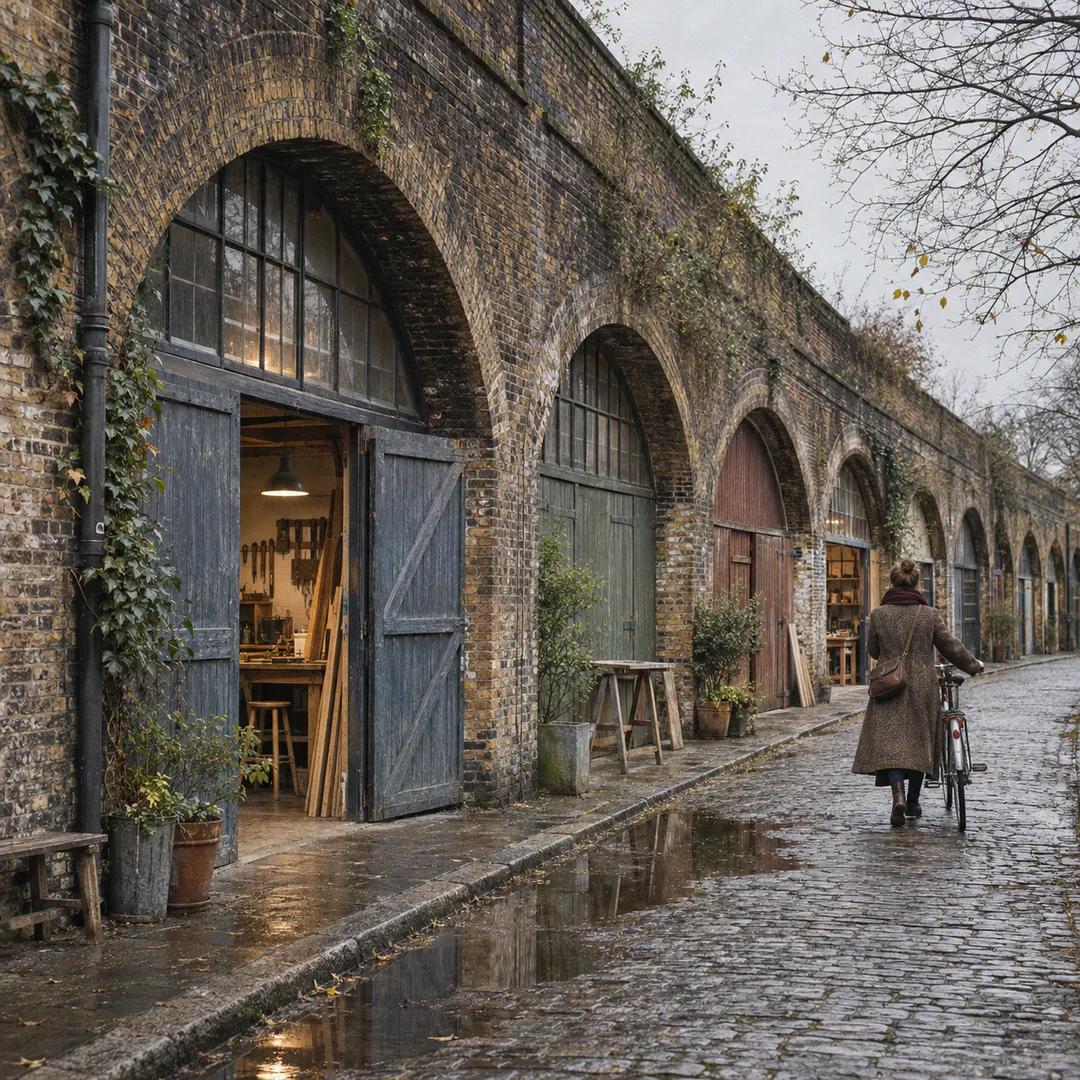
After the caff, walk towards the railway viaduct that carries trains into London Bridge. The brick arches beneath it hold bakeries, breweries, joiners and food producers, and on Saturdays the narrow lane at Maltby Street fills with stalls. For a photographer, the repeating curves of the arches and the wet cobbles after rain are a gift.
Weekdays are quieter and better for architectural pictures, when the arches are workshops rather than market stalls. Be as polite here as in the caff: people are working, and a quick nod before photographing someone's shopfront goes a long way. Keep to the edges of the lane so delivery vans can pass without you stepping back into puddles.
Leather Market to Shad Thames
Bermondsey Street runs north through the old leather district, where the great brick market buildings once handled skins from across the empire. Those halls now house studios and offices, but the names on the walls and the scale of the warehouses still hint at a noisy, smelly trade. Look up and you will spot hoists, loading doors and painted signs.
Carry on towards the river and you reach Shad Thames, a canyon of converted warehouses criss-crossed by iron walkways high above the street. It is one of the most photographed lanes in London, so go early before tourists gather. The cobbles, shadows and bridges between buildings make strong black and white frames, and the whole walk from the caff takes less than half an hour.
Planning a Caff Series With Karpo
A good caff project needs a long list, because rooms change and owners retire. Open the Karpo APP and ask for traditional greasy spoon caffs around Bermondsey, Southwark and Rotherhithe, then look through the photos for original interiors such as formica tables, tiled walls or old chrome fittings. Save the ones that still look untouched.
Use Karpo as a starting map and your own feet as the final test. Visit as a customer first, without a camera, and see how the room feels. Gareth keeps a short list of caffs he wants to return to with film, and he says his favourite pictures came from the places where he was a regular before he was a photographer.
Ask Karpo for more information.
Keep reading
- Fitzrovia Solo Dining Finder: Central Counter Stools
 Notting Hill Solo Dining Finder: West End Corner Cafes
 Islington Solo Dining Finder: Upper Street Bistro Stools