 Richmond Park Sunset Viewing Planner: Deer Meadow Horizons
Weekend Plans
London Glassblowing Studio in Bermondsey: Free to Watch
London Glassblowing at 62-66 Bermondsey Street SE1 3UD is free to enter and watch artists at work, and a three-hour class for two costs £500 a head.
London Glassblowing, at 62-66 Bermondsey Street, London SE1 3UD, is a working glass studio and gallery where entry costs nothing and the furnace is only a few metres from the door. Peter Layton founded it in 1976, and the studio now describes itself as the UK's foremost studio and gallery for contemporary glass art. The gallery at the front is open Tuesday to Saturday from 10am to 5pm and on Sundays from 11am to 5pm. Behind it sits the hot shop, where the team gathers molten glass heated beyond 1,000 degrees Celsius. For anyone searching for a glassblowing studio in London, this is the one that lets you walk in off the street and watch the work happen.
Where the Studio Sits on Bermondsey Street
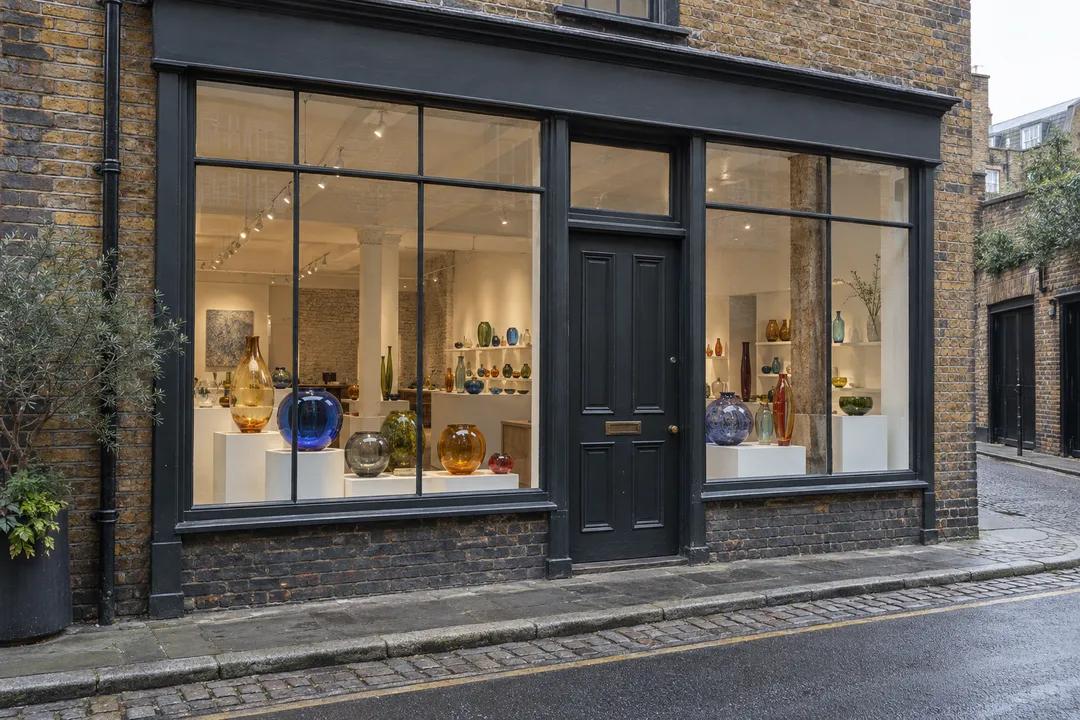
The studio occupies numbers 62 to 66 on Bermondsey Street, in the SE1 stretch south of the river between London Bridge station and the railway arches. London Bridge is the nearest station, roughly 556 yards away on foot, and the walk runs along Bermondsey Street itself, so you pass the shopfronts and cafés before the glass appears. The front of the building is the gallery, with pieces on plinths and shelves under good light.
A Studio That Began in 1976
The studio was established in 1976 and the story starts with Peter Layton, described by writers on British craft as one of the founding fathers of British studio glass. He discovered glassblowing in the mid-1960s while teaching ceramics in the United States, and he went on to help turn glass from an industrial material into a collectable art form. The studio celebrates its 50th anniversary this year, which makes the Bermondsey Street address one of the longest-running hot glass studios in Europe. That history shows in the gallery, where Layton's own colour-saturated vessels hang alongside work by artists such as Tim Rawlinson.
Watching the Hot Shop Work
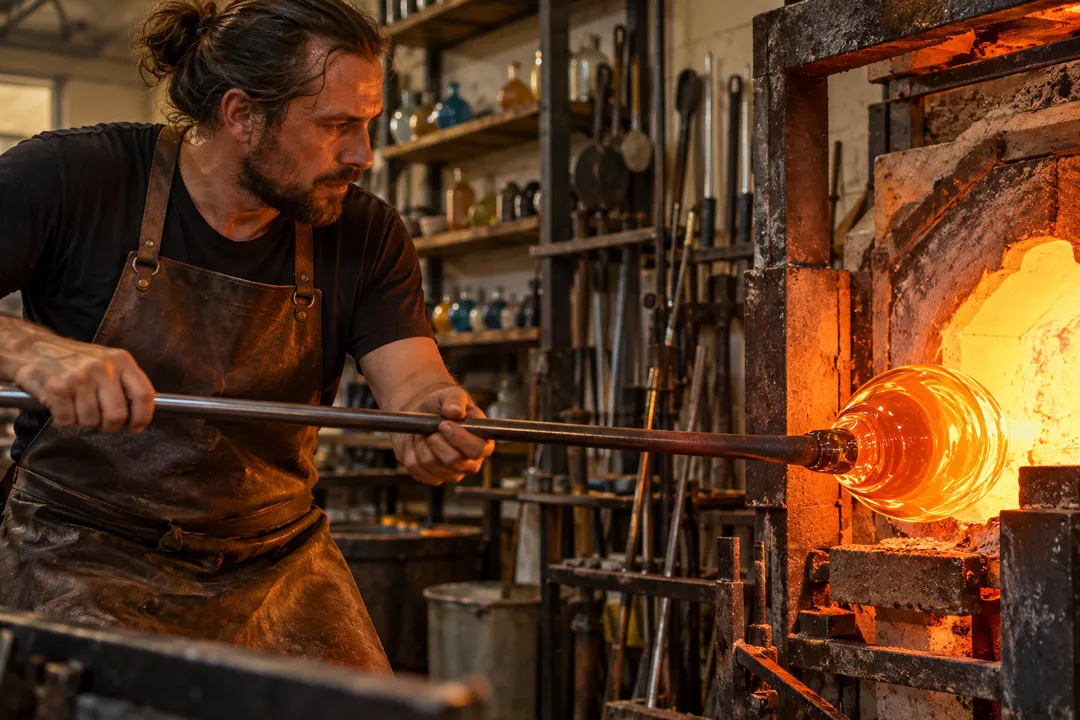
The most memorable part of a visit is the hot shop at the rear. The studio explains the process in four stages. First the glassmaker gathers molten glass from the furnace on the end of a pipe. Then the piece is shaped by blowing and by gravity, refined with hand tools at the edges and contours, and finally placed in a lehr to cool slowly. The studio puts it plainly: glass is an immediate medium that leaves no room to pause. A visitor account published in July 2026 counts 12 resident artists working in the hot shop, making Layton's designs during the day and using the equipment for their own projects when it is quiet. You can watch from just metres away, and nobody asks you to book.
The Coldshop and the Finished Pieces
Hot glass is only half of the story. Once a piece has cooled, it moves to the coldshop, where it is cut, ground, polished and finished by hand. That second phase, the studio explains, reveals detail and depth and controls how light moves through the finished object. Upstairs there is a storeroom and office holding stock that is waiting for online sale or a place in the gallery, and the same visitor account describes that upper floor as one of the most memorable parts of the building. Pieces in the gallery range from under £300 to £2,500 and over, so there is a real chance of leaving with something small and well made.
The Half-Day Glassblowing Experience
If watching is not enough, the studio runs a Half-Day Glassblowing Experience in London for £500 per person. It lasts three hours, from 10:00 to 13:00, with a second Saturday session from 14:00 to 17:00. Sessions are limited to two participants, so you get close attention from the glassmaker and plenty of time at the furnace, and you make two pieces to take home. Participants must be 18 or older, because the work happens near heat and needs physical mobility. The studio asks you to mention any serious health condition in advance. Gift vouchers are available, which is how many people end up booking this for a birthday.
How to Book Without Losing Months
The studio warns that sessions book up four to six months in advance, so early booking is recommended. In practice that means choosing the class before the date, then fitting the visit around it. If you are building a trip around the class, book it first and plan the rest of the weekend later. Because only two people share each session, the slots are scarce, and a pair of friends or a couple can take both places together. Pieces need slow cooling overnight in the lehr, so the finished glass is not ready the moment you put down the pipe.
A Short Walk From the Studio
Bermondsey Street runs north from the studio to Tooley Street and London Bridge station, and the Shard stands right beside the station. West of there you reach Borough Market and Southwark Cathedral on foot, which makes a natural second stop for lunch after the studio. The street itself is lined with independent cafés, restaurants and shops, so a visit to the gallery fits easily into a slow Saturday. The studio opens on Sundays too, from 11am, which suits a later start.
Practical Notes for a Visit
Entry to the gallery and hot shop is free, and you do not need a reservation to browse. Opening hours are Tuesday to Saturday from 10am to 5pm and Sunday from 11am to 5pm. School groups and large parties need to arrange their visit in advance with the studio. The class price of £500 per person covers the three hours and the two pieces you take away. The address is 62-66 Bermondsey Street, London SE1 3UD.
Who This Studio Suits
This is a good fit for visitors who want a glassblowing studio in London that is open to the public every week, not only on special events. It suits couples booking a shared three-hour class, collectors who want to see how a vessel is made before buying one, and anyone curious who wants a free hour on Bermondsey Street. Families with young children can browse the gallery during opening hours, but the class itself is for adults only. If you want to try the craft, book months ahead. If you only want to see molten glass being worked, walk in.
Ask Karpo for more information.
Keep reading
- Richmond Park Sunset Viewing Planner: Deer Meadow Horizons
 South Bank Sunset Viewing Planner: Thames Riverside Walks
 Parliament Hill Sunset Viewing Planner: London Heath Vistas