 Brixton Christmas Light Up Walk Planner: Rainy Arcades
Free Things to Do

South Kensington Free Admission Day Tracker: V&A First
Use a South Kensington free admission day tracker to start at the V&A, pair nearby galleries, and shape a calm London museum route around your energy.
South Kensington rewards a slow start because its museums sit close enough to feel like one cultural campus while remaining very different inside. Use the free admission day tracker to make the Victoria and Albert Museum your opening choice, then decide whether your attention wants design, natural history, or science next. The point is not to conquer every room. It is to shape a route with a clear first stop, a flexible middle, and one pleasant walk that lets the day breathe.
Start With the V&A’s Permanent Collection
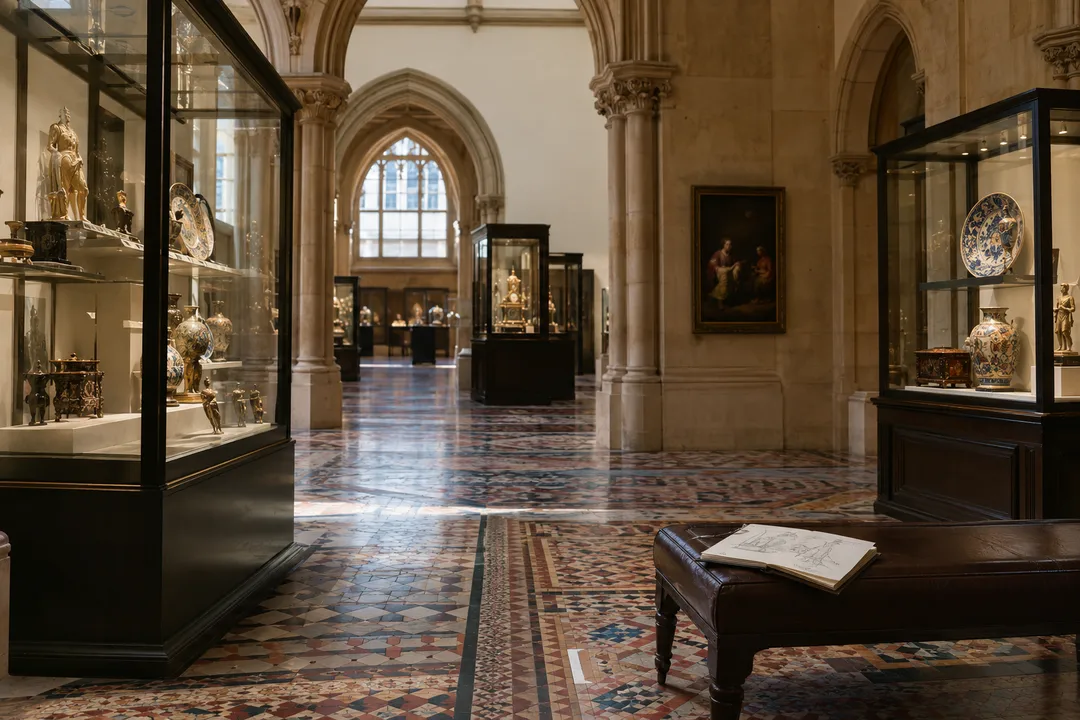
Begin with the V&A’s permanent collection rather than treating the building as a checklist. The earliest rooms can feel ornate and dense, while later galleries open into furniture, fashion, ceramics, and objects that reward close looking. A tracker note can hold two themes you actually want to see, such as stage costume and East Asian ceramics, so your route has a visual thread. That small act prevents the familiar free museum problem: walking quickly past everything and remembering very little.
The V&A works well as a first stop because it gives you choices without asking for a single mood. If you arrive curious and energetic, move toward the grand rooms and let the architecture set the pace. If you need quiet, choose a smaller gallery and stay with one case long enough to notice materials, joins, and wear. The tracker becomes useful when it records that preference, turning a vague wish for a museum day into a practical starting instruction.
Keep a short reset between galleries. Exhibition Road is made for it: the broad pavement, museum entrances, and glimpses of stone façades create a visual change without demanding transport. Write a simple transition into your plan, such as ‘ten minutes outside after the second room.’ That pause protects the rest of the day from the common mistake of spending all your focus in the first building and arriving at the next one already tired.
Choose your second stop by contrast rather than reputation. The Natural History Museum offers soaring space and a strong sense of scale; the Science Museum turns attention toward machines, experiments, and practical ingenuity. Neither needs to replace the V&A. In a tracker, label each option by the kind of concentration it asks for: visual detail, large-scale spectacle, or hands-on explanation. When the day arrives, that label makes the next choice easier than scrolling through a generic list.
Build a Three-Stop South Kensington Rhythm
For a mixed group, divide the route into shared anchors and optional branches. Everyone can meet beneath a memorable architectural feature, then split for twenty minutes into different rooms before regrouping. This keeps one person’s interest in fashion or design from becoming another person’s forced march. Save the branch idea in Karpo APP as a small decision point, so the group can move forward without debating every doorway in the corridor.
A V&A-first loop also suits a solo visit because it leaves room for repetition. Return to one object after seeing a different collection and notice what changed in your perception. You can frame the tracker around a single question—how craft shows movement, how colour signals status, or how domestic objects carry memory. A focused question gives the free route a personal story, even when the building is busy with school groups and visitors crossing in every direction.
South Kensington’s best route is often shorter than the map suggests. Museum entrances are close, but interior distances are not, and security or cloakroom moments can stretch a quick hop. Keep the plan to two substantial interiors and one optional third. In Karpo APP, record the order as a preferred sequence rather than a promise. That wording leaves you free to end after the second stop when the afternoon feels complete, which is a success rather than a failure.
Use food and coffee as pacing tools, not as another research project. The streets around the museums offer many ways to pause, but the useful decision is simply whether you want a seated meal, a warm drink, or something portable for a bench. Put that choice beside your route stage. A tracker that remembers ‘drink after gallery two’ is more actionable than a long list of places you will never open while carrying a coat and sketchbook.
Use the Streets as a Reset
The surrounding architecture gives the loop a second layer. Look for the changing proportions between the grand museum façades and the quieter residential streets leading away from Exhibition Road. A short detour through Kensington’s side streets can reset your eyes after display cases full of detail. Keep the detour geographically modest, and treat it as a breathing chapter between collections rather than a separate attraction that creates pressure to keep walking.
When weather turns unsettled, the South Kensington plan can stay mostly indoors without becoming repetitive. Save one covered passage or café pause as a fallback, then use the tracker to reorder the museums around the worst part of the forecast. The useful action is not a claim that the app sees every change in real time; it is having a prepared second sequence that you can choose quickly when the sky darkens and the group loses patience.
Families can make the route tactile by giving each person a small noticing task. One child can look for animals, another for inventions, and an adult can watch for colour or pattern. The V&A provides plenty of material for this without turning the day into a worksheet. Put the tasks in your shared Karpo APP note, and the museum becomes a set of discoveries rather than a test of who can walk the longest.
For a repeat visit, change the rule rather than the venue. One Saturday might follow materials—wood, metal, glass, and textile. Another can follow rooms with the best natural light or objects that show travel between cultures. The tracker keeps those prompts alongside the neighbourhood name, making it easy to return with a fresh lens. Free admission has more value when each visit asks a different question of a familiar place.
Practical Notes for a Repeatable Museum Day
Practical planning starts with what you carry. A compact bag, water, and a light layer make the security and corridor transitions easier. Leave enough battery for your route notes, but do not build the outing around constant phone use; the app should reduce decisions, not compete with the galleries. Save the meeting point, the next stop, and the one optional detour before entering, then let your eyes stay on the objects.
Keep the end of the route deliberately soft. A final walk along Exhibition Road, a quiet garden edge, or a simple bench gives the day a closing image. In Karpo APP, mark the route as a reusable South Kensington template and add one line about what you would skip next time. That reflection is more useful than a star rating because it teaches the tracker your pacing, interests, and tolerance for one more room.
One practical trick is to reserve a small ‘return later’ list. When an object catches your attention but the room is crowded, note its gallery and move on instead of forcing the moment. The tracker can keep that thread beside the route, making a future visit feel purposeful rather than unfinished.
A free admission day tracker is most helpful when it behaves like a thoughtful companion: it stores the question behind the outing, offers a few sensible sequences, and leaves the final call to you. For South Kensington, begin with the V&A, let contrast choose the middle stop, and reserve the surrounding streets for recovery. The result is a museum day that feels spacious enough to remember, even when the city outside is moving quickly.
Ask Karpo for more information.
Keep reading
- Brixton Christmas Light Up Walk Planner: Rainy Arcades
 Hackney Christmas Light Up Walk Planner: Canal Boats
 Islington Christmas Light Up Walk Planner: Square Dates